It’s no secret to anyone who knows me that I love a Disney movie. The stories are clear but still complex, the language accessible but not dumbed down. Relatable characters with flaws, and of course awesome belting songs. Not to mention a happy ending full of justice and redemption.
One of my favourite movies of more recent times is Frozen, particularly because the happy ending isn’t reliant on the girl being saved by a man. Even better, it cleverly turns the traditional story on its head with a twist that blew me away the first time I watched it.
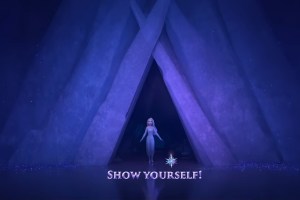
Rather unusually, however, I preferred the sequel. If I relate to Let it Go, and really who doesn’t? (I even wrote a parent version), the song that hits me hard these days is Show Yourself.
If you’re unfamiliar with the Frozen story, the main protagonist, Elsa, was born with a unique and frightening power, and ends up hurting her sister because her family don’t understand it and so can’t teach her how to control it. She is told to “conceal, don’t feel, don’t let it show”. When that mask slips, she becomes an outcast, and only her sister doesn’t give up on her.
In the second movie, Elsa is content surrounded by the few people who love and accept her, but she still feels different. She still feels she could be more. She is pulled by a voice, a sense of yearning, but is scared she’ll lose what she already has.
In the end, she has no choice but to follow the voice. And in the song Show Yourself, Elsa finds the source of the secret siren she has sought for answers.
I can sense you there, like a friend I’ve always known.
During the song, the spirit of her mother shows Elsa that she herself is the voice.
Show yourself, step into your power,
Grow yourself into something new.
You are the one you’ve been waiting for.
I’ll be honest, I get goosebumps every time I reach this part, although I only recently realised why. I feel like it’s my song, and the song for anyone who grew up feeling like they didn’t fit. Like they had more to give, if only they were given permission, if only it wasn’t so terrifying.
And the discovery that I am (probably) neurodivergent is that moment where I feel, “I am found”.
The more I learn about autism and ADHD, the more I understand these “cold secrets deep inside” me that are different and powerful and frightening, that make me different and often friendless, but that can be harnessed to create amazing things.
The message in the Frozen movies is that love is what is needed to control and harness the power.
However, friendships are hard for NDs to make and keep. Self confidence, self love, is even harder, when “Research has shown that children with ADHD have often received 20,000 more negative messages about their behaviour than a neurotypical child by age 12.” [Source]
It might take a lifetime, but I am going to follow the voice I hear now inside me that tells me that, while I might be different, I am not broken. I am ready to learn.
It’s just a cold, why are you making so much fuss?
I think this every time anyone in my family is ill. And then I’m ill, and I remember this is a neurotypical view of the world.
When you’re ruled by sensory difficulties, executive dysfunction, rejection sensitivity dysphoria (RSD), it’s never just a cold.
Your body stops bodying properly. It feels wrong. There’s new pain to process and you’re hyper aware of it. You can’t control it or make it stop. You’re aware of the discomfort of dry lips, weird papery skin, pressure of blocked sinuses, achy fidgety limbs, torture headaches, hot then cold then hot (which actually you’re used to because your temperature regulation wasn’t all that great to start with). Your brain loops on a single lyric or you have lurid dreams until you don’t know if you’re more miserable awake or asleep. You’re maybe thirsty but your body cues have never been obvious and then you chug a litre in one go and feel sick but too tired to pee.
But it’s just a cold. And why are you always ill, you had a cold just last month?
You’re more prone to colds because ARFID means your diet is poor and vitamins only do so much. And you forgot to drink any water yesterday, and caffeine helps you control your ADHD.
Anxiety makes it harder to leave the house and get fresh air, and you’re on the edge of burnout so often that exercise can use the last bit of resilience and actually let the germs take over.
I’ve lost count of the times a new determination to exercise more has ended with a temperature and days in bed.
It’s just a cold, why are you so grumpy, get over it.
You’re all out of spoons and sensitive to your triggers. That’s noise for me, so things like husband snoring or dogs licking become physically painful until I have my fingers in my ears and I’m screaming at the dogs for grooming themselves (not proud of that). So I try to control the noise, but I can’t, so that increases my anxiety until I’m almost hysterical. Which funnily enough doesn’t do much for the headache.
Guilt is rife because if I’m finally taking to my bed it’s because I have nothing. But chances are I’m not the only one ill, so everything falls apart and certainly no one has spoons to check I have water or am taking my meds. Which makes me sad. Then guilty. Then mum mode kicks in and I have to go take care of them, which adds another day to me shifting the darn cold.
For my son, on top of the sensory horror is the loss of routine. His day is controlled by alarms, when to shower, eat, work out etc. A day of ill disrupts all of that.
My daughter’s is food. Eating is hard, drinking water harder. Feeling poorly makes it harder to do both, so hangry turns up followed by guilt and self blame.
It’s just a cold, you’ll feel better tomorrow, quit moaning.
When you live in a world of now and not-now, it’s hard to think past the headache and inability to breathe and imagine a time you ever didn’t feel this way. It becomes easy to catastrophise, to want to end the misery. Your brain, part of it, tells you to get a grip, but your whole nervous system is fighting you telling you it’s too much to deal with right now.
Then you’re missing commitments, school, work, life, so the RSD pops up and tells you you’re letting everyone down and they all hate you and you’re a pathetic human being because everyone says it’s just a cold. You should just get up and get on. So you do, and the cold lingers, and comes back, and so it all begins again.
Are you ill again? I never get colds, what’s wrong with you?
I’ve heard it said that you need to apply for about sixty jobs before you find a new role. Actually, I’ve seen anywhere from 20 to 100, but sixty suits the purpose of this post, since it means I’m halfway there. [Cue a blast of Living on a Prayer. IYKYK.]
So, what have I learnt through applying for thirty jobs?
Firstly, job hunting these days is hard.
I mean, it’s always been hard. And I’ve always been rubbish at it. Before I knew I was neurodivergent, I thought I was just crap. Now I know I was trying to go through a ritual without anyone telling me the rules in a way that I understood.
Thankfully, there are now so many more tools available online, it’s actually been easier for me personally than ever before. Websites like this one, which not only tells you the questions you might be asked in an interview but also tells you what employers are looking for by asking AND suggests possible answers! Game changer. If only I could type my answers during the interview, so they don’t get garbled between brain and mouth!
But the market is hard. I’m looking for remote or nearby hybrid jobs, so I’m competing with a huge number of people. And, because marketing is the first part of a company to be jettisoned in an economic downturn, and often the least understood, some of the roles being advertised are bonkers (see octopus image above). They might as well say, “Please can you replace the whole brand and performance marketing and creative team we accidentally made redundant and then realised we needed, oh, but in a 40 hour week for a fairly average salary.” Er. No.
Joking aside, one of the skills I am honing is the ability to really understand the role from the job description, and then to judge it against my personal abilities. Not just, could I do that, but could I do that without hitting burnout in six months? I personally love variety in a role. I’m happy to become your email campaign/paid ad/SEO/landing page/adobe expert. But not if you expect me to have ten years’ experience in each of those functions, and not when you throw in expecting full analytics and ROI, event management, staff mentoring, and international travel. That’s just not feasible for one person.
Then the actual applications vary considerably.
The majority of my applications are through sites like LinkedIn and Indeed, and are straightforward – add CV, sometimes a cover letter, hit send. Unsurprisingly, those are the ones that get hundreds of applications.
I’ve been asked to do an online assessment, through LinkedIn as part of an application (not for an interview). Thankfully they only asked once, and I’ve been able to use the results for many more applications. Turns out, I’m Expert level on grammar, punctuation and fact checking/error spotting. Thank goodness for that, or I’m in the wrong line of work.
I was asked to prepare a short marketing outline for the application for Rewilding Britain (again, application stage, not interview stage). Being the overdelivering, out of work and bored marketeer that I am, I created a full webpage of assets, including video. It wasn’t looked at, as far as I can tell. But if you fancy a gander at what I can do, have a look.
Rewilding Britain also made a point of asking that AI not be used for CV, Cover Letter, or the marketing outline, which I found interesting. Because I’ve been using ChatGPT a lot.
There are lots of discussions online about the use of AI in job applications. But, as one person pointed out, if you’re a Plumber (say), then crafting cover letters is not your wheelhouse, and ChatGPT is just a tool. Particularly if you’re applying for the recommended 10-15 jobs a week.
I don’t have that excuse. I’m a wordsmith. However, I am also neurodivergent, and cover letters are another one of those areas that don’t come with guidelines. Do you want war and peace? Do you want me to pick up every part of the job description that I can do and give you an example? Isn’t that what an interview is for? So, I drop the job description into ChatGPT and ask it to provide a semi-formal cover letter up to 500 words. You have to say semi-formal or it sounds like a nineteenth century novel. And then – and this is the important bit – you REWRITE it, with your own experience and in your own style.
Similarly, I did use AI for my marketing outline for Rewilding Britain, despite being told not to. Perhaps that’s why I didn’t make the interview, perhaps they could tell. But I don’t have personal experience of promoting an environmental charity, and I didn’t have a week to research it. (I might have spent that time making videos about soil. Oops.) The lovely AI bot gave me brilliant ideas in about 30 seconds, that I was then able to build into a meaningful plan. It’s a tool, people, not a monster.
I have at least managed to get three interviews so far, which is well within the 8% success rate of application to interview, so that’s encouraging.
The interviews I’ve had have all been very different too. We won’t mention the one that triggered the bout of depression, as least said now is hopefully soonest mended. But of the other two, the online one was far preferable to the in-person one. As I said in my last post, it’s much more neurodivergent friendly. And even though I didn’t get the job, I felt I performed better by being more relaxed.
That was also the first interview where I received the interview questions in advance.
This is the positive of the whole process so far, for me. Being able to own being neurodivergent (even without a diagnosis. No one has asked for evidence. And I do have a diagnosis for Anxiety, which also counts as a disability).
Thanks to creating a wonderful echo chamber of neurodivergent-friendly people on LinkedIn, I feel comfortable asking for accommodations now, whether it’s if a job can be hybrid when it hasn’t been advertised as such, or asking for the interview questions in advance. For the latter, I would say that that’s just common sense. I was able to give much more meaningful answers to the competency questions by having an hour to think it through first.
Anyway, I didn’t meant this to be such a long post, and I’m not sure it’s interesting to anyone but me (and my husband, who I am now also applying for jobs for). I think it’s just useful to see how far I have come.
It’s easy to get discouraged, particularly when I had a job I loved that I had to leave and that wouldn’t have me back. But I do believe that everything, even the shitty things, can have a positive outcome.
Hopefully this one will be a meaningful job that I can do in all my ND weirdness. Preferably before the money runs out!
I originally wrote this on a LinkedIn post a couple of weeks ago, but I feel it deserves to be said again, even if I didn’t get the job!
Virtual Interviews for the win!
There are many ways that the pandemic heralded changes that were neurodivergent-friendly: hybrid working, learning about personal space, normalising not wanting to be touched, and, my favourite, the McDonalds app 😂
I have a job interview at lunchtime today. I’m sat in my PJs, eating breakfast and running through my presentation. I hope to shortly receive the interview questions, two hours in advance, as a requested accommodation.
And I’m calm.
Sort of.
There are still things that can go wrong:
– Dodgy internet – Power cut – Barking dogs – Panic attack
But what I don’t have to worry about is:
– What to wear, particularly on my feet (all shoes are awful, I can be barefoot) – Driving (tiring for my ADHD brain) – Traffic (stressful) – Getting to the right place (something I failed to do on my last interview due to a Google Maps error) – Where to park – How to get into the building – Finding a bathroom – External distractions in a new environment – Somewhere to put my notes to help me focus – The technology for sharing my presentation
Well, actually, that might crop up, as it has before, so I’ll email it over beforehand just in case. [As an aside, I did have difficulties sharing it, and was very glad I had emailed it in advance).
But you get the idea.
Teams interviews aren’t perfect. I have auditory processing difficulties, so sometimes it’s easier in person (where I can lip read). I don’t always know when it’s my turn to speak. It’s harder to avoid prolonged eye-contact. I dislike seeing myself on camera. Did I mention noisy dogs? 🐕
But the point is, the choice is there.
Interviews are hard for everyone, but particularly for neurodivergent people. And I for one am happy to be doing this one in my own office.
So, it’s been a couple of months since I went back to work and, I’ll be honest, it’s a struggle. I’m definitely in the ‘not waving but drowning’ phase.
Don’t get me wrong, I love the work. It’s frustrating and bitty and annoying, but it feels so good to be using my brain again. I feel like a part of the world; I feel useful.
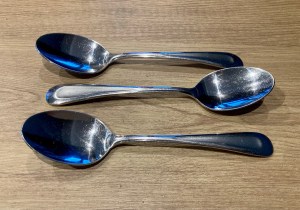
But, oh my days, am I out of spoons. If ever I wanted to explain spoon theory, now’s the time. So, here goes.
Spoon theory was coined by Christine Miserandino as a way to describe units of mental or physical energy. For Christine, who had lupus, it was physical energy, but I have always heard it in context of the mental energy associated with neurodivergence. And that’s what I’ll describe here. This is purely from my own experience of my neurodivergent family.
When I say that a spoon is a unit of physical or mental energy, I mean it’s what’s required to do those tasks that aren’t done automatically. You probably don’t need a spoon to go for a wee, unless of course you do. It’s hard to define because it’s different for everyone. I see it as any task that needs that extra push. Think of it like a car using fuel – you use more at 20mph than you do idling, and you use a lot more at 80mph. But it varies by car. And some cars have bigger fuel tanks.
Each of my family members has an invisible illness – anxiety, ADHD, ASD, depression. They’re not all diagnosed, but they’re all there, especially for me. My job for the last decade or so has been to dish out spoons to keep the family functioning. When the children were little, it wasn’t so obvious that that was what I was doing. Nurturing, providing for their needs, is natural when they’re five. It isn’t until they’re ten or more and you’re still doing it that you realise there might be something more.
Let’s take a normal school day morning. My son can get up without prompting, he makes his own breakfast. But there it gets tricky. He needs reminding to get dressed on time, he needs a nudge to brush his teeth. He needs help finding the right clothes for whether it’s PE or not, or if I haven’t put the laundry away. He’ll need to be told to pack his homework – several times – and to fill his water bottle. I’ll pack his lunch and make sure his shoes are clean and where he can find them. We’ll find his coat and make sure he has his phone. Now, let’s list that:
Find right clothes
Get dressed
Brush teeth
Pack homework
Fill water bottle
Get lunch
Find shoes
Find coat
Find phone
Track the time
These are all tasks that require a bit of extra mental energy to make sure they happen, especially to make sure they happen in time to leave the house at 8.15am. So, each one of these is a spoon. Ten spoons, and we haven’t even started the day.
Then I make sure my daughter is awake, is mentally able to go to school, has breakfast if she wants it (three spoons), I make sure my husband has eaten breakfast, because he won’t without a nudge, and then his day is harder (spoon). Then I need to make sure I’m fed, dressed, brushed my teeth, fed the dogs, fed the hamster, walked the dogs, (six spoons) maybe put the dishwasher on because none of us managed it the night before. Sign my daughter’s diary, or check school emails, maybe it’s World Book Day or my daughter needs a new notebook or can’t find a glue stick. All spoons.
Before I went back to work, that would be it for the morning, more or less. After the school run (which my husband now does, so that’s a couple of spoons gone for him), I would have until 3pm to get my mind straight. Catch up on tasks that hadn’t been done. Rest. Do something creative. Often sleep. Basically, top up my dopamine levels (ADHD), although I didn’t realise that’s what I was doing.
Then I would do the afternoon school run (also now my husband’s responsibility), which would require working out where my son wanted picking up from. Then home. To another few hours of dishing out spoons. Different meals for each neurodivergent person. Different after school activities. Mental exhaustion to soothe from the three who had been out in the world. More dog feeding and walking, more chores. Asleep by 9pm at the latest.
And now? Now I do most of that still, but between 9am and 5pm I have a job. A complex one, with lots of stakeholders, lots of deadlines and remembering things and keeping track of things. I have three different to-do lists on my desk. And still, I carry a lot around in my head, to make sure I don’t miss anything important. So. Many. Spoons. And because I need extra support to make sure I remember all the steps in a process, I have process-mapped a lot of my tasks. I had a call from the Project team yesterday, saying my process maps were great, and could I add them as a project. It’s easy, here are a couple of forms. Another task, another stakeholder. More spoons.
There’s this view that I’m organised. It makes me laugh. I’ve heard it before, and I used to let people believe it, and then work oh so hard to keep up the pretence. I’m not organised. I have ADHD. My brain is like someone emptied out the scrabble bag and now I’m trying to read it like a book. I have process maps and to-do lists and printed out plans because I’m NOT organised. It’s scaffolding. The same scaffolding that I put around my children so that they can seem ‘fine’ in school (hint: they’re not). I’m lucky that I work somewhere that I can say ‘I have ADHD’ and their response is ‘how can I help?’ Unfortunately, I don’t have an answer to that question.
The scary part? I’m only doing about half of the work I will need to be doing in a few months. If I’m still there in a few months. I am so tired. I’m asleep by 7pm. But it’s not restful sleep, because my brain is still trying to create order out of the chaos. I’m eating non-stop, constantly searching for dopamine because I’m too tired to exercise. And exercise takes spoons to start, even if it replenishes once it’s done.
This is not a whinge. I am so lucky. My husband and children have really stepped up to fill the gaps in what I used to be able to do. But I’m tired of eating takeaway. I’m tired of an even more chaotic house. I’m tired of once more having a constantly full laundry basket and a constantly messy kitchen.
I used to wonder if there was something wrong with me, that I couldn’t work and run a house. I didn’t have the skills, maybe, or I was lazy, or I just needed to try harder, or make my family do more, or hire a cleaner. (We’ve been through three cleaners. Too many spoons.)
It turns out there is something, not wrong, but different about me. And now I must decide what’s more important – having a job, an identity, a chance to use my skills, feeling alive and part of the world, but having my home life a stressful chaotic mess. Or having enough spoons to have a happy home, but not use my brain. It appears I may not be able to do both.

 writermummy