More Than My CV

This week marks 6 months of job hunting:

  • 50+ tailored applications and probably the same again in Easy Apply
  • 8-10 HR screen calls & interviews
  • Half a dozen presentations and interview tasks
  • 1 explanation of rejection

I’m in discussions with the job centre about getting IDM qualifications to fill gaps I might have, since marketing roles seem to be increasingly about specific experience rather than transferable skills (one job ad required 2+ years experience in a niche industry). But when my liaison asks ‘will this training get you a job’ how do I answer?

Without an explanation of rejection how do I know what needs addressing?

I had a 3-hour on-site second interview last week and the email (not phone call) I got two says later said “After careful consideration, we regret to inform you that on this occasion your application has been unsuccessful.”

I actually know why. Three hours is plenty long enough to know you’re not the right fit, but still, a bit of constructive feedback wouldn’t hurt.

I wrote the above on LinkedIn this week, in a fit of despondency that I’m no longer qualified to do my job because the requirements have shifted. Then, as I was folding laundry, I got to thinking about all the things I can do and have done. And posted the following…

Things I have done in previous jobs/life that I wish I could add to my CV:

  • I got a distinction for the final-year dissertation I wrote in ten weeks (of 10-hour days) on Russian History
  • While running an event during my first job out of uni, the CEO of GUS, Lord Wolfson, said ‘Ah, there’s always an Amanda behind the scenes’
  • I helped design, build, and train contact centre staff on how to use a phone-based gift finding service. In 1999
  • While helping run a hostel in NZ, I learned how to fold fitted sheets into neat squares
  • In the first month of a new marketing planning exec role, I presented plans to the South African Board
  • I ran a solo exhibition for my abstract art, finding out I secured it while still in hospital after the birth of my child
  • While raising my ND kids, I wrote and self published 12 novels, getting two long-listed for awards, and illustrating two of the ones written for children
  • I audio-typed interviews for the Compassion in World Farming CEO’s book 60 Harvests Left, learning so much about conservation and soil
  • I edited, and designed the cover for the autobiography My Life in Colour: From Bali to Brighton and Back by entrepreneur Paula Harward
  • As an invigilator, I walked the hall listening for sniffers, rocking desks, and pen tappers and fixed accordingly, to help those around them
  • I learned how to make and edit social media videos in Photoshop because a supplier wanted one and there was no resource
  • In two roles, I compiled a 30+ page Campaign Manager’s handbook, so future recruits wouldn’t have to figure it all out from scratch
  • In two years, with the support I could offer after leaving a job I loved, my AuDHD, MADD, ARFID, self-harming teenager secured 5 GCSEs, including two 7s, and is now a full-time hairdressing apprentice

Do I know how to use Hootsuite or Google Ads? Not yet. Do I have the experience to relate to all your customers and tell their stories? Absolutely.

And then, as you do at 3am, I realised I’d missed off the biggest achievement that’s really kinda relevant to marketing.

This blog.

Particularly in 2013, when I not only blogged daily for a year, but also wrote and self published Two Hundred Steps Home. All 285,000 words of it. Maybe when my ADHD assessor snidely remarked on my ‘excessive, rapid, and tangential speech’ we both forgot that that is a Strength.

I’m not really sure of the reason for this post, except to say, if you think the world is moving on without you, focus on the can not can’t.

AI stealing your job? Your words trained AI, learn how to use it as a tool. Everything now automated and programmatic? Software still needs intelligent input. And Hootsuite can’t talk round a Brand manager who doesn’t like your ‘Cheep Cheep’ pun, or get a print manager to fast-track a job because you’ve built up a rapport.

If computers are stealing your job, be something they can’t be: be human.

Show Yourself

The image is a shot from the movie Frozen II, where Elsa enters the cave following the sound of the siren. It has the words 'Show Yourself!' and a snowflake beneath Elsa.

It’s no secret to anyone who knows me that I love a Disney movie. The stories are clear but still complex, the language accessible but not dumbed down. Relatable characters with flaws, and of course awesome belting songs. Not to mention a happy ending full of justice and redemption.

One of my favourite movies of more recent times is Frozen, particularly because the happy ending isn’t reliant on the girl being saved by a man. Even better, it cleverly turns the traditional story on its head with a twist that blew me away the first time I watched it.

Rather unusually, however, I preferred the sequel. If I relate to Let it Go, and really who doesn’t? (I even wrote a parent version), the song that hits me hard these days is Show Yourself. 

If you’re unfamiliar with the Frozen story, the main protagonist, Elsa, was born with a unique and frightening power, and ends up hurting her sister because her family don’t understand it and so can’t teach her how to control it. She is told to “conceal, don’t feel, don’t let it show”. When that mask slips, she becomes an outcast, and only her sister doesn’t give up on her.

In the second movie, Elsa is content surrounded by the few people who love and accept her, but she still feels different. She still feels she could be more. She is pulled by a voice, a sense of yearning, but is scared she’ll lose what she already has.

In the end, she has no choice but to follow the voice. And in the song Show Yourself, Elsa finds the source of the secret siren she has sought for answers.

I can sense you there, like a friend I’ve always known.

During the song, the spirit of her mother shows Elsa that she herself is the voice.

Show yourself, step into your power,

Grow yourself into something new.

You are the one you’ve been waiting for.

I’ll be honest, I get goosebumps every time I reach this part, although I only recently realised why. I feel like it’s my song, and the song for anyone who grew up feeling like they didn’t fit. Like they had more to give, if only they were given permission, if only it wasn’t so terrifying.

And the discovery that I am (probably) neurodivergent is that moment where I feel, “I am found”.

The more I learn about autism and ADHD, the more I understand these “cold secrets deep inside” me that are different and powerful and frightening, that make me different and often friendless, but that can be harnessed to create amazing things.

The message in the Frozen movies is that love is what is needed to control and harness the power.

However, friendships are hard for NDs to make and keep. Self confidence, self love, is even harder, when “Research has shown that children with ADHD have often received 20,000 more negative messages about their behaviour than a neurotypical child by age 12.” [Source]

It might take a lifetime, but I am going to follow the voice I hear now inside me that tells me that, while I might be different, I am not broken. I am ready to learn.

I am ready to grow myself into something new.

Caution: Builder at Work

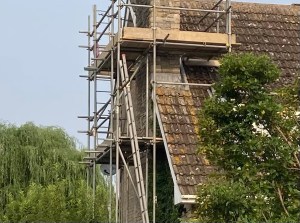
The picture shows the side of a house with scaffolding around the chimney

I’m on week four of my new job and just about hanging in there, juggling parenting and working.

Thankfully having teenagers in the summer holidays is mostly about making sure there is lots and lots and lots of food and driving them places. Throw in a bit of laundry, cleaning, and some body-doubling for my daughter, and that’s it. It will be more challenging when they go back to school, as they will need a lot more scaffolding.

If you haven’t come across the term scaffolding in a neurodivergent sense, it’s simplifying tasks other people find very easy, to free up spoons for the essential or more difficult tasks.

When I went to see my son’s head of year to talk about reducing his timetable, I was given a long list of all the reasons why he was thriving at school and didn’t need any accommodations: He turned up to class on time, he had all of the things he needed to learn, he remembered all the ingredients for his food tech, he was always smartly dressed. These are all things that I put scaffolding in place for, to allow him the spoons to get through the day.

He still comes home exhausted.

For an average teenager, I would be encouraging them to weigh out and label their own food tech ingredients, make sure they have ironed shirts or that their laundry has been done. I would tell them to find and polish their own shoes or put together their own PE kit. This would be ‘preparing them for adulthood’. 

But the thing is, my son already knows how to do it all, but each tiny task takes spoons.

He also has his own scaffolding: multiple alarms to remind him to get up, shower, brush his teeth, and other things an allistic person might not even have to think about never mind be reminded to do. By the time he leaves for school, he’s used up so much of his capacity already, the least I can do is help. 

Unlike the scaffolding on a building, this scaffolding may never come down. He may end up with an understanding partner, or he may need a housekeeper, or like me he might rely on AI (Alexa, Siri, and ChatGPT are my team.) These are accommodations for an autistic person in an allistic world. 

The same is true in my new job. I have a reputation for being very organised, which always makes me laugh as someone with ADHD. What people don’t realise, but I’ve become much more open in discussing, is that the organisation is essential for me to have any idea of what I’m supposed to be doing on an hourly or daily basis. 

I have links from spreadsheet to spreadsheet, I have bookmarks in sub-folders in folders. I have to-do lists and checklists and calendar reminders and even with all these things I still have to go through my notes every day to remember what I should be doing.

It is exhausting.

Like my son at the end of a school day, I have been crawling into bed early and sleeping late.

The analogy of the swan, calm on the surface and furiously paddling underneath, is a flippant image I use often. But imagine the swan is on an apparently slow-moving river with a very fast undertow: you would have no idea how exhausted the swan was just trying to stay in one place. Now imagine someone built a dam or a jetty to break the undertow. 

In case it helps, here are my favourite tech/AI scaffolding tips:

  • Alexa shopping list
  • Alexa devices in every room
  • Calendar reminder to check Echo app shopping list
  • Alexa timers and reminders (particularly cooking pasta!)
  • Talking work problems through with ChatGPT
  • Smart watch linked to phone so I hear calls
  • Airpods to hear messages
  • Tile to find my phone when watch tells me it’s ringing
  • Alexa to find my keys to activate my tile

It’s so much easier for my husband, he just has Wife™. 😂

What scaffolding do you use?

Channeling Energy (or how to sneak up on your brain)

A photograph of the multi-faceted dome from the TV series Crystal Maze

One of the things I’m learning as a neurodivergent is how to follow the flow of energy. When it’s right to rest and when it’s actually better to move, do something, anything, and how to sneak up on my brain if it’s resistant.

I was raised to see rest as idleness, self-care as decadence. It’s taken a really long time to even begin to deprogram myself from that. I also realise, with hindsight, that I pushed those values onto my husband. He used to understand the need to sit and just be, was an expert at it, but I saw it as laziness. Sorry, husband 😔

In my defence, it wasn’t just upbringing. Our whole Western culture celebrates productivity. We are told to “fill the unforgiving minute | With sixty seconds’ worth of distance run”.    

From infancy, our worth is defined by our achievements. You spoke! You walked! You can count to ten, you passed your exams. What a clever girl, I’m so proud of you. Haven’t you worked hard.

The message is never that it’s okay to just be. That the world is somehow better with you in it, regardless of whether you win awards or die trying.

When I was working, Monday morning chat filled me with dread. “What did you get up to this weekend?” caused my truthful autistic brain to stumble. Somehow, “I slept and did laundry” wasn’t the answer they were after 😂

But weekends were for rest and recovery, ready for another week of work. Harvesting energy, so I could pour it into my job. Which is why it was fortunate that I loved it (most of the time). I was excited by Mondays, revved and ready to tackle the challenges and test my brain to see what it could do.

Without that, under-employed as I currently am, (I won’t say unemployed, because there is still a house to run, a family to feed and clothe), managing my energy is so much harder.

Firstly, there isn’t much challenge in laundry, so it isn’t all that exciting. Feeding a house of ARFID is challenging, but in a tax-return sort of way that’s pretty fucking miserable, I won’t lie. My newly-freed-from-work husband is doing All. The. Things. Decorating, landscaping, renovating. Wonderful stuff, but it’s not where my energy is currently at.

So I read and apply for jobs and try not to panic.

And I learn about energy.

I’ve learned that my energy flows best in an empty house. Which is a bit of a bugger at the moment. I’m back to hanging out in coffee shops for solitude and cake. My waist is expanding at an alarming rate 😉

I’ve learned that I can sneak up on energy, like a skittish horse, if I pretend to be resting and then suddenly leap up, put running clothes on, and get stuck into a task before my brain’s caught up. 

I have remembered the power of a playlist. Metallica blaring through headphones got me through periods of post-procrastination panic-productivity at university, enabling me to write a term’s worth of essays in a sleepless week. I don’t recommend it, but if you must, then diet coke and …And Justice for All are what you need. Just don’t forget the headphones.

I am also learning about creative energy. It’s like trying to catch a Roborovski hamster. Or like the end of Crystal Maze, grabbing the gold tokens flying around. The clever contestants waited and gathered them as they landed rather than snatching at air.

Take this post. It’s weeks overdue, and the third I’ve started in my head. But today I waited until the ideas started to gather, then grabbed at them as they pooled in my mind. I started at 5a.m. The Notes file on my phone is full of 5a.m. thoughts. 😂 I had a slight side-quest, trying to find an image of a Crystal Maze contestant grabbing at tokens. I couldn’t, but am learning to limit these perfection-searches where I can. That way danger lies. (The same reason I can’t have Instagram or TikTok on my phone.)

My brain, when under-utilised, is like the Crystal Dome all the darn time. Ideas flap around me, all shiny, but I can’t get hold of them. Or I grab randomly and get a hodgepodge that I can’t sift through. Since leaving work to look after my daughter I’ve knitted, cross-stitched, crocheted, made a book trailer video, redesigned a book cover, drawn illustrations, updated my website, and come up with a dozen crazy ideas for new projects.

New cover design

But having to job-hunt is depleting my energy, because it’s all the things I hate. It’s trying to believe in myself and sell myself, it’s trying to say what recruiters want to hear, in cover letters and interviews. It’s searching, and reading through the job-speak trying to understand what is actually expected in a role.

And it’s waiting.

Waiting is ADHD Kryptonite. A 4 o’clock appointment will kill a day.
Add to that a daughter who is still in recovery and a hyper-productive husband doing ten projects at once, and managing my own energy is getting really hard.

So I read. And rest. And sneak up on my brain, holding a chocolate bar and a coffee to tempt it to submit.

And I wait.

Holidaying with Neurodivergents 

All the activities!

When I went on my honeymoon, I cried. Every day. I had no idea why. I wondered if I didn’t want to be married (I did). Later, I thought I’d had a breakdown. Now, I know it was burnout.

The year I got married, I also lost my dad unexpectedly, finished my Masters dissertation (on Divorce in 18th Century Literature!), moved house – twice – and turned 30, all while working full time in a stressful job. We honeymooned at Christmas in New Zealand, a place full of conflicting memories, and that 12 months caught up with me like an avalanche.

My husband dealt with it pretty well. We’d been together two years and knew each other a bit by then, though we’d not actually lived together all that long. I knew to give him food if he got snappy. He knew not to run after me if I left our accommodation and just kept walking. I’d come back eventually.

Years later, with two young children, I would often break down when we arrived at our holiday accommodation. I would have arranged everything, so would take every disappointment personally. There’d be tears and shouting. There still are sometimes.

The difference now is there is also understanding. For all of us. 

I know I get disregulated with the pressure of packing and remembering everything. My RSD kicks in if I think I didn’t choose the perfect cottage, or I forgot to pack my son’s breakfast bowl and spoon. And we get it.

When we arrive at a holiday destination, we separate to our own spaces (and accommodation is always booked to allow us LOTS of space) and we regulate. Scroll social media, drink tea, nap, unpack, have a lovely shit. 😂

And throughout the holiday, we practice low demand. 

It’s hard. 

Sometimes I really just want us all to go out for a meal in a nice restaurant. Or even a crappy café. But with tonnes of anxiety and ARFID, that’s never going to happen. Eating is a constant challenge and being in public is stressful. So I cater, even if that means less of a holiday for me.

*I’m pausing writing this because I’m on holiday and my daughter needs help regulating.*

Two days later…

And there, that’s exactly how we survive and even enjoy holidays. We lower our expectations and then lower them a bit further. And even if it feels like we’re giving up a bit of ourselves and a lot of what we might want to do, the result is a holiday that we can share together in our own unique way.

I have learned that the accommodation is everything. The largest expense always goes on the perfect Airbnb, because there’s a chance we might not leave it. It has to have three bedrooms rooms, hideaway spaces, a well-equipped kitchen, because I’ll be making all the food. 

WiFi is paramount. We learned that the hard way, when we couldn’t even get 4G in a place and my husband spent a lot of time parked in a Supermarket car park so my daughter could communicate with friends.

The second luxury is food. An all-expenses trip to Aldi on arrival has replaced the Waitrose home delivery now the children are older. If you’re not going to restaurants, you can splurge on all the best packet food, enough that hopefully someone will find something their anxiety allows them to eat. And then food intake MUST be monitored. Disaster is often caused by hanger.

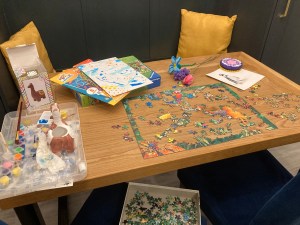
We pack as if we’re moving, even for an overnight trip. Craft, puzzles, colouring, games, gadgets. The two-night break I just had with my daughter included the glue gun (to make pipe cleaner flowers). 

When they were little, it was a £50 Baker Ross order of easy craft kits. ADHD needs to be busy, but anxiety and autism get easily overwhelmed. If you can’t get entertainment on the beach or in the arcades because the anxiety-stars won’t align, then entertainment has to be available. It’s walking a tightrope, it gets easier with practice.

There are loads more little learnings, but they’re probably unique to us. The last bit that might be worth sharing is the most challenging. 

Day trips. 

It’s hard to book something in a low demand house. You might buy tickets you don’t use. We often do. Or we bear the ND-tax of paying on the gate, because booking ahead is too risky. 

Much research goes into something we can all do. Space to roam. Not too much walking. Interaction. Flexibility. Food. Toilets. Easy parking. Weather proof (especially in wind-phobia days). The learning curve was steep.

I took my kids to our nearest seaside town when they were both under 3. It’s a two-hour drive in summer, but I grew up by the sea and wanted them to have that. 

When we arrived, my daughter fell and cut her knee. I hadn’t yet learned to carry a first aid kit. We got to the beach, pebbly and very British. It turned out my son didn’t like the feeling of the sand. My daughter was scared of the moving water. I didn’t know we were all neurodivergent, but I knew we needed a different plan. 

And there was Sealife. 

My first visit. It was perfect. Pushchair friendly. Doors sealed so children could roam safely. Interesting, but not sensory overwhelming. Animals, fishes, stickers. A playground (which is sadly now gone, I noticed yesterday). A café. Even a lovely member of staff who agreed to plaster my daughter’s knee.

We were there for hours. And Sealife is a firm favourite in our lives. My daughter and I went yesterday, 12 years later, and the magic was the same.

Places like Sealife, where the children know what to expect, are a lifesaver for us. We have a few – Woburn Safari Park, Warwick Castle, the different Sealife centres – where we know we can survive. We might only stay a short time. One parent might need to sit in the car to regulate. We might divide and conquer. But it works.

The other thing about our holidays is making sure I know everyone’s ‘Must Haves’ list. My son’s ‘must haves’ are the amusement arcade, preferably every day to earn tickets for a prize, and mini golf. My daughter needs to shop for souvenirs and to watch a sunset. I need to have walked along the shore and to have a daily proper coffee. My husband is happy to do anything as long as he can have a lie in and some downtime. Once we’ve ticked all of those, we’ve had a holiday, even if we have to leave early because we’re all out of spoons. But don’t tick one? Not good.

I used to think holidaying with my wonderful neurodivergent family meant I was missing out. I’d see friends’ vacation photos and envy the museums and restaurants and theatre visits, when mine were of shingle beaches and captive penguins. They go on trips abroad to Paris or Disneyland or – now the kids are older – skiing and safari. Things we will never do as a family. 

But not things I have never done. As a lone traveler I have seen so many amazing places, and hope to again. But this time in my life is not about me. And that’s okay. 

I take my moments. Sitting up late painting while everyone is plugged in watching YouTube. Early mornings on the beach watching the sun rise. Or walking in the freezing rain, as I did this morning while my daughter packed. I could sneak out, because she was regulated. And then I was ready to do what she wanted, which turned out to be come home. And that was okay.

My last little observation is that, actually, those Facebook photos are important. I used to feel disingenuous, posting smiling photos of sunny beaches, when that might have been the one light moment of a difficult day. But my social media feed isn’t to show off to others, it’s my journal. In a year, two, five, Facebook will remind me, and I will smile. I’ll barely remember the hardships, I’ll just recall that I was with my family and there were glimmers of joy.

And hopefully that’s what they’ll remember too.

All. The. Things.

Homeschooling ADHD style

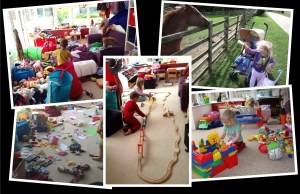
Turns out, when an AuADHD adult tries to homeschool an AuADHD child, what you get is chaos. Creative, messy, fun, imaginative, spoon-depleting, stress-inducing, brain-exhausting chaos.

When the kids were little, they moved from activity to activity at lightning speed. 

With the first child, I had a 25-labeled-box wall unit, and all activities went away. The farm, train, blocks, playdoh, paints, dolls, craft. I spent more time setting up and packing away than we did playing. But when you have a messy brain, you need a calm environment. Tricky, when you also have zero executive functioning skills.

Once there were two of them, only 19 months apart, I settled for containing it in one part of the house and ignoring it.

Thankfully, we escaped the house every day. To the Farm, the zoo, the supermarket, the park. Anywhere, to entertain without mess. I used to call Farm trips ‘Farm Calm’. A clean(ish), pushchair-friendly outside space, with endless variety, in a predictable, safe environment. With food and changing facilities and easy parking. One year we visited over 60 times. Value for money on an annual pass that paid for itself after four trips! We knew all staff and animals by name.

ADHD Parenting

These days, our day trips are to Aldi and Primark, and sadly they don’t do passes. I might buy shares.

At home, chaos reigns once more. And now there are two brains that get disregulated by mess, but need to do All. The. Things.

My current projects include decorating, crochet, sewing, fitness, video editing, writing, reading, lesson planning and feeding everyone. 

The daughter has rediscovered craft (which heals my heart) and lego and jigsaws and origami and painting and the glue gun. At Aldi yesterday, we bought stickers and colouring books and puzzle kits. Because, tiring as it is to keep up, I want to feed the embers of the girl I once knew, coming back to life.

It’s hard. 

There’s little down time, particularly as my creative side is also seeking fulfilment, now there are no LinkedIn campaigns or PowerPoint presentations to fuel it. I might even start another novel. If I can herd the excitable puppies racing round my brain all into one place. I wake at 5am to get some time alone to drink coffee and process in silence. She’s often up by 6am.

With it all, what I’ve realised most is that healing has to come before homeschooling. 

School lacks the creative stimulation for an ADHD brain. There’s little-to-no dopamine for a child who doesn’t want to dance or play an instrument. By GCSE, there’s no art or DT or cooking. If you can’t turn it into an exam, a career, it’s deemed worthless. But if you have no energy left at the end of a day to do those things, then what is left?

And she’s so worried about falling behind. I keep saying, behind where? Who set these goal posts? Even if she does return to full time school at Easter (and I doubt it), GCSEs are modular. She can catch up enough to pass five, and that’s all she needs to do. If that.

Education systems, teachers, the government, parents, they all love to convince kids that their whole futures depend on getting excellent GCSEs. 

It’s such rubbish. 

For a start, thanks to Bell Curve marking, a percentage will always do worse than they deserve. A child could give the exact same answers two years in a row and achieve different grades. The system is so flawed.

And who says GCSEs need be done now

She has her whole life to get qualifications, but if she destroys her passion for life, what’s the point?

Obviously it’s easier, cheaper, if she takes them next year. I’m still aiming for those five. I’ll still plan lessons each week, and weep at my inadequacy to even understand half the topics, never mind teach them. But if there’s more lego than lesson? If we spend two hours making origami hearts, or even two hours in Primark (sigh), then so be it. 

I have my daughter back. I’m getting myself back. I’m just not getting a lot of rest.

Pass the coffee. Black, no sugar, strong as you like. 😂

Spoon Theory

So, it’s been a couple of months since I went back to work and, I’ll be honest, it’s a struggle. I’m definitely in the ‘not waving but drowning’ phase.

Don’t get me wrong, I love the work. It’s frustrating and bitty and annoying, but it feels so good to be using my brain again. I feel like a part of the world; I feel useful.

But, oh my days, am I out of spoons. If ever I wanted to explain spoon theory, now’s the time. So, here goes.

Spoon theory was coined by Christine Miserandino as a way to describe units of mental or physical energy. For Christine, who had lupus, it was physical energy, but I have always heard it in context of the mental energy associated with neurodivergence. And that’s what I’ll describe here. This is purely from my own experience of my neurodivergent family.

When I say that a spoon is a unit of physical or mental energy, I mean it’s what’s required to do those tasks that aren’t done automatically. You probably don’t need a spoon to go for a wee, unless of course you do. It’s hard to define because it’s different for everyone. I see it as any task that needs that extra push. Think of it like a car using fuel – you use more at 20mph than you do idling, and you use a lot more at 80mph. But it varies by car. And some cars have bigger fuel tanks. 

Each of my family members has an invisible illness – anxiety, ADHD, ASD, depression. They’re not all diagnosed, but they’re all there, especially for me. My job for the last decade or so has been to dish out spoons to keep the family functioning. When the children were little, it wasn’t so obvious that that was what I was doing. Nurturing, providing for their needs, is natural when they’re five. It isn’t until they’re ten or more and you’re still doing it that you realise there might be something more.

Let’s take a normal school day morning. My son can get up without prompting, he makes his own breakfast. But there it gets tricky. He needs reminding to get dressed on time, he needs a nudge to brush his teeth. He needs help finding the right clothes for whether it’s PE or not, or if I haven’t put the laundry away. He’ll need to be told to pack his homework – several times – and to fill his water bottle. I’ll pack his lunch and make sure his shoes are clean and where he can find them. We’ll find his coat and make sure he has his phone. Now, let’s list that:

  • Find right clothes
  • Get dressed
  • Brush teeth
  • Pack homework
  • Fill water bottle
  • Get lunch
  • Find shoes
  • Find coat
  • Find phone 
  • Track the time

These are all tasks that require a bit of extra mental energy to make sure they happen, especially to make sure they happen in time to leave the house at 8.15am. So, each one of these is a spoon. Ten spoons, and we haven’t even started the day.

Then I make sure my daughter is awake, is mentally able to go to school, has breakfast if she wants it (three spoons), I make sure my husband has eaten breakfast, because he won’t without a nudge, and then his day is harder (spoon). Then I need to make sure I’m fed, dressed, brushed my teeth, fed the dogs, fed the hamster, walked the dogs, (six spoons) maybe put the dishwasher on because none of us managed it the night before. Sign my daughter’s diary, or check school emails, maybe it’s World Book Day or my daughter needs a new notebook or can’t find a glue stick. All spoons.

Before I went back to work, that would be it for the morning, more or less. After the school run (which my husband now does, so that’s a couple of spoons gone for him), I would have until 3pm to get my mind straight. Catch up on tasks that hadn’t been done. Rest. Do something creative. Often sleep. Basically, top up my dopamine levels (ADHD), although I didn’t realise that’s what I was doing.

Then I would do the afternoon school run (also now my husband’s responsibility), which would require working out where my son wanted picking up from. Then home. To another few hours of dishing out spoons. Different meals for each neurodivergent person. Different after school activities. Mental exhaustion to soothe from the three who had been out in the world. More dog feeding and walking, more chores. Asleep by 9pm at the latest. 

And now? Now I do most of that still, but between 9am and 5pm I have a job. A complex one, with lots of stakeholders, lots of deadlines and remembering things and keeping track of things. I have three different to-do lists on my desk. And still, I carry a lot around in my head, to make sure I don’t miss anything important. So. Many. Spoons. And because I need extra support to make sure I remember all the steps in a process, I have process-mapped a lot of my tasks. I had a call from the Project team yesterday, saying my process maps were great, and could I add them as a project. It’s easy, here are a couple of forms. Another task, another stakeholder. More spoons.

There’s this view that I’m organised. It makes me laugh. I’ve heard it before, and I used to let people believe it, and then work oh so hard to keep up the pretence. I’m not organised. I have ADHD. My brain is like someone emptied out the scrabble bag and now I’m trying to read it like a book. I have process maps and to-do lists and printed out plans because I’m NOT organised. It’s scaffolding. The same scaffolding that I put around my children so that they can seem ‘fine’ in school (hint: they’re not). I’m lucky that I work somewhere that I can say ‘I have ADHD’ and their response is ‘how can I help?’ Unfortunately, I don’t have an answer to that question.

The scary part? I’m only doing about half of the work I will need to be doing in a few months. If I’m still there in a few months. I am so tired. I’m asleep by 7pm. But it’s not restful sleep, because my brain is still trying to create order out of the chaos. I’m eating non-stop, constantly searching for dopamine because I’m too tired to exercise. And exercise takes spoons to start, even if it replenishes once it’s done.

This is not a whinge. I am so lucky. My husband and children have really stepped up to fill the gaps in what I used to be able to do. But I’m tired of eating takeaway. I’m tired of an even more chaotic house. I’m tired of once more having a constantly full laundry basket and a constantly messy kitchen. 

I used to wonder if there was something wrong with me, that I couldn’t work and run a house. I didn’t have the skills, maybe, or I was lazy, or I just needed to try harder, or make my family do more, or hire a cleaner. (We’ve been through three cleaners. Too many spoons.)

It turns out there is something, not wrong, but different about me. And now I must decide what’s more important – having a job, an identity, a chance to use my skills, feeling alive and part of the world, but having my home life a stressful chaotic mess. Or having enough spoons to have a happy home, but not use my brain. It appears I may not be able to do both.

Where’s the Conductor?

So, I’m pretty certain I have ADHD. I can’t remember if I’ve mentioned this before, and if I go off to look, I’ll forget what I’m doing and the idea I’ve had for this post will vanish. Although the forgetfulness might be peri-menopausal, so there’s that too. Or it could be depression. Aint it grand to be alive?

Anyway, I started investigating when I suspected my children of being neuro-divergent. Ironically, thanks to a call to my GP, it appears I might get an assessment before they do, which is just wrong. But the broken NHS, broken mental health systems, broken school system, broken government, they’re all distractions, other posts I won’t write here. But they lead me nicely into what I wanted to write about.

There are lots of ADHD Facebook pages, YouTube Channels, memes. Too many, in a way, as I feel I shouldn’t be adding to that noise, especially as an undiagnosed person. Still. The pages are wonderful, nevertheless. Helpful, supportive, affirming. I’m not lazy, I’m not crazy, I’m not broken or stupid or worthless. I’m just (potentially) wired differently. (I feel like a journalist writing ‘allegedly’ when it was quite clear who the murderer was, but there you go.)

However, enlightening as they are, the various analogies weren’t working for me. Yes, my head feels like a washing machine on spin; yes I’m exhausted; yes I’m out of spoons (a wonderful phrase to describe the depletion caused by neurodiversity), but none helped me explain me to my husband, or gave me a way to help myself or my daughter. After all, if you switch the washing machine off mid-spin, you just get a soggy mess and your clothes are trapped.

The analogy I’ve come up with to describe the feeling is that of an orchestra. I played in the orchestra at school, it was quite a big part of my life then. I was fortunate to have hobbies that kept the manic cats in my head occupied. I wish my daughter did. So, an orchestra is a useful metaphor. Sometimes, the orchestra is tuning up. It’s just noise. A cacophony of nonsense that I block my ears from and run away. Sleep is my friend.

Then, at other times, the different instruments all start playing. This is most common at 5 a.m. They’re playing, but they’re all playing something different. The lead violinist is nailing the twiddly section that opens the second movement of Vivaldi’s Winter, whilst the violinist in the next chair is playing Rimsky-Korsakov’s Flight of the Bumblebee, which is basically a musical panic attack. The cellist is lost in the dramatic opening to Elgar’s concerto in E Minor; it’s so beautiful that I want to listen all day. But the guy on the timpani is crashing out the first bars of Fanfare for the Common Man like he’s auditioning for the ghost scene in Moana. Briefly the brass section joins in, and it sounds like Star Trek, which takes my mind off on a tangent, thinking about why the red shirts didn’t see danger coming. They all pause to listen to the clarinet playing Mozart, and then they’re off again with their solos. Together. Loudly. Each trying to be heard over everyone else.

And it isn’t just noise. I sit in the audience and listen to each beautiful musician and each is worthy of attention. I sit and think, oh I’ll listen to the Four Seasons today, or I haven’t heard Jacqueline du Pre’s rendition of Elgar for ages, or what is it the viola is playing, I must look that up. I might even settle on one thing to do with my day, but by the time I’ve got up, fed kids, made lunches, done the school run, walked the dogs and stacked the dishwasher, I’ve forgotten. Or I realise that I should, metaphorically, be practicing scales, and that’s boring, so I do nothing.

Every. Single. Day.

I’m a crafter, so the house is full of half-finished knitting or crochet or painting or drawing or watercolours. I’m supposed to be doing physio for a bad back so I can start running again. The house is a crazy mess in constant state of flux. I have EHA meetings with the school about the children’s issues, and I want to solve my daughter’s loneliness. I need to lose weight, and eat well, and fix my brain and calm my hormones. It’s suddenly so damn hot, do I have Covid or a hot flush? I need to find a job or a way to earn money, since I quit my invigilator job because the training was so awful. The dog is scratching her ear again and probably should go back to the vet. The car insurance is due. The fridge is empty. The ironing basket is over-flowing. The floors are crusty and there’s dog hair in the bath. The lawn needs mowing if it ever dries out, and I must pick up the dog shit and clean out the hamster. And feed the locusts to feed the gecko. And find the lost shin pad and make sure the football kit is clean. Find the old milk glass stinking up the boy’s bedroom and read the book the girl is studying so I can understand her homework. Oh, look, it’s time for the school run again and all I did was play Alphabetty or sleep. I’ll try again tomorrow.

It’s exhausting. ADHD may be about hyperactivity, but when it’s brain activity, it is draining. Running and karate helped because they created energy and gave focus and a moment of calm. I haven’t done either for a year and it’s awful. But physio exercises? Something boring and difficult that I have to do every day? Not a chance. I need an app to remind me to brush my teeth and then it’s once a day at best. Don’t even ask me how many times I’ve lost my car keys in public. I terrified a woman in the Co-op yesterday because I rang my Tile (best. gift. ever) and the keys were below her till.

Where is the upside? Because there is an upside to (possibly having) ADHD. Occasionally a conductor shows up. Sometimes he’s called ‘Crisis’ or she’s called ‘Urgent Deadline’ or maybe ‘Hyperfocus’ makes an appearance. They tap their baton, clear their throat, and all those little thoughts hush and pay attention. Suddenly there’s a purpose, someone is in charge. The conductor says, ‘Today we’re playing Paint the Kitchen before the Parents come to tea.’ The lead violinist opens with, I’ve got a plan, and the second violinist joins in with make a list. Then the brass section weave in, move the furniture, take down the paintings, don’t forget to put something in the slow cooker for dinner. The percussionist taps out cut in the ceiling, roller the walls, walk the dogs, repeat. And before you know it, it’s all come together into something beautiful, something that can move mountains. Or paint a whole kitchen in two days.

But, I tell you what, those players are EXHAUSTED at the end. They’ve given everything to stay in sync. The conductor disappears off, possibly before the piece is actually finished and, in the audience, I sob at the beauty of it, knowing I won’t see the like for a long time. We all sleep for a week. And then, slowly, one by one, the players start practicing their solos and we’re back at the beginning.

And I’m left, trying to sort my Copland from my Smetana and wandering off on a tangent wondering what happened to my awesome music teacher, and wishing we’d done musical theatre in our GCSE like they do today. And did you see Strictly on Saturday? That Paso?

Goodnight.