So, I have another job interview next week. Another organisation to deep dive in a few days, so I don’t go to pieces in the moment.
(Spoiler: I will go to pieces, I hate interviews. They are an ND nightmare.)
The difference is, I understand this organisation, this role. And, amazingly, they have a robust marketing department already (Unlike most roles advertised at present, that want you to be twenty people for a smidge above minimum wage.)
(Ooh I could write posts upon posts just from these parentheses.)
Anyway, dragging it back to the point…
As I have been researching the charity, and learning where medical emergency response sits on a donor’s emotional spectrum, my AI threw up this line:
Humans are wired to value help given with no expectation of return.
This made me pause. Are we? Are we? Then it said humans are driven by the idea that:
Someone I will never meet helped someone they didn’t know.
And then it made sense. In times of trouble, when it all feels overwhelming, the advice is to look for the helpers.
We love reels of ordinary people rescuing dogs from frozen lakes, catching babies from balconies, talking down a suicidal stranger. We honour the person who challenges the knife-wielder or who shields someone they don’t know, at risk to themselves.
We want to be that person, or to know that – when it matters most – someone like that will come to our aid. And the chances are they will.
We allow our politicians to talk of an island of strangers, to worry us about immigration or people on benefits or just people who are different. We allow our journalists to foster hate because it sells newspapers.
But when faced with immediate need, I believe the majority of us would help. And if we were in need, we would hope that someone would come. And I doubt we’d care too much if the person who saved our dog, our child, ourselves looked like us or not.
And if we really are becoming an island of strangers, I believe it’s because the infrastructure of society is being eroded: high streets lost to supermarkets, schools breaking trust with parents, doctor visits becoming sought-after transactional moments, till staff replaced by machines. We can’t value our neighbours if we never actually speak to them.
We learned to isolate during Covid, now we need to be taught how to mingle again. To form connections, to talk to strangers and realise they’re just like us.
Incidentally, if you want to see this most eloquently presented by Ian McKellen, in the words of Shakespeare, Watch this Video
In a world being damaged by exploitation and excessive profit and divisive language, I truly hope we still value ‘help given with no expectation of return.’
Yesterday’s post doesn’t count, it’s actually about a year old. I needed to add my blog to a job application, and realised half the photos were missing. Seems about right.
How to sum up the last 9 months? What’s the phrase, ‘There appears to have been a struggle’.
Menty Bs aplenty, not all of them mine. Lots I can’t discuss, lots I can’t remember.
Burnout. Brain fog. Bumpy roads.
Sounds like the title of a self help book, not that the world needs any more of those.
Things I can share:
I am Officially Autistic. As if we were in any doubt. 😂 But it’s affirming to know I’m not a crap horse, I’m a zebra.
Daughter sat some GCSEs and made it to prom. There was plenty of doubt that would happen, when we weren’t sure she had a school place for Year 11. I am indescribably proud, but also exhausted like I’ve been in labour for two years. We’re now at the start of a new – equally exhausting but also exciting and positive – chapter, as she starts her hairdresseing apprenticeship. Assuming we can find a college that doesn’t cancel its course and not tell us.
Just a wee bump in the road. 😂
I’ve started an Etsy shop. All those friends who told me to do it have finally won. I haven’t sold anything, so I’m running at a loss, but it looks pretty, and I have an excuse to paint and make videos for my Instagram page.
Expect to see posts of art and not many words for a month or two. All my words are going on cover letters and job applications at present.
Um. More positive news? My kids are mostly happy, we’re keeping pets and houseplants alive just about. I’ve taken up tame swimming (like wild swimming, but I pay to use a little lake, rather than risk E. coli in the local river!) I’ve read some great books. I’ll share a few.
That’s about it for now. Just checking in really. Waving not drowning.
I’m on week four of my new job and just about hanging in there, juggling parenting and working.
Thankfully having teenagers in the summer holidays is mostly about making sure there is lots and lots and lots of food and driving them places. Throw in a bit of laundry, cleaning, and some body-doubling for my daughter, and that’s it. It will be more challenging when they go back to school, as they will need a lot more scaffolding.
If you haven’t come across the term scaffolding in a neurodivergent sense, it’s simplifying tasks other people find very easy, to free up spoons for the essential or more difficult tasks.
When I went to see my son’s head of year to talk about reducing his timetable, I was given a long list of all the reasons why he was thriving at school and didn’t need any accommodations: He turned up to class on time, he had all of the things he needed to learn, he remembered all the ingredients for his food tech, he was always smartly dressed. These are all things that I put scaffolding in place for, to allow him the spoons to get through the day.
He still comes home exhausted.
For an average teenager, I would be encouraging them to weigh out and label their own food tech ingredients, make sure they have ironed shirts or that their laundry has been done. I would tell them to find and polish their own shoes or put together their own PE kit. This would be ‘preparing them for adulthood’.
But the thing is, my son already knows how to do it all, but each tiny task takes spoons.
He also has his own scaffolding: multiple alarms to remind him to get up, shower, brush his teeth, and other things an allistic person might not even have to think about never mind be reminded to do. By the time he leaves for school, he’s used up so much of his capacity already, the least I can do is help.
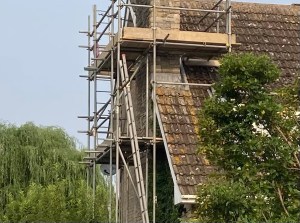
Unlike the scaffolding on a building, this scaffolding may never come down. He may end up with an understanding partner, or he may need a housekeeper, or like me he might rely on AI (Alexa, Siri, and ChatGPT are my team.) These are accommodations for an autistic person in an allistic world.
The same is true in my new job. I have a reputation for being very organised, which always makes me laugh as someone with ADHD. What people don’t realise, but I’ve become much more open in discussing, is that the organisation is essential for me to have any idea of what I’m supposed to be doing on an hourly or daily basis.
I have links from spreadsheet to spreadsheet, I have bookmarks in sub-folders in folders. I have to-do lists and checklists and calendar reminders and even with all these things I still have to go through my notes every day to remember what I should be doing.
It is exhausting.
Like my son at the end of a school day, I have been crawling into bed early and sleeping late.
The analogy of the swan, calm on the surface and furiously paddling underneath, is a flippant image I use often. But imagine the swan is on an apparently slow-moving river with a very fast undertow: you would have no idea how exhausted the swan was just trying to stay in one place. Now imagine someone built a dam or a jetty to break the undertow.
In case it helps, here are my favourite tech/AI scaffolding tips:
Alexa shopping list
Alexa devices in every room
Calendar reminder to check Echo app shopping list
Alexa timers and reminders (particularly cooking pasta!)
Talking work problems through with ChatGPT
Smart watch linked to phone so I hear calls
Airpods to hear messages
Tile to find my phone when watch tells me it’s ringing
Alexa to find my keys to activate my tile
It’s so much easier for my husband, he just has Wife™. 😂
I’ve heard it said that you need to apply for about sixty jobs before you find a new role. Actually, I’ve seen anywhere from 20 to 100, but sixty suits the purpose of this post, since it means I’m halfway there. [Cue a blast of Living on a Prayer. IYKYK.]
So, what have I learnt through applying for thirty jobs?
Firstly, job hunting these days is hard.
I mean, it’s always been hard. And I’ve always been rubbish at it. Before I knew I was neurodivergent, I thought I was just crap. Now I know I was trying to go through a ritual without anyone telling me the rules in a way that I understood.
Thankfully, there are now so many more tools available online, it’s actually been easier for me personally than ever before. Websites like this one, which not only tells you the questions you might be asked in an interview but also tells you what employers are looking for by asking AND suggests possible answers! Game changer. If only I could type my answers during the interview, so they don’t get garbled between brain and mouth!
But the market is hard. I’m looking for remote or nearby hybrid jobs, so I’m competing with a huge number of people. And, because marketing is the first part of a company to be jettisoned in an economic downturn, and often the least understood, some of the roles being advertised are bonkers (see octopus image above). They might as well say, “Please can you replace the whole brand and performance marketing and creative team we accidentally made redundant and then realised we needed, oh, but in a 40 hour week for a fairly average salary.” Er. No.
Joking aside, one of the skills I am honing is the ability to really understand the role from the job description, and then to judge it against my personal abilities. Not just, could I do that, but could I do that without hitting burnout in six months? I personally love variety in a role. I’m happy to become your email campaign/paid ad/SEO/landing page/adobe expert. But not if you expect me to have ten years’ experience in each of those functions, and not when you throw in expecting full analytics and ROI, event management, staff mentoring, and international travel. That’s just not feasible for one person.
Then the actual applications vary considerably.
The majority of my applications are through sites like LinkedIn and Indeed, and are straightforward – add CV, sometimes a cover letter, hit send. Unsurprisingly, those are the ones that get hundreds of applications.
I’ve been asked to do an online assessment, through LinkedIn as part of an application (not for an interview). Thankfully they only asked once, and I’ve been able to use the results for many more applications. Turns out, I’m Expert level on grammar, punctuation and fact checking/error spotting. Thank goodness for that, or I’m in the wrong line of work.
I was asked to prepare a short marketing outline for the application for Rewilding Britain (again, application stage, not interview stage). Being the overdelivering, out of work and bored marketeer that I am, I created a full webpage of assets, including video. It wasn’t looked at, as far as I can tell. But if you fancy a gander at what I can do, have a look.
Rewilding Britain also made a point of asking that AI not be used for CV, Cover Letter, or the marketing outline, which I found interesting. Because I’ve been using ChatGPT a lot.
There are lots of discussions online about the use of AI in job applications. But, as one person pointed out, if you’re a Plumber (say), then crafting cover letters is not your wheelhouse, and ChatGPT is just a tool. Particularly if you’re applying for the recommended 10-15 jobs a week.
I don’t have that excuse. I’m a wordsmith. However, I am also neurodivergent, and cover letters are another one of those areas that don’t come with guidelines. Do you want war and peace? Do you want me to pick up every part of the job description that I can do and give you an example? Isn’t that what an interview is for? So, I drop the job description into ChatGPT and ask it to provide a semi-formal cover letter up to 500 words. You have to say semi-formal or it sounds like a nineteenth century novel. And then – and this is the important bit – you REWRITE it, with your own experience and in your own style.
Similarly, I did use AI for my marketing outline for Rewilding Britain, despite being told not to. Perhaps that’s why I didn’t make the interview, perhaps they could tell. But I don’t have personal experience of promoting an environmental charity, and I didn’t have a week to research it. (I might have spent that time making videos about soil. Oops.) The lovely AI bot gave me brilliant ideas in about 30 seconds, that I was then able to build into a meaningful plan. It’s a tool, people, not a monster.
I have at least managed to get three interviews so far, which is well within the 8% success rate of application to interview, so that’s encouraging.
The interviews I’ve had have all been very different too. We won’t mention the one that triggered the bout of depression, as least said now is hopefully soonest mended. But of the other two, the online one was far preferable to the in-person one. As I said in my last post, it’s much more neurodivergent friendly. And even though I didn’t get the job, I felt I performed better by being more relaxed.
That was also the first interview where I received the interview questions in advance.
This is the positive of the whole process so far, for me. Being able to own being neurodivergent (even without a diagnosis. No one has asked for evidence. And I do have a diagnosis for Anxiety, which also counts as a disability).
Thanks to creating a wonderful echo chamber of neurodivergent-friendly people on LinkedIn, I feel comfortable asking for accommodations now, whether it’s if a job can be hybrid when it hasn’t been advertised as such, or asking for the interview questions in advance. For the latter, I would say that that’s just common sense. I was able to give much more meaningful answers to the competency questions by having an hour to think it through first.
Anyway, I didn’t meant this to be such a long post, and I’m not sure it’s interesting to anyone but me (and my husband, who I am now also applying for jobs for). I think it’s just useful to see how far I have come.
It’s easy to get discouraged, particularly when I had a job I loved that I had to leave and that wouldn’t have me back. But I do believe that everything, even the shitty things, can have a positive outcome.
Hopefully this one will be a meaningful job that I can do in all my ND weirdness. Preferably before the money runs out!
I originally wrote this on a LinkedIn post a couple of weeks ago, but I feel it deserves to be said again, even if I didn’t get the job!
Virtual Interviews for the win!
There are many ways that the pandemic heralded changes that were neurodivergent-friendly: hybrid working, learning about personal space, normalising not wanting to be touched, and, my favourite, the McDonalds app 😂
I have a job interview at lunchtime today. I’m sat in my PJs, eating breakfast and running through my presentation. I hope to shortly receive the interview questions, two hours in advance, as a requested accommodation.
And I’m calm.
Sort of.
There are still things that can go wrong:
– Dodgy internet – Power cut – Barking dogs – Panic attack
But what I don’t have to worry about is:
– What to wear, particularly on my feet (all shoes are awful, I can be barefoot) – Driving (tiring for my ADHD brain) – Traffic (stressful) – Getting to the right place (something I failed to do on my last interview due to a Google Maps error) – Where to park – How to get into the building – Finding a bathroom – External distractions in a new environment – Somewhere to put my notes to help me focus – The technology for sharing my presentation
Well, actually, that might crop up, as it has before, so I’ll email it over beforehand just in case. [As an aside, I did have difficulties sharing it, and was very glad I had emailed it in advance).
But you get the idea.
Teams interviews aren’t perfect. I have auditory processing difficulties, so sometimes it’s easier in person (where I can lip read). I don’t always know when it’s my turn to speak. It’s harder to avoid prolonged eye-contact. I dislike seeing myself on camera. Did I mention noisy dogs? 🐕
But the point is, the choice is there.
Interviews are hard for everyone, but particularly for neurodivergent people. And I for one am happy to be doing this one in my own office.
One of the hardest things for autistic people to get their heads around is injustice.
I noticed it first when my son was at school and he came home angry that his sports team lost a game because others were ‘cheating’. My own outrage matched his, and it took a while to realise that the cheating was in fact what I guess is called gamesmanship.
Gamesmanship is the use of dubious (although not technically illegal) methods to win or gain a serious advantage in a game or sport.
Wikipedia
The problem for autistic people is that there are so many shades of grey in this kind of behaviour, and our brains are more black and white.
In the classroom, my son would end up in trouble for insisting loudly that a classmate adhere to the rules. My son would be seen as the disrupter and get told off. The injustice of such an accusation would be awful, combined then with a feeling that he had somehow broken a rule. It was my first real indication that he might be autistic.
My daughter struggles with the unfairness of teachers breaking a uniform code that is inflicted on children because they need to be ‘ready for the workplace’. So much wrong with that! Autistic people tend not to recognise hierarchy, so one rule for teachers and one for teenagers isn’t fair. And then there’s the illogical idea of an imaginary workplace that isn’t in fact where teachers work. Or her parents. In fact, noone she knows still wears a tie to work and can’t have jewellery.
I used to think my need for fairness was a Libra trait. I am learning that it’s probably a bit more than that.
Discovering I am (probably) autistic – and how glad will I be, like my daughter this week, when I finally get my diagnosis – makes so much sense of why I have struggled to find and keep an office job.
Firstly there’s not understanding hierarchy: turns out thinking ‘if you’re wrong, you’re wrong, whether you’re an admin assistant or a chief exec’ isn’t a popular view point. 😂
Then there’s following the rules. What rules? Who made them up? Where is it written that I wear heels and don’t swear and don’t tie my hair in a messy bun? It doesn’t affect my ability to do my job. Same with laughing too much, complaining about noise, or not wanting to eat lunch with the team.
And fairness or things making sense? That’s just a minefield. Challenging that something shouldn’t be done just because it’s always been done that way is hugely unpopular. But if you do what you always did you get what you always got.
Needing to know WHY is another no-no apparently. But if I understand why a project is urgent, where it fits in, I might be able to deliver it quicker and change a process so it’s not urgent next time.
Right now, all these things are very much in my mind, for reasons I can’t discuss. It’s making me very sad, and I need to move on. But a combination of injustice and something just not making sense has caught my brain in a loop, trying to comprehend the incomprehensible.
It’ll pass.
In the meantime, if you have an autistic person in your life, and I hope you do as we’re pretty goddam awesome, try and appreciate their strengths even if it makes you uncomfortable. They might just fight for you with everything they have to make your world a better, fairer, place
One of the things I’m learning as a neurodivergent is how to follow the flow of energy. When it’s right to rest and when it’s actually better to move, do something, anything, and how to sneak up on my brain if it’s resistant.
I was raised to see rest as idleness, self-care as decadence. It’s taken a really long time to even begin to deprogram myself from that. I also realise, with hindsight, that I pushed those values onto my husband. He used to understand the need to sit and just be, was an expert at it, but I saw it as laziness. Sorry, husband 😔
In my defence, it wasn’t just upbringing. Our whole Western culture celebrates productivity. We are told to “fill the unforgiving minute | With sixty seconds’ worth of distance run”.
From infancy, our worth is defined by our achievements. You spoke! You walked! You can count to ten, you passed your exams. What a clever girl, I’m so proud of you. Haven’t you worked hard.
The message is never that it’s okay to just be. That the world is somehow better with you in it, regardless of whether you win awards or die trying.
When I was working, Monday morning chat filled me with dread. “What did you get up to this weekend?” caused my truthful autistic brain to stumble. Somehow, “I slept and did laundry” wasn’t the answer they were after 😂
But weekends were for rest and recovery, ready for another week of work. Harvesting energy, so I could pour it into my job. Which is why it was fortunate that I loved it (most of the time). I was excited by Mondays, revved and ready to tackle the challenges and test my brain to see what it could do.
Without that, under-employed as I currently am, (I won’t say unemployed, because there is still a house to run, a family to feed and clothe), managing my energy is so much harder.
Firstly, there isn’t much challenge in laundry, so it isn’t all that exciting. Feeding a house of ARFID is challenging, but in a tax-return sort of way that’s pretty fucking miserable, I won’t lie. My newly-freed-from-work husband is doing All. The. Things. Decorating, landscaping, renovating. Wonderful stuff, but it’s not where my energy is currently at.
So I read and apply for jobs and try not to panic.
And I learn about energy.
I’ve learned that my energy flows best in an empty house. Which is a bit of a bugger at the moment. I’m back to hanging out in coffee shops for solitude and cake. My waist is expanding at an alarming rate 😉
I’ve learned that I can sneak up on energy, like a skittish horse, if I pretend to be resting and then suddenly leap up, put running clothes on, and get stuck into a task before my brain’s caught up.
I have remembered the power of a playlist. Metallica blaring through headphones got me through periods of post-procrastination panic-productivity at university, enabling me to write a term’s worth of essays in a sleepless week. I don’t recommend it, but if you must, then diet coke and …And Justice for All are what you need. Just don’t forget the headphones.
I am also learning about creative energy. It’s like trying to catch a Roborovski hamster. Or like the end of Crystal Maze, grabbing the gold tokens flying around. The clever contestants waited and gathered them as they landed rather than snatching at air.
Take this post. It’s weeks overdue, and the third I’ve started in my head. But today I waited until the ideas started to gather, then grabbed at them as they pooled in my mind. I started at 5a.m. The Notes file on my phone is full of 5a.m. thoughts. 😂 I had a slight side-quest, trying to find an image of a Crystal Maze contestant grabbing at tokens. I couldn’t, but am learning to limit these perfection-searches where I can. That way danger lies. (The same reason I can’t have Instagram or TikTok on my phone.)
My brain, when under-utilised, is like the Crystal Dome all the darn time. Ideas flap around me, all shiny, but I can’t get hold of them. Or I grab randomly and get a hodgepodge that I can’t sift through. Since leaving work to look after my daughter I’ve knitted, cross-stitched, crocheted, made a book trailer video, redesigned a book cover, drawn illustrations, updated my website, and come up with a dozen crazy ideas for new projects.
New cover design
But having to job-hunt is depleting my energy, because it’s all the things I hate. It’s trying to believe in myself and sell myself, it’s trying to say what recruiters want to hear, in cover letters and interviews. It’s searching, and reading through the job-speak trying to understand what is actually expected in a role.
And it’s waiting.
Waiting is ADHD Kryptonite. A 4 o’clock appointment will kill a day. Add to that a daughter who is still in recovery and a hyper-productive husband doing ten projects at once, and managing my own energy is getting really hard.
So I read. And rest. And sneak up on my brain, holding a chocolate bar and a coffee to tempt it to submit.
So, it’s been a couple of months since I went back to work and, I’ll be honest, it’s a struggle. I’m definitely in the ‘not waving but drowning’ phase.
Don’t get me wrong, I love the work. It’s frustrating and bitty and annoying, but it feels so good to be using my brain again. I feel like a part of the world; I feel useful.
But, oh my days, am I out of spoons. If ever I wanted to explain spoon theory, now’s the time. So, here goes.
Spoon theory was coined by Christine Miserandino as a way to describe units of mental or physical energy. For Christine, who had lupus, it was physical energy, but I have always heard it in context of the mental energy associated with neurodivergence. And that’s what I’ll describe here. This is purely from my own experience of my neurodivergent family.
When I say that a spoon is a unit of physical or mental energy, I mean it’s what’s required to do those tasks that aren’t done automatically. You probably don’t need a spoon to go for a wee, unless of course you do. It’s hard to define because it’s different for everyone. I see it as any task that needs that extra push. Think of it like a car using fuel – you use more at 20mph than you do idling, and you use a lot more at 80mph. But it varies by car. And some cars have bigger fuel tanks.
Each of my family members has an invisible illness – anxiety, ADHD, ASD, depression. They’re not all diagnosed, but they’re all there, especially for me. My job for the last decade or so has been to dish out spoons to keep the family functioning. When the children were little, it wasn’t so obvious that that was what I was doing. Nurturing, providing for their needs, is natural when they’re five. It isn’t until they’re ten or more and you’re still doing it that you realise there might be something more.
Let’s take a normal school day morning. My son can get up without prompting, he makes his own breakfast. But there it gets tricky. He needs reminding to get dressed on time, he needs a nudge to brush his teeth. He needs help finding the right clothes for whether it’s PE or not, or if I haven’t put the laundry away. He’ll need to be told to pack his homework – several times – and to fill his water bottle. I’ll pack his lunch and make sure his shoes are clean and where he can find them. We’ll find his coat and make sure he has his phone. Now, let’s list that:
Find right clothes
Get dressed
Brush teeth
Pack homework
Fill water bottle
Get lunch
Find shoes
Find coat
Find phone
Track the time
These are all tasks that require a bit of extra mental energy to make sure they happen, especially to make sure they happen in time to leave the house at 8.15am. So, each one of these is a spoon. Ten spoons, and we haven’t even started the day.
Then I make sure my daughter is awake, is mentally able to go to school, has breakfast if she wants it (three spoons), I make sure my husband has eaten breakfast, because he won’t without a nudge, and then his day is harder (spoon). Then I need to make sure I’m fed, dressed, brushed my teeth, fed the dogs, fed the hamster, walked the dogs, (six spoons) maybe put the dishwasher on because none of us managed it the night before. Sign my daughter’s diary, or check school emails, maybe it’s World Book Day or my daughter needs a new notebook or can’t find a glue stick. All spoons.
Before I went back to work, that would be it for the morning, more or less. After the school run (which my husband now does, so that’s a couple of spoons gone for him), I would have until 3pm to get my mind straight. Catch up on tasks that hadn’t been done. Rest. Do something creative. Often sleep. Basically, top up my dopamine levels (ADHD), although I didn’t realise that’s what I was doing.
Then I would do the afternoon school run (also now my husband’s responsibility), which would require working out where my son wanted picking up from. Then home. To another few hours of dishing out spoons. Different meals for each neurodivergent person. Different after school activities. Mental exhaustion to soothe from the three who had been out in the world. More dog feeding and walking, more chores. Asleep by 9pm at the latest.
And now? Now I do most of that still, but between 9am and 5pm I have a job. A complex one, with lots of stakeholders, lots of deadlines and remembering things and keeping track of things. I have three different to-do lists on my desk. And still, I carry a lot around in my head, to make sure I don’t miss anything important. So. Many. Spoons. And because I need extra support to make sure I remember all the steps in a process, I have process-mapped a lot of my tasks. I had a call from the Project team yesterday, saying my process maps were great, and could I add them as a project. It’s easy, here are a couple of forms. Another task, another stakeholder. More spoons.
There’s this view that I’m organised. It makes me laugh. I’ve heard it before, and I used to let people believe it, and then work oh so hard to keep up the pretence. I’m not organised. I have ADHD. My brain is like someone emptied out the scrabble bag and now I’m trying to read it like a book. I have process maps and to-do lists and printed out plans because I’m NOT organised. It’s scaffolding. The same scaffolding that I put around my children so that they can seem ‘fine’ in school (hint: they’re not). I’m lucky that I work somewhere that I can say ‘I have ADHD’ and their response is ‘how can I help?’ Unfortunately, I don’t have an answer to that question.
The scary part? I’m only doing about half of the work I will need to be doing in a few months. If I’m still there in a few months. I am so tired. I’m asleep by 7pm. But it’s not restful sleep, because my brain is still trying to create order out of the chaos. I’m eating non-stop, constantly searching for dopamine because I’m too tired to exercise. And exercise takes spoons to start, even if it replenishes once it’s done.
This is not a whinge. I am so lucky. My husband and children have really stepped up to fill the gaps in what I used to be able to do. But I’m tired of eating takeaway. I’m tired of an even more chaotic house. I’m tired of once more having a constantly full laundry basket and a constantly messy kitchen.
I used to wonder if there was something wrong with me, that I couldn’t work and run a house. I didn’t have the skills, maybe, or I was lazy, or I just needed to try harder, or make my family do more, or hire a cleaner. (We’ve been through three cleaners. Too many spoons.)
It turns out there is something, not wrong, but different about me. And now I must decide what’s more important – having a job, an identity, a chance to use my skills, feeling alive and part of the world, but having my home life a stressful chaotic mess. Or having enough spoons to have a happy home, but not use my brain. It appears I may not be able to do both.
Doesn’t that sound like a book title to grab the attention, if only for the wrong reasons? Maybe for my next book I should come up with a random title and then write the book to fit? Anyway I digress. The title actually refers to the highs and lows of my weekend.
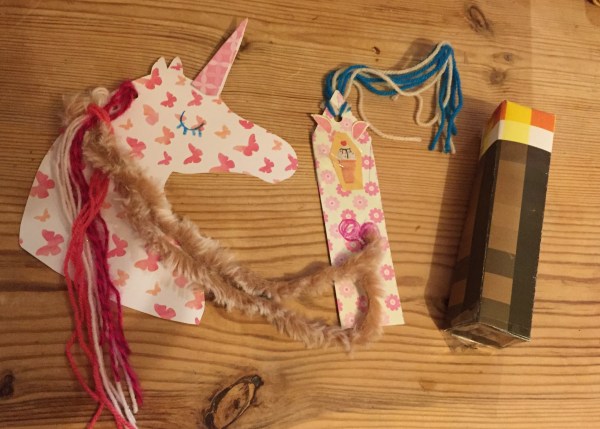
On Saturday I had an ‘author event’ at our local library. Originally it was going to be a book reading and signing, but that got cancelled due to lack of interest (it was on a school night) and swapped for a Saturday morning craft session. Only I forgot to sort crafts. So at 5am Saturday, full of cold, I searched Pinterest for ideas, and produced craft unicorns, Minecraft Torches and bookmarks. I was still cutting out cardboard at 9.30am when I was meant to be leaving for the library! Me, disorganised? Hmmm.
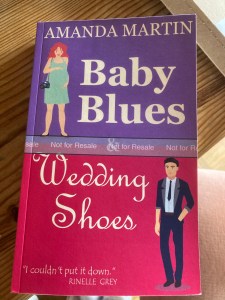
Anyway, it was a bit of a washout. Five or six girls made unicorns, but no one really knew why I was there. (The minecraft torches ended up being used for my son’s Nativity Pringle Pot, so not totally wasted!) Until a young lad came in, carrying a copy of Hope Glimmers. And next to him, his dad, who it turns out I went to school with. But they were there to meet Mandy Martin the author, not Mandy Jarman from school. The dad’s surprise when he figured I was me was awesome. The best part, though, was that Hope Glimmers had been purchased online and they’d brought it to be signed. By me. Like I was a real author or something. And when I said there was a new book based on Minecraft, the lad’s smile made my year.
Nativity & Santa Pringle Pots
I read an article a while ago (written in 2008 and updated here) by a guy called Kevin Kelly, who said that what creative people need to succeed is a 1000 true fans; superfans who will buy anything you produce. I’ve never had a superfan before, generally my books are bought by people I know, or anonymously on Amazon, where without reviews you don’t even know if they liked it. I’m not saying this boy was really a superfan, but it certainly felt like it at 11am on a Saturday morning as I signed books for him.
My happy bubble was short-lived, however, when I received an email from Boots (a High Street Pharmacy Company, for non Brits) with feedback on a job I had applied for as a trainee pharmacy dispenser. Please note, ‘trainee’. As in, to be trained to do the job, surely?
This is my first experience of interview by computer and I’m not impressed. Having clicked ‘apply’ through the job website, they asked for my job (just one) and my education (just one), so I put Invigilating and a Masters in English, as my two most recent. No request for CV or experience or anything. Just an email with a link to a psychometric test.
Now, I hate psychometric tests, especially now I’ve been out of the work game for a while and am fully entrenched in ‘me’ because ‘me’ is a socially-awkward introvert who finds people challenging. But ‘work me’ is outgoing, confident, creative, innovative and all that jazz. So anyway I tried to understand what the questions were getting at, although that’s pretty tough in most psychometric tests as that’s the whole point of them. Except we’re not all black and white, either or, ‘this statement best reflects me’ without context.
I worked in a bar when I was a uni student, and loved it. In fact I wanted to be a bar manager when I graduated, but my first class degree actually proved a sticking point in the interviews I went to because the starting salary was so low. Anyway, six months after I’d been working in the busy train station pub, dealing with difficult customers and working alongside a team of twelve people, they made me do their psychometric test ‘for their files’. I failed. They said they would never have hired me because funnily enough it showed that I am a reserved introvert who doesn’t much like people. Thankfully they had six months’ experience of me being a complex human being who was able to act a role at work, convincingly too, and they trusted me enough to have me run as assistant manager for a while.
Given all that, I shouldn’t have been surprised when I failed the test from Boots. But I was. Surprised and gutted (the job was perfect for me). And angry. Because this was their response:
We’re sorry to have to let you know that you haven’t been successful on this occasion due to the level you attained for the questionnaire assessment.
You will need to allow a 12 month period before applying for a similar role as this will give you adequate time to develop your skills and experience.
Adequate time to develop my skills and experience? How do they know anything about my skills and experience? They didn’t even ask for my CV. See that I’ve worked front of house in Hotels, Restaurants, Youth Hostel, Bars and a Clothing Store. See that I’ve worked as a Marketing Manager with direct reports, worked in Communications and handled the grumpy ‘Letters to Director’ that were received. I could go on. And I did, in my head, at 3am, full of cold and disappointment and a little bit of despair. This was a trainee role, where presumably a person would be given the relevant skills and I didn’t even get a look in.
Sigh. Breathe.
It doesn’t matter. A company that interviews by bot is not one I want to work for. But it’s battered an already bruised confidence.
Thank goodness for superfans, that’s all I can say.
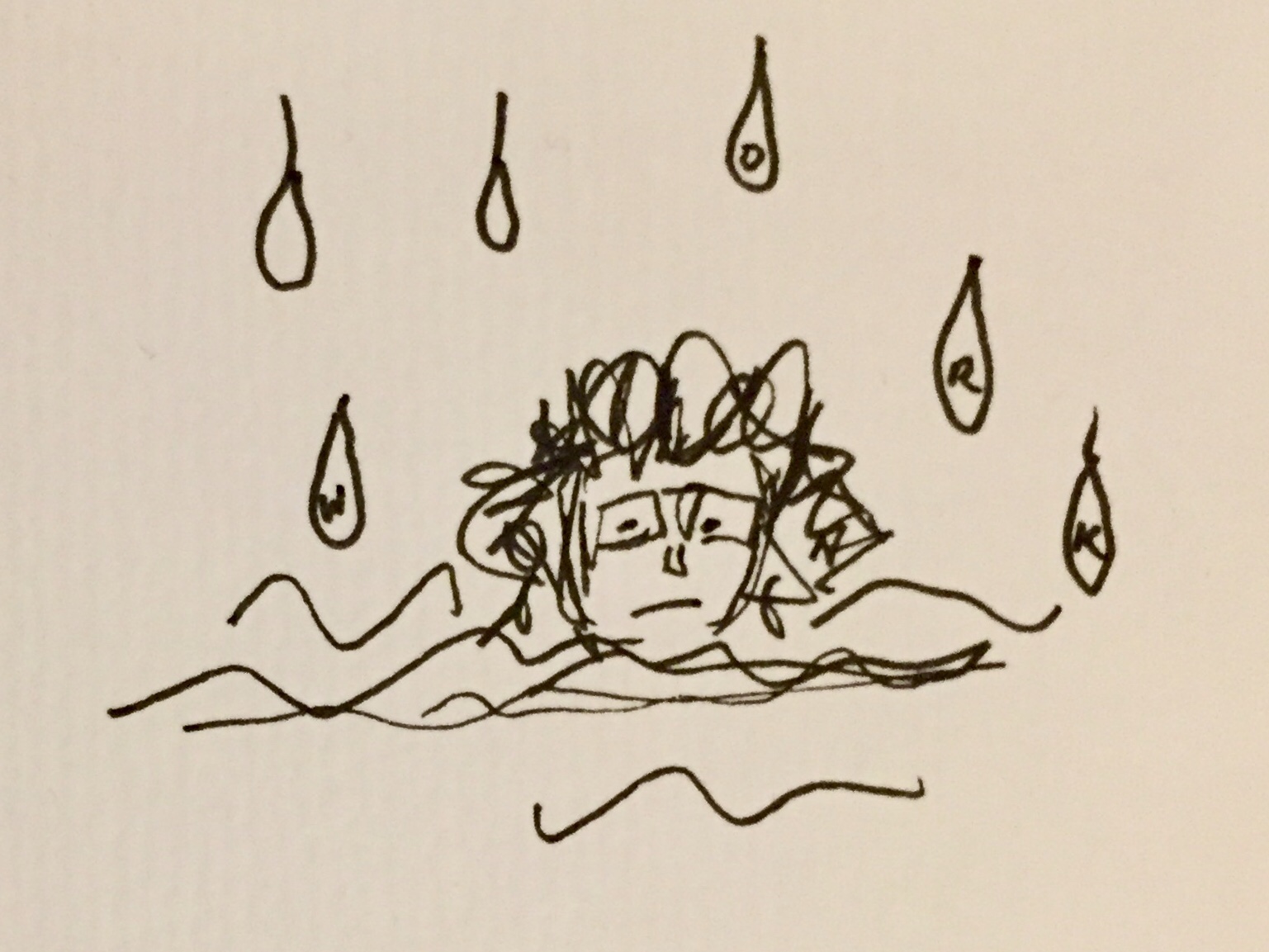
It turns out teaching is a bit like parenting, once you make your announcement, people can’t wait to tell you how dreadful it will be.
Only whereas, as a not-yet-parent, I could dismiss all the scaremongering and doomsaying, now I know better. Parenting has taken me to edges I didn’t know were there and left me drained, frightened and unsure of everything.
Not a great position from which to make a great leap forward.
Yesterday I had my compulsory ‘Safeguarding Children’ training that I need as an invigilator. Only this time I listened with increasing horror as teachers swapped stories about neglect and abuse. One or two ‘examples’ of neglect – such as letting a child watch videos late at night – made me question my own parenting.
And then the lovely teacher delivering the training explained that, as adults working with children, we can be held personally liable for a failure to report or disclose a concern. Suddenly I felt like I was standing on a sea wall facing a tsunami.
But I know my anxious brain magnifies worries and turns everything into the monster under the bed. So I went to talk to the charismatic teacher, who clearly loved his job, despite everything he’d been sharing. Tell me about teaching, I pleaded, everything I’ve read and heard makes it sound terrifying. And he said it was rewarding, and gruelling and disheartening and very hard work.
And then he said, ‘As long as you can engage with the students, you’re fine.’
I’m screwed.
I’m the least-engaging person I know. People confuse me, and I spend most of my time trying to second-guess what they’re thinking and feeling. Which I don’t even get right with my family most of the time, so goodness knows how I’ll manage with hormonal teenagers.
My husband’s very pragmatic – take it one day at a time, it’ll be fine. But so far I dipped my toe in the idea of teaching and got swept out to sea. And you have to ask, if they’re so desperate to drag you in with mentors and bursaries and personal plans, what are they not telling you?
Working as a train driver is starting to sound appealing.





 Doesn’t that sound like a book title to grab the attention, if only for the wrong reasons? Maybe for my next book I should come up with a random title and then write the book to fit? Anyway I digress. The title actually refers to the highs and lows of my weekend.
 It turns out teaching is a bit like parenting, once you make your announcement, people can’t wait to tell you how dreadful it will be.
 But I know my anxious brain magnifies worries and turns everything into the monster under the bed. So I went to talk to the charismatic teacher, who clearly loved his job, despite everything he’d been sharing. Tell me about teaching, I pleaded, everything I’ve read and heard makes it sound terrifying. And he said it was rewarding, and gruelling and disheartening and very hard work.
 writermummy