The Hidden Cost of Parenting

Seven gifts for the next three weeks!

Seven gifts for the next three weeks!

Of all the things I thought would cost time and money as a parent, it would never have occurred to me to factor in birthdays. Not my children’s birthdays – of course they are costly things – but the birthdays of other children.

It wasn’t a problem until this year. My daughter had maybe half a dozen close friends at nursery, my son has about the same. I like going to children’s parties – it gives us something to do at weekends and someone else entertains my child for two hours while I drink tea and gossip. Lovely.

But since my daughter started in Reception it’s been relentless. I should have realised, when we invited forty-odd kids to her party, that it would be reciprocated. And it has been. We have two/three parties every weekend for the next three weeks. Most of which only my daughter is invited to, so we have to divide and conquer on parenting, rather than taking it in turns to have a break.

And the gifts, and cards, and wrapping paper. Never mind the cost (and I set a miserly budget!), having to sit with my five year old and try to tolerate her attempts at wrapping is an exercise in patience I don’t have. Ditto writing cards and labels. “I can do it, Mummy!” yelled at volume is a common occurrence. I like wrapping gifts and pride myself on my neatness. And my ability not to tangle yards of selotape or cover it in dog hair and fluff. Some parenting tasks are above the call of duty. At least I’ve stopped letting her choose each gift. Now I buy them in bulk as part of the weekly shop.

Rumour has it it isn’t so bad in year one, when she’ll only mix with her class rather than the sixty kids across the whole year group (they have a shared classroom much of the day). I love that she’s popular, I do. But I could live without five parties a month for the next decade!

The Ocean at The End of The Lane and Childhood

Beautiful cover

Beautiful cover

This weekend I read one of the pot luck books I picked up from the library – The Ocean At the End of The Lane by Neil Gaiman. I like choosing books I don’t know, just because I recognise the title or author or just because I like the front cover (and the library is much cheaper than all the books I’ve bought in book shops using the same method and have then never read!)

This ticked the last two points – I have heard of Neil Gaiman (I follow him on Twitter even) and I was intrigued by the cover. I first came across Neil Gaiman when a friend bought me one of his Sandman graphic novels as a teenager. Then I loved (although was creeped out by) his Doctor Who episode The Doctor’s Wife.

The Ocean at the End of The Lane is the first novel of his I have read. It creeped me out, too. Just one bit in the middle which I made the mistake of starting to read at bedtime. I had to switch to a Georgette Heyer and skip three pages in the morning.

It’s an interesting book, simply but compellingly written. It recounts an event from the childhood of the forty-something protagonist, which he recalls after revisiting his childhood house and a farm at the end of the lane. The telling of childhood was fascinating; viewing the world through the eyes of a seven-year-old. It also made me think a great deal about the difference between being seven thirty-odd years ago and being seven now. I kept thinking Oh he wouldn’t have been left to roam free like that, surely? And then I realise that I was, as far as I can remember. Certainly some time before I was eight (when I moved north – my childhood is bisected by that move) I roamed the fields, climbed trees, visited friends’ houses on our estate, all without taking much notice of where my parents were.

I like this cover too

I like this cover too

My memories of childhood are almost non-existant, apart from one or two key events. The book recreates that fluidity of childhood and memory with great authenticity. It also made me wonder what my children will remember. It’s so different now: their lives are recorded through photographs, video, school reports with images, social media, parents’ blogs. So many aides to memory. There are probably fewer than fifty photos of me between the ages of 0 and 16 in total. I can take that many of my chidren in a day.

Is it a good thing? Maybe we should be able to rewrite our childhoods, change our recollections at will. Like the protagonist in the novel, maybe our childhood memories are not entirely accurate, and maybe that’s necessary. Maybe we don’t want to be reminded of every tiny detail. Our lives are really only stories we write in our mind, with heroes and villains. The truth, as revealed by endless photographs, is bound to feel much more ordinary.

Mind you, all our photos are stored digitally. There’s a strong chance they’ll degrade over time and the children will only be able to retrieve fifty images in thirty-odd years time. And perhaps that will be just as well.

Too Many Words!

Why can't they all be nice and quiet like the dog..?

Why can’t they all be nice and quiet like the dog..?

After my day of zen on Friday I had a bit of a relapse on Saturday, culminating in me loudly biting out the words “just shut up” to my son in the middle of a busy supermarket. I so love making other parents feel better about themselves.

The problem is the talking. The endless, incessant, dual voiced, competing in stereo, “Mummy, mummy, mummy” talking. Alone or together, my kids are driving me nuts.

The irony, of course, is that I am a chatterbox. A talker rather than a listener. I have spent my whole life being teased for having too much to say.

My mum thinks it’s hilarious that the kids are driving me crazy. Of course, as the office-based parent when I was growing up, with my father the working-from-home one who presumably looked after us (I don’t remember) she didn’t have as much first-hand experience as she might think.

For six hours a day on nursery days and twelve on days when they’re at home, I’m expected to be able to hold two or three concurrent conversations, and tantrums ensue if anyone isn’t answered directly. And I do try. Because it upset me so much to be ignored as a child or to be ridiculed for having too many words, I try so hard to answer every query with patience.

But oh my the repetition.

Chatterbox Children

Chatterbox Children

In the twenty minutes preceding my loss of control in Tesco, my son had said the same sentence a dozen times. Like a Chinese water torture it broke through even medicated calm.

I suppose the difference is that, instead of blowing up at them, ranting and bellowing, then sobbing and apologising, I’ve had no release, so I’ve been snapping at them all afternoon. Frustratingly to the same end result that my daughter sobbed through dinner because of something mummy said: albeit in a snappy voice rather than a sergeant major shout.

It seems that maybe the bellowing rage works as a release valve and without it I’m just a mean mummy instead of a monster. I read a beautiful post on Amy Saab’s 2me4art blog today saying she is trying to listen to her ten year old son because she knows it won’t be long before he stops wanting to talk. I found myself looking forward to the surly uncommunicative teenage years today.

I’ve heard people say ‘listen properly to the small things or they won’t ever tell you the big things’, but how can you listen and listen and listen when you’re a talker? A ‘babbling brook’ as Gary Chapman describes it in The Five Love Languages. And as my children are talkers rather than listeners they’re not even happy using up their words on each other: I’ve taught them not to talk over people so all I hear is “he talked over me!” “but she wasn’t listening to me” followed by a tantrum, tears or a thump, because no one hates being ignored more than a three-year-old second child.

I don’t know what the answer is. The more I sit in silence the harder it is to be abused by the torrent of noise. And, is it me, but do they use fewer words at school than nursery? I suppose it’s all that listening they have to do. Certainly my daughter seems to need more of my attention than she did before she started school. I might have to go back to plugging them into Cbeebies before we all go mad.

Medicate Me: Day Fifteen

Sleeping Family

Sleeping Family

Day fifteen on my antidepressants and I have found a love for life. I laugh more. I am more gentle on myself. I take time to read my book with a cup of tea, or cook dinner while watching Homes Under the Hammer on the iPad, instead of trying to blog, fold laundry and iron at the same time, doing all four things badly.

I leave early for the school run and read my book in the car, arriving at the school gate with a smile on my face. I walk the dog mid-morning rather than running around ten minutes before I need to collect the children. I sleep when I need to, preferably in a sunbeam in the playroom.

I haven’t bellowed at the children or sworn at them in a fortnight.

I’m still not sleeping. I still feel anxious about lots of things (schools, food, teeth!) My writing and particularly the blog have taken a back seat. I miss it. I miss logging on in the morning and seeing blog post likes and new comments. I worry I’ll lose everything I fought so hard to build up last year. But not having to come up with a new topic to discuss everyday is giving me time to breathe. Not having to make time to take pictures to go with my posts is increasing my reading time.

I'm awake!

I’m awake!

It isn’t all a result of the medication. Reading The Five Love Languages brought smiles and understanding back to my marriage and increased my ability to see when the children need my time or a cuddle. The longer days, the sunshine and warmer weather are all mood enhancers, especially for me.

But most of all I have given myself permission to heal. I’ve accepted I don’t have to do everything all the time. I don’t have to fill every minute with sixty seconds run. I accept I am the luckiest woman in the world to be able to cook dinner calmly at 11am while watching TV, or to be able to read my book.

But also I acknowledge that I get up at 5am to wipe bums, crawl out of warm covers at 2am to replace blankets that have fallen off chilly children, and fold laundry at midnight when hubbie is already asleep.

Mine is the responsibility to cook, clean, empty the bins, iron and shop. Mine is the juggling routine of remembering when to collect the children and when to make them packed lunches or sign forms.

I realise I’ve been competing mentally against working mums, needing to prove I work just as hard as they do. Why? What does it matter if I don’t? We made choices for me to be at home. We go without meals out, babysitters, expensive holidays. Surely a happy mummy is an important part of that?

It reminds me of the poem I read at my Mum’s wedding; the Desiderata: “Go placidly amid the noise and haste, and remember what peace there may be in silence … Be gentle with yourself. You are a child of the universe, no less than the trees and the stars; you have a right to be here.”

Words to live by.

If It Aint Broke…

Happy at school

Happy at school

We had my daughter’s parents evening this week, just to add some extra fuel to the fire of my schools dilemma. Oh my goodness.

We knew she was doing well, that she has considerably more merits than the other children, and that she enjoys reading and numbers. What we didn’t realise is how well she’s doing in every area, including social. I took the fact that she doesn’t have a close friend, and is clingy at drop off, to mean she hung out with the teacher all day. Apparently she did in the beginning but now she’s off playing with this group and that.

It’s hard not to come to the conclusion if it aint broke don’t fix it. We have the same issue on a wider scale (with a similar division of opinion between me and hubbie) with regards to the local schools generally. Our local council currently operate a 3-tier system, with kids going to primary school ages 4-8 years, middle school aged 9-12 and upper school from 13 to 18 years old.

I went through the same system, albeit a different primary and middle school to the ones my daughter will attend, and I like the system. I like that those tricky pre-teen years are experienced separated from the young children and the almost-adults. But there is no doubt some of my school concerns involve not wanting to send my daughter to the upper school I went to. There is also some difficulty, if we do decide to go private, at moving her at 11 when she’ll be half way through a school rather than at a natural transition point.

When news of the consultation came in, therefore, I was supportive. Then I started reading the anti-change literature and felt the arguments had merit. Hubbie went to the consultation meeting and he’s all for it. He thinks the academy status and cash injection will be brilliant, and moving to a bigger, newer building will only be beneficial for our primary-aged children. On the other hand, I see more congestion at two already-busy sites and terrible upheaval, particularly for our son who will start school in the year of the change.

Then today I watched a promotional video for the middle school and was blown away. The eloquence of the head of site and the headmistress (pilfered from our primary school to sort out a dodgy Ofsted rating), the passion and humour of the children, the lovely middle school building (which I’ve never been inside) were all much better than I could have anticipated for a school currently struggling to achieve a ‘good’ rating. It just shows the power of video (although in general I never watch them because I prefer to read stuff on the internet).

So now we have a division in the family: one for, one against a move to private, one for, one against a shift to a two-tier system. It’s all pretty good humoured, because most of it is out of our hands and the rest is irrelevant while our daughter continues to thrive in her current school. What does it matter if she doesn’t have access to a wider range of subjects, a posh new building or gourmet lunchtime food? She’s happy, she’s learning, she’s doing well. That’s good enough for now. And all the rest? Time will tell who is right. 🙂

Food And Filling Prevention: My Latest Sources of Mummy Guilt

Mummy-guilt trip to Waitrose!

Mummy-guilt trip to Waitrose!

Today I have been obsessing about food and tooth decay. I found out recently that my three-year-old son has cavities. I was horrified. He loves his sweets and juice and though we minimise his intake of both, he is also a fussy eater and so has many other bad-teeth foods like dried fruit and toast with jam.

Probably as a result of latent anxiety, which seems to be the latest phase of medication side effects (or just my natural state), when I saw the hole in my son’s tooth this morning it tipped me over the edge. Even though I later allowed him to eat a muffin (and don’t get me started on the guilt I felt when I saw the 11 lines of ingredients, most of which were unpronounceable) and some crisps.

So while he slept this afternoon I spent an hour on Google. It didn’t improve my anxiety; quite the opposite. Because it turns out that grain-based foods are bad for teeth too. And my fussy child only eats breakfast cereal, sandwiches, toast and pasta. All wheat. (Also all full of salt – and a news report I heard this morning bemoaned how much salt kids eat – is there no end to my parenting fails?).

My sister has started following a Paleo diet (a diet that seeks to recreate the foods our ancestors would have eaten – meat and veg – while eschewing grains, potatoes, dairy, refined sugar and processed foods). She’s the foodie in the family. I hate cooking, I hate thinking about food and I’m rubbish at anything that requires hardship and excessive thinking. A diet without grains falls into all those camps, especially when pancakes and pasta are key elements of happy parenting for me. I have got lazy recently, feeding particularly my son the things I know he’ll eat, like spaghetti bolognaise and cheese sandwiches. I thought as long as he had a few fruit pouches, plenty of milk and some rice cakes, he was getting an okay diet (he gets great food at nursery and eats better for strangers).

But while I figured he would outgrow his fussiness, I hadn’t factored in his teeth issues. And now all my laissez-faire parenting, my not insisting on fresh fruit and vegetables and fish in the hope that – like his sister – he’d come to all the things in his own time, seems to have backfired. Because apparently nutrition can affect teeth. Obviously I knew that calcium was important, but both my kids drink buckets of milk. I didn’t really think about all the other vitamins, like A and D and the Omega fats. My daughter doesn’t like cow’s milk so she has powder milk – fortified with vitamins – as well as happily eating fish and meat. Is it coincidence that her teeth are fine?

Anyway, I won’t try and unravel all the sources of information I ploughed through today. I came away with one relatively-easy solution: cod liver oil, with one concern – vitamin A overdose. I didn’t come to a happy resolution, but I did decide that cod liver oil might be good for all of us (particularly hubbie’s bad back and my dodgy knees). I also decided that if I can’t banish grains from our diet, I might be able to widen them away from just wheat. A bit more maize and rice. Cornflakes (also nicely lower in sugar than most of our current breakfast cereals), rice cakes, some minestrone soup. Baby steps. And eggs, eggs are meant to be good. I used to cook lots of scrambled egg, until my son refused to eat it. He might just have to learn to eat what he’s given or lump it!

Conscientious parenting: so full of pitfalls it should come with a health warning.

How Much Should You Entertain Your Children?

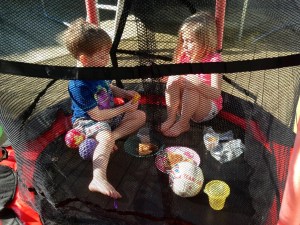
Picnic in the sun

Picnic in the sun

It’s the weekend. The sun is shining and it’s warm outside for the first time this year. The children are in shorts. Hubbie and I are not at fighting strength and the desire to spring clean house and garden are being decimated by an overwhelming need to curl up and read a book (me) or get back to stripping the engine in the garage (hubbie).

Saturday saw a whirlwind of sorting from hubbie, in response to a plea from me that the lounge had disappeared under weeks of accumulated detrius. I do cleaning, he does sorting, that’s our skill set and division of labour. I was still feeling sick and disorientated from the tablets and the kids were slightly flummoxed by having a whole weekend without children’s parties to go to.

Grandpa came round to put the world to rights and help tinker with the engine. The children were told to shush, go play and mostly they did. But promises were made that today would involve more games and attention. Then Grandad called late to say he’d pop in for coffee in the morning. So Sunday started with a frenzy of cleaning (as he comes less often I make more effort to maintain the illusion that his son married a clean and tidy person. My stepdad knows this is a lie – my mum won’t even come round anymore because the clutter in our house drives her bonkers.)

By 10am this morning (his anticipated arrival time) we’d cleaned and hoovered and found the house under the filth and clutter. The children assisted by cleaning dust with wet wipes. But still, they reminded us continuously about the request for attention and games. Grandad spent half his time looking at the stripped engine and the rest imparting typos to me that he found in Two-Hundred Steps Home. When he left at 12 o’clock the children had been left to bounce on the trampoline and play in the playhouse. They were quite happy, but still asking for games.

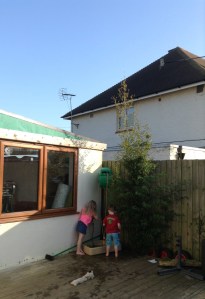
Playing with the hose

Playing with the hose

Hubbie finally managed a game of chess with our daughter while I baked cookies with our son. I then played dominos with them both for twenty minutes. But that was the extent of our attention, as I went off to iron school clothes (and ended up writing this post!) and hubbie mowed the lawn.

They’ve been happily (mostly) playing with the hose and trampoline for the last hour (hurrah for early spring sunshine!), but I still feel a bit concerned.

After all my reading on The Five Love Languages, I suspect that Quality Time is important to both of them. But they do also need to learn to play by themselves. Weekends can’t always be children’s parties and trips to the farm. I at least get time during the week to myself but hubbie needs downtime at the weekend. I used to take them to lots of places when I had them both at home, because they’re easier to manage at the zoo or the park than in the house, but I worry that they had so much fun and mummy time it is why they both cry when being left at school and nursery.

They’re not neglected children, but parental attention can be pretty thin at times. They have each other and are expected to find solace in that. And mostly they used to do that. But more and more, since my daughter started school, they’ve been demanding adult attention at home. Assuming I had the patience to offer it, is it still wise? I don’t remember our parents doing much in the way of entertaining us as kids. We were taught to ride bikes and taken to gym classes, but we also played with our dolls and books and colouring. We sat in the car eating crisps while they went to the pub to play darts, or while they did the supermarket shop.

Parenting these days is all about quality time and enjoying every moment, but what if we’re raising kids that don’t know how to be and play by themselves? What if school becomes harder and harder because being with mummy and daddy is such fun? But what if they need my attention to thrive? It’s a pickle. I’m beginning to understand why people take their kids to ballet and football at the weekend. Wear them out and pay someone else to entertain them. We’re not quite there yet, we enjoy our relaxed weekends too much, but it might happen soon.

In the mean time hubbie is explaining rugby to them both while I cook tea. Somehow it’s only 4pm. Is it bed time yet?

The Perfect School?

Sudbury Valley School

Sudbury Valley School

Almost as soon as my nephew was born, my sister began to speak about sending him to a particular school in America. A free school, a democratic school – run by the children for the children. A place where a child could ride their bike or play video games all day, everyday, if they chose.

I scoffed. My parents rolled their eyes. I’m an academic at heart, with straights As and a first class degree and a Masters (we won’t mention the B in A Level General Studies – after all it wasn’t a ‘real’ qualification – it was only about life and that’s not important to a student who wants to succeed.)

Over the years, my brave, courageous, determined sister never let go of her American dream. Her husband’s sister’s children went to the school and her desire grew. I never got it. Three years ago, after untold hours of effort, my sister and her family emigrated to America to live near my brother-in-law’s family, with a view to my nephew and now niece going to the school.

The school run for my sister

The school run for my sister

I still didn’t get it. School is about learning and classes and exams and school uniform and all that, and my children were going to love it. There were going to be reading and counting to a hundred by the time they were five, they were going to be top of the class. After all, I was, and that made me happy, didn’t it?

My daughter started school six months ago, and my confidence began to waver. School seemed so regimented, especially for these tiny four-year-olds looking so serious and adorable in their smart uniform. The school run was chaotic and emotional and full of stressed parents snapping and snarling (particularly me).

To begin with, my daughter loved it. As suspected, she thrived on learning and was reading and counting to a hundred by her fifth birthday. She loves the community of school, idolises her teacher, and adores singing, reading and PE. But, here’s the thing: after spending a whole year desperate to go to school, my bright, academic, sponge-like learning child doesn’t want to go anymore.

“Mummy why do we only do PE once a week, I love PE.”

“Mummy, I love singing, is it singing assembly today? Is it?”

“Mummy, we didn’t get to do reading today.”
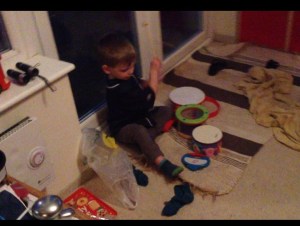
Drumming with his sister (click for video)

Drumming with his sister (click for video)

Then, yesterday, I watched this video on the Sudbury Valley school my sister has set her heart on. And I cried. Oh my. I want that for my children. I want them to be able to play piano for three hours straight if they choose. I want the calm, majestic, green surroundings, the rocks and the lakes and the books and the teachers there to facilitate enthusiastic learning. I want my children, my artistic children who often spend hours playing in their band, to have that.

Who cares if they meet some government-decided tick box of success. I want them to know what makes them passionate by the time they’re fifteen, not fifty.

Already, in six months, I’ve seen my daughter lose her edge. Become less able to find things to do without direction, become more concerned about breaking rules than having fun. She gets some of that from me, but where did I get it from?

I read a post yesterday written by the talented and successful writer, Kim Bongiorno, who wondered if the fact that she didn’t finish college would affect her own children’s desire and ability to go to college. She wondered whether she was a good enough role model for them. This was my reply (before watching the Sudbury Valley video!)

“I think you are being a better role model by not having finished your college degree. I don’t think university is for everyone. I went to university because I didn’t know what I wanted to do with my life. For people with vocations, like doctors or teachers, of course university is essential. However, if you’re not academic then it’s a way to run up huge debt and be no nearer to a job at the end. Certainly that’s true in the UK.

Fifteen years ago I graduated with a first class degree and it marginally improved my chances of getting a good job. Which I did. But I hated it and had a breakdown after three years. The next job was no better except I lasted five years before realising I don’t handle office stress well and I need to be creative.

And I AM academic, I loved studying. What about the people who don’t learn through lectures and essays? My sister struggled for four years to get a 2:2 in a language she hated, and graduated with massive debt, great pool playing skills and a love of Jack Daniels. Since then she’s started from scratch, building up her own businesses and finding what she loves and is good at.

In fifteen years time, when my daughter would graduate, I suspect a degree won’t be enough to compete. She’ll need a Masters, maybe a PhD. Years more of study and debt, for what? She wants to be a writer like her mummy, my son wants to be a racing driver (he’s three). I truly hope I’ll be strong enough to encourage them in those desires because happy is as important as well paid.

There is a great lecture I watched http://new.ted.com/talks/ken_robinson_says_schools_kill_creativity all about academic inflation and how university is really only good if you want to be a professor. I have long debates and worries about education and making sure it’s right for my children and this lecture consolidated some of them.

If your children want to go to college, the fact that circumstances outside your control prevented you completing your course shouldn’t stop them. And if they don’t want to go, you’ll be the best person to show them that – with hard work and determination – they can be a success without it.”
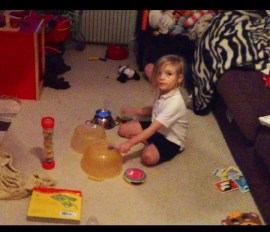
Daughter drumming - stuff she can't do at school

Daughter drumming – stuff she can’t do at school

This all sounds like I’m upping sticks and moving my family to Boston, doesn’t it? Oh I wish. But I don’t want to live in America, not even for an amazing school. For all my angst and depression, I’ve travelled the world and found myself home. But it does mean I can now say,

“Sister, you are the bravest, smartest, strongest, kick-ass person I know, and well done. Sorry I didn’t always understand.”

And I can keep looking for a better school for my children, and give them space at home to be children. To be themselves and to be happy with that. It’s taken me nearly four decades to achieve it, and I’m only partly there. In the meantime, I hope more schools look to the Sudbury Valley model and at least take some parts of it away. Watch the video and tell me you aren’t just a teeny bit impressed.


What’s Your Love Language?

My daughter loves quality time

My daughter loves quality time

I had a revelation at 6am this morning – when I have most of my epiphanies – to do with the book I’m reading: The Five Love Languages. As I mentioned before, the Five Love Languages – as defined by Gary Chapman – are Words of Affirmation, Quality Time, Receiving Gifts, Acts of Service and Physical Touch.

Chapman argues that, for a relationship to thrive, we must first identify and then learn to speak our partner’s love language. I’ve always assumed my language is Acts of Service. I do the laundry out of love, I cook and clean and make coffee out of love. It has frustrated me beyond measure that my husband doesn’t understand. Not just that he doesn’t do those things himself, but that he doesn’t recognise them as acts of love from me.

Hubbie’s love language is Physical Touch. Not (just) in the obvious male way – Chapman distinguishes between sexual desire and touch as the primary love language. If you have sexual desire, but can take or leave the hugs, hand-holding and incidental moments of day-to-day physical contact, then chances are you have a different primary language.

My son is either touch or quality time

My son is either touch or quality time

Thinking it through this morning, using the techniques Chapman suggests, I suddenly realised that the Acts of Service may well be learned behaviour from my parents. Chapman recommends thinking back to the time when you and your partner were first dating, to understand the thing about your partner that made you think ‘he’s the one’. Hubbie and I lived apart for the whole of the two years between meeting and getting married. Picking up dirty underpants and cooking rarely figured in our equation. Oh yes, I liked that he cooked, that was a bonus. Who doesn’t love a domesticated man?

But the thing that first snared me, on day one as we chatted online before even meeting, was that he listened. My favourite times in our courtship were the long phone conversations, lying in the dark with just the two of us speaking. No interruptions, no distractions, just voices, sharing, listening. (Well, I assumed he was listening. I did have an ex who confessed years after we broke up that he used to mute the phone and watch TV while I rambled, but at least – even at the tender age of 16 – he realised my need to speak and indulged it.)

All my life I’ve felt that no one really listened to me. As discussed that’s not uncommon. But as I thought it through this morning, I realised that I blossom when I am listened to. I have a good friend who is a listener and I come away from our coffee catch-ups fizzing and smiling and alive (and feeling guilty for being what Chapman calls a ‘Babbling Brook’). Growing up, and even now at least once a month, my family tease me remorselessly for being a chatterbox. I hated it; still do. The endless words were driven inwards, to diaries and inner thoughts (not helping the depression) and now to my blog and my novels. And always I feel guilty for speaking, for hogging the attention, for asking to be heard.

Chapman lists a dialect of Quality Time as ‘Quality Conversation’ which includes quality listening. I was so quick to accuse myself of being a rubbish listener that I missed the point. Being listened to is my primary love language.

Joanne Harris

Joanne Harris

I went to an author lecture by Joanne Harris last night and came home bubbling with excitement and a need to discuss it. Hubbie paused his TV program but I still felt I was interrupting. I realise now that an act of love – to me – would have been for him to turn off the TV and give me his full attention.

And again, earlier in the evening, I was getting angry and frustrated with my son because he kept interrupting me, endlessly, as only a three-year-old can. And it dawned on me that the yelling I often resort to, that has become increasingly prevalent in recent years, possibly stems from an insatiable need to be heard.

I know my daughter’s language is quality time and I suspect my son’s is too, (although – like his Dad – physical touch is also super important.) Certainly both children talk as much as me and get just as frustrated if they aren’t attended to. That’s tough on hubbie – being in a house with three chatterboxes all vying for airtime. No wonder he switches off and stops listening; it’s probably a self-defence mechanism. However, if we can become a family that hugs and hears, that loves and listens attentively, we might just cut back on the shouting and increase the joy. It’s worth a go.

I told the doctor yesterday, when talking about my depression, that I didn’t need any more therapy; that words didn’t help and the last psychotherapist I saw made it worse. Turns out I just needed to hear (read) the right words. I can’t recommend the book enough and I will always be grateful to the lovely lady who leant it to me.

Depression is an Illness Not a State of Mind

Sometimes sleep isn't enough

Sometimes sleep isn’t enough

I finally had my doctor’s appointment today to talk about getting some chemical support to help me climb out of the pit of despair I have tumbled into over the last two or three years. I nearly didn’t go. The sun is shining, I had a day off this week (to be ill, but a day off is a day off), the school run went well, I felt in control. I felt great.

I’m not depressed, I decided. Why do I need to go to the doctor, I’m just wasting their time. Then I checked my blog. My low periods have been coming every two to four weeks since I last went to see a GP at the beginning of September last year (when the woman told me to get more sleep ‘for the sake of my family’ grrr) and they’re always followed by a period of revelation when I decide I’m better and as long as I read a certain book, implement a change, recite a mantra every day, I’ll be fine. Hmmm.

So I went.

And as the lovely lady (an understanding GP I saw two years ago, not the one from September) asked me about my life, my routine, why I found the school run so stressful, why I couldn’t just re-organise things, get some help, put my kids in after school club, ignore the dishes, I thought here we go again. And as she picked through all my weaknesses and stress points the carefully constructed bubble I’d put around myself burst and the blackness flowed back in.

I sobbed.

I felt so inadequate giving her all the answers I’ve given myself, as I’ve called myself a failure: I shouldn’t need help; my husband does what he can but he works hard too; my mother has earned her stripes and deserves her retirement; I don’t want a cleaner they create mores stress; I gave up work to do the school run, not to pay someone else to do it.

I cried because nothing was going to change. I was still a failure, and there was no help coming. I would still get angry and yell at the kids, I would still neglect my husband and ignore the dog. I would still feel that I prioritise my writing over being a good parent. My mess was all my fault. My chest tightened, the tears fell and the darkness closed around me.

Flowers from my daughter

Flowers from my daughter

Then the GP said, “I agree, you do need medication,” and everything changed. A light shone bright at the end of the tunnel. It isn’t just me. I’m not a failure just because I can’t manage to look after two small children, even with them in childcare or school half the week. I might actually be ill, not crap. And then she talked about different medication options, including the one she prescribed two years ago (I should have taken it then! Ah hindsight, you bitch) and I felt she might actually be able to help.

I was talking last night about the first GP that diagnosed me with depression, fourteen years ago. The man – and I don’t even remember his name – saved my life. He might not have realised it, I certainly didn’t, but that’s what he did. He didn’t suggest I just needed to get a different job or organise my time better or get more sleep. He sat and drew a diagram of the brain on a scrap of paper, he explained about chemical imbalance and the importance of serotonin. He treated me as ill rather than inadequate, poorly not pathetic. He gave me half an hour of his time and my life back.

I accept that depression is hard to diagnose, and that the world is over medicated. I accept that therapy is brilliant and necessary for some people, just as some diabetes can be managed through diet rather than drugs. But Doctors who suggest a few nights sleeping at your mum’s house might fix everything could be doing untold harm.

So I’m glad I went today, I’m grateful for the advice on the blog two weeks ago, encouraging me to go. I might get to the end of six months and nothing will have changed. I’ll still be overwhelmed, angry, a horrible parent teaching my children that shouting is the only form of conflict resolution. I hope not.

As with everything, I’ll keep you posted!