Finding The Positives

Getting ready for school!

Getting ready for school!

1. It’s not raining

2. Our house isn’t flooded

3. I have two wonderful, loving children

4. I can still get up and look after everyone

5. My daughter doesn’t have a temperature and can go to school

6. The doctor says my son’s cold hands and feet don’t automatically mean he has septicaemia

7. The kitchen is clean after my “I’m ill so I must do housework” blitz yesterday

8. I remembered to buy milk and found some tea bags in the back of the cupboard

9. I no longer have to worry about planning a party

10. I sold a copy of Dragon Wraiths

Money and What Does It Mean to be Normal?

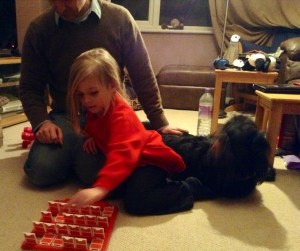
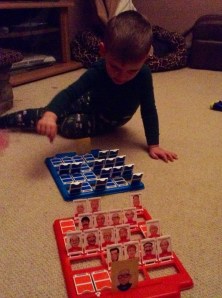
Playing Guess Who with my family

Playing Guess Who with my family

I’m feeling a bit bruised today. I feel as if this month, or more precisely these last few months, have been a real battle, mostly about money. It’s easy for money not to be an issue when you have enough.

Hubbie and I have fought hard to arrange our lives so that money isn’t an issue. We’ve made many choices that have put lifestyle over income and possessions. But some things, like Christmas, or birthdays, bedroom furniture and children’s parties, all fall under lifestyle rather than unnecessary expense.

And that’s fine and as it should be.

But when they all come at once, along with some other sources of income not happening when they should, it all leads to stress. And the biggest stress for me is that I don’t earn anything. For all the rationalisation that hubbie couldn’t do his job if I didn’t look after the house and kids, I still hate spending ‘his’ money.

I knew writing was not the lucrative financial choice. I used to make more in a day contracting than I made all last year selling books. And that’s okay. Right up to the point where I want to spend money on something other food and fuel and don’t feel like I can.

Concentrating hard!

Concentrating hard!

I don’t want to give up writing, but I know hubbie is tired of me crying all time because I’m worried about money, because I feel worthless without an income. And I worry I’m risking friendships because I don’t want to spend money on a day out, night out, weekend away or other expensive thing. One short contract would make it all easier. I could pay for my daughter’s party, new bed and bike, and still have enough left over to proofread my next manuscript.

But I can’t even think where to start. Now my daughter’s at school I’d have to arrange childcare before and after school. Not to mention having to buy a whole new wardrobe of suits in my post-baby body size. And then I’d have to convince one of my old contacts that I still know anything about insurance and/or marketing. After five years out, I probably don’t. It’s a fast moving industry – new regulations, new channels; five years ago social media barely existed.

Even if I did find something, it wouldn’t be on my former salary. I’d probably not actually bring in much extra money, after we’d paid for childcare, not to mention the extra pressure on the family if mummy wasn’t at home cooking, cleaning, washing and ironing. There’s a meme going around facebook that says:

Normal is getting dressed in clothes that you buy for work and driving through traffic in a car that you’re still paying for – in order to get to the job you need to pay for the clothes and the car, and the house you leave vacant all day so you can afford to live in it ~ Ellen Goodman

Craziness. Do I really need to put my children in childcare and put us all under stress just so I can feel I have my own money to spend? Instead of doing what I love – walking the dog, taking care of my family and writing novels? Having time to play board games and cook dinner, with time over to learn how to bake cakes? Put like that it’s all a bit silly. But still, earning a few hundred pounds a month might be nice!

Domestic Chaos or Learning to Learn

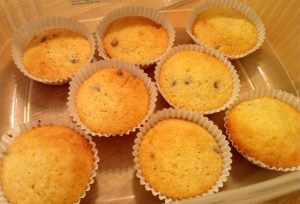
Flat Fairy Cakes

Flat Fairy Cakes

I am always having to tell my four year old daughter (five year old, by the time you read this in the morning. Eek!) that you can’t do anything on the first go. When she gets frustrated because she can’t skate, or read, or sew, I remind her it just takes practice and it wasn’t that long ago that she couldn’t write her name, scoot or draw people. It doesn’t end the tears and tantrums, but I hope it’s sinking in somewhere.

Seems, as in most things, I’m a hypocrite. All my life, I’ve avoided doing things I wasn’t naturally good at, because I hate being merely okay or, worse still, just plain awful at anything. Studying wasn’t hard, until I got to A Level Maths and, even then, I managed to cram and learn enough to get an A. I passed my driving test first time. I gave up the violin after grade five because there was no way I was going to pass musical theory, as I’m pretty tone deaf.

I’m not afraid of hard work, but I need motivation to continue and I’m driven by praise and good results. Which is probably why I hate to cook. Because I can’t. For as long as I can remember I’ve sucked at baking. My long-suffering family have consumed many a crunchy cake and cardboard biscuit, un-risen sponge or crumbling flapjack. And laughed. So in the end I gave up trying.

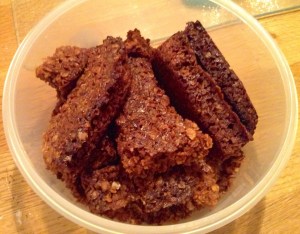
Burnt Flapjack

Burnt Flapjack

For some reason I’ve been on a baking spree this week, and mostly it’s been a disaster. Soggy banana bread, brick-like wholemeal loaf, flat fairy cakes and burnt flapjack. My birthday tea for my daughter tomorrow is likely to come courtesy of whichever supermarket I pass on the way home. The thing is, I’m sure I just need to practice. But this isn’t like learning piano. You don’t waste five quid of ingredients if piano practice doesn’t go right. You don’t get fat from eating all your mistakes that no one else will touch. You don’t get grimaces from the family. Actually, I do when I play the piano too, which is why my keyboard skills are about as good as my culinary skills!

I’ve been discussing my failures on Facebook and one friend said “Amanda you are one of the smartest people i know! I KNOW you can do this. If you can read, you can cook! Keep the faith!”

I think that’s the problem, though; it isn’t just about reading a recipe. The recipe I followed for the fairy cakes said nothing about the eggs and butter needing to be at room temperature (two of the reasons suggested for why my cakes didn’t rise.) I feel like Hermione in Harry Potter and the Half-Blood Prince when Harry is using the book with extra notes and making great potions, when hers don’t work. Baking is more science than art. Give me words or paint any day: much more forgiving of mistakes, more scope for being creative! Cooking is creative, but baking is all about precision; it’s chemistry and I was rubbish at science!

This time, though, I can’t give up. I can’t teach my children persistence and the importance of failure, if I won’t follow my own advice. I just have to find a few recipes to stick to, rather than blaming the recipe and trying a new one every time. And stop eating my failures! 🙂

Domestic Madness

Homemade bread and crumble

Homemade bread and crumble

What is it about us humans that we do crazy things under the delusion that they’re a good idea? I woke up yesterday full of cold (again!) and this weekend should have been about survival. Instead I took my son shopping yesterday to buy my daughter’s birthday gift. Two hours of wandering around shops looking for bedding, with a three-year-old in tow, isn’t that clever.

I did at least take a lie-in this morning, after writing my blog post, and didn’t get up until 10am. But then, instead of sitting in a corner quietly reading my book while the kids played (as suggested by hubbie) I started on a baking spree.

I don’t do baking or cooking, unless I want cookies and there aren’t any in the house. I’m the only person I know who isn’t a foodie, doesn’t enjoy cooking and hates making everything from scratch. But, today I made macaroni cheese, fruit crumble and a loaf of bread, all from scratch. What the…?

Actually, there is some logic. Firstly, although the kids were playing nicely by themselves, I knew that would end abruptly if I sat on the sofa with a book. If Mummy’s busy they can mostly be relied on to do things they think I might not approve of. I watch them surreptitiously to make sure it’s nothing dangerous, and everyone is happy.

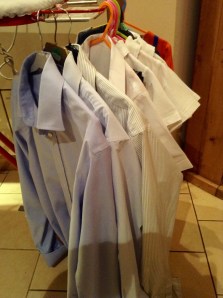
Ironing done. Check.

Ironing done. Check.

Secondly, it’s ‘that time of the month’ and comfort food was required. A nice broccoli and cheese pasta bake and some fruit crumble and custard was just what the doctor ordered (well, probably not, but you know what I mean!) I managed to make a hash of mixing powdered custard, ending up with a lumpy goo twice, but it tasted okay.

Thirdly, I bought a new loaf tin a few weeks ago and I haven’t really had a chance to try it out. I made banana bread in it, but think I got the recipe wrong because it didn’t rise (although it tasted okay!) I searched and searched online for an easy wholemeal bread recipe, for my basic cupboard of ingredients, and found one on Delia’s site. Delia is one of the UK cooking gurus, so I thought what can go wrong?

The recipe certainly is easy, requiring no kneading and only a few basic ingredients (flour, salt, sugar, yeast, hot water). It rose as she said it would, to fill the tin, and baked to perfection, sounding lovely and hollow. It looked lovely, smelt great. But it feels like a house brick. Tastes like one, too.

It’s just about edible toasted, but it’s sooooo heavy. It’s just as well I managed to buy a loaf at the supermarket this afternoon, because I can’t see the kids eating it in their packed lunches tomorrow (I’ve got to make them all week, because I forgot to order my daughter’s hot dinners. Idiot!)

Says it all!

Says it all!

So my search for the perfect easy bread recipe continues! My sister swears by a no-knead one that cooks for hours (or sits for hours, I can’t remember) but I’m not very patient. And, actually, I’m happy to do a bit of kneading if it means light and fluffy bread!

To top off my day of domesticity, I did ninety minutes of ironing while the kids played outside in the rain and then picked away at their tea. It’s a nice feeling to know it’s all done, but my head is fit to burst now (especially as they’re watching Barney for the tenth time in two days and that singing goes straight through me!).

Thankfully hubbie did bath time, although that seems to have finished him off (he also has a cold!) What a pair we are.

Roll on spring and feeling well again. And thank goodness it’s bedtime (for the kids and probably for me, too!) How was your weekend?

2013 365 Challenge: Some Lessons Learned

Conquering mountains

Conquering mountains

For anyone new to the blog (where have you been? *grin*) I spent last year undertaking a writing experiment I called the 2013 365 Challenge.

I set myself a tri-fold task: I would write a blog post everyday, I would include pictures in every post (mostly from what I had been doing that day) and I would write an installment of a novel every day. Not just serialise a novel already written, or write 10,000 words at the beginning of the month and parcel it up, but sit down every single day and think of something new to happen in my novel.

I set myself rules, too. I would try and post by 10am every day (which I mostly did!) I would collate each set of installments into a free monthly ebook and publish it by the last day of the month (which I mostly did). And, most importantly, I would not go back and change things (which I didn’t, aside from typos and spelling mistakes, which slipped through due to tiredness, and – once – when I accidentally changed the name of a character to one in the novel I was also editing at the time. I changed that for the sake of readers’ sanity. But I never changed more than a word at a time).

I think reaching the end of my challenge, the end of Claire’s (my protagonist’s) story, and realising I had written 285,000 words in a year and published them, counts as one of my greatest life achievements.

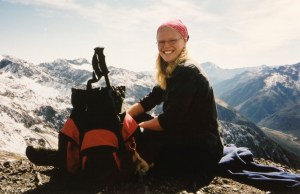
Me before kids (when I got sleep!)

Me before kids (when I got sleep!)

It isn’t Pulitzer Prize winning fiction. In some places it rambles. In many places I’m sure the lack of editing is obvious. But, still, hundreds of people read it and enjoyed it (as far as I can tell, by almost as many copies of the later volumes being downloaded as the first one). I felt like I reached the mountain top and the view was amazing.

Most importantly, I learned so much about being a writer that, even if I hadn’t had a single download, I think I would consider it time well spent. (Although, if I hadn’t had a single download I probably wouldn’t have made it past January, as knowing people were expecting the next installment was often the only thing giving me the motivation to write when all I wanted to do was sleep.)

I’m still processing all the things I learned from my challenge, but I promised in yesterday’s post that I would write some of them down. So these are the things that occur to me right now:

  • It really is important to write every day. That is probably more true for the blogging than the novel challenge, actually. I’m working on my current novel only three days a week (as I used to before the 2013 365 Challenge) but writing something everyday keeps the words flowing
  • You can write great prose even when you’re tired and uninspired (in fact, sometimes having half my brain worried about other things kept my conscious brain busy and left my creative sub-consciousness to get on with it)
  • Writing to a deadline sharpens the mind. Knowing you have to write something, anything, in the next hour, frees you from restraint.
  • Writing to a deadline can also cause terrible writer’s block. Knowing you have to write something, anything, in the next hour can make the white screen the most terrifying thing in the world
  • If the white screen scares you, turn it off and write somewhere else. Tap out a text message, scribble on an envelope. Once the words start flowing, it’s easy
  • Walking sets a great rhythm for dialogue. If I ever got stuck with a scene of dialogue, getting outside and walking the dog helped the words come. The conversation would run in my head in time to my footsteps and all I had to do was write it down
  • Research can spark off new and exciting ideas. Many of my best installments were triggered from a Tripadvisor review. Reading about other people’s experiences can set off a train of thought that leads to a new story, character, or source of conflict.
  • Keep your characters moving. If they must have internal dialogue or introspection, having the protagonist physically moving can give interest and momentum. Claire did some of her best thinking while hiking along cliffs or driving country lanes. It also makes it easier to match scene to mood: a lashing thunderstorm made a great backdrop for a moment of angst
  • Weather is important. It isn’t always sunny. Using Google StreetView to look at different parts of the UK also gave me impetus to write about different types of weather. Now I know to think about the weather and make sure it’s appropriate both for the time of year and mood of scene (see above)
  • Character arcs are fun. Having Claire change from a shallow work-driven career woman into a nature-loving, child-hugging, self-aware woman was very satisfying.
  • Nasty characters can be fun, too. When Claire’s brother turned out to be an utter git (which I hadn’t completely anticipated) I absolutely loved writing his scenes. We don’t often get to say mean things in real life and not feel guilty afterwards. Writing is cathartic
  • Your own experiences are a limitless resource. I used many things from my own life, including (but not exclusively) my time in hospital having my second child; my father’s cancer; my breakdown and subsequent depression; my year living, working and travelling around New Zealand; summers spent in Swanage with my father; hiking holidays in the Lake District, my time working as a Marketing Manager
  • Friends are also great resources. Two examples that spring to mind are when I used emotional anecdotes (not the details) from my paediatrician friend to get inside Josh’s mind, and an accidental conversation with a friend who used to live in the Lake District that greatly enhanced my Grasmere episode.
  • The mind is a well that can run dry. Whether I write 1,000 words a day for a week or 8,000 words in a day, my overall work rate stays fairly level. I just can’t generate the ideas to write more than 10,000 words in a week. The brain needs time to refill and replenish
  • Coffee shops and town centres are great places to refill the mind. Eavesdropping on conversations and watching how people interact can help to create stories
  • Reading is just as important as writing. Immersing yourself in a well-written book can fill the word-well in the mind and reinvigorate an exhausted muse
  • Formatting for Smashwords and Kindle are really boring but actually fairly straightforward. It helps to format as you draft, if it isn’t too distracting. I’ve learned to do it when I’m waiting for the next idea to come, or while watching TV
  • People don’t leave reviews for free books

I’m sure there are loads more things I’ve learned and I’m equally sure that some of these things only apply to me and not to all writers. Looking at the list, though, it makes me realise how far I have come as a writer and how much my confidence has grown. Turning up to work every day, whether I wanted to or not, moved me from “aspiring writer” to “writer”. I just need to make sure I keep it going! This year’s (unofficial) challenge is to build on my learning and concentrate on the craft of writing. Quality over quantity. I’ll keep you posted.

Making a Change: It Starts Here

My Reason For Change

My Reason For Change

As a writer I know the power of words. Words can move, heal, hurt, destroy. Change the world. Think about Martin Luther King Jr’s speech “I have been to the mountain top”. Or the words in the bible. As a writer I should know to mind my words but, like any person of a certain profession, I don’t always follow my own beliefs.

A while ago I read a poem called powerful words on Chris McMullen’s blog and I said something in the comments about the words I use to my children being the wrong ones and how damaging that was and how I can’t take them back.

It’s something I’ve been worrying about more and more lately. Then, today, I read this article on Facebook called Ten Ways to Guide Children Without Punishment and I felt like I’d been whipped. It starts with these words,

“The reason a child will act unkindly or cause damage is always innocent. Sometimes she is playful and free spirited, and other times, when aggressive or angry she is unhappy or confused. The more disturbing the behaviour, the more the child is in pain and in need of your love and understanding”

Oh my it’s so true. I get most angry with my son when he’s at his happiest because that’s when he’s at his most destructive/deaf/irritating. Lately I’ve started hearing some of the terrible things I say to my children when I’m in a rage: things that were probably said to me, that I believe about myself deep down, that I’m teaching them to believe, and so the cycle continues.

“You’re lazy,” “You’re mean”, “You’re being selfish”, “You’re unkind”, “You’re trying to hurt me”.

These things are not true of children, certainly not two wonderful children under five. I excuse myself (or else I couldn’t live with myself a moment longer) by saying I’m exhausted, they don’t remember it, that I’m teaching them not to be bullies, and a load of other rubbish that just isn’t true.

My amazing kids!

My amazing kids!

To complete the trio of articles that have a) made me feel like ending my own life I hate myself so much and b) have forced me to see the need for change, is this one I found on Twitter called Why We Told Our Kids to Stop Saying “Sorry”. It discuss why the author has stopped her children apologising. She said to her child, after his umpteenth sorry, that, “Your sorries don’t mean anything when your behavior shows me that you aren’t sorry at all.”

I say sorry. All The Time. I’m sorry for living, I’m sorry for being a monster, I’m sorry it’s raining. Either it’s something I can’t control or it’s something I could change if I tried hard enough. Sorry doesn’t cut it. There’s a meme on Facebook about comparing a crumpled piece of paper to a bullied child: you can smooth the paper but the creases never go. You can say sorry but you can’t unsay the hurtful words.

As I write this I feel sick to my stomach. I feel like I have hurt my children beyond repair, beyond redemption. But the more I beat myself up about being a monster, saying the hurtful things I heard in my childhood, the more I give myself permission to continue because, hey, I’m a monster already.

I am not a monster. And, no matter how exhausted, overwhelmed, unhappy I am with being a parent, it is not my children’s fault. So, today, I have to make a commitment to stop. In my post yesterday I mentioned the book Happiness as a Second Language. The author, Valerie Alexander, stopped by to encourage me to read the book some more. So last night I did. I read all the way to Chapter Nine, although I need to read it again to take it in properly. The two chapters that really resonated were Chapter Eight – Adjectives and Chapter Nine – The Negative Form. Because these are the two I know I need to learn. Adjectives: the describing words I use on myself and my children, and learning not to be a negative person.

Because another thing I’ve learned from childhood is that sympathy = attention, that being broken means people try to fix you, help you, love you. That being happy means people resent you, ignore you, take you for granted. So I’ve learned to be miserable, so people ask “what’s wrong?” Except of course they stop asking after a while, or get bored of hearing the same ol same ol. So you up the ante. You think of taking your own life because then “That will show them I’m really miserable.” No, that just shows that you were too pathetic to help yourself.

Chatting to my sports massage friend yesterday she says it frustrates her when people refuse to help themselves get better. That’s me. I’ve had an injured knee for eighteen months but will I do the exercises to get better? No. I make excuses that they hurt, or I’m tired, or I don’t believe they’re working. Instead of growing up and just getting on with it. The only person that suffers from that is me (and my dog and my family.)

I want to learn how to be happy

I want to learn how to be happy

So I don’t want to be a negative person anymore. I don’t want to steal other people’s happiness to make myself feel better. An “Indirect Negator” in Valerie’s words, someone “whose own unhappiness is so palpable that it risks becoming contagious.” Equally I don’t want to be around people like that (and I know a few).

The next thing I am going to do is choose five adjectives I want to describe me: five things I want people to think when they think about me, and live those values. This is an exercise I think I can do because I obsess about what people think about me all the time. That probably needs fixing too, but at least I can use it to my advantage.

Being a wordy sort of person I came up with alliterative adjectives so they’re easier to remember. There are many traits I’d like to be: successful, funny, strong, gracious, social, but I have to be realistic about what is in my control and what fits with my personality. So the five I have chosen are:

  • Calm
  • Confident
  • Caring
  • Compassionate
  • Clever

Calm: Since becoming a parent I am never calm. I rush around saying “we’re late” or I’m yelling or sniping at the kids, or I’m trying to do one hundred things at once. Yet, way back when, I used to work for a man who said “You’re always calm.” I said, “I’m a swan, I’m paddling furiously underneath.” But what mattered was that, on the exterior, I was calm. As a parent that’s the important bit. Honesty is great, but I am too honest about my feelings with the kids. They will feel calmer and happier if Mummy is calm. So, back to being a swan. This great article on Aha! Parenting will help.

Confident: My lack of self-confidence is something I wear like a badge. I second and third guess myself on everything. I dither, I ask for opinions. I change my mind, or let my mind be changed. I cry. I negotiate with the kids. I let other people’s parenting affect how I feel about mine. And yet the one thing I want for my children is self-confidence. To the point where I want to put them in a private school to learn it, because I know they can’t learn it from me. And yet the private school I visited was not right for my children.

I did use to have the courage of my convictions, when I worked for a living. I knew my stuff and I would argue my case (not always calmly!) and stand my ground. Against clients, against directors. No wonder I never got promoted. Now, though, as a writer and a parent, all I read are articles telling me how I’m doing it wrong, how I should do it better, and I believe every contradictory word. (Read this post by Ava Neyer for an hilarious summary of how contradictory parenting advice can be). So, I’ll start with the mask and hopefully confidence will come.

Learning Kindness from my Kids

Learning Kindness from my Kids

Caring: This would have been a given, once. I considered myself an empathetic person, someone who cared about others. I seem to have lost that at the vital moment. Now I’ve become a monster. I say to the kids all the time “I don’t care” when they’re whinging about something. Arrgghh. Enough said. I will care. I will listen. I will kiss the grazed knees and listen to the fights and try not to get involved but still be present and caring.

Compassionate: Similar to above, but more about seeing other people’s points of view. I can be very judgemental and it has only got worse since becoming a parent. Part of my defence mechanism against feeling like a terrible parent is seeking out instances of other people’s terrible parenting to make myself feel better. I have probably made other people feel bad in the process. I want to learn to be more compassionate to other people (especially my family).

Clever: This used to be the one thing I knew I was, back when it was easy, when it was about exams and studying and stuff. The longer I’ve lived the more I’ve realised I know nothing. But the brain is still in there, beneath the lack of sleep and the low self-esteem and the self-doubt. I know stuff about writing, but through modesty, humility or fear, I can’t present myself as an authority here on the blog or to others. Yet I probably know more than I realise. Ditto for marketing, history, literature and some other stuff. I don’t want to bore the pants off people but remembering I have a brain and using it sometimes might help the other stuff.

Anyway, sorry for the long, self-indulgent post. When I finished writing it at 6am this morning I nearly hit delete. But then, for me, much of the beauty of the blogsphere is learning from others, seeing others experiencing pain and surviving it. Regular followers know my demons. By declaring to you all that I’m going to do this, I have made it a real thing. I will try and some days I will fail. But by trying to live the values of Calmness, Confidence, Caring, Compassion and being Clever, I hope to make a difference before it’s too late.

Defeating the Grump?

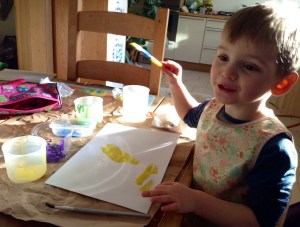
Painting fun

Painting fun

I’m in a grump. I don’t know why. The sun is shining outside, I’m home with my boy, my daughter is going to a friend’s house for tea. Life is okay.

I’m a bit stressed about my daughter’s party in a couple of weeks, but that’s mostly being planned by the other mummy (although maybe that’s why I’m stressed!) I’m tired of being poorly and random bits of my body not working (my knee seized this morning and I trapped a nerve in my back on Sunday) but generally I have good health.

I have a lovely husband, two gorgeous children, I enjoy writing my books (well, okay, that’s not really true when I’m revising, as I am now, but – you know – I don’t hate it).

I have enough money to buy the weekly food and pay for the odd cup of coffee. We found the resources to buy my daughter a new bed (although I hate not earning for a living and am currently looking for a part time job). I get three days a week without the children to theoretically do my writing, although mostly I do housework. I survived my 2013 365 Challenge and wrote 285,000 words of which I’m quite proud. I even sell a book every now and then.

But, for all my blessings – and I do count them every day – I feel meh. Sad. I sigh a lot. Shout at the kids. Cry, even, when small things overwhelm me. I don’t feel depressed, just melancholy. And I don’t know how to fight it. In the old days I would have gone for a run, but since I injured my knee 18 months ago I struggle to walk the dog without feeling the after effects. Cleaning the house helps for a while, but it gets messy again so quickly it adds to the feelings of futility and adriftness.

Telling me about his painting

Telling me about his painting

I read to escape, but then I pick up a book like The Curious Incident of the Dog in the Night-Time and it magnifies my sorrow. Last night I dreamed about a remote hotel where all the staff had Asperger’s Syndrome; they’d been hired because they couldn’t lie and they didn’t like being with people so didn’t mind being by themselves for long periods of time. I have no idea if that’s true, by the way, I’m just basing it on the character in the book I’m reading. My dreams are all either high-drama chase sequences or depressing stories of loss and unhappiness.

I’m not what you’d call a happy person. I grew up with a man they nicknamed Morbid Mick. I try and see the positive in things but my default is to see what might go wrong and feel guilty about everything that does. For example, I cooked a lovely lasagne at the weekend for my father-in-law, with mince I took from the freezer. When I went to the fridge today I realised there was mince in there that now hovered on its sellby date. I cooked it anyway, but it smells a bit odd. I’ve been beating myself up all day for my stupidity. All Day. I mean, really?

I follow the blog of Valerie Alexander, author of Happiness as a Second Language. I have the book, too, although I’ve only read the first chapter. When I did I felt happy, and so stopped reading. I don’t have much staying power for self-help stuff. There always seems to be so much else that demands my attention instead (which has brought to mind that I haven’t phoned the doctors or the vets and there is a load of washing in the dryer and potatoes to peel for dinner and the dog needs walking and son asked to play playdough quarter of an hour ago…)

My brain is my biggest enemy. I over-think everything so generally I’m happier when I don’t think about things. But what to do when you’re stuck in a grump? Maybe it’s just the January blues, or the fact we can’t really afford to go on holiday because our daughter is now in school. Or that a holiday isn’t a holiday anyway anymore. I feel so sorry for myself it’s pathetic, especially as I don’t even know what could change for me to feel better. I feel like Shrek in Forever After, when he imagines life without wife and kids and finds out it’s not as great as he remembers it to be.

Ah well. It’ll all be alright tomorrow. No one died. What do you to get out of the grump?

Kairos Time Not Carpe Diem

Friends at the scooter park

Friends at the scooter park

Back when parenting was impossibly hard (like yesterday! Haha) I read an article about not subscribing to the need to Carpe Diem when it comes to raising small children. So often as a new parent (or not even a new parent) people who have done their parenting, whose kids have left home, who look back with nostalgia, say unhelpful things like “treasure every minute, it goes so fast.”

Of course that’s true and, as I watch my babies grow older and less cute, I see the truth in that. But with every “adorable age” comes a bucket load of trouble and it’s tough to see the diamonds at the coal face. Being told to love every minute just subscribes to the Perfect Parenting myth and puts unnecessary pressure on an already difficult task. As Glennon Melton writes in her post Don’t Carpe Diem:

It bugs me. This CARPE DIEM message makes me paranoid and panicky. Especially during this phase of my life – while I’m raising young kids. Being told, in a million different ways to CARPE DIEM makes me worry that if I’m not in a constant state of intense gratitude and ecstasy, I’m doing something wrong.

Braving her own Mt Everest

Braving her own Mt Everest

She compares raising children to climbing Mount Everest: “Brave, adventurous souls try it because they’ve heard there’s magic in the climb. They try because they believe that finishing, or even attempting the climb are impressive accomplishments … Even though any climber will tell you that most of the climb is treacherous, exhausting, killer. That they literally cried most of the way up.”

In my favourite bit of the articles she then says, “if there were people stationed, say, every thirty feet along Mount Everest yelling to the climbers — “ARE YOU ENJOYING YOURSELF!? IF NOT, YOU SHOULD BE! ONE DAY YOU’LL BE SORRY YOU DIDN’T!” TRUST US!! IT’LL BE OVER TOO SOON! CARPE DIEM!” — those well-meaning, nostalgic cheerleaders might be physically thrown from the mountain.”

Instead of treasuring every painful moment, every tantrum and time out, Glennon Melton introduces the concept of Kairos time, God’s time: Moments of perfection to treasure amidst the chaos, as opposed to Chronos time, “the hard, slow passing time we parents often live in.”

Kairos time is moment when you really see the children, love them with an immensity that is overwhelming. Even if the specific moments aren’t remembered after the event, just getting to the end of a day and knowing it had one or two moments of Kairos time in it is enough. It’s a beautiful article and it’s worth reading and rereading.

Kids carpe diem

Kids carpe diem

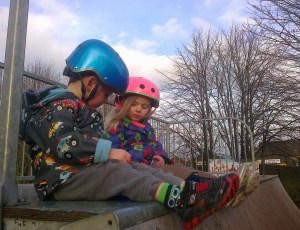
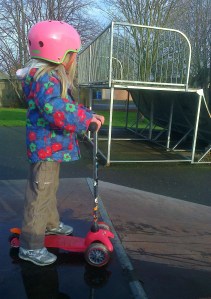
And this afternoon I had one of those moments. Sitting on a bench, watching the children scoot round the park as the late afternoon sun trickled through the trees and sparkled off the puddles, I had a moment of peace. Of being proud of my beautiful babies, of myself.

Of course, being me, I ruined It by suggesting that my daughter let her brother have a turn in front. Thus ensued half an hour of sulking and tears, and Mummy getting cross. My son went and made some big girl friends who helped him where his sister had before.

But I fought hard to keep my Kairos moment and not let the sulking spoil it. Because these moments are rare. In the article, Melton compares parenting to writing a novel – we enjoy having parented, much as a famous author once admitted to enjoying having written. That’s true for me usually too. But some days the words flow effortlessly and shine and sparkle, and some days the children do the same. Those are moments worth hanging on to.

Finding Sense in Stories

Horrible headlines

Horrible headlines

Sat here on a Saturday morning, trying to think of something to write for my blog post, my mind was blank. After a night of The Raven Boys type dreams (always the danger of reading a powerful book at bedtime) I couldn’t pull together a story. I started flicking through my Reader, catching up on my favourite bloggers, like Miss Fanny P, looking for inspiration.

And then I came across a post that stopped me like a punch to the stomach. On Wednesday this week, over the border in Scotland, a three year old boy went missing from his first-floor flat, some time between bedtime and morning. The kind of story that twists inside you as a parent and makes you rush to hug your child.

I’ve been following the story with latent hope, as the people of Edinburgh poured out in their hundred to search for the missing boy. As is usual in such circumstances, we discussed whether our children could leave the house by themselves (they could) and whether there was more to the story than a boy running away from home (it seems there possibly was).

So, when I saw in my Reader this post by a resident of Scotland, whose children were involved in the search for the missing boy, I felt physically sick. We all want a story to have a happy ending. As an author (an author who lives for the HEA) I can’t bear a story that doesn’t end as I think it should. One that involves the death of a small child is the worst there is.

The Facebook appeal

The Facebook appeal

It’s not the only story that has wrenched at me this week. There’s the case of a child who died within hours of their first day at nursery, or Jordon, the autistic boy who locked his mother in the house and disappeared on 9th January.

The latter story, like the story of the missing three-year old boy in Edinburgh, was one I discovered first on Facebook. I always share missing people or pets messages because Social Media ought to be good for something. In the case of Jordon, the story had a happy ending, with the boy being found alive and well. But during my internet search to see if he was okay, I discovered another dozen stories of missing children found dead.

They haunt me, these stories. Not just as a parent, imagining something happening to one of my children (which I can’t imagine, or I’d never let them leave the house again). I think of the families blown apart. The scars that won’t heal. The blame, the recriminations, the guilt. Of all the people touched, all the people searching with hope in their hearts. The policeman holding back tears as he breaks the terrible news. The assumptions that will be made, as the authorities search for the truth.

Mostly I think about the mother (who is often the first one questioned). I no longer judge mothers. No matter what we see from the outside, we have no idea and we must not judge. I am sure there are evil people in the world, but there are just as many desperate, overwhelmed, frightened people and we cannot know the truth of their lives.

As a writer, I live these stories with full emotion. It isn’t just a news story, it’s life in all its messy detail. There aren’t heroes and villains, winners and losers. Just the complicated horrible terrible beauty and tragedy of life. And it’s why I write love stories, women’s fiction, journeys of self discovery. The world needs hope and Happily Ever After. It needs to make sense of life and wrap up the loose ends, to have themes and symbolism and resolution.

Because life doesn’t. Life has sadness and questions and fear. It has grieving families and worried parents. We’ll all hug our little ones just a bit tighter today, and maybe we’ll look for escape in a book. I know I will.

Getting Ready in the Morning: Mummy vs Daddy

Breakfast Chaos

Breakfast Chaos

This is an average morning in the Martin household:

Mummy

6.15am – daughter comes in and asks if she can read (she has one star left on her Groclock)

6.20am – daughter starts singing loudly in her room

6.25am – daughter turns on bathroom light and I wait for the shout of “Mummy, I’m finished!”

6.30am – daughter calls for a bum wipe

6.45am – husband’s alarm goes off – he rolls over and silences it then goes back to sleep

6.45am – daughter runs in asking if it’s time to go downstairs because Daddy’s alarm has gone off

7.00am – tire of waiting for Daddy to get up or daughter to read quietly in her room. Get up (even though kids’ ‘sun’ doesn’t come up until 7.15am)

7.05am – let dog out

7.10am – put porridge in the microwave and boil kettle, unstack dishwasher and tidy kitchen

7.15am – put breakfast on table for first child, turn off radio and put Cbeebies on the iPad for an easy life, after getting distracted checking email and messages for five minutes. Dispense biscuits for dog

7.20am – son comes downstairs, crying about something, saying his nappy has leaked, or standing in middle of kitchen, half naked, demanding pants. Pour him cereal and put him in front of iPad

7.21am – realise haven’t heard shower. Yell up to see if husband is awake

7.22am – son needs a wee. Take him to the bathroom

7.25am – remember dog (who has been bouncing at the window for twenty minutes to come in). Let her in and wipe her paws

7.27am – remember porridge in microwave and put on for extra three minutes

7.30am – take breakfast and coffee up to husband in attempt to get him out of bed and into the shower

7.38am – send children up to get dressed, try to eat breakfast, run up to turn on bedroom lights and sort out clothing dispute

7.41am – get dressed into yesterday’s crumpled clothes, open blinds in daughter’s room, open blinds in son’s room, make beds, turn off lights, pick up pyjamas, sort out dirty clothes left in a heap the night before, lay out pants and socks for husband who is now running late

7.45am – cajole children into getting dressed instead of playing. Remind husband not to spend all day in the shower

7.46am – eat cold porridge and drink cold tea
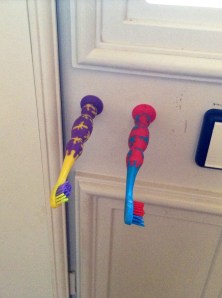
Brushing Teeth on the Run

Brushing Teeth on the Run

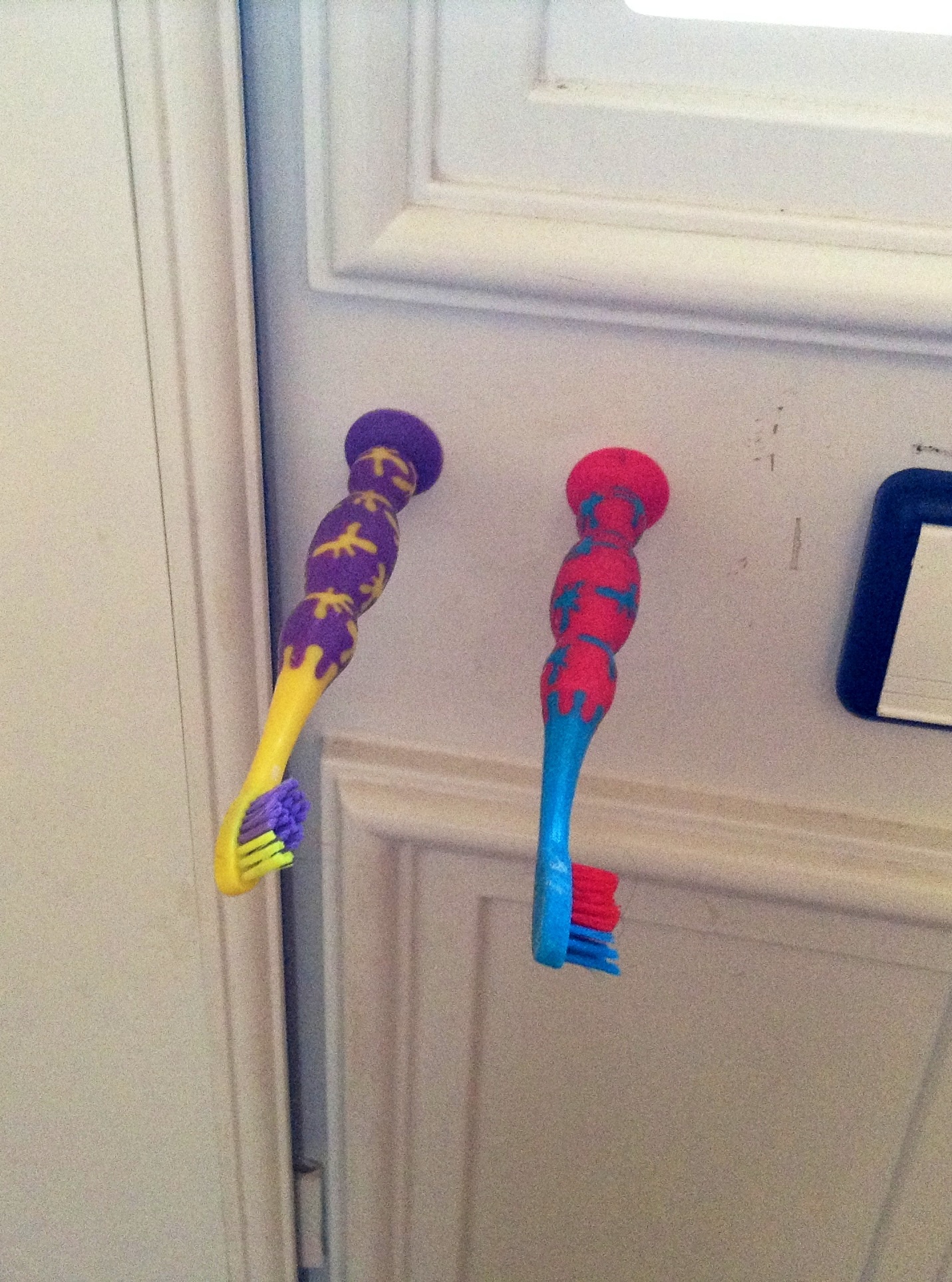
7.50am – brush teeth and get toothbrushes for kids

7.55am – realise son can’t get dressed because there are no clean clothes in his drawers. Locate laundry pile, take upstairs, sort and put away

8am – kiss husband goodbye

8.05am – make sure kids have eaten breakfast and are dressed

8.10am – brush daughter’s hair and endure screams, get frustrated at trying to plait it, put it in a pony tail on the third attempt

8.15am – remember haven’t made packed lunch for son, quickly make a cheese sandwich

8.20am – fill up school water bottles, yell at kids for not putting their shoes on, run round saying “we’re late, we’re late”

8.25am – get children in car with promises of program on the iPad. Remember haven’t brushed teeth, run back in house for toothbrushes. Brush teeth in the car

8.28am – realise car windscreen is frozen, run back in house for warm water, curse when throw water all over car seat by accident. Wipe car seat, sit in wet patch

8.30am – finally leave the house. Drive for ten minutes listening to Octonauts for the fifteenth time

8.40am – get to town and look for parking space

8.45am – park and get scooters out, wrestle children into hats, coats and gloves, grab school bags, trot after scooting children to school saying “we’re late, we’re late”, pick up at least one child with grazed knee and wet clothes. Promise plasters

8.50am – remove daughter’s coat, deposit water bottle, show and tell item, signed forms, homework diary, make sure daughter has signed the register, write encouraging ‘star’ for daughter’s board, leave her with teaching assistant, usher son out of the building past all the other parents and children, shoulder spare scooter

8.55am – get son scooting back to car, while saying “we’re late, we’re late”

9.05am – drive son to preschool, park on the mud, step in dog poo, forget lunch box, run back to car

9.10am – get son in slippers, take off coat, find a spare peg for his bag, find his name on the register table, put packed lunch in kitchen, find his mimi, give son to keyworker, crying and saying he’ll miss me, run round to make silly faces at the window

9.12am – stride back to car, drive to end of road to turn car around, navigate out past the twenty other cars. Turn radio on. Breathe.

9.15am – get home, put dishwasher on, turn off rest of the lights, put on laundry, put wet towels on the radiator, turn on tumble dryer, tell the dog we’ll go out later, make cup of tea

9.30am – start work
Daddy

6.45am – alarm goes off. Silence it. Go back to sleep

7.20am – wife calls up the stairs to see if I’m up. Say yes. Go back to sleep.

7.30am – wife brings porridge and coffee. Eat porridge and coffee.

7.40am – get in shower. Stand under hot water for ten minutes. Shave. Brush teeth.

7.50am – get dressed in clothes laid out on bed. Put on ironed shirt. Go downstairs. Kiss everyone goodbye

8.00am – leave house. Sit in running car while the windscreen defrosts.

8.05am – drive to work listening to the radio

8.30am – start work