The Perfect School?

Sudbury Valley School

Sudbury Valley School

Almost as soon as my nephew was born, my sister began to speak about sending him to a particular school in America. A free school, a democratic school – run by the children for the children. A place where a child could ride their bike or play video games all day, everyday, if they chose.

I scoffed. My parents rolled their eyes. I’m an academic at heart, with straights As and a first class degree and a Masters (we won’t mention the B in A Level General Studies – after all it wasn’t a ‘real’ qualification – it was only about life and that’s not important to a student who wants to succeed.)

Over the years, my brave, courageous, determined sister never let go of her American dream. Her husband’s sister’s children went to the school and her desire grew. I never got it. Three years ago, after untold hours of effort, my sister and her family emigrated to America to live near my brother-in-law’s family, with a view to my nephew and now niece going to the school.

The school run for my sister

The school run for my sister

I still didn’t get it. School is about learning and classes and exams and school uniform and all that, and my children were going to love it. There were going to be reading and counting to a hundred by the time they were five, they were going to be top of the class. After all, I was, and that made me happy, didn’t it?

My daughter started school six months ago, and my confidence began to waver. School seemed so regimented, especially for these tiny four-year-olds looking so serious and adorable in their smart uniform. The school run was chaotic and emotional and full of stressed parents snapping and snarling (particularly me).

To begin with, my daughter loved it. As suspected, she thrived on learning and was reading and counting to a hundred by her fifth birthday. She loves the community of school, idolises her teacher, and adores singing, reading and PE. But, here’s the thing: after spending a whole year desperate to go to school, my bright, academic, sponge-like learning child doesn’t want to go anymore.

“Mummy why do we only do PE once a week, I love PE.”

“Mummy, I love singing, is it singing assembly today? Is it?”

“Mummy, we didn’t get to do reading today.”
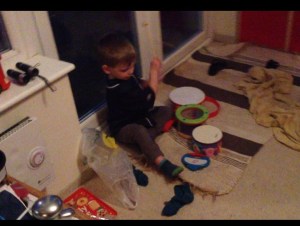
Drumming with his sister (click for video)

Drumming with his sister (click for video)

Then, yesterday, I watched this video on the Sudbury Valley school my sister has set her heart on. And I cried. Oh my. I want that for my children. I want them to be able to play piano for three hours straight if they choose. I want the calm, majestic, green surroundings, the rocks and the lakes and the books and the teachers there to facilitate enthusiastic learning. I want my children, my artistic children who often spend hours playing in their band, to have that.

Who cares if they meet some government-decided tick box of success. I want them to know what makes them passionate by the time they’re fifteen, not fifty.

Already, in six months, I’ve seen my daughter lose her edge. Become less able to find things to do without direction, become more concerned about breaking rules than having fun. She gets some of that from me, but where did I get it from?

I read a post yesterday written by the talented and successful writer, Kim Bongiorno, who wondered if the fact that she didn’t finish college would affect her own children’s desire and ability to go to college. She wondered whether she was a good enough role model for them. This was my reply (before watching the Sudbury Valley video!)

“I think you are being a better role model by not having finished your college degree. I don’t think university is for everyone. I went to university because I didn’t know what I wanted to do with my life. For people with vocations, like doctors or teachers, of course university is essential. However, if you’re not academic then it’s a way to run up huge debt and be no nearer to a job at the end. Certainly that’s true in the UK.

Fifteen years ago I graduated with a first class degree and it marginally improved my chances of getting a good job. Which I did. But I hated it and had a breakdown after three years. The next job was no better except I lasted five years before realising I don’t handle office stress well and I need to be creative.

And I AM academic, I loved studying. What about the people who don’t learn through lectures and essays? My sister struggled for four years to get a 2:2 in a language she hated, and graduated with massive debt, great pool playing skills and a love of Jack Daniels. Since then she’s started from scratch, building up her own businesses and finding what she loves and is good at.

In fifteen years time, when my daughter would graduate, I suspect a degree won’t be enough to compete. She’ll need a Masters, maybe a PhD. Years more of study and debt, for what? She wants to be a writer like her mummy, my son wants to be a racing driver (he’s three). I truly hope I’ll be strong enough to encourage them in those desires because happy is as important as well paid.

There is a great lecture I watched http://new.ted.com/talks/ken_robinson_says_schools_kill_creativity all about academic inflation and how university is really only good if you want to be a professor. I have long debates and worries about education and making sure it’s right for my children and this lecture consolidated some of them.

If your children want to go to college, the fact that circumstances outside your control prevented you completing your course shouldn’t stop them. And if they don’t want to go, you’ll be the best person to show them that – with hard work and determination – they can be a success without it.”
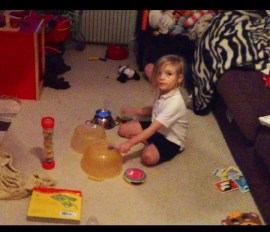
Daughter drumming - stuff she can't do at school

Daughter drumming – stuff she can’t do at school

This all sounds like I’m upping sticks and moving my family to Boston, doesn’t it? Oh I wish. But I don’t want to live in America, not even for an amazing school. For all my angst and depression, I’ve travelled the world and found myself home. But it does mean I can now say,

“Sister, you are the bravest, smartest, strongest, kick-ass person I know, and well done. Sorry I didn’t always understand.”

And I can keep looking for a better school for my children, and give them space at home to be children. To be themselves and to be happy with that. It’s taken me nearly four decades to achieve it, and I’m only partly there. In the meantime, I hope more schools look to the Sudbury Valley model and at least take some parts of it away. Watch the video and tell me you aren’t just a teeny bit impressed.

My 500th Post and a Giveaway

Wow!

Wow!

How exciting! WordPress has just informed me that my last post was my 500th post! That’s not bad going in two years.

I wanted to pen a quick line to say thank you to everyone who follows this blog, reads my posts, likes them, comments on them, shares them and generally makes the whole thing worthwhile.

When I started Writermummy two years ago, I didn’t really know what I was doing or what a blog was for. I only knew that if I wanted to sell books I needed an author platform. I’m not sure Kristen Lamb would approve of my blog in that role.

The blog has become my therapist’s couch, my sounding board, my coffee shop where I hang out and chat with friends. My safe place, where I can vent on pretty much any subject and find someone willing to give advice or at least a virtual hug. You guys can’t begin to know what it means to me.

So, it might not help me sell books (it certainly takes time away from writing new ones!), but my blog is my soul. To celebrate reaching my 500th post I’ve decided to offer Baby Blues and Wedding Shoes for free this weekend (even though I said it would never be free!) The promotion should be live around 8am GMT on 1st March. I wish I could offer cake, but that’s a bit more tricky.

Here’s to 500 more posts. Thanks for listening. 🙂

What’s Your Love Language?

My daughter loves quality time

My daughter loves quality time

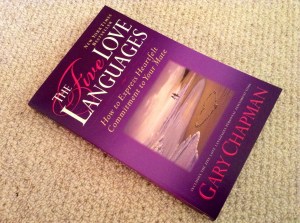
I had a revelation at 6am this morning – when I have most of my epiphanies – to do with the book I’m reading: The Five Love Languages. As I mentioned before, the Five Love Languages – as defined by Gary Chapman – are Words of Affirmation, Quality Time, Receiving Gifts, Acts of Service and Physical Touch.

Chapman argues that, for a relationship to thrive, we must first identify and then learn to speak our partner’s love language. I’ve always assumed my language is Acts of Service. I do the laundry out of love, I cook and clean and make coffee out of love. It has frustrated me beyond measure that my husband doesn’t understand. Not just that he doesn’t do those things himself, but that he doesn’t recognise them as acts of love from me.

Hubbie’s love language is Physical Touch. Not (just) in the obvious male way – Chapman distinguishes between sexual desire and touch as the primary love language. If you have sexual desire, but can take or leave the hugs, hand-holding and incidental moments of day-to-day physical contact, then chances are you have a different primary language.

My son is either touch or quality time

My son is either touch or quality time

Thinking it through this morning, using the techniques Chapman suggests, I suddenly realised that the Acts of Service may well be learned behaviour from my parents. Chapman recommends thinking back to the time when you and your partner were first dating, to understand the thing about your partner that made you think ‘he’s the one’. Hubbie and I lived apart for the whole of the two years between meeting and getting married. Picking up dirty underpants and cooking rarely figured in our equation. Oh yes, I liked that he cooked, that was a bonus. Who doesn’t love a domesticated man?

But the thing that first snared me, on day one as we chatted online before even meeting, was that he listened. My favourite times in our courtship were the long phone conversations, lying in the dark with just the two of us speaking. No interruptions, no distractions, just voices, sharing, listening. (Well, I assumed he was listening. I did have an ex who confessed years after we broke up that he used to mute the phone and watch TV while I rambled, but at least – even at the tender age of 16 – he realised my need to speak and indulged it.)

All my life I’ve felt that no one really listened to me. As discussed that’s not uncommon. But as I thought it through this morning, I realised that I blossom when I am listened to. I have a good friend who is a listener and I come away from our coffee catch-ups fizzing and smiling and alive (and feeling guilty for being what Chapman calls a ‘Babbling Brook’). Growing up, and even now at least once a month, my family tease me remorselessly for being a chatterbox. I hated it; still do. The endless words were driven inwards, to diaries and inner thoughts (not helping the depression) and now to my blog and my novels. And always I feel guilty for speaking, for hogging the attention, for asking to be heard.

Chapman lists a dialect of Quality Time as ‘Quality Conversation’ which includes quality listening. I was so quick to accuse myself of being a rubbish listener that I missed the point. Being listened to is my primary love language.

Joanne Harris

Joanne Harris

I went to an author lecture by Joanne Harris last night and came home bubbling with excitement and a need to discuss it. Hubbie paused his TV program but I still felt I was interrupting. I realise now that an act of love – to me – would have been for him to turn off the TV and give me his full attention.

And again, earlier in the evening, I was getting angry and frustrated with my son because he kept interrupting me, endlessly, as only a three-year-old can. And it dawned on me that the yelling I often resort to, that has become increasingly prevalent in recent years, possibly stems from an insatiable need to be heard.

I know my daughter’s language is quality time and I suspect my son’s is too, (although – like his Dad – physical touch is also super important.) Certainly both children talk as much as me and get just as frustrated if they aren’t attended to. That’s tough on hubbie – being in a house with three chatterboxes all vying for airtime. No wonder he switches off and stops listening; it’s probably a self-defence mechanism. However, if we can become a family that hugs and hears, that loves and listens attentively, we might just cut back on the shouting and increase the joy. It’s worth a go.

I told the doctor yesterday, when talking about my depression, that I didn’t need any more therapy; that words didn’t help and the last psychotherapist I saw made it worse. Turns out I just needed to hear (read) the right words. I can’t recommend the book enough and I will always be grateful to the lovely lady who leant it to me.

Depression is an Illness Not a State of Mind

Sometimes sleep isn't enough

Sometimes sleep isn’t enough

I finally had my doctor’s appointment today to talk about getting some chemical support to help me climb out of the pit of despair I have tumbled into over the last two or three years. I nearly didn’t go. The sun is shining, I had a day off this week (to be ill, but a day off is a day off), the school run went well, I felt in control. I felt great.

I’m not depressed, I decided. Why do I need to go to the doctor, I’m just wasting their time. Then I checked my blog. My low periods have been coming every two to four weeks since I last went to see a GP at the beginning of September last year (when the woman told me to get more sleep ‘for the sake of my family’ grrr) and they’re always followed by a period of revelation when I decide I’m better and as long as I read a certain book, implement a change, recite a mantra every day, I’ll be fine. Hmmm.

So I went.

And as the lovely lady (an understanding GP I saw two years ago, not the one from September) asked me about my life, my routine, why I found the school run so stressful, why I couldn’t just re-organise things, get some help, put my kids in after school club, ignore the dishes, I thought here we go again. And as she picked through all my weaknesses and stress points the carefully constructed bubble I’d put around myself burst and the blackness flowed back in.

I sobbed.

I felt so inadequate giving her all the answers I’ve given myself, as I’ve called myself a failure: I shouldn’t need help; my husband does what he can but he works hard too; my mother has earned her stripes and deserves her retirement; I don’t want a cleaner they create mores stress; I gave up work to do the school run, not to pay someone else to do it.

I cried because nothing was going to change. I was still a failure, and there was no help coming. I would still get angry and yell at the kids, I would still neglect my husband and ignore the dog. I would still feel that I prioritise my writing over being a good parent. My mess was all my fault. My chest tightened, the tears fell and the darkness closed around me.

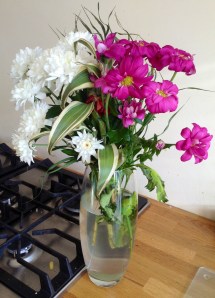
Flowers from my daughter

Flowers from my daughter

Then the GP said, “I agree, you do need medication,” and everything changed. A light shone bright at the end of the tunnel. It isn’t just me. I’m not a failure just because I can’t manage to look after two small children, even with them in childcare or school half the week. I might actually be ill, not crap. And then she talked about different medication options, including the one she prescribed two years ago (I should have taken it then! Ah hindsight, you bitch) and I felt she might actually be able to help.

I was talking last night about the first GP that diagnosed me with depression, fourteen years ago. The man – and I don’t even remember his name – saved my life. He might not have realised it, I certainly didn’t, but that’s what he did. He didn’t suggest I just needed to get a different job or organise my time better or get more sleep. He sat and drew a diagram of the brain on a scrap of paper, he explained about chemical imbalance and the importance of serotonin. He treated me as ill rather than inadequate, poorly not pathetic. He gave me half an hour of his time and my life back.

I accept that depression is hard to diagnose, and that the world is over medicated. I accept that therapy is brilliant and necessary for some people, just as some diabetes can be managed through diet rather than drugs. But Doctors who suggest a few nights sleeping at your mum’s house might fix everything could be doing untold harm.

So I’m glad I went today, I’m grateful for the advice on the blog two weeks ago, encouraging me to go. I might get to the end of six months and nothing will have changed. I’ll still be overwhelmed, angry, a horrible parent teaching my children that shouting is the only form of conflict resolution. I hope not.

As with everything, I’ll keep you posted!

Blogging: The Art of Listening

A potentially life-changing book

A potentially life-changing book

I started reading a (for me) life-changing book, yesterday, which I wish I’d read years ago, called The Five Love Languages by Gary Chapman. I haven’t finished reading it, so I won’t write too much about it here, but the basic premise is that we all speak one of five love languages and for us to maintain healthy relationships (be it parenting or marriage) we have to understand the other person’s language and learn to speak it.

The languages are Words of Affirmation, Quality Time, Receiving Gifts, Acts of Service and Physical Touch. (If you want to learn more before I finish reading the book, visit www.fivelovelanguages.com).

Rather like Valerie Alexander’s Happiness as a Second Language, it teaches hope, as it reassures that we can all learn these unknown languages, whatever our upbringing. I grew up in a house where happiness wasn’t really spoken and, equally, love wasn’t an open dialogue either. I’m slowly learning to speak these foreign tongues, and having phrasebooks is essential.

The part of the book that sparked today’s blog post came during the discussion of the love language Quality Time. The author speaks of each language having different dialects. For example, Words of Affirmation can include ‘verbal compliments’ or ‘encouraging words’ or ‘kind words’. Quality Time is about giving full attention to another person but this can include ‘quality conversation’ or ‘quality activities’.

On p.67 Chapman explains how hard it is for people to listen, particularly when a loved one wants to rant about a problem at work or similar. He says, “[w]e are trained to analyze problems and create solutions. We forget that marriage is a relationship, not a project to be completed or a problem to solve.”

This was particularly relevant for me yesterday as hubbie came home from work frustrated after having had to work on his personal development plan all day. Admitting there were things he wasn’t good as was hard. Instead of listening sympathetically, “with a view to understanding the other person’s thoughts, feelings, and desires,” I tried to fix the issue. And when he wouldn’t accept my brilliant advice I got angry. Crazy.

Chapman has some great (well worn) advice on listening attentively, but it was point five (p68) that grabbed me.

“Refuse to Interrupt. Recent research has indicated that the average individual listens for only seventeen seconds before interrupting and interjecting his own ideas.”

Oh my goodness, yes, guilty as charged. Interrupting is one of my greatest flaws and I hate myself every time I realise I’ve done it. Even when I’m interrupting to agree, to share an anecdote to say ‘me too!’ or to offer words of sympathy, I am still interrupting. I’m even worse with the children, because for the past five years I’ve had to interpret what they’re trying to say. Now, when they’re capable of explaining it themselves, I still do it and it drives them bonkers, especially the youngest one.

My head fills with words and it’s like I can’t actually carry on listening because my need to speak fills my mind and my words are too precious to waste. How arrogant. When the children interrupt me and I stop them, they often cry and say “I’ve forgotten what I wanted to say now”. My response is usually, “if it was important it will come back to you” but I know from experience that isn’t true. For me, words not said or written down are lost forever (especially the blog posts or character scenes I write in my head at 2am and don’t capture because I don’t want to wake everyone up by getting out of bed.)

I’ve been known to lose track of whole conversations with other people because of the nagging sensation that I was about to say something brilliant. Maybe it’s time to let that go and trust that the words, if important enough, will come back eventually.

Thinking about all this at 5am this morning I realised that is why people love blogging so much and why I love reading posts that other people write. You cannot interrupt. I can write all the way to the end of a thought, or read all the way through to the end of someone else’s explanation, discussion or revelation, without interruption. In a world where we are all so eager to speak, blogging teaches us to listen and allows us to be heard. I hit the like button (where there is one, and I hate it when there isn’t) when I get all the way to the end of a blog post, as if to say “I have listened”.

I also realised that, by reading all the way to the end of a post without interrupting, I often don’t have anything to say. There is nothing to fix, no need for shared anecdotes. The writer has often answered their own question or revealed that actually their situation isn’t exactly like that time when I … at all.

So, my mission is to learn to listen, to learn to let my words go so that I can hear the words of others. How can I write stories if I won’t ever listen to them?

And I’m also going to try really really hard not to beat myself up about past failures. My favourite quote so far in Chapman’s book is “I am amazed how many individuals mess up every new day with yesterday. They insist on bringing into today the failures of yesterday and in so doing, they pollute a potentially wonderful day.” (p47) The sun is shining outside, the children are happy and the husband is smiling. Who would want to pollute this day?

Happy listening.

Dear World; SAHMs and Writers Still Work, You Know

Reminding myself that I do work

Reminding myself that I do work

I took my children to a play date this morning and had a fabulous few hours watching them enjoy new toys, sunshine and company while I enjoyed a comfortable chat and plenty of hot tea. The talk, as often happens with parents you don’t know very well, turned to work.

The other three were teachers and when I explained that I was at home writing I got the dreaded response, “So you don’t work then?” followed by the embarrassed proviso of the working mum: “Except of course looking after these,” with a smile towards the children.

The funny thing was I was more bothered by writing not being considered a proper job than being a SAHM, even though looking after the children is much harder and takes up more of my time. There was another comment later, along the lines of, “You’re doing what we’d all love to be doing,” and again I wasn’t sure whether it referred to being able to pick my kids up from school, being about to do my hobby as a job or having endless free time to do laundry or, you know, drink coffee and paint my nails. 😉

I don’t know the other parents very well but I know they’re lovely people and it was clear that nothing was intended maliciously or even said with a great deal of thought. Much as I used to think being a teacher must be easy – short days, long holidays – before I spent any time with teachers and realised it’s the hardest job in the world and you couldn’t pay me enough to do it: we none of us have a blinking clue what’s really involved until it’s our job. And even then we all approach life differently.

Some of my light reading

Some of my light reading

I have to be working; I feel guilty if I don’t. So if I’m not writing I must either be cleaning, doing social media (which I don’t love) or reading (which I’m only just accepting as training for writers). It doesn’t feel like a hobby, but of course I do have a choice whether to work or be a housewife, which many don’t. I know I’m extremely fortunate.

Equally when I said to them that I loathed the school run (their children aren’t yet at school so they have that joy to look forward to) I’m sure they were envious that I have the luxury of doing it, as their children are in childcare all week. We all want what we can’t have.

There’s a lovely post on Facebook – two letters from a Stay at Home Mum and a working mum – which actually sympathises with the differences rather than finding reasons to hate. I’ve done a bit of both and I know they each suck in some way. (Incidentally, for a completely different take on the Facebook post, and why we parents should all STFU and stop moaning, read this). I preferred working (or, I should say, I preferred being employed, getting paid and knowing what I was meant to be doing from one minute to the next and not feeling guilty) but I only did it for a short time and before I had a child at school, so childcare was easier. Writing is a lot less stressful in many ways, of course, but it’s not always an easy way to spend your day. And the pay is lousy 😉

There’s another meme on Facebook – a quote from Katrina Monroe – that sums it up:

“Writing is like giving yourself homework, really hard homework, every day, for the rest of your life. You want glamorous? Throw glitter at the computer screen.”

Amen to that. You don’t get a day off, even when – like today – the only writing that gets done is on a phone in the dark while walking the dog at 6.15pm after hubbie gets home. You lie awake at 2am wondering what your character should do next or – as I have been lately after reading too many blog posts about how self-published authors are a scourge on decent literature – whether you should even be a writer. Can you call yourself a writer with a hundred sales to your name and more one star reviews than fives? (Well, almost. Hyperbole is accepted to make a point.) You’re never an aspiring teacher, no one ever called a teacher at home marking books ‘not working’. (Well, not to their face anyway!) I choose to be a writer, and to take all that entails, but it’s not a walk in the park (even when you’re walking in the park).

So, next time you’re chatting to a writer, or a SAHM, just nod and smile and maybe keep the phrase “So you don’t work then?” to share with your husband once you get home and vent on how the others have it easy. Much appreciated! 😀

A Taste of Summer and a Countdown Deal

Enjoying The Sun

Enjoying The Sun

The sun came out to play today. We had planned to go swimming but a last minute check of the website revealed that the pool was closed for a gala. I wasn’t disappointed, as it meant we got to go to the farm instead. With the strange orange globe in the sky warming our skin we watched the children ride ponies, feed goats and bet on racing pigs. Glorious.

It was still sunny, wind-less and dry when we got home, so the children were able to play on the trampoline and climbing frame (even if it did mean de-pooping the lawn, only for the kids to go back in to the playroom five minutes later).

Then I sat watching Olympics on the iPad while the kids did puzzles and the open patio doors let in a cool afternoon breeze. A tiny taste of summer.

I’m praying to the Universe that this weather holds for half term. Parenting is always easier outdoors and I appear to still be woefully all out of patience.

The fact that I spent the day still in a grump shows me, more than anything, that I need some help restoring my mental balance. And before summer arrives for real. Now there’s a target.

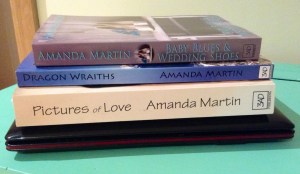
P.S. Baby Blues & Wedding Shoes  and Dragon Wraiths are both (hopefully) 99c currently on Amazon.com. I’m trying out the KDP Countdown Promotion but it’s not going to plan as a) my new covers don’t seem to have loaded, b) I couldn’t do a countdown deal on the UK site because my book was too cheap (even though Amazon set the UK sale price) and c) I can’t see if the countdown deal has gone live – even though it’s meant to be there for the next 30 hours – so I daren’t promote it. However, if you’re in the US and want to grab my books for a bargain, click the links (and let me know if it works!)

Because Life Needs a Playlist

I dare you not to bop along

I dare you not to bop along

When I was at university, I tried so hard to live within a budget, staying within the confines of my student loan, grant and what I could earn during weekends and holidays (yes, I was the last of the generation that got a small grant and didn’t have to pay fees. I was very fortunate). I would write down all my expenditure and knew what I had in my bank account to the penny. When I was running out of cash, I would live on plain pasta with black pepper. And then I would break, take £100 out of my savings account, and blow the lot on books, CDs and, more rarely, clothes.

This isn’t a post about money. I used up all my ability to budget during my university and travelling days. Now I probably don’t know to the nearest thousand what’s in the joint account without checking. We have an account that combines income and mortgage and our cash flow can be a bit random.

No, this is about music. When I was done with playing the martyr, doing what I thought I should do, denying myself pleasure to be “good”, and I cracked, my extravagance was usually music. (My habit of choosing the “cheap” option, to my own detriment, is a whole other post).

Just beautiful

Just beautiful

Music has been as important in my life as books – it’s another form if escapism. Oh to have had an ipod when travelling, instead of a battery-guzzling cd player and an ancient in-car tape deck. Mind you, even that brings stories. My tapes included U2 (donated by a Magic Bus driver) and Donovan (from a rather attractive hitch-hiker). My CDs included Pearl Jam (bought for the Kiwi I fell in love with), Jans Joplin (bought to impress said Kiwi!), and Red Hot Chili Peppers and Bon Jovi – two CDs that will always be the soundtrack to our breakup.

I have always loved listening to a whole album over and over, learning the words and seeking for meanings, although I often made my own playlists on blank tapes and then discs, long before iTunes made it easy (although moving music from PC to iPad in any structured fashion seems to be beyond my capabilities!)

I’m not sure when that love of music stopped. I haven’t bought a CD for me in a decade. I don’t download music much either. I think the last track I bought was for hubbie’s birthday last year, not including CDs for the children to have in the car. Actually, it was having the children that saw the end of my music. Any attempt to play my choice is met with yells of protest and heaven forbid I try to sing along. Yet music still brings pleasure when I remember to play it. Mostly I listen to the radio. Even then there tend to be only a few tracks that really grab me and they’re played for two weeks by the radio station and then never again.

*Hangs head*

*Hangs head*

It’s crazy. Music makes me happy, uplifts me, takes me outside the quagmire of my own head, allows me to find shared feelings, to dance around the kitchen or sob into my tea in a shared cathartic moment. Music fills the spaces, sparks the words and helps my writing when I’m stuck. (Garth Brooks is the master of getting a whole story into a single song). Why deny myself all these opportunities to feel better?

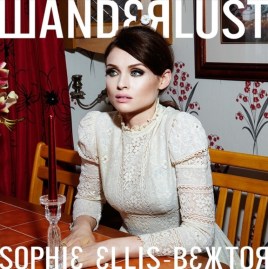
So today I downloaded an eclectic mix of tracks that have made me smile recently – Young Blood by Sophie Ellis-Bextor, Happy by Pharrell Williams and (blush) Story of my Life by One Direction. Now I’m trying to remember other uplifting tracks, to download and play when the world gets black (hard to be sad clapping along to Pharrell’s catchy tune!) because everyone’s life needs a decent playlist.

Medicate Me?

Looking for Life's Rainbow

Looking for Life’s Rainbow

I’m back in the eternal dilemma I’ve struggled with since having my second child. I know I’m (probably) depressed, but I don’t want to go back on anti-depressants. I’ve been on them once in my life, when I had a breakdown after three years in my first grown-up job. I needed them, as I wasn’t sleeping and could barely function. But they put me in a glorious bubble where the world couldn’t touch me. I left my job, my home, my friends, my guide unit, my family, and I barely felt it. No joy, no grief. And, when I came off them, I was introduced to the world of anxiety and panic attacks as an unexpected (as unknown at the time I guess) side effect. Since then I’ve been prescribed the same drug three times and each time I’ve carried the pack of pills home as a lifeline and refused to take them.

But now I’m spending more and more time in the dark place, where I am worthless, where I am a terrible mother who is damaging her children beyond redemption, where it makes perfect sense that they might be better off without me. Where I cry and cry and it never gets better. Or the rage builds, inflating like a balloon in my chest with every petty annoying thing the children do – every time they whine, or refuse to eat, or don’t listen, or ask and ask and ask, until I pop and the shouting starts.

The I Wasn’t a Good Mom letter that I included in The Parent I am and The One I Aspire To Be post has a whole heap of supportive comments underneath. But the one that stood out, when I re-read them this week, was the one which said your poor daughter, you need medication, she will remember these days and be scared for life by them. And it raised the endless debate that wars away in my brain.

Should I medicate?

Will it take away the extremes of temper and grief? Will I lose me or find me? What if the shouty ranting person is me? Or what if I realise I’m a hundred times better on medication, and I’ve been battling all these years – making the children’s life, hubbie’s life, my life awful – for nothing?

Happy Food my Son Refuses to Eat

Happy Food my Son Refuses to Eat

The bit that’s stopped me in the past is the part in the information leaflet that tells you it gets worse before it gets better. I’m not sure there’s any capacity for worse.

I remember, also, that last time I slept and slept. I don’t have that luxury now, who would run the house? Who would take the children to school and pick them up? What would I miss?

And then I realise there are whole chunks of the kids’ lives I don’t remember because of the sleep deprivation (did you know you only write the events of the day to your long term memory if you reach second-stage sleep? Like that ever happens in this house). So what difference would it make?

The biggest challenge is finding someone to talk it through with who understands. The last time I saw my GP she blamed everything tangible, refusing to accept that I might be depressed. She even suggested I send my husband in to ‘fix’ his snoring because clearly that was the cause of everything. A factor, occasionally, possibly, but hardly a major one. Might as well tell me to give up being a wife and mother completely, because husbands and kids cause sleep deprivation and therefore mood swings. That makes about as much sense as my sister’s doctor prescribing her prozac for PMT. my psychiatrist said it sounded like I was overwhelmed, rather than depressed, and I just needed to take more time for me. (I take half the week to do my writing, how much more would it take?)

It’s true that it’s got a lot worse since my daughter started school and I lost both my long nursery days – which gave me time to reset – and my freedom to manage our week as required. Quiet days at home to nurture, days out to recharge. Which terrifies me. I always thought it would get better, as the kids slept better, as my time became my own. The opposite is true: my time is so much more squeezed, my chores have increased, with extra ironing, packed lunches, assemblies, home work, and my self-doubt increases with every day nearer to adulthood my children get.

How many mothers need medication to survive the school run? It makes me feel selfish and pathetic. But every time my daughter sobs hysterically for no reason, I take the blame that she’s learning it from me, and it eats away at me. I remember my own mother battling with depression as I grew up. I read somewhere that children who grow up taking care of their parents end up missing out on their childhood and spend their grown life adrift and unable to connect. I could relate to it and it hurts me each time my son pats my shoulder and asks “Are you okay, Mummy?” as I sit sobbing. He’s three. It should be me comforting him, not the other way around.

Sigh. I wish life, or at least parenting came with an instruction manual. Or a crystal ball. Something, anything, to give you a hint about the right path to take. Until I find one, I guess I’ll muddle on through, getting it right and wrong and never knowing which is which.

Descriptions That Breathe – Bringing Writing to Life

The Dream Thieves

The Dream Thieves

When I write, both in my blog and my novels, I know that my language is straightforward – no deviation between signifier and signified. No real stretch of the imagination necessary to obtain meaning. I gently lead the reader by the hand as they wander through my stories without minimal effort required on their part.

Thinking about it this morning, I’ve decided this is due to three things: My inexperience as a writer of fiction, my background as an analyst and academic, and my constant lack of sleep. Taking those in order, this is how I see it:

1. My inexperience as a writer means I lack confidence and bravery. I over-explain to make sure the reader understands my story, knows what my characters are thinking and feeling. I dread “I don’t get it” and as a result probably get “I don’t feel it.”  Any tendency towards being different is slashed so that I can find acceptance. Any flowery description is deleted as ‘purple prose.’ (The person who edited Baby Blues crossed-out half the similes, saying, for example, “Or just ‘he slept'”)

2. Similarly, my business and academic background have kept my language uncomplex. Actually, that isn’t true of the academic writing: what that did for me was ingrain the passive tense as an acceptable form of language usage. “One could argue that …” is a historian’s stock phrase.

But marketing was all about saying what you meant in easy words. There’s a phrase in marketing, summarised as the acronym KISS – Keep It Simple Stupid. One of my jobs working in Internal Comms was to take complex business documents and ‘translate’ them into briefings for the staff. I was good at seeing through difficult ideas and getting to the essence of the message.

It’s a useful skill as a parent of young children. I am constantly trying to break abstract ideas down into basic language. Unfortunately, nothing kills vocabulary quicker than not using it. Oh, apart from lack of sleep.

3. I can barely remember the colours of the rainbow on fewer than six hours’ continuous sleep and I hardly ever get anything near that these days. I remember at university, when I would pull all-nighters to complete essays: I’d stumble into the communal kitchen at 7 a.m., bleary eyed, and ask my housemates, “What’s another way to say Stalin was pissed off?”

Bereft that I've finished it!

Bereft that I’ve finished it!

Why am I writing this defence of my unsophisticated prose? I finished The Dream Thieves by Maggie Stiefvater last night, and was as blown away as I was by The Raven Boys (and slightly less put out at the ending, having braced myself with the knowledge that it’s a quartet of books.)

Maggie Stiefvater’s writing is beautifully rich. Meanings have to be wrestled from the often dense and opaque prose. Motivations, character’s feelings, and even the basic plot, are often hard to fathom, despite the novel being written in omnipotent third person. It is not a passive read.

What I love most is the way the language is mixed up. I’m struggling to describe it (for all the reasons listed above!) but the closest I can come is to say the descriptions are alive. Just as Death is anthropomorphised in the Terry Pratchett novels, so is everything in The Dream Thieves. It seems appropriate, in a novel where the trees speak Latin and half the characters are psychics, that you can have an “ardently yellow” polo shirt or a “desolate” washing line (pp 7 and 57 respectively. All references taken from the paperback version, UK, 2013.)

Some of the language reminds me of my favourite poet, Gerard Manley Hopkins, who was known for stringing words together, like “dapple-dawn-drawn Falcon, in his riding | Of the rolling level underneath him steady air” (from The Windhover.”). Compare Maggie’s description of one of the characters visiting the family house:

“When Ronan opened the door, the car was immediately filled with the damp-earth, green-walled, mould-stone scent of home.” (p147)

All the senses invoked in one description, without apparent effort. You don’t have to analyse what the character feels, smells, sees, because it’s all there.

For the first time I wish I’d read the book in e-form, as I’m struggling to locate some of my favourite phrases. But here are a few (none of which, I hope, give any story away):

“Adam’s hand glided over her bare elbow. The touch was a whisper in a language she didn’t speak very well.” (p9)

“Gansey’s furiously orange-red ancient Camaro.” (p21)

“Blue Sargent was pretty in a way that was physically painful to him. He was attracted to her like a heart attack.” (p60)

“Then the engine expired … The engine ticked like a dying man’s foot.” (p122)

“Declan looked shocked and poisonous. He was always so alarmed by the truth.” (p411)

“The past was something that had happened to another version of himself, a version that could be lit and hurled away.” (p221)

“Cicadas sang madly from the trees. It was so impossibly summer.” (p340)

“She smiled at him. It was a tiny, secretive thing, like a bird peering from branches.” (p360)

“The crowd, drunk and high and gullible and desirous of wonders, screamed their support.” (p432)

“It was deadly like a cancer. Like radiation.” (p434)

It would be disingenuous to write in Maggie Stiefvater’s style. It is so clearly and unequivocally hers. But reading books like this stretch my vocabulary muscles and build up their strength. They encourage me to be braver and self-censor slightly less. Above all, they transport me to a place where words are everything, reminding me of their power. A place where emotions aren’t described as “her heart thumped like a hammer” (there are a lot of thumping hearts in my prose!)

To read is to learn and to learn is to grow. Bring it on.