Writer’s Block

Chick Lit

It’s amazing how the act of trying to think up a brilliant idea can bring on Writer’s Block. Normally I don’t suffer from anything like writer’s blankness, only writer’s fatigue. You know, when even you are a bit sick of your characters and the woes that continually befall them.

I’ve never opened my laptop on a writing day and failed to write five hundred words, even if the quality of said words means they’ll be on the cutting room floor at some point in the future. (Or not, as is too often the case. I’m a terrible editor.) Today, though, after finally locating dry wellies for the children and packing them off to nursery, grateful to finally be writing after missing Monday due to the bank holiday, I came up against the wall of the blank word document.

I was sat in a car park, waiting for someone I was due to have a meeting with, and I tried to at least freewrite about my surroundings. Describe the wind through the trees or the wall surrounding the car park. I managed a painful two hundred words before giving up in disgust.

The thing is, I know the cause. It comes from my desire to enter the Bridport prize.

Suddenly I’m back to the person I was four years ago, before I discovered freewriting with the OU, before I was introduced to Nanowrimo, before I was given permission to just write, without peering over my own shoulder critiquing every word that appears on the page. Because, of course, just writing isn’t going to be enough for a Bridport entry. It needs to be a moving or clever story with compelling characters and amazing momentum. The kind of story that lingers long after you’ve finished it, that hovers round your mind and raises new thoughts, new questions.

I don’t even know where to start.

Chick Lit, now, that’s easy. It’s genre writing; there’s always somewhere to start. But coming up with something original, something unique enough to get through round after round of vetting? I’ve as much chance learning how to fly. I’m not even sure I can write good chick lit because I’ve only sent my novel to one agent so far, and I know that my synopsis doesn’t do the novel justice.

I think it is time to focus, stop faffing, concentrate on what I can do, and put dreams of £5000 prize funds and fame and glory away for another year.

Besides I have a synopsis to write.

Reach for the prize

Cover of "Notes From An Exhibition"

Every year about this time I start thinking about writing competitions. More specifically the Bridport Prize.  I did the same when I was painting. The theory goes something like this: enter prestigious competition, win competition (or get shortlisted at least) and therefore have something to talk about in query letters when trying to sell my other work.

I never do enter though, not with my writing. With the abstract paintings I used to gamble the entry fee on the rare chance someone would connect with one of my pieces: art is even more subjective than literature. Not that it ever paid off, mind you. I spent a fortune in entry fees before I accepted the truth.

With writing, though, I always talk myself out of it. The usual litany of excuses: I can’t see my brand of frothy romance getting past the first round; I don’t have the time; I’ve never really been a short story writer (I’ve probably written half a dozen since I started writing again four years ago and they were all for my university course.)

This year though I felt something different.

Determination.

For lots of reasons: I’ve just started thinking about short stories, after waking up with one in my head last week (see last entry). That one ended up in the post to Woman’s Weekly on Friday. I enjoyed writing it, but mostly – surprisingly – I enjoyed editing it. Working with a few thousand words instead of a hundred thousand meant I had the patience to think about every line, every word. Okay, mostly that was because I was cutting 800 words out to fit the Woman’s Weekly word count. But whatever the reason, I was forced to tighten up my prose and I felt pleased with the result.

So Bridport popped into my head again. Maybe this year I could read some award winning short stories, try and understand what it takes. Come up with a less frothy theme than my usual romance. Give it a go. I was further spurred on by noticing the short story judge this year is Patrick Gale, whose novel Notes from an Exhibition is one of my all-time favourite reads.

Then I noticed they’ve moved the deadline from end of June to end of May. Four weeks away. It also happens to be my husband’s 40th birthday, as well as being the week before we take our annual family trip to see the rellies in Italy.

I’ve basically got seven nursery days to sort out a birthday pressie for the man who wants nothing, buy new clothes for the kids, pack and all that jazz, plus read a hundred short stories, come up with an amazing concept, write a fantastic story and edit it until it glows.

Or I could just wait until next year…

I’ll keep you posted.

P.S In my Bridport frenzy I came across some interesting blog entries. See below, particularly the first one, which is a brilliant interview with a previous winner.

http://www.multi-story.co.uk/guestspot-archive-emmadarwin.html

http://www.jonathanpinnock.com/2010/09/the-bridport-prize/

http://teresa-stenson.blogspot.co.uk/2010/05/brief-bits-and-bridport-advice.html

http://teresa-stenson.blogspot.co.uk/2012/04/bridport-prize.html

When is it good enough?

Once again I woke with a story in my head. Well, not so much a story as a What if on my own life. Actually much of my fiction is based on that premise, so much so that I sometimes write the real names instead of the pseudo made up ones. This was definitely one of those.

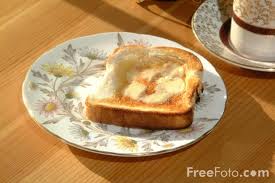
Of course, me being me, I immediately abandoned my current novel (the one that also came in a dream, the one where, 35k words in, I still have no idea what it’s about) to write this story. Luckily it came out as a short story, two scenes, 2,700 words. I’d nailed it in less than two hours over tea and toast in the coffee shop, after dropping off the kids.

Problem is, I think it’s great. I bought a copy of Woman’s Weekly Fiction Special on the way home (I don’t know a lot about where to sell short stories, so it seemed a good place to start) and I’m all set to send it in. Besides I need to get something published soon before the bills send me back to work.

And that’s my Achilles Heel.

Having been told in the past that my writing was dull, any time I pen anything vaguely readable I’m just so excited I think This is it!

Of course, in reality, I should add ‘sh’ to the beginning of that last word because, as a first draft, it undoubtedly is. The difficulty for me is, once I’ve accepted the ‘sh’ bit, I don’t know what I need to do to make it better.

I write in a certain style, quite simple and chatty. Should I be more descriptive, build in alliteration, metaphors, similes? More sounds, smells, colour? Make my plots more complicated or daring. Make my characters suffer more, make them funnier? And if I do all that (assuming I can, of course, which is another issue entirely), will it retain what I love most; the easy going chatty style? And more importantly, will it sell?

I was always told to write for intrinsic rather than extrinsic reasons: I do love to write and that’s mostly why I do write, but, you know, the bills still need to be paid. I know that only a lucky few make a fortune as a writer, and not that many make a living. I just need to make enough to pay for childcare.  

Hmmm. Answers on a post card please!

Writing a Synopsis

I spent last night searching the Internet for agents that accept email submissions (I don’t mind being rejected, but I’d rather not use a tree’s worth of paper doing it).

During my search, I came cross a great page of tips on the 3 Seas Literary Agency website, which included this advice for improving your manuscript’s chances:

Write a Great Synopsis

  • The synopsis for fiction works should include the beginning, the conflicts, the resolutions and the ending.
  • It must be written in the present tense.
  • A synopsis represents you and your work. Take your time, make it interesting, read it out loud, and wherever necessary, improve…improve…improve it, until you are happy with the final result.

(There are also great tips on writing a query letter, which I should also have followed!)

I’m sure there are other sites offering more detailed help. In fact, I’m sure I taught a lesson covering the same stuff. It’s not rocket science, but I particularly valued point three, the reminder to “improve… improve… improve.”

It’s amazing how quickly you can forget the basics, in a rush of blood to the head. I spent six months carefully crafting and re-crafting my novel. When I finally decided to be brave and send it to an agent, I spent about 90 minutes writing a cover letter and synopsis.

This wasn’t just the usual laziness, lack of time or child intervention. I found writing the synopsis harder than writing the novel. Also, foolishly, I didn’t see it as that important: after all, the agent has my first 3 chapters, surely if they’re hooked they’ll want to read more and if they’re not, what difference would a good synopsis make?

Silly really.

After all those weeks pouring heart and soul into my novel, surely I could afford to spend more than an hour or two trying to sell it? That’s when I realised the problem: I find it impossible to sell myself or anything I have created.

Before commencing my life as writermummy, I worked as an abstract artist – leaving my “proper job” to paint full-time. After six months, I had to return to the real world to earn a living, because I couldn’t sell my work to strangers. It turns out there is only so much art you can sell to friends (even lovely friends with a farmhouse in Luxembourg!)

Now I face the same barrier. I have to sell something I have created.

So my challenge, should I choose to accept it, is to find some objectivity and learn how to sell my own novel. If I can’t convince you, or an agent, or a publisher, to read it, then I may as well not have bothered writing it in the first place.

Any Synopsis-writing Tips gratefully received.

Rejection

I received my first rejection letter today. I feel a bit empty. Not because I care, really. Despite wild delusions that any agent would, of course, immediately demand to see the full manuscript (and who doesn’t have those?), I didn’t really expect to be accepted that quickly or easily. I anticipate many rejections before I find success (assuming I ever find it). I didn’t even expect a personalised letter detailing why my novel was rejected.

Which is lucky.

In fact, I think the real reason I feel flat is because I got a response so quickly. My Mills and Boon submission disappeared into the ether, regardless of assurances that a response would be received inside six months, and despite several attempts to elicit said response from them. Somehow that not knowing gave me hope, at least for a while. (I can safely assume that, after nine months, I am not a Mills & Boon writer!)

Maybe hope is what it is all about. Possibly that is why I have only recently sent my first submission to an agent, despite having written four novels in the last three years. Until it has been rejected, there is still the hope that your novel is the next big thing.

But here’s the rub. My novel could still be the next big thing. One rejection is just one person’s opinion. As my rejection letter was signed ‘Bryony’ rather than the name of the agent I sent my submission to, I assume my novel was perused by a reader. So that one opinion wasn’t even the agent’s.

I think the bit that leaves me feeling insecure is not knowing how far into my first three chapters the reader got before they hit the ‘no thanks’ button and moved on. What if they hated it after the first paragraph? I’ll never know.

My rejection letter recommended the services of a literary consultant. I admit I have considered getting a professional view of my work. I just can’t quite bring myself to pay someone – it makes me nervous, with hints of vanity press and the like.

Does anyone have any experience of literary consultants?

In the meantime, I shall plough on with novel #5 and eventually, after another few months, I might find the courage to send some chapters of one of my growing stack of novels to another agent.

Until then, I have hope.

Life vs. Writing: Life is Winning

Writer's Block 1

My problem seems to be that I run out of steam. I’m not sure whether it is attributable to lack of sleep or maybe just that, after three years of raising children, I have the attention span of a toddler.

Take this blog for example. I started it full of enthusiasm and self-belief, convinced I had something unique to say and the energy to say it. Merely weeks later, life has taken over again. I’ve spent my child-free days decorating and cleaning, and my evenings looking for children’s furniture on ebay.

All the thieves of time are out with their knives.

Add to that a severe bout of teething and my motivation has hit rock bottom. I am trying to think of interesting blog entries but my fellow bloggers seem to have said it all.

Working on my third draft edit has left me convinced my work is only fit for the delete button. It’s a place all writers reach I’m sure. I’m just not sure how to break out.

So it’s time for a new plan.

I’ve narrowed it down to two choices.

Option A. Research my next blog entry on writers’ forums – something that I admit has caused me a blogger’s block, as the idea of joining a writer’s forum and putting my work out there for censure terrifies me.

Option B. Shelve my current novel and start something new. That smacks of running away to me, but it might be time to freshen up.

The third option; book the kids in nursery for a week and run away to a writer’s retreat so that I can focus more than an hour at a time on my rewrite, sadly is not feasible.

Tempting though.

In the meantime at least I’ve broken my blog drought. I’m off now to visit my best friend and her new baby, and to try not to get too broody. Having another child would probably erase the writer from writermummy for good!

Get Professional Help

Cover of "Plot & Structure: (Techniques A...

Even if the story is burning in you and flowing out faster than you can type, you still might benefit from professional help, particularly when it comes to editing your first draft.

If you are disciplined enough to work solo there are some amazing books to help you start writing or to hone your skills as a writer. These are my favourites (I intend to review them when I get a chance, so watch this space.)

General Books on Writing

Teach Yourself Creative Writing, published by Hodder Education, London, By Stephen May (2008)

Starting to Write, published by Studymates Limited, Abergale, By Dr Rennie Parker (2007)

Creative Writing, published by How To Books Ltd., Oxford, By Adele Ramet (2007)

More Specialised Works

Dialogue: Techniques and exercises for crafting effective dialogue, published by Writer’s Digest Books, Cincinnati, Ohio. By Gloria Kempton (2004)

Beginnings, Middles & Ends, published by Writer’s Digest Books, Cincinnati, Ohio By Nancy Kress (1993)

Description & Setting [Techniques and Exercises for Crafting a Believable World of people, places, and events], published by Writer’s Digest Books, Cincinnati, Ohio By Ron Rozelle, (2005)

Plot & Structure [Techniques and Exercises for Crafting a Plot that Grips Readers from Start to Finish], published by Writer’s Digest Books, Cincinnati, Ohio, By James Scott Bell, (2004)

Characters & Viewpoint, published by Writer’s Digest Books, Cincinnati, Ohio, By Orson Scott Card, (1988)


If, like me, you need to be led, cajoled or terrified into getting pen to paper there are various course options. Try your local government or college website for free or low-cost Creative Writing courses. I taught a couple of free PCDL (Personal and Community Development Learning) courses at New College Stamford with a lovely group of students, who went on to form a writing group.

If you want something more detailed, then a university or distance learning course might be an option. The Open University does a range of Start Writing short courses or they have a nine-month creative writing course (which I highly recommend).

Finally there is no substitute for reading as widely and as voraciously as you can. Learning from the people who have already been published is a good step in the right direction to getting there yourself. Don’t limit yourself to your chosen genre – there is much to be learnt from reading outside your comfort zone.

As Stephen May puts it in his Teach Yourself Creative Writing,

“Writers choose their own mentors. Anyone still in print or still available on the shelves of a library is there to help guide you towards expressing yourself clearly and well. To help you find your own voice.”

Who are your favourite mentors?

Carry your story with you

For me, one of the secrets of the writer/mummy is to always take your story with you in your head. If you carry your characters in your mind you can chat to them, shout at them, fire questions at them – their answers won’t always be predictable and the conversations can be very interesting.

Creative writing advice books will tell you that the more you know about your characters the better your writing will be. If you are the kind of person that makes lists or is very good at being thorough, there are various forms available online to work out all the details of your characters – star sign, favourite colour, place of birth. This is a particularly comprehensive one I have discovered (but am far too lazy to fill out for any of my characters!)

These character maps are useful, they enable you to be consistent and understand how your character might react to a given situation. However, if you’re honest, could you say what your best friend’s favourite colour is or where she was born? That doesn’t mean you don’t know her inside out, though, does it? You learn more about her real character from gossiping over a glass of wine or from watching how she copes in a crisis.

For me the same can be said of my characters. When I’m out and about I like to imagine what my characters would say to each other, how they would handle a range of situations. I fantasize about their futures in the same way I used to fantasize about my own whenever I got dumped (you know, those scenes where he comes back grovelling and begging for you to forgive him, but you spurn him with a toss of your sleek blonde hair.)

It can help if you think of plot and character development as a series of ‘What if?’ and ‘Why?’ questions. What if your female protagonist jacked in her job to take up sky-diving, what if your male lead got dumped at the altar? Why would she take up sky-diving – is it to conquer her fear of heights, because her ex said she was too scared to do anything dangerous, because her mum forbade her and she’s just pissed off at the world. Why did he get dumped? Was he a bastard, did she meet someone else? Has his fiancée found out she’s dying of cancer and doesn’t want to put him through the pain of losing her slowly?

When I’m in the throes of writing, particularly in the early days of a new book, my head is flooded with questions and potential answers. I often don’t know the answer that will appear in the book until I write, (and characters have a nasty habit of not doing what they’re told) but I have already played out all the various permutations in my head while in the supermarket queue, driving the car or lying awake in the night between bouts of teething tantrums.

Another important thing is to always have writing implements to hand – a crayon, a notepad, a mobile phone – to write down that dazzling piece of dialogue or dastardly plot twist. Once you start with the what ifs and whys it can lead you down the most meandering of mazes. It’s best to take notes as you go along, unless you’ve had enough sleep to have a particularly retentive memory.

My mobile phone is my most important writing tool, aside from my laptop. (As I write, my mobile phone is dead; I am utterly bereft and trying to fathom how to work my husband’s spare!) I like the phone because I always have it to hand; it is both pen and paper; it doesn’t get scribbled on by the kids (though often covered in yoghurt or chocolate) and – best of all – I can send my texts to my laptop, thus saving me the effort of writing it all twice.

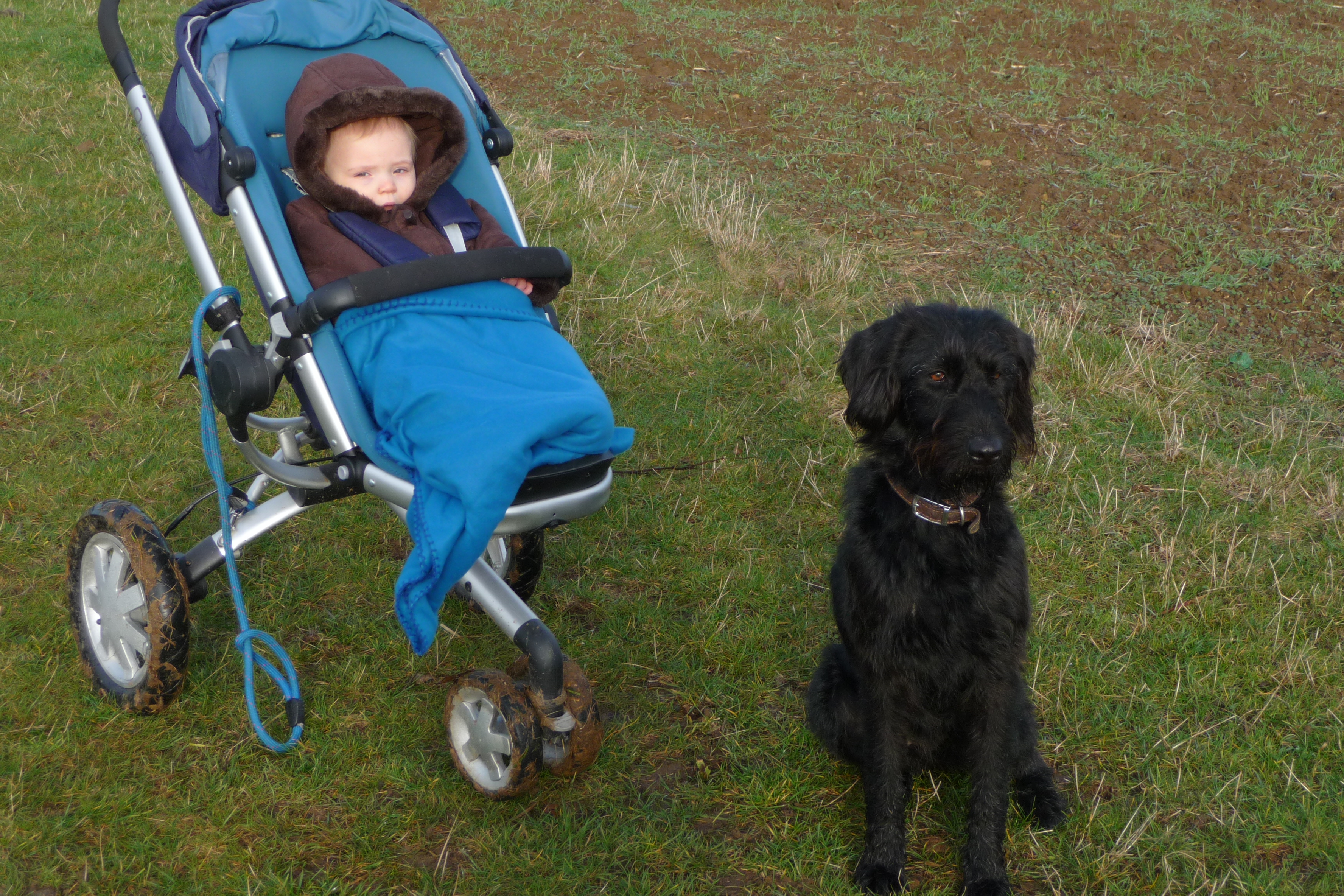
My favourite time to write conversations between my characters is when I’m walking the dog, as I can text and walk at the same time (us mothers are good at multi-tasking, yes?) and for some reason I find the rhythm of walking sets a good pace for dynamic dialogue.

If you think you don’t have time to write, then think of all the times in the day when you can tap out a quick text message – waiting in the supermarket queue, sitting in the car with a sleeping child, lying in the dark waiting for them to go back to sleep. (I wrote some of this section at 6am, on my mobile phone, with a sickly child asleep on my chest.)

So, next time you’re tired of listening to the twentieth rendition of Miss Polly Had a Dolly in the car, pass your toddler a banana and, while she’s busy eating, have a think about the stickiest situation you can land your characters in. Then work out the most outlandish way you can rescue them again.

I would love to hear about your favourite ‘thinking’ times, or your craziest plot twists. What is your favourite way of taking notes?

Life vs. Writing

English: Paintbrush Português: Trincha

It’s all about the carpet.

A few weeks ago we decided the carpets had absorbed as much wee, poo, vomit, coffee and dog hair as they could stand.

They had to go.

Immediately. Because in this house everything has to be done immediately once a decision has been made (although the procrastination can go on for years prior to that.)

So, five years after moving in, we made the decision. We immediately found a great deal on a wool carpet that had to be bought immediately (it was in the sale). You get the idea.

The fitters were booked to come in five weeks, job’s a goodun.

Sounds simple doesn’t it?

Not for us. There is always a chain of events that have to occur whenever anything needs to be done. This is because our house is a disaster zone of unfinished projects.

What has this to do with writing, you ask? Well, everything really.

My novels are all unfinished projects too. As are my husband’s novels. We’re not great at finishing things. We use the writing projects to put off having to finish house stuff, and house stuff gets in the way of finishing our writing.

Also, we get bored.

Starting something new is much more fun than finishing off the fiddly, hard, quite frankly tedious bits that make something look finished. You know, like skirting boards, architrave, painting.

Or editing, formatting, redrafting.

So our house, which could look like a lovely show home, rather resembles a hopeless case on DIY Disaster. Well, not that bad (in case my husband reads this), but close. And my novels, two of which are finished in draft form, are, to be honest, a bit boring. They need all that tedious editing time to make them sparkle.

So, anyway, before the new carpets can be laid we have to:

Laminate the hallway. Which means finish the utility room step, put the new architrave up, take off the skirting boards, fill holes in the plaster and so on. The laminate fitters come today, so husband has been busy for the last two weeks doing his bit. I was meant to be painting the woodwork downstairs, but I’ve been writing this blog instead. Oops.

Now husband has done his part, and hopefully the hallway fitters will actually arrive at some point (already two hours late), it’s my turn. I’m redecorating our bedroom. Since we’ve moved in it is the only room that hasn’t been decorated. We’ve managed to ignore it until now because, well, basically, we could.

I have hated the wallpaper since moving in, but I hate painting woodwork even more, and our room is chock full of it.

I’ve managed to strip the wallpaper (I like that bit), and paint a few feet of dado-rail. Then child#2 got rotavirus and nothing has been done since. And now the carpet fitter comes in two weeks. But the closer the deadline, the more my brain is fizzing with writing ideas – blog posts, new novels, restructuring of old novels. I am trying to emulate Fireman Sam, and do One Thing At A Time (he says it with the capital letters). But I’m so scared of losing an idea, I push them all along together, and ignore the decorating.

Anyway, you may have noticed that this post doesn’t contain any writing advice. Sorry about that. I just thought a little insight into the life of writer/mummy might be interesting. I’m sure I’m not the only person on the seesaw of life vs. writing. Currently life is winning, although I’m fighting back: I’m writing this while on a tea break, waiting to let the fitters in who, apparently, ARE on their way. Then back to painting.

I would love to hear about your battles of life vs. writing.

May writing always win in the end!

Write what you know

A mug of tea

Never be afraid to write what you know. If you think your life is boring, you couldn’t be more wrong. People like to hear about lives they don’t live and, most definitely, lives they do live. As a Writer/Mummy, especially as a mother of small children, you can share the horror and humour of everyday life and make a fellow mum laugh in empathy and recognition.

If you don’t believe me, check out the amazing Parenting with Crappy Pictures blog. It never fails to make me smile, laugh, or even weep in shared sympathy. Note how many people follow the blog and read some of the comments. It can be lonely being a mum. There is nothing nicer than hearing you’re not the only one going slightly barmy on too much caffeine and too little sleep.

Talking of caffeine, I have found that cafes and coffee shops are an excellent place to overhear fascinating tales. You don’t have to be hobnobbing with the rich and famous to come up with cracking storylines. The art of penning entertaining dialogue can often be enhanced by surreptitious eavesdropping. (As you develop your writing you’ll learn what to leave out, such as the ums and ahs of natural conversation. I will write more on dialogue in a future post).

I devised an entire character after eavesdropping on a public school boy having lunch with his visiting grandparents. The character doesn’t vaguely resemble the boy – instead it’s the lead protagonist in my first romance – but the ideas flowed from the life the boy was describing and the reactions of his grandfather.

Next time you are surrounded by chaos at breakfast, store in your mind the sights, smells and emotions that bring the scene to life. Today’s grey-hair-inducing tussle with your two-year-old is tomorrow’s true-to-life hilarious scene.

Honestly.

How many times have you moaned to a friend about the horrific supermarket tantrum and realised that, with distance, it was a bit funny.

Even if you don’t want to write about life as a mummy, or your job, or your time at university, or your gap year, your first date, your childhood, your parents. Even if you want to create a fantasy world on planet Zarg with a tin robot as your lead man, you can still take inspiration from the world around you and the life you have lived.

It isn’t just your experiences that inform your writing, but your sensations. The emotions you feel, the physicality of your existence. Childbirth pain? I’m sure the same sensations could translate into how it might feel to be tortured by an alien device. Seeing your little one off to school for the first time? Those feelings of pride and desolation, the swelling heart, the racing pulse, the nausea, might just belong to an Army Sargent sending his troops into a no-win situation.

The most important, unique, thing you can bring to your writing is you.

So, next time your darling daughter is screaming at the top of her shrill register in the biscuit aisle at Sainsbury’s, don’t reach for the Valium, reach for a pen.