And I Am Free

The view from my childhood home

The view from my childhood home

Did you ever run away from home, as a child? My childhood memories are sketchy at best. I recall the hullabaloo when my sister ran away, and was subsequently discovered hiding out in the neighbour’s garden.

I seem to remember a similar ruckus to do with me walking to or from Brownies by myself (it was several miles away along a deserted road) because Mum couldn’t take me.

My childhood comes back in vague flashes that I’ve learned not to rely on as the truth. But I do know that I was often away from the house. I roamed the fields, climbed trees, waded through rivers, either with friends or alone. Home was not a happy place and I avoided it when I could. (When a psychiatrist asked me to name a significant adult I remembered from childhood, I couldn’t, settling eventually on a neighbour who used to breed rabbits and whose house I used to haunt.)

The other place I escaped to was inside a book. No friends outside school? No matter. I had the Sweet Valley High twins, Nancy Drew and the Famous Five. No boyfriend? Never mind. I had a hundred romance stories, from Georgette Heyer and Mills and Boon, to Jane Austen and Emily Bronte. All the happy ever afters you could desire (what they did to my expectations of love and marriage is another post entirely.)

Roaming the fields near home

Roaming the fields near home

As an adult little changed. My roaming got further afield, to the Lake District and Scotland, Morocco and New Zealand. My reading switched, unfortunately, to Nineteenth Century Russian History, to be rescued by Shakespeare and Gerard Manley Hopkins.

And now? Now I long to run away. To roam the fields unfettered without rushing for the school run. I long to drive more than ten miles from home, to be by myself with wide open skies and roaring rivers. To not be ruled by the clock and the routine and the responsibilities. To get through a night without drawing on compassion that doesn’t come naturally or survive a day with no need for patience.

So I escape, into books, and discover that writing has become my salvation. Many writers I know have always been writers. They’ve known from the beginning that that is what they were meant to be. Not me. I wanted to an academic and control words, as I couldn’t control life. I had all the freedom I needed in the mountains I climbed and the books I read.

Escaping to the Lakes

Escaping to the Lakes

Then I became a mother, and my world contracted to a tiny point of endless worry. Even reading wasn’t always an escape (husbands and children don’t understand “this is a good bit” and are sure to interrupt at the climax, never mind my new inability to read anything where people suffer.)

I couldn’t find the books I needed, so I wrote them. I write of all I’ve learned, all the things I’ve done, the people I’ve been, to remind myself. I write of painting huge canvasses or taking photographs, hiking mountains and travelling far from home. I write to remember and I write to forget.

And I read, with my fingers in my ears. I hoard the last chapter until I know I can enjoy it uninterrupted. I read fantasy books by brilliant authors who let me live other lives for a while and make me want to be a better writer. I read at the school gate, and write in the supermarket, and plot and plan in the dark hours of coughing and crying and complaining and cuddles.

And I am free.

Revisions and The Raven Boys

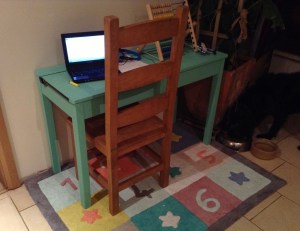
My new workstation - the kids' homework desk!

My new workstation – the kids’ homework desk!

I finally managed to get back to some work today, having packed my almost-better children off to school and nursery. I felt guilty about it, because they probably should have been at home, but I needed the space and silence and absence of sick to start feeling human again.

It felt good to work on my manuscript for the first time in ten days, even though I failed at the numbers game. That’s the thing with revision: you write and write and cut and edit and, at the end of several hours, you have 200 words fewer than you started with.

It’s disheartening.

I’m editing and expanding with this novel, so there are still thousands of words to write to fill the gaps. It’s not uncommon for me. When I write my first drafts I tend to write the highlights; something like an extended synopsis. I write for the romantic ending, the big scenes, the turning points. Then, fifty thousand words later, I look through what I have written and think what?! How did I get from there to there? How did she go from hating to loving him? Why have I given all the secrets away in the first chapter? How much backstory? Then I have to go through and unpick the mess. Fill in the motivations, flesh out the hundred-word paragraphs that really should be two-thousand word chapters. It’s tiresome work, because I write to discover the ending. Once I’ve reached the end, I’m not that interested in filling in the spaces.

I read that way, too. I usually have to read a book twice because, the first time through, (if the book’s any good at story pace or suspense) I skim-read whole chapters to get to the essence, the plot point, the drama. I miss all the great language, the unfolding of characters and personalities, the subplots, the themes. I devour the book, barely tasting it, and then have to go back through and vacuum up the crumbs.

Revision leaves me feeling like this

Revision leaves me feeling like this

I’m reading the sequel to The Raven Boys – The Dream Thieves – at the moment (despite my rant about the abrupt and unsatisfying ending of the first one) and I’m utterly hooked. Now that I know it’s a four-parter, I’m not worrying too much about story resolution (although I’m still skimming ahead for the drama, of which there is plenty). I feel that I’m reading the book in a language other than my native tongue, as if it’s in Old English or something, because the writing is dense and complex and poetically beautiful, but for some reason that’s okay.

But it hasn’t helped my revision. Because, when I put the book down and reluctantly get back to work, I read through my oh-so-obvious story line, with my two-dimensional, unintriguing characters, and I want to chuck the lot in the bin. My Alex and Rebecca are pale imitations (not imitations, because I wrote them before I read Maggie Stiefvater, but you know what I mean), pale shadows of Gansey and Ronan, Adam and Blue. And I want them to shine and live, like Maggie’s characters do. It’s exhausting.

No one says writing a novel is easy. Actually, writing it is the easy part. Making it make sense, making it shine: that’s the impossible task. Reading the words of a master is at once both inspiring and crushing. Never mind. I shall slog on, ignoring the expert sprinting past to the finish, and climb my own climb, one step at a time. It’s worked before. I have faith. I’ll see you at the summit!

2013 365 Challenge: Some Lessons Learned

Conquering mountains

Conquering mountains

For anyone new to the blog (where have you been? *grin*) I spent last year undertaking a writing experiment I called the 2013 365 Challenge.

I set myself a tri-fold task: I would write a blog post everyday, I would include pictures in every post (mostly from what I had been doing that day) and I would write an installment of a novel every day. Not just serialise a novel already written, or write 10,000 words at the beginning of the month and parcel it up, but sit down every single day and think of something new to happen in my novel.

I set myself rules, too. I would try and post by 10am every day (which I mostly did!) I would collate each set of installments into a free monthly ebook and publish it by the last day of the month (which I mostly did). And, most importantly, I would not go back and change things (which I didn’t, aside from typos and spelling mistakes, which slipped through due to tiredness, and – once – when I accidentally changed the name of a character to one in the novel I was also editing at the time. I changed that for the sake of readers’ sanity. But I never changed more than a word at a time).

I think reaching the end of my challenge, the end of Claire’s (my protagonist’s) story, and realising I had written 285,000 words in a year and published them, counts as one of my greatest life achievements.

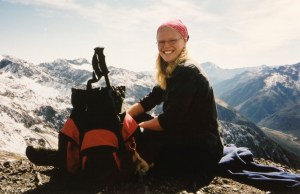
Me before kids (when I got sleep!)

Me before kids (when I got sleep!)

It isn’t Pulitzer Prize winning fiction. In some places it rambles. In many places I’m sure the lack of editing is obvious. But, still, hundreds of people read it and enjoyed it (as far as I can tell, by almost as many copies of the later volumes being downloaded as the first one). I felt like I reached the mountain top and the view was amazing.

Most importantly, I learned so much about being a writer that, even if I hadn’t had a single download, I think I would consider it time well spent. (Although, if I hadn’t had a single download I probably wouldn’t have made it past January, as knowing people were expecting the next installment was often the only thing giving me the motivation to write when all I wanted to do was sleep.)

I’m still processing all the things I learned from my challenge, but I promised in yesterday’s post that I would write some of them down. So these are the things that occur to me right now:

  • It really is important to write every day. That is probably more true for the blogging than the novel challenge, actually. I’m working on my current novel only three days a week (as I used to before the 2013 365 Challenge) but writing something everyday keeps the words flowing
  • You can write great prose even when you’re tired and uninspired (in fact, sometimes having half my brain worried about other things kept my conscious brain busy and left my creative sub-consciousness to get on with it)
  • Writing to a deadline sharpens the mind. Knowing you have to write something, anything, in the next hour, frees you from restraint.
  • Writing to a deadline can also cause terrible writer’s block. Knowing you have to write something, anything, in the next hour can make the white screen the most terrifying thing in the world
  • If the white screen scares you, turn it off and write somewhere else. Tap out a text message, scribble on an envelope. Once the words start flowing, it’s easy
  • Walking sets a great rhythm for dialogue. If I ever got stuck with a scene of dialogue, getting outside and walking the dog helped the words come. The conversation would run in my head in time to my footsteps and all I had to do was write it down
  • Research can spark off new and exciting ideas. Many of my best installments were triggered from a Tripadvisor review. Reading about other people’s experiences can set off a train of thought that leads to a new story, character, or source of conflict.
  • Keep your characters moving. If they must have internal dialogue or introspection, having the protagonist physically moving can give interest and momentum. Claire did some of her best thinking while hiking along cliffs or driving country lanes. It also makes it easier to match scene to mood: a lashing thunderstorm made a great backdrop for a moment of angst
  • Weather is important. It isn’t always sunny. Using Google StreetView to look at different parts of the UK also gave me impetus to write about different types of weather. Now I know to think about the weather and make sure it’s appropriate both for the time of year and mood of scene (see above)
  • Character arcs are fun. Having Claire change from a shallow work-driven career woman into a nature-loving, child-hugging, self-aware woman was very satisfying.
  • Nasty characters can be fun, too. When Claire’s brother turned out to be an utter git (which I hadn’t completely anticipated) I absolutely loved writing his scenes. We don’t often get to say mean things in real life and not feel guilty afterwards. Writing is cathartic
  • Your own experiences are a limitless resource. I used many things from my own life, including (but not exclusively) my time in hospital having my second child; my father’s cancer; my breakdown and subsequent depression; my year living, working and travelling around New Zealand; summers spent in Swanage with my father; hiking holidays in the Lake District, my time working as a Marketing Manager
  • Friends are also great resources. Two examples that spring to mind are when I used emotional anecdotes (not the details) from my paediatrician friend to get inside Josh’s mind, and an accidental conversation with a friend who used to live in the Lake District that greatly enhanced my Grasmere episode.
  • The mind is a well that can run dry. Whether I write 1,000 words a day for a week or 8,000 words in a day, my overall work rate stays fairly level. I just can’t generate the ideas to write more than 10,000 words in a week. The brain needs time to refill and replenish
  • Coffee shops and town centres are great places to refill the mind. Eavesdropping on conversations and watching how people interact can help to create stories
  • Reading is just as important as writing. Immersing yourself in a well-written book can fill the word-well in the mind and reinvigorate an exhausted muse
  • Formatting for Smashwords and Kindle are really boring but actually fairly straightforward. It helps to format as you draft, if it isn’t too distracting. I’ve learned to do it when I’m waiting for the next idea to come, or while watching TV
  • People don’t leave reviews for free books

I’m sure there are loads more things I’ve learned and I’m equally sure that some of these things only apply to me and not to all writers. Looking at the list, though, it makes me realise how far I have come as a writer and how much my confidence has grown. Turning up to work every day, whether I wanted to or not, moved me from “aspiring writer” to “writer”. I just need to make sure I keep it going! This year’s (unofficial) challenge is to build on my learning and concentrate on the craft of writing. Quality over quantity. I’ll keep you posted.

2013 365 Challenge Aftermath

Life Since Claire

Life Since Claire

Last night I realised it’s been nearly a month since I finished my 2013 365 Challenge (although I’m still blogging daily). Twenty-four days since I had to hold a story in my head every day; to remember who was in scene, all the strands of plot that needed completion, all the characters and their stories and flaws and mannerisms.

Four weeks since I had to format a word document for Smashwords, search for the perfect cover image or wonder what the weather was like on a random day last summer. To worry if I was taking Claire through a development arc as well as a physical journey.

I felt a bit sad, especially as I no longer get any downloads on Smashwords – checking my stats always picked up a gloomy day. I wondered if some of my sense of being adrift is due to not having that thread of continuity with me all the time. like leaving work or finishing a university course, or breaking up with a partner.

Then, in my new spirit of Happiness, I thought I would list all the great things about finishing Two-Hundred Steps Home.

  • Finally being able to read all the novels I’ve wanted to read for ages, rather than just reading Tripadvisor reviews and the YHA website
  • Catching up on blogs and actually leaving comments. Okay I’m still behind on my aim of three comments a day, but I probably managed fewer than three a month last year
  • Eating lunch while watching Bargain Hunt instead of researching tourist attractions or driving routes with Google Streetview
  • Going to bed before midnight
  • Getting stuck into crafting a novel, including all the pain of fixing continuity errors and plot holes, and being able to work on any chapter rather than having to stick to a strict linear timeline
  • Writing poor prose, just to write something, and knowing I can change it!
  • Walking the dog without tapping out dialogue into my phone: feeling the wind on my face and not falling into rabbit holes
  • Sitting down after dinner and the kids-to-bed routine without that lead weight in my stomach and the dread words “I have to write my post”
  • Spending time after the school run; getting my head straight, listening to the radio, drinking tea, and not feeling guilty that I’m not writing
  • Going out. I actually went to the cinema this evening for the first time in years, and afterwards talked about something other than my blog and Claire
  • Spending time with new characters and getting to know them

My work rate has dropped off as a result – I’ve only written around 12,000 words this month instead of the usual 20,000-25,000 (uncrafted words, too, whereas I proofread every Claire installment) – but I barely feel like I’ve done any writing and still the words pile up. I wrote 600 words on my iPad while waiting for an appointment yesterday. Before the challenge, I would have seen anything less than 5,000 words in a day a failure, but I could go days without writing anything. I have now learned that daily 600-word scenes quickly add up to a significant amount.

I learned so much from the challenge, although I’ll probably save that for another post. But, in some ways, I’m having to learn to live without it. It’s good to realise there are loads of positives. Mostly I feel there is time to breathe.

Now, time for another cup of tea.

Finding Sense in Stories

Horrible headlines

Horrible headlines

Sat here on a Saturday morning, trying to think of something to write for my blog post, my mind was blank. After a night of The Raven Boys type dreams (always the danger of reading a powerful book at bedtime) I couldn’t pull together a story. I started flicking through my Reader, catching up on my favourite bloggers, like Miss Fanny P, looking for inspiration.

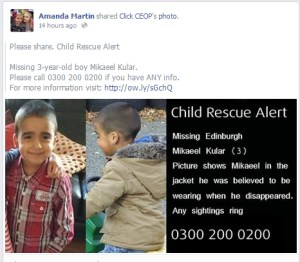
And then I came across a post that stopped me like a punch to the stomach. On Wednesday this week, over the border in Scotland, a three year old boy went missing from his first-floor flat, some time between bedtime and morning. The kind of story that twists inside you as a parent and makes you rush to hug your child.

I’ve been following the story with latent hope, as the people of Edinburgh poured out in their hundred to search for the missing boy. As is usual in such circumstances, we discussed whether our children could leave the house by themselves (they could) and whether there was more to the story than a boy running away from home (it seems there possibly was).

So, when I saw in my Reader this post by a resident of Scotland, whose children were involved in the search for the missing boy, I felt physically sick. We all want a story to have a happy ending. As an author (an author who lives for the HEA) I can’t bear a story that doesn’t end as I think it should. One that involves the death of a small child is the worst there is.

The Facebook appeal

The Facebook appeal

It’s not the only story that has wrenched at me this week. There’s the case of a child who died within hours of their first day at nursery, or Jordon, the autistic boy who locked his mother in the house and disappeared on 9th January.

The latter story, like the story of the missing three-year old boy in Edinburgh, was one I discovered first on Facebook. I always share missing people or pets messages because Social Media ought to be good for something. In the case of Jordon, the story had a happy ending, with the boy being found alive and well. But during my internet search to see if he was okay, I discovered another dozen stories of missing children found dead.

They haunt me, these stories. Not just as a parent, imagining something happening to one of my children (which I can’t imagine, or I’d never let them leave the house again). I think of the families blown apart. The scars that won’t heal. The blame, the recriminations, the guilt. Of all the people touched, all the people searching with hope in their hearts. The policeman holding back tears as he breaks the terrible news. The assumptions that will be made, as the authorities search for the truth.

Mostly I think about the mother (who is often the first one questioned). I no longer judge mothers. No matter what we see from the outside, we have no idea and we must not judge. I am sure there are evil people in the world, but there are just as many desperate, overwhelmed, frightened people and we cannot know the truth of their lives.

As a writer, I live these stories with full emotion. It isn’t just a news story, it’s life in all its messy detail. There aren’t heroes and villains, winners and losers. Just the complicated horrible terrible beauty and tragedy of life. And it’s why I write love stories, women’s fiction, journeys of self discovery. The world needs hope and Happily Ever After. It needs to make sense of life and wrap up the loose ends, to have themes and symbolism and resolution.

Because life doesn’t. Life has sadness and questions and fear. It has grieving families and worried parents. We’ll all hug our little ones just a bit tighter today, and maybe we’ll look for escape in a book. I know I will.

What Sharknado Taught Me About Characters

Because of course a chainsaw is weapon of choice against a great white

Because of course a chainsaw is weapon of choice against a great white

Hubbie and I finally watched Sharknado the other night. I’d read about it on Kristen Lamb’s blog and it sounded  right up hubbie’s street: low budget B Movie with awful special effects that’s a bit tongue in cheek and doesn’t take itself too seriously.

I don’t share in his enjoyment and fully intended to go to bed. But the movie was just so darn awful I couldn’t tear myself away. Not being as used to such movies I kept saying “but what about..?” and “that wouldn’t happen..” Then realised I was talking about a movie where sharks were sucked up into a tornado and didn’t suffocate, where sharks could swim through storm drains and jump twenty feet into the air.

However it was all about different levels of suspended disbelief. I could accept all the things to do with the sharks – it was a science fiction movie after all. I could just about accept that you could blow a hurricane apart with a MacGyver home-made bomb (although I’m sure there are plenty of people living in tornado paths that wish it was true.) The bit I struggled with most, however, was character motivation.

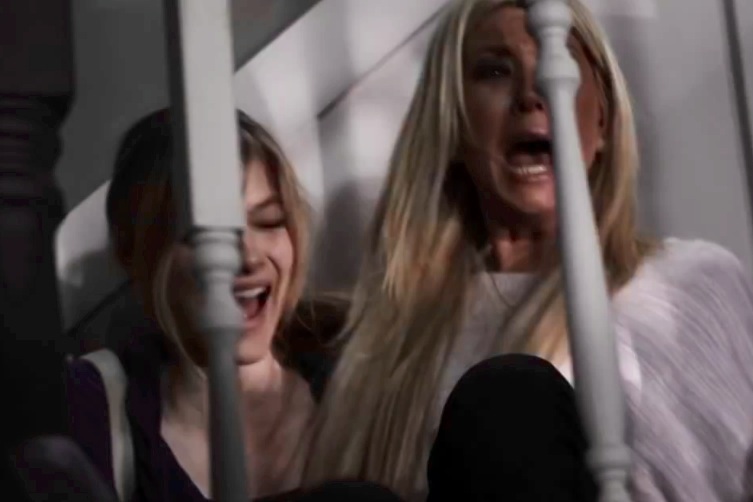
Safe on the stairs? I don't think so!

Safe on the stairs? I don’t think so!

People are people, whether there are sharks falling from the sky or spinning round in a waterspout or not.

So, if a mother was sat on the stairs with her daughter watching her husband being eaten alive by a giant shark, wouldn’t she at least climb a bit higher up the stairs away from the bloody water and body parts? And if a man drove halfway across town to rescue said daughter, would he stop in the path of sharks to rescue a stranger?

Aside from the dire acting and the awful script, the actions of the characters just weren’t believable. I could accept the sharks and the bombs and all that, but I didn’t give two hoots about the characters.

What I took away from the movie (apart from a vivid nightmare about genetically altered wolves which made me wish Horror was my genre of choice) was that you can get people to believe anything if you write it with conviction, but you have to get the character motivation right. With authentic characters, who have clear goals and believable motivation, you can sell anything. Even flying sharks.

Write Now, Write Naked: 2013 365 Challenge #330

The Inconvenient Urge

The Inconvenient Urge

I’ve read several posts this morning with great writing advice in them, or posts about the importance of writing. The online blog community is a wondrous resource for all things writerly. Even if you aren’t a writer, these are still great reads.

So I thought I’d share the highlights of my morning reads (as a nice change from hearing all about me and my lovely children!)

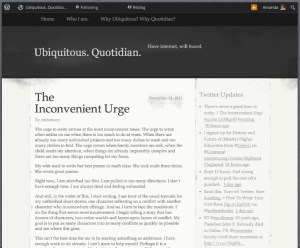
The first post I read this morning was by Robert Benson, on his blog Ubiquitous. Quotidian, called The Inconvenient Urge.

The post discusses how the need and inspiration to write comes at the worst possible times:

“The urge to write often settles on me when there is too much to do at work. When there are already too many unfinished projects and too many dishes to wash and too many clothes to fold. The urge comes when family members are sick, when the child needs my attention, when things are already impossibly complex and there are too many things competing for my focus.”

Aside from the fact that it’s nice to hear a man also complaining about the laundry and the dishes (hurrah it isn’t just me!) it is also a feeling I can completely relate to. I went to write in the local Motorway Services this morning (it’s not far from preschool and I find if I go there, rather than going home, I get more done. Especially when the internet isn’t working!) Even though the WiFi was on today, meaning I wrote fewer than half of the 4,000 words I wrote last Monday, I still got engrossed enough in Claire’s journey to forget to get my McD breakfast before 10.30am. 🙂

I’ve been known to be late for the school run, or lose several hours of what is meant to be productive housework time, or forget to walk the dog, because I’m wrapped up in another world. As Robert Benson concludes, however, “the urge to write comes when it will. Be grateful. Be ready. It is always inconvenient.”

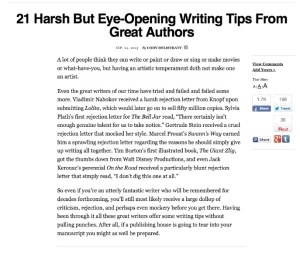
Thought Catalog Article

Thought Catalog Article

The second post I read today (via http://jeryder.blogspot.co.uk) was a list of great quotes on writing by famous authors, on the Thought Catalog blog. Entitled 21 Harsh But Eye-Opening Writing Tips by Great Authors, my favourites include these:

11. Imagine that you are dying. If you had a terminal disease would you finish this book? Why not? The thing that annoys this 10-weeks-to-live self is the thing that is wrong with the book. So change it. Stop arguing with yourself. Change it. See? Easy. And no one had to die. – Anne Enright

and

17. Substitute ‘damn’ every time you’re inclined to write ‘very’; your editor will delete it and the writing will be just as it should be. – Mark Twain

The final blog I read today, by the Write Practice, was called Write Naked, and it discusses a favourite topic of mine: writing what you know. Like the author of the article, I used to think that suggested you could only write about your personal sphere of experience: meaning I could only write stories about marketing managers who had been to New Zealand. (Well, actually, that does feature quite a lot in my stories! Ahem.)

Write Naked

Write Naked

But that isn’t what it means. It means writing about the sensations you can relate to. It isn’t the detail of the job you do that defines it, but the emotions you experience along the way.

So, even though Dragon Wraiths is about a sixteen-year-old orphan, and that wasn’t my childhood, I could still draw from enough experiences of my life growing up to write authentically about loneliness and not fitting in and the exhilaration of being outside in nature.

In the article, Sophie Novak says:

“Write naked. The raw can be a million times more powerful than the best polish. Do you know why? Because truth shines.  It can’t be beaten by invention. Just forget any inhibitions, and share the truth. Your truth. It’s quite scary, and absolutely worth it.”

Or, as Neil Gaiman puts it, “The moment that you feel that just possibly you are walking down the street naked…that’s the moment you may be starting to get it right.”

________________________________________________________________________________

Below is the next installment in my novel Two-Hundred Steps Home: written in daily posts since 1st January as part of my 2013 365 Challenge. Read about the challenge here.You can catch up by downloading the free ebook volumes on the right hand side of the blog:

________________________________________________________________________________

“Right, boys, get dressed, we’ve got a busy day ahead.”

Claire laughed at the groans emanating from the bunks as she stuck her head around the door. The hostel had been mostly empty when they arrived, and they’d been able to secure adjacent rooms. After sharing with the boys for a week at the previous hostel, Claire was glad to go back to her own, private, sweet-smelling space.

The only movement her words provoked was a pulling up of duvets, muffling the grumbling protests that it was too early. Claire thought there had to be a happy medium between Sky waking up with the birds, and these boys who needed a rocket under them to get them going in the morning.

With a sly glance she said, “I guess I’ll have to cancel the motor boat trip then, and we’ll go to the seal sanctuary after all.”

The duvets flung back and first Jack and then Alex sat up in bed.

“Motor boat? Are we going water skiing?” Jack asked, looking adorable with his tousled hair and sleepy excited eyes.

Claire’s smile drooped. “Ah, no. We’re going on a day out on the estuary.” She watched their excitement fade, and thought quickly. “But we’re taking the boat out on our own. Have you steered a motor boat before? And are you any good at map reading?”

Alex’s expression remained disgruntled, but Jack jumped up. “Bagsy I get to steer the boat first. Thank you, Aunt– I mean Claire.” He ran over and gave her an impulsive hug.

Claire returned the embrace, a little surprised at the gesture. The boys were not very tactile, unless you included thumping each other and wrestling on the bedroom floor.

“You’re welcome, Jack. Come on boys, get dressed. This hostel is self-catering, so we’re going out for a fry up.” She’d learnt that a hearty breakfast was essential. As with men, so with boys: regular feeding was a core requirement of good relations.

*

Claire looked at the tiny craft bobbing on the water, and thought better of her great idea. For something licensed to hold six people it looked tiny.

And very vulnerable, she thought, watching the boat pull at its mooring as the wake of a passing yacht stirred up the water.

“You boys taking your Mum fishing?”

All three of them turned to look over as a man approached them, his lined face split in a wide grin. “They’ll be biting today. It’s high tide around mid-morning, but you’re best to wait until the afternoon. Forecast is good. Did you want to borrow some rods? I’m sure I can find something.”

Claire shuddered, and hoped the boys were more interested in steering the boat than pulling slimy squirming creatures from the water.

“Can we, Claire, can we, please? I’d love to catch something. I’ve never been sea fishing before.” Jack’s voice rose high with eagerness.

“Doesn’t Robert take you?” As she said the words, she tried to imagine her brother, as she knew him now, attaching maggots to a hook. “Never mind. Er, yes, if you can borrow all the gear I don’t see why not. Just don’t expect me to touch them. If you catch something you’re on your own.”

The answering grin from both boys was electric. Claire hoped the friendly stranger was wrong, and the fish weren’t biting. Leaving them discussing the merits of various types of bait with the man from the boat yard, Claire wandered off in search of caffeine. It was going to be a long day.

***

Bringing Scenes to Life: 2013 365 Challenge #325

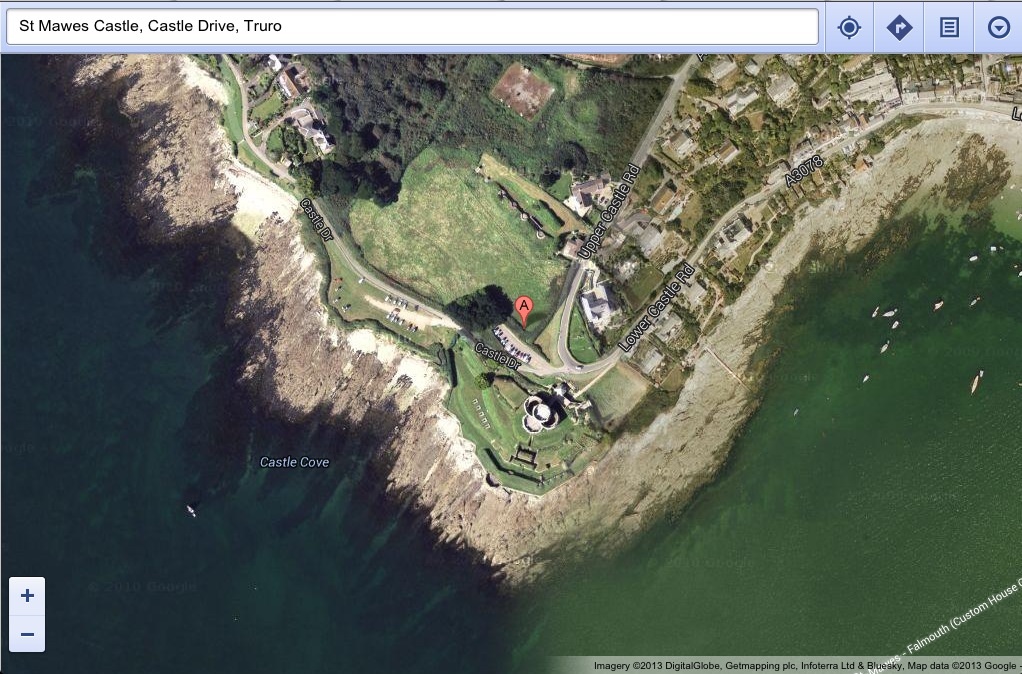
Satellite view of St Mawes Castle

Satellite view of St Mawes Castle

As part of my writing challenge this year, I have had to do a lot of research on the locations that Claire visits in Two-Hundred Steps Home, to make it plausible. Of course I could have made her journey entirely fictional, but that would have been considerably harder for me.

Because, while I can write dialogue in my sleep, I cannot visualise places. My brain, my imagination, doesn’t think in 3D or in colour.

Even when I’m reading a well-described fantasy novel, I struggle to picture the scene being described. And I’m okay with that.

I read for characters, for dialogue and stories and action. I’m not overly fussed about what a castle looks like, or how the armies are set out on the battlefield. Tell me a mystical city is beautiful and has spires and walkways, and that’s enough. No need to describe it in detail, I’ll only pull myself out of the story trying to build the picture in my mind, and get frustrated when I fail.

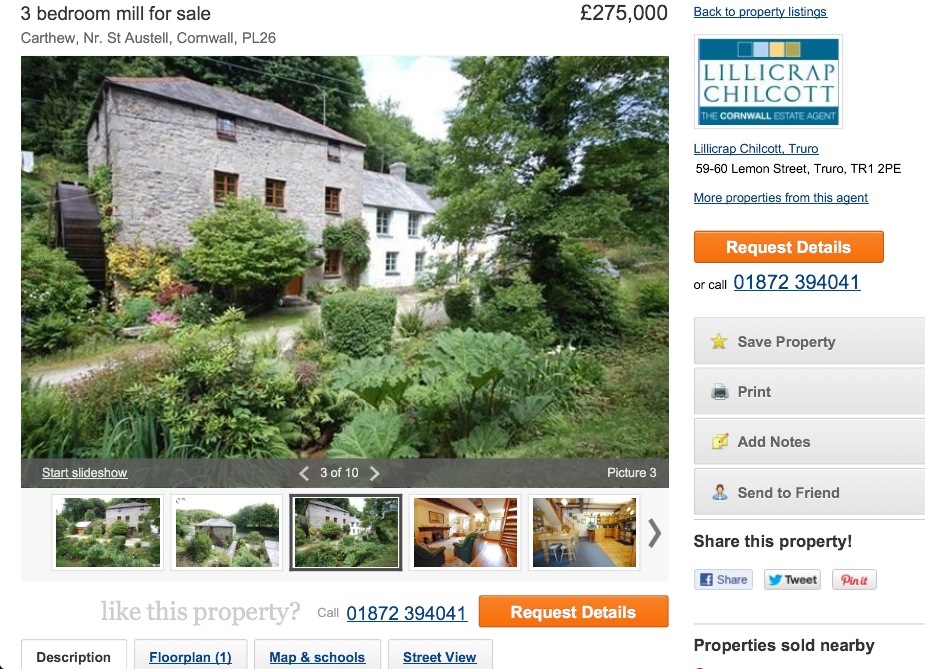
A house Claire could buy in Cornwall

A house Claire could buy in Cornwall

However, not everyone is like me, happy to exist inside a vague grey mist when they read. Some people like to be able to see the scene, to know the sea is visible in the distance, or whether the building is Georgian or Victorian or Modern.

Not only that; having characters exist in a three-dimensional space makes the action work. If a character is moving, even if it’s only drinking a glass of wine, it pulls the story forward.

My inability to visualise places used to be a major cause of writer’s block. I’d try and figure out what a character’s house looked like, and whether the phone was in the lounge, or if the post fell on the mat or into a box, and it would paralyse me.

Then I discovered the wonders of research and stealing appropriation, and I’ve never looked back. In the UK the main property website is Rightmove (although there are others). If I need a house for a character, I pop on Rightmove and find one.
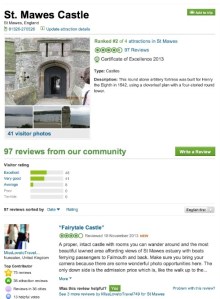
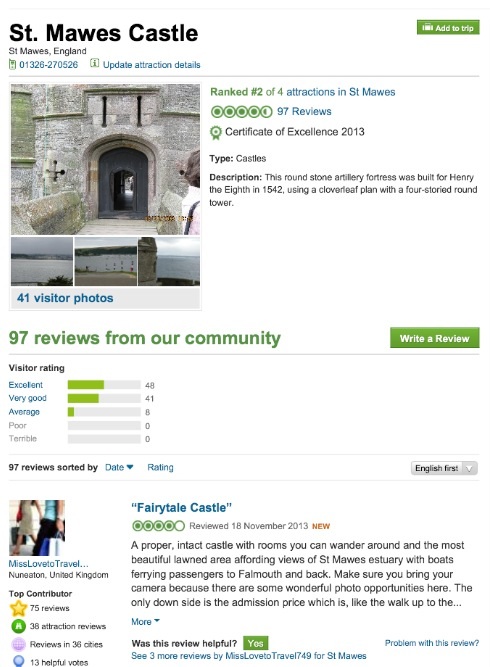
Reviews on Tripadvisor

Reviews on Tripadvisor

I usually have an idea whether my characters live in a cottage or an apartment, what they might be able to afford, and I generally have a city or town or village in mind. When I’ve found the right one, (and pulled myself away from dreaming about cottages in Cornwall or houses in Wales) I print out the details (important because they disappear off the website when the house is sold, and are gone forever), and put it in a scrap-book.

In Finding Lucy, (my first, though still unfinished, novel), I have the floor plans and everything for Lucy’s grandmother’s house. I know where the TV is, and the telephones. I don’t worry quite so much about that level of detail now, although it is useful for adding depth to a scene.

For example, instead of “Lucy ran down the stairs to answer the phone,” I can write, “Lucy took the steep stairs two at a time, knocking her hip against the breakfast bar as she reached for the phone. She kept forgetting her grandmother’s cottage was so darn small.”

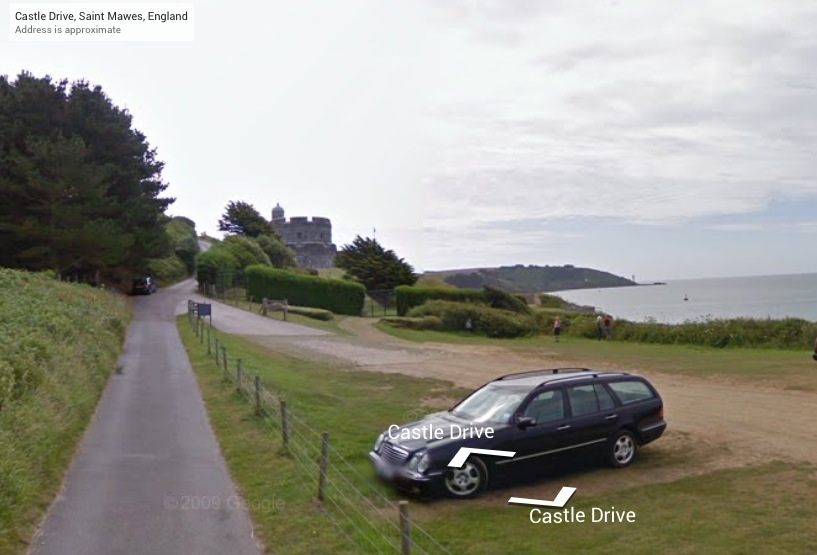
Another thing I’ve found useful is Google Streetview. Looking at a two-dimensional photograph of a location is useful, but it can be misleading. If you go to streetview, though, (assuming the location is covered), you can literally walk down the road and spin round for a 360 view. You can see that there is a cemetery across the road, or that the bus stop is dirty, or that there are cars parked all along the street.

Streetview of St Mawes car park

Streetview of St Mawes car park

You can even get an idea about the weather. For a recent scene in THSH, it had been sunny all day in the story. Then I “drove” the road out to the hostel, as Claire did in a towering rage, and the streetview photos had stacked clouds along the horizon. Hey presto, her rage is mirrored by the approaching storm.

Incidentally, for Baby Blues and Wedding Shoes, which is set in London, I actually visited the street where I had located Helen’s apartment. I walked her route to the tube station and sat in the park where she first thinks she might be pregnant. It added extra detail, such as the smells and sounds, and how close the buses got to the pavement. You can’t beat first hand research, but I’d have to put in a lot of miles to follow Claire’s journey around the UK!

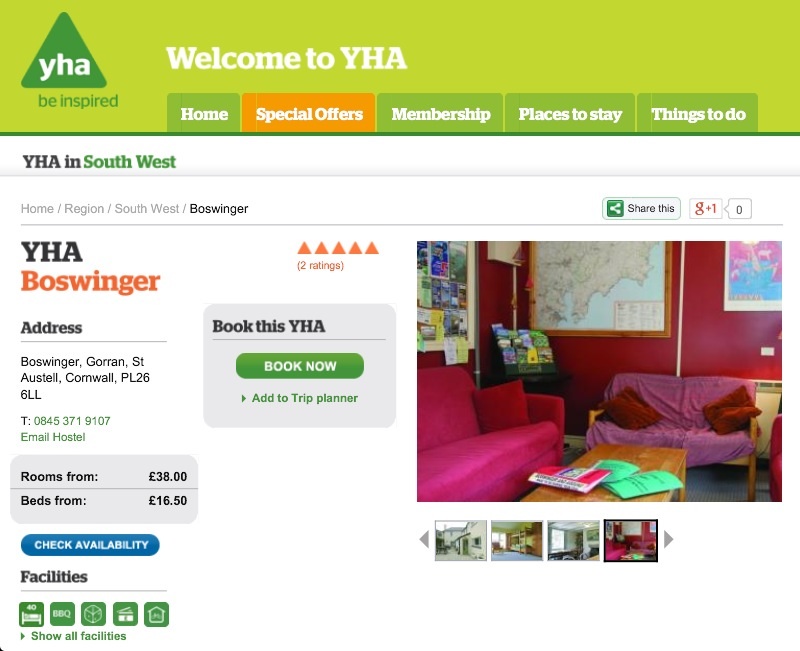
Hostel Claire's in currently

Hostel Claire’s in currently

The final site I go to often for internet research is Tripadvisor, particularly for the places that Claire visits. I’ve never been to the Eden Project, Pendennis Castle or even Cornwall for that matter.

The YHA website has a few reviews and things to do, but for variety it helps to read a lot of different perspectives. Tripadvisor is how I found out that the Eden Project has a problem with queueing because of gift aid or how the English Heritage will ask you if you want to pay a thousand pounds for lifetime membership.

There isn’t a single activity that Claire has done, or a café that she’s visited, in the UK or New Zealand, that isn’t based on fact. I’ve even been known to check the opening times of the Starbucks and write the story around it! If you wanted to, with some planning, you could follow in Claire’s footsteps for about 95% of the story.

I try and get two or three reviews that agree before I write something (I’m always a bit worried about libel!) but it would be easy enough to make the place fictional, just to be safe. Reviews are brilliant, because they’re genuine and colloquial and so very varied. Two people can visit the same place, in the same week, and have completely different experiences, based on how easy it is to get in, the weather, who they are with, and their expectations. There’s half your story written, right there.

The world is at your fingertips, with a good internet connection and some patience. Sometimes it feels like cheating. But I prefer to call it research! 🙂

________________________________________________________________________________

Below is the next installment in my novel Two-Hundred Steps Home: written in daily posts since 1st January as part of my 2013 365 Challenge. Read about the challenge here.You can catch up by downloading the free ebook volumes on the right hand side of the blog:

________________________________________________________________________________

“Hello, how’s it going? I thought I’d call and make sure you’re still alive. Or, more to the point, that your brother is. The look on your face when you left the restaurant was something to behold.”

Claire cradled the phone to her ear and looked across to see if the boys were listening. They appeared to be engrossed in some car show on the TV. Even so, Claire kept her voice low as she replied to her boss’s question.

“We’re all still alive. Just. Have you any idea how far you have to go to find a McDonalds in Cornwall? Robert’s gone back to Geneva.”

“With a flea in his ear?” She could hear the grin in Conor’s voice.

“I never understood that phrase. But if you mean did I let him know I was cross with him: I tried. Might as well attempt to chastise an elephant for all the good it did me.”

“And the boys? Do you think you’ll cope?” The tone of concern in his voice was almost masked by the humour, but not quite. It made Claire’s stomach twist and squirm.

“Jack will be fine. He’s a nice lad; open and enthusiastic, if a little eager to emulate his brother.”

“And the other one?”

“Alex. Hmmm. Let’s say he’s practising hard for his teenage years. If the chip on his shoulder gets any bigger he’ll fall out of his bunk at night.”

“Must be tough, not having a settled home at that age. He might even have girl trouble.”

“At twelve?” Claire’s voice rose, and Jack glanced at her before turning back to the screen.

“Oh, yes. Didn’t you say they were at boarding school? Is it mixed? Not that that matters. Twelve was about when I, well, never mind.”

“Twelve?” Claire felt the blood drain from her face. “Seriously?” She tried to remember how old she was when she first even noticed boys. Then she realised it wasn’t the conversation to have with her boss, and she coughed. “Anyway, if that’s it, I’m sure it will blow over. They’re only here for a fortnight.”

“Did you want me to come out with you guys tomorrow, help you ease into it a bit? I’ve got brothers and nephews; I might be able to help.”

The surge of gratitude warmed Claire from her toes to the tips of her fingers. Then she realised what impression it might give and the words of acceptance died on her lips.

“Think of it as a work assignment,” Conor added, apparently as an afterthought. “We can go visit a castle or something and take notes together.”

“Are you checking up on me?”

“Would I? No, you’d be doing me a favour, actually. I’m meant to be going to Mass in the morning, for the baptism of some random cousin in Birmingham. I can live without it. Mum thinks because I’m in the same country I should go.”

“Same country, yes, but Birmingham is miles away. Is that why you came to St Austell; to hide? You don’t have a work appointment at all, do you?”

“You’ve found me out, I confess,” he said, then fell silent.

Claire’s mind filled with conjecture. Escaping a Baptism seemed a flimsy excuse to drive all the way to Cornwall. She didn’t want to think about it too deeply, so she said, “Well, if you’re sure, that would be great. Thanks.”

They agreed a time and place to meet in the morning and hung up the phone. Claire curled into the corner of the sofa and let her mind wander.

*

Claire’s heart gave a little hiccup when she saw Conor strolling towards them. It had been a difficult morning already and it wasn’t yet ten o’clock. Alex and Jack had bickered non-stop over breakfast, and then Alex had refused to come with them to the castle, insisting he was old enough to stay at the hostel by himself. He tried to hide it, but Claire saw him with a phone clutched in his hand, and she began to suspect that Conor might have been right.

Damn him.

The boys had moaned all the way up from the car park and now, looking at the site from the outside, Claire thought they should probably have gone back to Pendennis Castle, on the other side of the water.

“Top of the morning to you.” Conor said in greeting as he approached, and Claire recognised the jovial Irish man act he’d put on for her mother, what felt like months ago.

She rolled her eyes at him, then gave him a meaningful look, trying to convey some sense of the morning they’d had. He gave a tiny wink, barely more than a crinkling of one cheek, and turned to face the children.

“Hello, I’m Jack.” Claire’s youngest nephew said brightly, holding out his hand. Conor shook it formally then turned to face Alex.

“And yer man must be Alex. Pleased to meet you.” Conor had the sense not to hold out his hand to be left hanging. Alex stood with his hands buried deep in his jeans pockets and stared at the ground. With a twinkle in his eye, Conor winked at Claire again.

“Shall we go in?” Claire said, leading the way to the entrance and trying to ignore Alex’s fit of the sullens. She’d hidden most of Robert’s money at the hostel, retaining enough to pay for their tickets and lunch. When she handed over the fifty-pound note to a suspicious cashier, Conor sidled up behind her.

“Big brother flashed the cash then? At least you haven’t got to pay for his grumpy kids as well.”

“You mean Alex? I think you might have been right,” she murmured. “He’s been clutching his phone like a lifeline all morning.”

“Ah, love’s sweet torment.”

She blushed hotly and she turned away in confusion. With a throaty chuckle, Conor moved to stand by Jack. She heard him ask about the boy’s home town and school, and felt able to breathe again.

Just what game is he playing?

Whatever it was, she wished she knew some of the rules.

***

Why I will always be a Pantser: 2013 365 Challenge #323

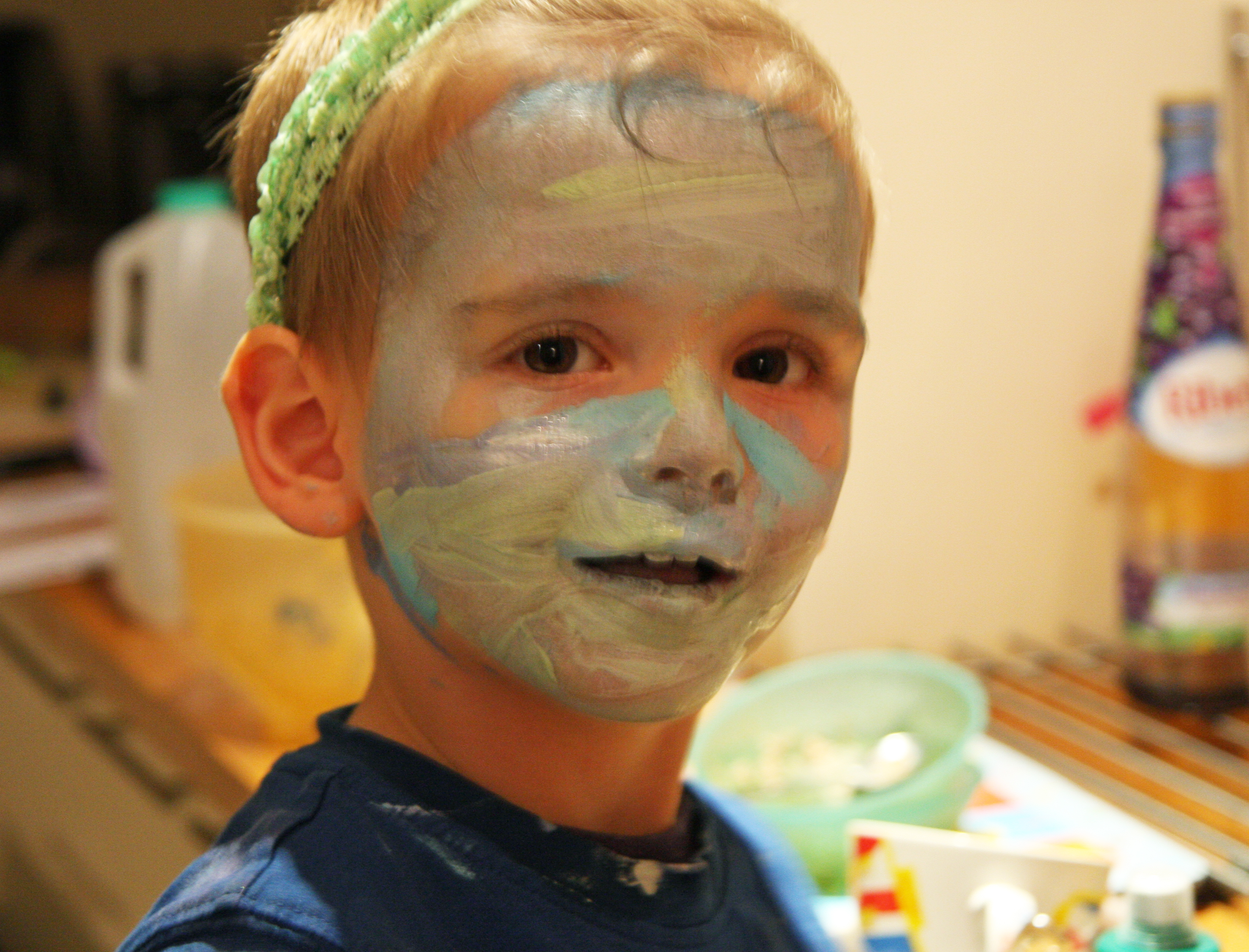
Letting the kids paint their own faces

Letting the kids paint their own faces

In a fit of inspiration on Sunday morning, I wrote notes for the next few installments of Two-Hundred Steps Home. I don’t do it very often, partly because my mind goes blank as soon as I’ve written the day’s 500-1000 words and partly because planning isn’t in my nature. When I write, I have a (very) rough idea of how a story will end but that can and does change as I come to know my characters better.

With THSH I’ve thought of a dozen endings, all of which have been scrapped as the story has followed its twists and turns. I admire people who plan even one book, never mind a whole series, as Two-Hundred Steps Home has become.

Incidentally the books I’m reading at the moment are one story told over ten volumes (although the second set of five possibly were added after the first five were finished) and it all hangs together. They were published year after year, with no chance to go back and change stuff, yet there are hints in book one that only come to fruition in book five or ten. My response to that is Wow. Since writing Claire’s story, there are loads of things I’d go back and change if I could, if I wasn’t writing it live, as it were.

Artistic face painting!

Artistic face painting!

Maybe it’s because they’re plot driven rather than character driven stories. Maybe I’m just missing a writing gene. All I know is that, if I plan for something to happen, my characters always mess it up.

For example my notes had Claire falling apart in her confrontation with Robert, because she’s all emotional about Conor. One commenter on yesterday’s post suggested Conor should come and punch Robert. Neither situation suited Claire. To be honest Robert was not really on her radar except as the person who ended her lunch with Conor early.

She was angry but still in control. How far she’s come, I’m so proud. 🙂 She doesn’t need a man fighting for her and she won’t let Robert’s arrogance derail her. Besides, he’s her brother, she’s used to him being an arse (and doesn’t he do it well?)

Without intention, Claire has allowed me to set up a comparison between Robert and Conor, a parenting story line and some fun dialogue. Much better than my ideas, that’s for sure. My advice? Trust your characters, they know what they’re doing.

________________________________________________________________________________

Below is the next installment in my novel Two-Hundred Steps Home: written in daily posts since 1st January as part of my 2013 365 Challenge. Read about the challenge here.You can catch up by downloading the free ebook volumes on the right hand side of the blog:

________________________________________________________________________________

Claire let the warmth from the chipped mug soothe her as she inhaled the reviving scent of Earl Grey. Her skin prickled and her body remained still only under sufferance. She wanted to pull her hiking boots on and stride down to the beach, to let the sea breeze blow the dark thoughts from her mind. But outside the window, the mountainous clouds had turned black and the wind dragged at the tree tops, sending the green leaves dancing.

She knew, also, that despite extreme provocation, she wasn’t about to send the boys back to Geneva with their father. If it meant buying a phrase book or spending a fortnight doing sign language, she wouldn’t quit now.

I’m sure some of it will come back. I learnt the language for eleven years, some of it has to have stuck.

Her brain presented her with a range of French phrases, none of which were appropriate for communicating with two pre-teen boys. Her ire at Robert’s duplicity rose again, and she gripped the mug tightly before taking a calming sip of tea. Despite her desire to punch him, she knew from experience that she might as well smack a rock.

Footsteps approached down the corridor, accompanied by a deep voice murmuring dire consequences. Claire braced herself for confrontation, focussing on the steam rising from her mug as if it was a meditation candle.

“Ah, Claire, there you are.”

Robert’s urbane tone rolled around the small room, and Claire wondered if he ever lost his cool. She glanced up and saw him in the doorway, phone in one hand, the other hand buried in his pocket. Behind him the boys giggled and shoved each other in the arm. She took a moment to look at them properly, as much to avoid having to endure Robert’s bland, appraising, stare. She knew if she looked her brother in the eye she was likely to lose her temper again and she wouldn’t give him the satisfaction.

The boys were almost as tall as their father, but with the boyish round faces and gangly limbs of the adolescent. The tallest boy had dark hair, thick like his dad’s. The youngest was fairer and his hair tended to curly. It reminded her of Conor’s, although both lads had dark brown eyes and eyelashes that would be the envy of future girlfriends. She tried to picture Francesca in her mind, and remembered that she, too, was a dark beauty.

As if sensing Claire’s resolve, Robert turned his attention to his sons. “That’s enough, boys. Now you apologise to your Aunt or I will take the iPads back with me.”

His words provoked muttering and hanging of heads. Claire wondered what they had to apologise for, noting also that the boys clearly understood English, even if they didn’t speak it. As she watched, a suspicion crept into her mind, fanning the flames of her latent fury.

The kitchen filled with silence. Claire added her stare to her brother’s and eventually the younger boy cracked.

“We’re sorry we pretended not to speak English, Auntie Claire. It was only meant to be a joke.”

His voice held no trace of the French accent from earlier, but rather rang out with the public school boy vowels of his father.

Robert didn’t acknowledge his son’s apology, he merely transferred his gaze to the elder child. When he remained silent, Robert said in a low, menacing, tone, “Alex?”

“Sorry,” the boy spat out, his face turning sullen at his father’s reprimand. Robert raised an eyebrow at him with a clear message and the boy glared back. “Sorry, Aunt Claire,” he amended, in a tone no more friendly than before.

It seemed to Claire that her brother wasn’t going to let it go, so she pushed back from the table and walked over to the boys.

“That’s okay, guys. Great trick, you certainly had me fooled.” She gave them both what she hoped was a non-patronising smile and was rewarded with a grin from the younger boy. Relieved, she glanced up at Robert’s face and came to a decision. “Can you give me a minute to chat with your dad? Have you been allocated a room?”

Jack nodded, while Alex folded his arms and stared at the floor. Claire swallowed a sigh.

“Great. Why don’t you go and play some games on your iPads, then? I’ll come get you when your father is ready to leave.”

She shooed them out with her hands, waiting until their footsteps had faded, before she turned back to Robert.

“Well?” She said in a low voice.

“Well, what, Claire? I don’t really care for your tone.”

“And I don’t care for your behaviour. Treating me like one of your PAs, whispering sweet nothings to your new lady friend while your boys try to convince me they only speak French. And what was that all about?” She jerked her chin to indicate she meant the scene that had just taken place in the kitchen. “You acted like they’d mugged me. It was only a game; you didn’t need to be so hard on them. I’m sure we did much worse when we were kids.”

She knew she wasn’t making sense, but the thoughts were all jumbled in her mind. Robert stood motionless and absorbed her anger like a sponge.

When she ran out of words, he said calmly, “Boys need a firm hand. You’ll find that out, assuming you’ve recovered from your fit of pique and are still going to take them?”

Claire’s palms itched and she stalked back to the table to collect her tea. It was safer if she gave her hands something to do other than slap her brother. She wondered why he was being so hostile. What happened to the brother who had sat in the hospital with her, worrying about Ruth?

“Let me get something straight,” she said, enunciating each word. “What you are asking me to do is beyond a little favour. I’m not one of your unfortunate staff and taking your boys for a fortnight is a big ask. In case it slipped your notice, I am working here. This isn’t a jolly, this is my job. I’m lucky my boss is understanding enough to let the boys tag along. They’re here on his goodwill as much as mine.”

“Ah yes, your boss that you have cosy lunches with.” He sneered and Claire’s eyes opened wide.

“Where do you get off, speaking like that, Robert? You dumped your wife and moved on to someone new. You’re in no position to judge.”

“So you are sleeping with your boss.”

“Not that it’s any of your business, but no, I’m not. Some of us have principles.” She thought back to her parting conversation with Conor and hoped Robert took the flush on her cheeks for anger. “This is all beside the point. I said I’ll take the boys and I will, but do not forget that I am helping you.”

Their eyes locked for an angry minute, then Robert suddenly smiled. “Thank you, Claire. I’m sorry; I don’t mean to be ungrateful. There’s a lot going on.” He took his wallet out of a pocket and retrieved a roll of notes.

“Here. This should cover it, but if you need any more let me know, and I’ll wire it to you. I have to go now.”

Claire took the money mutely, wondering if it was too late to inflict violence. She looked at the notes in her hand and decided her brother would pay, one way or another.

***

Autumn Sun: 2013 365 Challenge #310

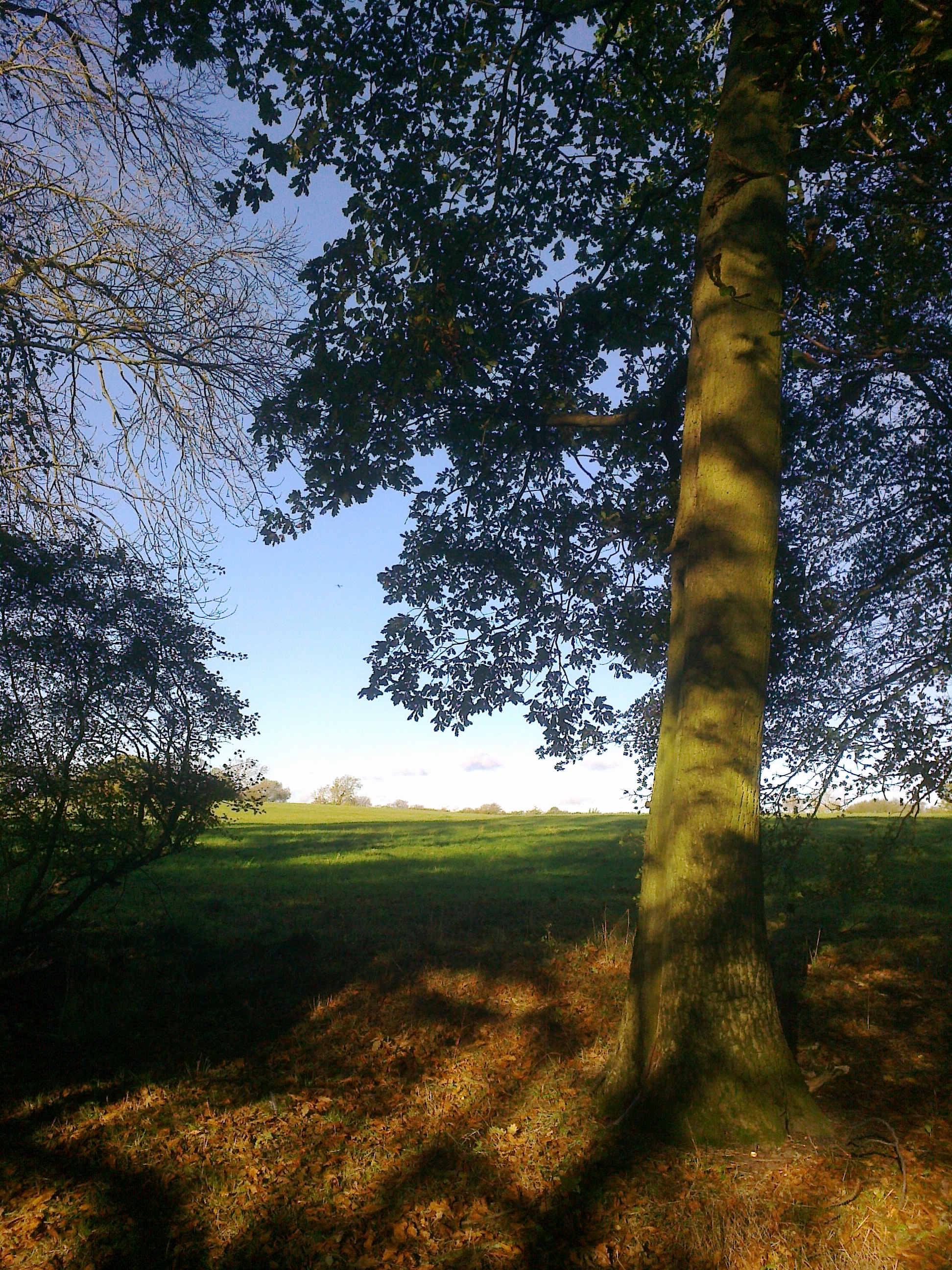
Sunlit walk

Sunlit walk

Back in the summer I did a freewrite on the season and had a vague idea of compiling a seasons thesaurus. Add it to the list of projects. Still, it doesn’t hurt to take some notice as the weather changes. Here are my thoughts on a sunny autumn day.

The wind chills my cheeks as I walk, but it’s refreshing after weeks spent indoors watching the rain. I feel like I’ve been breathing the same air for too long and my skin feels clogged.

The sun paints long shadows across the fields, as it drops to the horizon despite it only being mid-afternoon. Beneath my feet, soggy leaves lay scattered in a random pattern of yellow and brown. Those on the trees look tattered. Hanging on against the odds.

When the wind drops the sun brings warm memories of summer and hope for a swift return although autumn is only just here. Across the endless azure sky tufts of cloud are hurried like so many sheep before the biting wind. The wind whistles in my ears like the sound of rushing blood or an angry sea. It drags tears from my eyes and makes my nose run.

Autumn sun

Autumn sun

My shadow marches at my side, long and dark against the bare hedges. Muddy puddles make a playground for the dog and tractor wheels have dug deep furrows in the road.

The fields dance with short stems of green as a winter crop pokes optimistically about the earth. Seagulls searching for wormy treats swoop and dive over the green landlocked sea of soil.

As I walk beneath the trees the wind stops and I hear the bird song, adding welcome decoration to the endless green, blue and brown. The sun sparks a fire in my heart – so precious after weeks of rain and grey skies. I walk slowly to savour the warmth on my skin, feeling too hot and bundled in my thick coat.

Despite the cold cheeks and wind-battered face I am reluctant to return home. The house feels like a dark cave, gloomy and dead, with stale air and artificial light. Somewhere to hibernate like a hedgehog.

The dog brings me a muddy stick, and throws it playfully at my feet. She runs with glee through the mud as it squishes between her claws. My house won’t be clean again until spring

_______________________________________________________________________________

Below is the next installment in my novel Two-Hundred Steps Home: written in daily posts since 1st January as part of my 2013 365 Challenge. Read about the challenge here.You can catch up by downloading the free ebook volumes on the right hand side of the blog:

_______________________________________________________________________________

Claire gripped the rail with two hands as the spray from the sea glistened on the wood and made it slippery beneath her fingers. Her thighs burned from climbing the steep steps, but she refused to stop for a breather. If she looked around she might notice the steep drop down to the rocks below, visible beneath the white froth of the crashing waves.

Trust me to come on a windy day. I should have waited until it was calmer.

The manager at the hostel had said a visit to Tintagel castle would be all the more impressive against the backdrop of the rough sea. She’d failed to mention the perilous climb or the narrow stairway.

Claire pulled into the side to make way for an elderly couple, holding hands and giggling as they skipped down the steps like teenagers. Claire wondered what they found so funny.

At last she reached the castle, perched on the cliff top overlooking the sea.

How on earth did they build this, all the way up here? In the dark ages, with no equipment? Crazy.

With the wind threatening to drag her from the cliffs, Claire wandered around the ruined castle, trying to imagine what it must have been like when it was complete. The views stretched for miles, even on a blustery day, with the scudding clouds chasing each other across the sky.

Turning to see how far she had come, Claire held her breath at the sight of the castle walls, looking like piles of balanced stones or sand castles, climbing the steep rock face, with the tiny archway leading through to the endless steps back to the mainland. Overhead, seagulls screamed their defiance to the wind, swooping and diving in an endless dance.

With effort, Claire blocked out the sounds of the tourists, the giggling children, the frantic mothers, the bored teenagers up to mischief. She focussed on the cry of the birds and the howl of the wind and felt herself transported to another time.

Who knew all this beauty was here? So much history crammed into one place and I would never have come if it weren’t for this project.

For a moment all the fear and doubt seemed worthwhile. It seemed a shame to come back to the present and take notes for her report.

I have to remember I’m being paid to be here, I’m not on holiday.

With a sigh that was instantly whipped away from her mouth by the playful wind, Claire began her exploration of the site, taking notes of all the things people seemed to enjoy.

I wonder if the castle in Dorset is this impressive. What’s it called? Cough castle or something like that. I’d better look it up.

*

It was getting dark by the time Claire finished her tour of the island. She’d covered every element – from the gun house to Merlin’s Cave – and her legs throbbed while her mind swirled with the history and mythical stories she’d consumed.

Looking up at the castle from the café, it wasn’t hard to imagine Arthur and Guinevere standing in an open window holding hands, or cosying down on a rug in front of a roaring fire, while Lancelot stormed across the cliff tops in a jealous rage.

Blimey this place does bring out the romantic. What tosh.

She smiled at the thoughts, ignoring the prosaic part of her mind that told her it was all just legend anyway.

What difference does it make? Real historical figures are only as real as the representations of them, passed down through the centuries. Arthur and his missus are as real as any European king. Probably more so, seeing as we know more about him.

Trying to drag her mind back to her work, she wondered if there were any legendary characters lurking around Conor’s stomping ground that could be used to good effect in her report. It wouldn’t hurt to look like she’d done her homework.

Claire cupped her hands around her mug of coffee and let her mind drift, until the images of Arthur ravishing his queen morphed into Conor’s boyish face; his hair windswept and his green eyes full of love. With a quick shake of her head she dispelled the image.

He wouldn’t spend five minutes in a remote place like this. Not enough people.

She drained the last of her drink and headed back to the car.

***