“Treat your book like your child”

Parenting or Writing, which is harder?

Over on the NaNoWriMo blog, the Office of Letters and Light, they recently interviewed author Karen M. Cox, whose second novel Find Wonder in All Things was written during a NaNoWriMo. Her novel was awarded an Independent Publishers Book Award, which just shows how great NaNoWriMo can be for unlocking the novel in you.

As part of the interview, Karen gives her top writing, revision, and publishing tips for other NaNoWriMo participants.

These are summarised below:

  • Write every day during NaNoWriMo. The days that I started out ‘behind’ were tough days.    
  • When you stop for the day, know where you’re going tomorrow. It helps eliminate the ‘staring at a blank screen or paper’ syndrome. 
  • Resist the urge to edit until you’ve got the thing out of your brain and onto the stone tablet, paper, or screen. 
  • Find people you trust to give you feedback: [people with] no agenda besides reading good material.
  • Throughout the writing process, treat your book like your child. What I mean is love it, treasure it, brag about it, but be objective and open-minded enough to discipline it—through accepting constructive criticism, editing, rewriting—without losing your long-term vision for when it’s ‘all grown up.’ This is harder than it sounds—you have to weigh others’ opinions without pride and prejudice, yet still stay true to what you want for your ‘child’ in the end.

It was the final point that really stuck in my mind as the most comprehensive piece of advice, but the hardest (for me) to follow. On a bad day the advice would mean me yelling at my book over something stupid and then sobbing in the corner for being a terrible writer, destined to go to Writer Hell in a handcart.

As you can tell, I haven’t sussed parenting yet, particularly the discipline part. I find it hard not to take toddler-defiance personally and I’m often more prone to childish tantrums than they are (I like to think I’m the highly strung artistic sort but that’s probably rubbish!)

I know all the theories of good discipline and on a good day, with lots of sleep, I can be that parent, calmly instigating time-outs and positive rewards. Much as I know the theory of what constitutes good writing and on a good day I can be that writer too, editing with consistency and a clear mind. On a normal day, however, I have as haphazard an approach to editing as I do to parenting: I do what I can do, get frustrated that I’m not doing it better, and constantly fight the urge to throw in the towel.

Maybe I need to write all my first drafts now, play with them and enjoy them, and get to the task of revision and redrafting when I’ve worked out how to be a proper grown-up parent person.

Oh dear, I might never finish a novel.
The dangers of self-publishing: Introducing “Them.”

It turns out you can make your work-in-progress look too like a real book too easily. The image of seeing your WIP in kindle format (or even print) is seductive, but probably not a great idea for the proof copy. Aside from the hassle of getting the right format to everyone, when pretty much all e-readers can open the traditional pdf, I’ve discovered the existence of “them”.

After my mother gave her damning verdict on Pictures of Love, “I preferred your first book,” (the one I wrote in a few weeks, barely edited at all, and had rejected by Mills and Boon,) she said something that dumfounded me:

“Did they not edit or proof-read your book before formatting it for kindle?”

My response, when I stopped laughing, was to say, “Mum, there’s no They. I wrote it, revised it, edited it, proof-read it, designed the cover, wrestled with kindle formatting, added the copyright, the dedication, the publisher’s logo. All of it. You’re my beta reader, so in fact you’re They. You’re meant to help me find the typos.”

“Oh,” she said, “I wondered why there were so many. They do come a bit thick and fast at the end.” Not what I wanted to hear but unsurprising as every time I started proof-reading I began at the beginning but didn’t always make it to the end.  I get distracted so easily.

As a result I have a thudding fear that the second half of the novel, the half only my mother has read apart from me, is a bit rubbish. Seems I’m probably right, at least as far as editing goes. And if I missed a heap of typos, I probably didn’t spend enough time revising the latter half of the book in terms of language, character, plot.

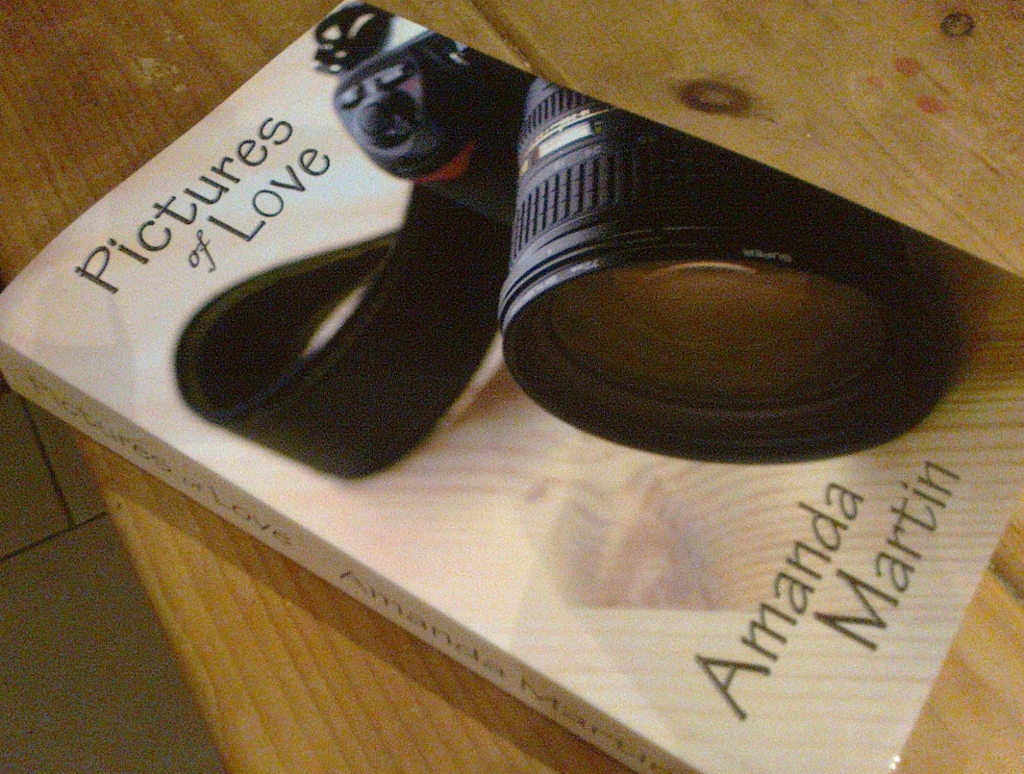
And yet there it is, my Lulu print version, sitting in paperback glory on my kitchen table, looking for all the world like a ‘proper’ book.

So I think when the naysayers who don’t like self-publishing bemoan the fact that something can look like a traditionally published book and still be awful, they may occasionally have a point.

Another scary thought is how easily the formatted-for-kindle version is being passed around without my knowledge. I used to password protect my pdfs. I don’t even know if you can do that for kindle. What if my proof makes it into the outside world? (My sister-in-law has already sent it to my father-in-law, and another beta reader has given a copy to his parents.)

What if everyone thinks like my mother and wonders why They haven’t done a better job finding errors? Or me for that matter. I don’t mind if the book is deemed a failure because the characters are underdeveloped or the plot is thin, but being damned for typos when it isn’t even the final edit gives me the shivers.  In future I think I’ll splash Beta Reader Copy or Proof over every page and be less vain about trying to make it look like a proper novel.

Or maybe it is time to go back to that Agent list after all.

Beta Readers

Apologies for my silence, to those of you who are kind enough to follow my novel writing exploits. As well as drying out my soggy soul in sunny Italy for a few days, I have spent weeks immersed in major editing of my WIP Pictures of Love.

It seems the nearer I get to pressing save on my final draft, before sending it to my lovely beta readers, the more I feel compelled to rewrite the whole bloomin’ thing from the first page.

I understand the need for my novel to be the best it can be before going out into the world at large. But how polished does it need to be for beta readers? I mean, what if I spend hours filling in all the extra bits of back-story for a secondary character only to be told she adds nothing to the plot?

Or – my biggest fear, certainly in my academic days – what if I remove something, only to have someone suggest it’s exactly the thing that is missing for them? Do I take out the long words – as has been suggested – when I know most of my readers will understand and expect them? Most importantly, do I take out the sex?

I have one sex scene, right at the beginning, to show my main character’s relationship is based only on lust. There is no more sex after that, well none shown explicitly. What if I set the expectation that it’s an erotic novel when it’s nothing of the sort?

Sigh.

I knew writing novels was going to be hard but, like parenting, it’s hard in all different places to the ones I expected.

Maybe I’m not lazy after all

Edit Ruthlessly

I think I’ve discovered my problem with editing. I always thought I was just lazy, each time I found myself resisting the necessary process of honing and polishing my work. After all, serious writers spend months and years editing and I can hardly bring myself to do a few days before I’m ready to start writing a new novel from scratch. I’m clearly not a serious writer, just a housewife with delusions.

But maybe it isn’t that at all (well, perhaps the delusions bit is true).

I think the problem is to do with visible progress.

When you write a first draft you can watch the word count growing, the number of chapters increasing. Characters develop and do crazy things, taking your carefully crafted outline in a new and unexpected direction. It creates a buzz, fills you with euphoria. It’s like going for a run, when everything is working properly and you feel like you could fly if only you knew how.

With editing there is no way to track progress. Word count, if anything, goes down. Chapters need to be moved, re-numbered, scrapped. And who’s to say the chapter you’ve just spent three hours rewriting is actually any better? It’s more akin to doing housework: five hours’ of effort and what is there to show for it, particularly after the kids have been home five minutes.

I get confused, too, with what I’m actually doing. Am I checking for readability? Grammar? Continuity errors? If I’ve spotted a character gap do I go fix that, trying to find the right place to add in extra scenes or sentences that will make the character work, or do I stick with my linear progression through the novel?

I’m not the most organised person and I find it hard keeping track of what needs changing, particularly when I only work on it two days a week, with two or three days of childcare in between. (There’s nothing like 57 verses of Wheels on the Bus to dam your creative flow.)

I could do with a tool that magically highlights everything written about one character in green, another in red. All adverbs could be in blue, all passive tense in orange. Clichés could be highlighted in flashing letters so you can pick them off one by one. Even better would be a tool that says ‘This bit’s great, this bit is pants, re-write it.’ (I know, now I’m just being silly.)

Thinking about it seriously though, there are probably thousands of writing programmes out that that might make me more organised. Maybe I should look for one. Or is that just another form of procrastination (like starting a new novel or short story) to take me away from the unavoidable hard slog of editing? I think I probably know the answer.

Still, if anyone knows of super-organising software that won’t kill my netbook, I’d love to hear about it.

P.S. Since writing this post (while out walking the dog, as usual) I have downloaded the free trial of Scrivener, which I have been meaning to do since completing Nanowrimo last November. So far I’m half an hour in to the two-hour tutorial and it does look as if it might be helpful, if only I can figure how to use it!

Anyone used it before?

Get Professional Help

Cover of "Plot & Structure: (Techniques A...

Even if the story is burning in you and flowing out faster than you can type, you still might benefit from professional help, particularly when it comes to editing your first draft.

If you are disciplined enough to work solo there are some amazing books to help you start writing or to hone your skills as a writer. These are my favourites (I intend to review them when I get a chance, so watch this space.)

General Books on Writing

Teach Yourself Creative Writing, published by Hodder Education, London, By Stephen May (2008)

Starting to Write, published by Studymates Limited, Abergale, By Dr Rennie Parker (2007)

Creative Writing, published by How To Books Ltd., Oxford, By Adele Ramet (2007)

More Specialised Works

Dialogue: Techniques and exercises for crafting effective dialogue, published by Writer’s Digest Books, Cincinnati, Ohio. By Gloria Kempton (2004)

Beginnings, Middles & Ends, published by Writer’s Digest Books, Cincinnati, Ohio By Nancy Kress (1993)

Description & Setting [Techniques and Exercises for Crafting a Believable World of people, places, and events], published by Writer’s Digest Books, Cincinnati, Ohio By Ron Rozelle, (2005)

Plot & Structure [Techniques and Exercises for Crafting a Plot that Grips Readers from Start to Finish], published by Writer’s Digest Books, Cincinnati, Ohio, By James Scott Bell, (2004)

Characters & Viewpoint, published by Writer’s Digest Books, Cincinnati, Ohio, By Orson Scott Card, (1988)


If, like me, you need to be led, cajoled or terrified into getting pen to paper there are various course options. Try your local government or college website for free or low-cost Creative Writing courses. I taught a couple of free PCDL (Personal and Community Development Learning) courses at New College Stamford with a lovely group of students, who went on to form a writing group.

If you want something more detailed, then a university or distance learning course might be an option. The Open University does a range of Start Writing short courses or they have a nine-month creative writing course (which I highly recommend).

Finally there is no substitute for reading as widely and as voraciously as you can. Learning from the people who have already been published is a good step in the right direction to getting there yourself. Don’t limit yourself to your chosen genre – there is much to be learnt from reading outside your comfort zone.

As Stephen May puts it in his Teach Yourself Creative Writing,

“Writers choose their own mentors. Anyone still in print or still available on the shelves of a library is there to help guide you towards expressing yourself clearly and well. To help you find your own voice.”

Who are your favourite mentors?

Life vs. Writing

English: Paintbrush Português: Trincha

It’s all about the carpet.

A few weeks ago we decided the carpets had absorbed as much wee, poo, vomit, coffee and dog hair as they could stand.

They had to go.

Immediately. Because in this house everything has to be done immediately once a decision has been made (although the procrastination can go on for years prior to that.)

So, five years after moving in, we made the decision. We immediately found a great deal on a wool carpet that had to be bought immediately (it was in the sale). You get the idea.

The fitters were booked to come in five weeks, job’s a goodun.

Sounds simple doesn’t it?

Not for us. There is always a chain of events that have to occur whenever anything needs to be done. This is because our house is a disaster zone of unfinished projects.

What has this to do with writing, you ask? Well, everything really.

My novels are all unfinished projects too. As are my husband’s novels. We’re not great at finishing things. We use the writing projects to put off having to finish house stuff, and house stuff gets in the way of finishing our writing.

Also, we get bored.

Starting something new is much more fun than finishing off the fiddly, hard, quite frankly tedious bits that make something look finished. You know, like skirting boards, architrave, painting.

Or editing, formatting, redrafting.

So our house, which could look like a lovely show home, rather resembles a hopeless case on DIY Disaster. Well, not that bad (in case my husband reads this), but close. And my novels, two of which are finished in draft form, are, to be honest, a bit boring. They need all that tedious editing time to make them sparkle.

So, anyway, before the new carpets can be laid we have to:

Laminate the hallway. Which means finish the utility room step, put the new architrave up, take off the skirting boards, fill holes in the plaster and so on. The laminate fitters come today, so husband has been busy for the last two weeks doing his bit. I was meant to be painting the woodwork downstairs, but I’ve been writing this blog instead. Oops.

Now husband has done his part, and hopefully the hallway fitters will actually arrive at some point (already two hours late), it’s my turn. I’m redecorating our bedroom. Since we’ve moved in it is the only room that hasn’t been decorated. We’ve managed to ignore it until now because, well, basically, we could.

I have hated the wallpaper since moving in, but I hate painting woodwork even more, and our room is chock full of it.

I’ve managed to strip the wallpaper (I like that bit), and paint a few feet of dado-rail. Then child#2 got rotavirus and nothing has been done since. And now the carpet fitter comes in two weeks. But the closer the deadline, the more my brain is fizzing with writing ideas – blog posts, new novels, restructuring of old novels. I am trying to emulate Fireman Sam, and do One Thing At A Time (he says it with the capital letters). But I’m so scared of losing an idea, I push them all along together, and ignore the decorating.

Anyway, you may have noticed that this post doesn’t contain any writing advice. Sorry about that. I just thought a little insight into the life of writer/mummy might be interesting. I’m sure I’m not the only person on the seesaw of life vs. writing. Currently life is winning, although I’m fighting back: I’m writing this while on a tea break, waiting to let the fitters in who, apparently, ARE on their way. Then back to painting.

I would love to hear about your battles of life vs. writing.

May writing always win in the end!