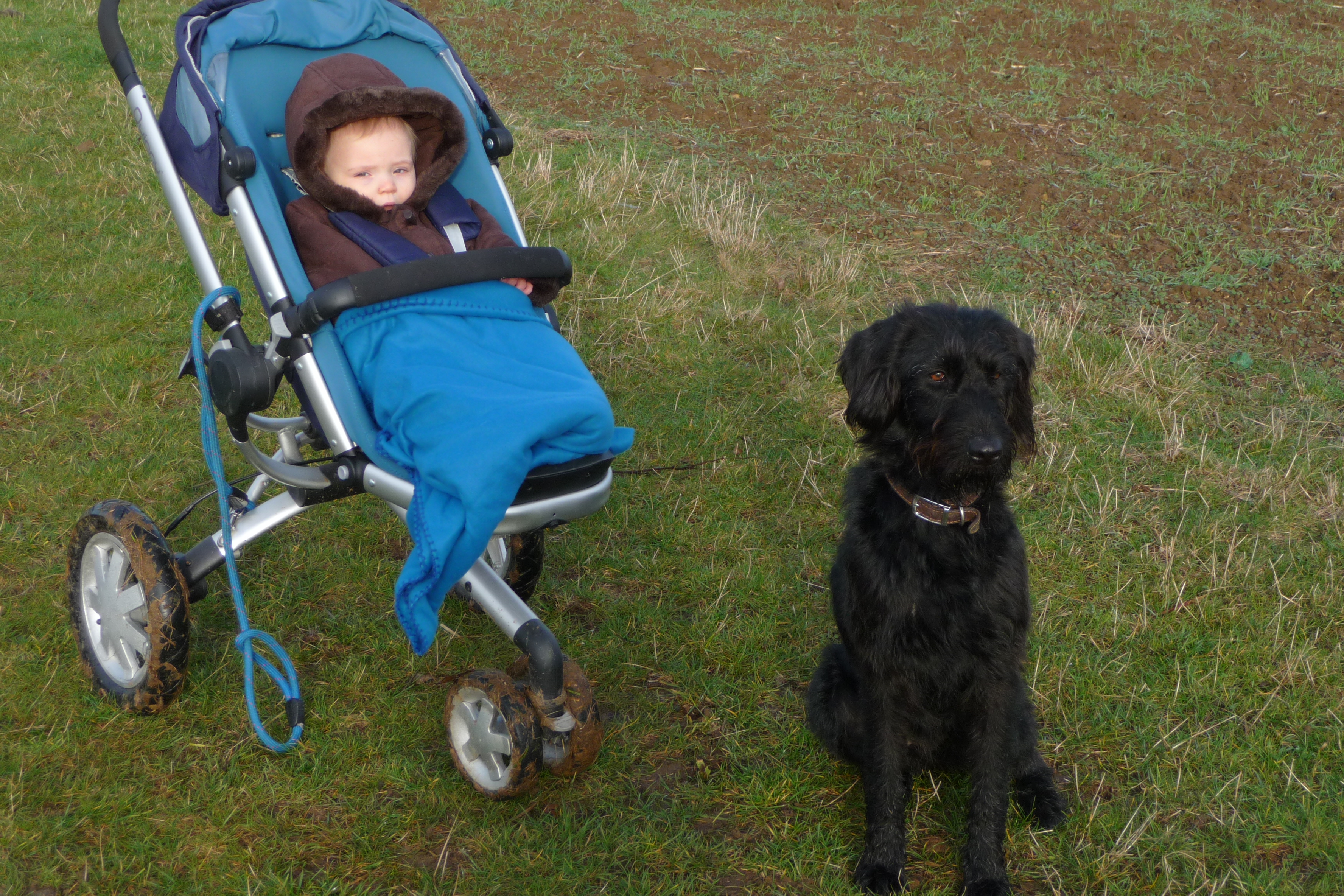
Maybe I’m not lazy after all

Edit Ruthlessly

I think I’ve discovered my problem with editing. I always thought I was just lazy, each time I found myself resisting the necessary process of honing and polishing my work. After all, serious writers spend months and years editing and I can hardly bring myself to do a few days before I’m ready to start writing a new novel from scratch. I’m clearly not a serious writer, just a housewife with delusions.

But maybe it isn’t that at all (well, perhaps the delusions bit is true).

I think the problem is to do with visible progress.

When you write a first draft you can watch the word count growing, the number of chapters increasing. Characters develop and do crazy things, taking your carefully crafted outline in a new and unexpected direction. It creates a buzz, fills you with euphoria. It’s like going for a run, when everything is working properly and you feel like you could fly if only you knew how.

With editing there is no way to track progress. Word count, if anything, goes down. Chapters need to be moved, re-numbered, scrapped. And who’s to say the chapter you’ve just spent three hours rewriting is actually any better? It’s more akin to doing housework: five hours’ of effort and what is there to show for it, particularly after the kids have been home five minutes.

I get confused, too, with what I’m actually doing. Am I checking for readability? Grammar? Continuity errors? If I’ve spotted a character gap do I go fix that, trying to find the right place to add in extra scenes or sentences that will make the character work, or do I stick with my linear progression through the novel?

I’m not the most organised person and I find it hard keeping track of what needs changing, particularly when I only work on it two days a week, with two or three days of childcare in between. (There’s nothing like 57 verses of Wheels on the Bus to dam your creative flow.)

I could do with a tool that magically highlights everything written about one character in green, another in red. All adverbs could be in blue, all passive tense in orange. Clichés could be highlighted in flashing letters so you can pick them off one by one. Even better would be a tool that says ‘This bit’s great, this bit is pants, re-write it.’ (I know, now I’m just being silly.)

Thinking about it seriously though, there are probably thousands of writing programmes out that that might make me more organised. Maybe I should look for one. Or is that just another form of procrastination (like starting a new novel or short story) to take me away from the unavoidable hard slog of editing? I think I probably know the answer.

Still, if anyone knows of super-organising software that won’t kill my netbook, I’d love to hear about it.

P.S. Since writing this post (while out walking the dog, as usual) I have downloaded the free trial of Scrivener, which I have been meaning to do since completing Nanowrimo last November. So far I’m half an hour in to the two-hour tutorial and it does look as if it might be helpful, if only I can figure how to use it!

Anyone used it before?

Writing a Synopsis

I spent last night searching the Internet for agents that accept email submissions (I don’t mind being rejected, but I’d rather not use a tree’s worth of paper doing it).

During my search, I came cross a great page of tips on the 3 Seas Literary Agency website, which included this advice for improving your manuscript’s chances:

Write a Great Synopsis

  • The synopsis for fiction works should include the beginning, the conflicts, the resolutions and the ending.
  • It must be written in the present tense.
  • A synopsis represents you and your work. Take your time, make it interesting, read it out loud, and wherever necessary, improve…improve…improve it, until you are happy with the final result.

(There are also great tips on writing a query letter, which I should also have followed!)

I’m sure there are other sites offering more detailed help. In fact, I’m sure I taught a lesson covering the same stuff. It’s not rocket science, but I particularly valued point three, the reminder to “improve… improve… improve.”

It’s amazing how quickly you can forget the basics, in a rush of blood to the head. I spent six months carefully crafting and re-crafting my novel. When I finally decided to be brave and send it to an agent, I spent about 90 minutes writing a cover letter and synopsis.

This wasn’t just the usual laziness, lack of time or child intervention. I found writing the synopsis harder than writing the novel. Also, foolishly, I didn’t see it as that important: after all, the agent has my first 3 chapters, surely if they’re hooked they’ll want to read more and if they’re not, what difference would a good synopsis make?

Silly really.

After all those weeks pouring heart and soul into my novel, surely I could afford to spend more than an hour or two trying to sell it? That’s when I realised the problem: I find it impossible to sell myself or anything I have created.

Before commencing my life as writermummy, I worked as an abstract artist – leaving my “proper job” to paint full-time. After six months, I had to return to the real world to earn a living, because I couldn’t sell my work to strangers. It turns out there is only so much art you can sell to friends (even lovely friends with a farmhouse in Luxembourg!)

Now I face the same barrier. I have to sell something I have created.

So my challenge, should I choose to accept it, is to find some objectivity and learn how to sell my own novel. If I can’t convince you, or an agent, or a publisher, to read it, then I may as well not have bothered writing it in the first place.

Any Synopsis-writing Tips gratefully received.

Get Professional Help

Cover of "Plot & Structure: (Techniques A...

Even if the story is burning in you and flowing out faster than you can type, you still might benefit from professional help, particularly when it comes to editing your first draft.

If you are disciplined enough to work solo there are some amazing books to help you start writing or to hone your skills as a writer. These are my favourites (I intend to review them when I get a chance, so watch this space.)

General Books on Writing

Teach Yourself Creative Writing, published by Hodder Education, London, By Stephen May (2008)

Starting to Write, published by Studymates Limited, Abergale, By Dr Rennie Parker (2007)

Creative Writing, published by How To Books Ltd., Oxford, By Adele Ramet (2007)

More Specialised Works

Dialogue: Techniques and exercises for crafting effective dialogue, published by Writer’s Digest Books, Cincinnati, Ohio. By Gloria Kempton (2004)

Beginnings, Middles & Ends, published by Writer’s Digest Books, Cincinnati, Ohio By Nancy Kress (1993)

Description & Setting [Techniques and Exercises for Crafting a Believable World of people, places, and events], published by Writer’s Digest Books, Cincinnati, Ohio By Ron Rozelle, (2005)

Plot & Structure [Techniques and Exercises for Crafting a Plot that Grips Readers from Start to Finish], published by Writer’s Digest Books, Cincinnati, Ohio, By James Scott Bell, (2004)

Characters & Viewpoint, published by Writer’s Digest Books, Cincinnati, Ohio, By Orson Scott Card, (1988)


If, like me, you need to be led, cajoled or terrified into getting pen to paper there are various course options. Try your local government or college website for free or low-cost Creative Writing courses. I taught a couple of free PCDL (Personal and Community Development Learning) courses at New College Stamford with a lovely group of students, who went on to form a writing group.

If you want something more detailed, then a university or distance learning course might be an option. The Open University does a range of Start Writing short courses or they have a nine-month creative writing course (which I highly recommend).

Finally there is no substitute for reading as widely and as voraciously as you can. Learning from the people who have already been published is a good step in the right direction to getting there yourself. Don’t limit yourself to your chosen genre – there is much to be learnt from reading outside your comfort zone.

As Stephen May puts it in his Teach Yourself Creative Writing,

“Writers choose their own mentors. Anyone still in print or still available on the shelves of a library is there to help guide you towards expressing yourself clearly and well. To help you find your own voice.”

Who are your favourite mentors?

Carry your story with you

For me, one of the secrets of the writer/mummy is to always take your story with you in your head. If you carry your characters in your mind you can chat to them, shout at them, fire questions at them – their answers won’t always be predictable and the conversations can be very interesting.

Creative writing advice books will tell you that the more you know about your characters the better your writing will be. If you are the kind of person that makes lists or is very good at being thorough, there are various forms available online to work out all the details of your characters – star sign, favourite colour, place of birth. This is a particularly comprehensive one I have discovered (but am far too lazy to fill out for any of my characters!)

These character maps are useful, they enable you to be consistent and understand how your character might react to a given situation. However, if you’re honest, could you say what your best friend’s favourite colour is or where she was born? That doesn’t mean you don’t know her inside out, though, does it? You learn more about her real character from gossiping over a glass of wine or from watching how she copes in a crisis.

For me the same can be said of my characters. When I’m out and about I like to imagine what my characters would say to each other, how they would handle a range of situations. I fantasize about their futures in the same way I used to fantasize about my own whenever I got dumped (you know, those scenes where he comes back grovelling and begging for you to forgive him, but you spurn him with a toss of your sleek blonde hair.)

It can help if you think of plot and character development as a series of ‘What if?’ and ‘Why?’ questions. What if your female protagonist jacked in her job to take up sky-diving, what if your male lead got dumped at the altar? Why would she take up sky-diving – is it to conquer her fear of heights, because her ex said she was too scared to do anything dangerous, because her mum forbade her and she’s just pissed off at the world. Why did he get dumped? Was he a bastard, did she meet someone else? Has his fiancée found out she’s dying of cancer and doesn’t want to put him through the pain of losing her slowly?

When I’m in the throes of writing, particularly in the early days of a new book, my head is flooded with questions and potential answers. I often don’t know the answer that will appear in the book until I write, (and characters have a nasty habit of not doing what they’re told) but I have already played out all the various permutations in my head while in the supermarket queue, driving the car or lying awake in the night between bouts of teething tantrums.

Another important thing is to always have writing implements to hand – a crayon, a notepad, a mobile phone – to write down that dazzling piece of dialogue or dastardly plot twist. Once you start with the what ifs and whys it can lead you down the most meandering of mazes. It’s best to take notes as you go along, unless you’ve had enough sleep to have a particularly retentive memory.

My mobile phone is my most important writing tool, aside from my laptop. (As I write, my mobile phone is dead; I am utterly bereft and trying to fathom how to work my husband’s spare!) I like the phone because I always have it to hand; it is both pen and paper; it doesn’t get scribbled on by the kids (though often covered in yoghurt or chocolate) and – best of all – I can send my texts to my laptop, thus saving me the effort of writing it all twice.

My favourite time to write conversations between my characters is when I’m walking the dog, as I can text and walk at the same time (us mothers are good at multi-tasking, yes?) and for some reason I find the rhythm of walking sets a good pace for dynamic dialogue.

If you think you don’t have time to write, then think of all the times in the day when you can tap out a quick text message – waiting in the supermarket queue, sitting in the car with a sleeping child, lying in the dark waiting for them to go back to sleep. (I wrote some of this section at 6am, on my mobile phone, with a sickly child asleep on my chest.)

So, next time you’re tired of listening to the twentieth rendition of Miss Polly Had a Dolly in the car, pass your toddler a banana and, while she’s busy eating, have a think about the stickiest situation you can land your characters in. Then work out the most outlandish way you can rescue them again.

I would love to hear about your favourite ‘thinking’ times, or your craziest plot twists. What is your favourite way of taking notes?

Write what you know

A mug of tea

Never be afraid to write what you know. If you think your life is boring, you couldn’t be more wrong. People like to hear about lives they don’t live and, most definitely, lives they do live. As a Writer/Mummy, especially as a mother of small children, you can share the horror and humour of everyday life and make a fellow mum laugh in empathy and recognition.

If you don’t believe me, check out the amazing Parenting with Crappy Pictures blog. It never fails to make me smile, laugh, or even weep in shared sympathy. Note how many people follow the blog and read some of the comments. It can be lonely being a mum. There is nothing nicer than hearing you’re not the only one going slightly barmy on too much caffeine and too little sleep.

Talking of caffeine, I have found that cafes and coffee shops are an excellent place to overhear fascinating tales. You don’t have to be hobnobbing with the rich and famous to come up with cracking storylines. The art of penning entertaining dialogue can often be enhanced by surreptitious eavesdropping. (As you develop your writing you’ll learn what to leave out, such as the ums and ahs of natural conversation. I will write more on dialogue in a future post).

I devised an entire character after eavesdropping on a public school boy having lunch with his visiting grandparents. The character doesn’t vaguely resemble the boy – instead it’s the lead protagonist in my first romance – but the ideas flowed from the life the boy was describing and the reactions of his grandfather.

Next time you are surrounded by chaos at breakfast, store in your mind the sights, smells and emotions that bring the scene to life. Today’s grey-hair-inducing tussle with your two-year-old is tomorrow’s true-to-life hilarious scene.

Honestly.

How many times have you moaned to a friend about the horrific supermarket tantrum and realised that, with distance, it was a bit funny.

Even if you don’t want to write about life as a mummy, or your job, or your time at university, or your gap year, your first date, your childhood, your parents. Even if you want to create a fantasy world on planet Zarg with a tin robot as your lead man, you can still take inspiration from the world around you and the life you have lived.

It isn’t just your experiences that inform your writing, but your sensations. The emotions you feel, the physicality of your existence. Childbirth pain? I’m sure the same sensations could translate into how it might feel to be tortured by an alien device. Seeing your little one off to school for the first time? Those feelings of pride and desolation, the swelling heart, the racing pulse, the nausea, might just belong to an Army Sargent sending his troops into a no-win situation.

The most important, unique, thing you can bring to your writing is you.

So, next time your darling daughter is screaming at the top of her shrill register in the biscuit aisle at Sainsbury’s, don’t reach for the Valium, reach for a pen.

Throw away the excuses

Gatorade Rain bottles lined up on a supermarke...

 “I don’t have the time,”

             “I don’t know where to start,”

                     “I just can’t write,”

“My writing is boring.”

Let’s explore the common excuses (the ones I said most often to myself) and how they can be banished.

“I don’t have the time”

To produce a 100,000-word novel in a year you need to write 274 words a day. Scan this section (down to imagination). It’s 274 words. That’s not much really, is it? To put it into context, it’s 10 tweets or 9 text messages. If you touch-type at an average speed you can type 274 words in 4 minutes (learn to touch-type if you want to become a writer, particularly if your you-time is limited.)

You’ll hear many suggestions on how to foster a daily writing habit. Anyone offering advice about writing will tell you that you must write every day. And of course, in an ideal child-free life, you could do that.

I don’t write every day. I get two days a week to do my writing, when my children go to nursery.

I am very lucky.

However, when I’m consumed by a new plot twist, I’ve been known to sneak in writing time on mummy days. I write when I’m walking the dog (being able to touch-text is handy), or I pull into a lay-by when the kids are asleep in the car and fire up the laptop. Or bribe the children with Peppa Pig so I can sit and tap out a few hundred words. (Did I mention this isn’t a blog about good parenting?)

I can’t tell you how to fit time into your day, as I have no idea about your schedule. All I’m saying is, if it matters to you, you can find the time. Sacrifice a tea break, an episode of Grey’s Anatomy or your twenty minutes of Facebook, and delve into the murky world of your imagination.

“I don’t know where to start,”

This is the excuse that scuppered me for the longest time. I owe it to the OU and their marvellous Creative Writing course that I ever got past it. I realise now that I fell into a very common trap: I was too self-critical. I tried to write whilst listening to the evil genius on my shoulder telling me how rubbish it all was, making me re-craft every line, every word.

Big mistake. Big. Huge.

The OU use a technique called Freewriting, the basic concept of which is that you tell your evil genius to go down the pub, and then you hurry up and get writing while he or she is gone. You can freewrite using a prompt, or just sit with a blank sheet of paper and write the first thing that comes to mind. I find working with a prompt is best. I’ll probably do a post on freewriting and prompts but, for now, I’ll suggest a couple of ideas that really got me going (my first novel came entirely from a freewrite using technique #1)

#1: characters from objects.

Get someone you know to write a list of random objects (a telescope, some tarot cards, a box of matches, an amber necklace, a seashell, it can be anything).

Now sit and think who might own some or all of the objects and why. Don’t analyse, just write for ten minutes without stopping.

#2: freewriting from prompts.

Take one of the following prompts and write for ten minutes without stopping (set an alarm. Do Not Stop until it rings.)

The sunshine makes me happy because…

When the kids leave home I want to…

He said it was all my fault…

“I just can’t write,”

Yes, you can. You do it already. Every time you tell someone about your day, relate a funny story you’ve heard or share something your children did this morning, you are writing.

When I first started thinking about this blog, I worried that I wasn’t one of those people who just had to write. You know, someone like Virginia Woolf, who wrote diaries, letters, stories because she was compelled to. Then I realised that I have always written; it’s just that much of it was in my head. I would retell my day, sometimes changing bits to make it the day I wished I’d had. I’d often write the conversation between me and my boss where he did appreciate all my hard work. Or, better still, the one where I told him to take a long walk off a short pier. I would construct amazing scenarios where the boy who had just dumped me drove across town and found me, just to tell me he’d made a terrible mistake.

Okay so maybe I lived in a self-delusional fantasy world, but it has given me amazing fodder for my fiction. Particularly when I tried to turn my hand to Mills & Boon. That’s for another time.

“My writing is boring.”

How do you know? Has anyone read it but you? If they have, if (like me) your friends or family suggested that maybe your writing wasn’t the most entertaining they’d ever read, then remember one key thing: you are writing your first draft.

I consider my first draft to be the rough pencil sketch that I will paint in with colour later. I hope, of course, that I won’t have to re-write it all, but I know for a fact I’ll have to work hard on some of it to move it from tedious bunkum to something worth reading.  Plenty of time to worry about that later. As I’ve said before, you can’t edit a blank page.

The important thing to focus on when you start writing is to just write. Go with the flow of the story, follow the twists and turns of the plot, and get to the finish line. When you’ve done that you can polish every sentence until it shines with brilliance. I guarantee your first draft will not be your last. And it won’t all be boring. Yes, bits of it will drag: those are the bits to shine or slash later. But parts of it will shine so bright you’ll wonder who drugged you and added them into your story when you weren’t looking. Those are the morsels that make writing addictive.

So, what are you waiting for. Get writing!

How to write a novel (with young kids underfoot)

The Mummy part of Writer/MummyDuring the month of November 2011 I wrote 50,000 words of what has become my third novel, Pictures of Love. Depending on how much you have written in the past, that may sound easy or it may sound incredible.

It felt incredible for me, not just because, before 2008, I had never written more than 100 words of a novel, but because I am a stay-at-home mum with two children under three, a mad labradoodle and a husband who travels a lot. Oh and at the time I had a solo exhibition of my artwork at a Gallery in Stamford, and was running the odd live painting demonstration.

I’m not one of these super-mummies with a full-time job, immaculate house and beautifully behaved children, who still finds time to teach them sign language and who bakes cookies with them on a Sunday.

Well, I do bake with them occasionally, but usually only when we’ve run out of chocolate.

If you want to learn how to be a good mummy, you’re on the wrong site. I try (not always successfully) to accept I’ll only ever be good enough at being a parent.

However if you want to learn some tips on how to be a writer/mummy then I might just be able to help.

I meet many people who “have always wanted to write a book”, whether a novel or a non-fiction work. Since calling myself a ‘writer’ (rather than, as previously, ‘marketing manager’, ‘consultant’, ‘artist’ or ‘full-time-mum’,) I have been amazed how many people have said to me “oh I’ve always wanted to write, but I just can’t because xxxx,’ fill in excuse here.                                           

“I don’t have the time,”

     “I don’t know where to start,”

        “I just can’t write,”

            “My writing is boring.”

I apologise for being blunt.

It’s for your own good.

They are just excuses.

Really.

I know this, because I have used every one of them in the past. And, if I hadn’t signed up for the Open University Creative Writing module when I fell pregnant with my first child, as a way to keep my brain moving, I would probably still be trundling out those same excuses.

Two things changed.

Firstly, the OU course taught me that you just need to start writing. You can’t edit a blank page. I learnt many different styles – poetry, life writing, fiction – and lots of excellent techniques on how to be a good writer. And it might have remained just another qualification to add to the vast array I’ve amassed (being an academic junkie who has a perverse pleasure in studying), were it not for the second thing that happened.

Nanowrimo.

I stumbled across Nanowrimo, a couple of months into the course, and my life changed forever. Literally.

Nanowrimo stands for National Novel Writers Month. The challenge is to write 50,000 words during the month of November. It doesn’t matter what words. You could re-write the phonebook, if that was your desire. The important thing about Nanowrimo is to just keep writing. (If you’ve seen Finding Nemo, think of Dory singing ‘Just keep swimming, just keep swimming’.)

That first November, I only started half way through the month, and still wrote 28,000 words of what became my first novel, Finding Lucy. It’s not quite finished, more on that later, but the point is it currently stands at 78,000 words. That’s a novel, even if it doesn’t have an ending yet.

And you could do it too.

The following two Novembers I wrote another two 50,000-worders (although the 2010 year was only weeks after I gave birth, and so it is more a journal of round-the-clock feeding and the challenge of having two kids under two.)

The point is, if I can do it, Queen of Excuses that I am, you can too.

I can’t help you sell a £100k three-book deal, because I haven’t done it. 

Yet.

What I can do is tell you how, in three years, I have progressed from someone who couldn’t get past the first chapter, to someone who has four novels in various stages of completion, including one that I’m getting ready to sell as an e-book for the kindle.

All whilst also doing some teaching, painting, the occasional consultancy project and, of course, caring for my young children (I sketched out the last five chapters of Finding Lucy just a few hours before going into labour – five weeks early – with my second child)

Without even realising it, a dream I had harboured all my life came to fruition. And it all came down to confidence: being told I could be a writer, and then being given the push to go ahead and prove it.

So, here are my top tips on how to get started, how to keep going and, most importantly, how to finish your first book.

(I will add detail to each section in subsequent blogs)

1. Throw away the excuses

2. Write what you know

3. Carry your story with you

4. Get Professional Help

5. Find fabulous friends

6. Finish, Finish, Finish

7. Put your critical hat on

8. Get it out there