But, Therefore: 2013 365 Challenge #205

My Mammoth Research Session

My Mammoth Research Session

In my mammoth research session yesterday into plotting and planning, I came across this great article on Janice Hardy’s blog, The Other Side of the Story.

Janice shares the two tips on plotting that she wishes she had written, both to do with cause and effect. The first one particularly made an impact on me because it helped me identify what I know to be a weakness in my writing.

I don’t want to rewrite Janice’s whole article – she has written it far better than I ever could – but the essence is about how to know you are moving your story forward with every scene.

Summarising advice from South Park creators Trey Parker and Matt Stone, she writes:

Every scene in your story is connected, and how you connect them will determine whether or not they’re moving the story or just showing stuff happening. If you can say “and then” between them, they’re not advancing the story. If you can say “but” or “therefore” then something happens that forces a conflict or a decision and the story advances.

This really brought home to me why Baby Blues lacks punch, particularly when compared to Dragon Wraiths. Because Dragon Wraiths is written in the first person, and starts In Media Res (albeit it with back-story in the form of diary entries), the scenes are linked far more with But and Therefore, rather than And Then.
12-year-old Leah does a lot of running away

12-year-old Leah does a lot of running away

For example, in the diary segments (where most of the action sits at the beginning), it is Leah’s 12th birthday. She wants art supplies, therefore her family take the car rather than the train to town, therefore their enemies are able to attack them on the way home. Her mother tells her to run and keep running, therefore Leah leaves her behind and runs, but she collapses from exhaustion. Her goal is thwarted by her weakness. Therefore she ends up in hospital, but she doesn’t tell anyone who she is, therefore she ends up in care, but her mother told her to keep running. The story progresses because of Leah’s decisions, or the machinations of her unseen enemies.

In Baby Blues, on the other hand, the scenes are much more ‘and then’. Helen hosts a dinner party, and then sleeps with her boyfriend, and then realises she’s late for a photography shoot. Or maybe that’s a ‘therefore’? She stays up late because of her duty to Daniel, therefore she is nearly late for a photography shoot. However she isn’t late, so there is no cause and effect. No conflict. If she had missed her photography shoot and her career had been blighted by it, her resentment of Daniel might have been greater and the first third of the novel have more punch and pace.

As you can see, it can be tricky to identify the ‘but’ and ‘therefore’ points. Janice offers some key things to remember with this technique:

  • When you’re identifying your but, make sure what happens is in conflict with the character’s goal or action.
  • When you’re identifying your therefore, make sure it’s a choice made in response to what has just happened
I want happy smiley protagonists, not conflict

I want happy smiley protagonists, not conflict

It all comes down to conflict. I hate inflicting conflict and pain. I actually find it painful to watch a TV show where a bad decision leads to people dying. I don’t sit on the edge of my seat, I rue the What If and wonder how the character (albeit a fictional one) lives with the guilt.

As a result my writing is pretty and descriptive and explores the inner character of protagonists, but it doesn’t speed along. Janice Hardy even has a post about it: Do you Suffer from NWS? Living with Nice Writer Syndrome. Er, yes, that would be me!

I’ve accepted that it is too tricky to change the way I’m writing Two Hundred Steps Home, as building in cause and effect every single day would probably stretch my ability to keep up with the story (unless I have England attacked by blood-sucking aliens. Now there’s an idea!).

But as I tackle Class Act, I will have this advice in mind. Time to get tough.

________________________________________________________________________________

Below is the next installment in my novel Two-Hundred Steps Home: written in daily posts since 1st January as part of my 2013 365 Challenge. Read about the challenge here.You can catch up by downloading the free ebook volumes on the right hand side of the blog: 

________________________________________________________________________________

“Claire? It’s Carl.”

Claire paused in her walk along the bay and perched on the stone wall, gazing out to sea. I knew I shouldn’t have answered the phone. After believing her boss was trying to force her out for months, it was hard not to be confused by his sudden terrier-like behaviour, now she had finally resigned.

“Have you had a chance to consider my offer?” Carl spoke into the silence.

“What offer?” Claire watched as a couple wandered along the sand, fingers entwined. Behind her the amusement arcades advertised their wares with raucous music and flashing lights. The air smelled of salt and candyfloss.

“I sent you an email.” Carl’s voice sliced through her reverie.

“I’ve been busy. Catching up on the blog and collating my notes together to pass to my replacement.”

Carl didn’t respond immediately, and the scream of hungry seagulls rent the still evening air. Claire envied them their freedom of expression.

When Carl spoke again, his tone was nonchalant. “I merely emailed you with a counter-offer, as is standard procedure when someone resigns in the middle of a critical project or contract negotiation.”

Claire wasn’t fooled by Carl’s insouciance. Sitting up straight, she narrowed her eyes and glared at the arm of fields stretching into the sea, as if embracing the bay.

“And are we? In the middle of contract negotiations? With whom? Happy Cola? The YHA? Both? That would have been rather pertinent to our conversation earlier this week, don’t you think?”

“So, you’ll reconsider?” Claire imagined his tail wagging furiously. “Both accounts are more than pleased with the early results of your social media activity. The YHA have seen a marked increase in bookings at the hostels you’ve written about and Happy Cola have cited a significant increase in the healthy associations of their brand in recent regional market research.”

He sounded like Sky explaining why she should be allowed ten minutes more on the iPad, or a second chocolate bar. Claire felt her cheeks twitching in a smile, while her head reeled with possibilities. Her fingers itched to load her email and discover exactly how big Carl’s counter-offer was. Not that it’s actually a counter-offer, unless I am offered the Purbeck role, but he doesn’t need to know that.

Claire was swept up in a tide of emotion. From being the outcast black sheep of the organisation, she belonged again. No more nasty challenges from Julia, or scrawled queries on her expenses forms. If she was the king pin securing two important deals, the world was her oyster.

Although a grin stretched her cheeks, Claire forced her voice low and doubtful. “I don’t know, I’ll have to think about it. The job here is a fantastic opportunity for me to make a difference.”

“Promise you’ll think it over? Look at the counter-offer. It’s not set in stone.”

Glee surged through Claire as she heard the panic in her boss’s voice. She could imagine the strain on his face as he rehearsed the conversation with the Board that centred on granting her a significant pay increase.

Blind to the beauty of the orange sun sliding across the sky, staining the sea blood-red, Claire said farewell to Carl and loaded up her emails.

***

Beat Sheets: 2013 365 Challenge #204

Coffee Shop Catastrophe

Coffee Shop Catastrophe

Apologies to anyone who received yesterday’s post without the Claire installment attached. Technical issues were to blame (combined with crawling to bed last night without finishing my Claire Installment).

On a Monday I often write the remaining part of my post in the coffee shop (because Sunday night is the hardest time to write). I have some of the post scheduled to go live if all else fails. This morning was the first time (I think) that it happened, only because the internet was down in coffee shop I chose to visit. I’ve learned my lesson! (I spent the morning wandering round town discovering which businesses have free WiFi!)

Today I have been looking at Beat Sheets and other planning tools. Following on from recent discussions about how hard it is to plan a novel if you’re a Pantser, I’ve been doing more internet research, specifically around planning romance novels (although most things seem to be quite generic). I came across the most amazing collection of resources on the website of an author of Paranormal fiction: Jami Gold. Jami has even written a post called A Pantser’s Guide to Beat Sheets. Perfect.

Even Pantsers can have structure!

Even Pantsers can have structure!

The thing I love about the post, and beat sheets, is that they can be used against a first draft, rather than (or as well as) for pre-planning, as a way to see how well the draft is structured. I spent this afternoon trying to map Baby Blues against Jami’s Romance Beat Sheet, with mixed results.

It would seem that (as suspected) my climax and ending fit the right pattern, but my opening third is way off beat. I also am not entirely sure what my inciting incident or first plot point is. I searched around some more to get a real definition of these, but haven’t reached a consensus of exactly what they are or where they should come in the novel.

I see my inciting incident as Helen finding out she’s pregnant and then leaving Daniel (apologies about spoilers!). In the Romance Beat Sheet, it suggests the inciting incident should involve both protagonists. Except Helen doesn’t even meet Marcio until a third of the way through the novel. One of my Beta readers did comment on this fact, but I admit I like the first third for setting Helen on her journey without it being about Marcio. Maybe it makes the book more Chick Lit than Romance (which is how I have categorised it anyway) or maybe it’s just plain wrong. Interestingly, both Baby Blues and Class Act originally started with the meeting between lead girl and lead boy, but I pulled the action back so that the backstory didn’t become overwhelming.

Pillow Talk by Freya North

I am looking forward to using beat sheets to rebuild Class Act and, had I had something similar before I rebuilt Baby Blues, I suspect it would be tighter. These things are all about learning. If I had used the sheets, though, would I have invented Sharni and given her so much air-time? She’s one of my favourite characters and I would hate to lose her.

I seem to recall that I was reading Pillow Talk, by Freya North, at the time of redrafting Baby Blues, and the structure of that novel may well have had an impact on me (as there are super-strong secondary characters and the love interest comes later). If it’s good enough for Freya North, then maybe it isn’t so bad!

What’s your view? Can you have a Romance/Chick Lit novel where the lovers don’t meet until a third of the novel has passed? Does it give you a chance to understand why they’re made for each other or would you have given up on the novel before that point? They say to write the novel you want to read, but that’s only going to work if others want to read it too!

________________________________________________________________________________

Below is the next installment in my novel Two-Hundred Steps Home: written in daily posts since 1st January as part of my 2013 365 Challenge. Read about the challenge here.You can catch up by downloading the free ebook volumes on the right hand side of the blog: 

________________________________________________________________________________

Claire closed her iPad and looked out the hostel window. In contrast to the dark wood furniture in the dim room, the view that beckoned sparkled in the late evening sunlight. In the distance the sea reflected the blue of the sky, in a deeper hue. Behind the strip of water, a long barrow of land jutted out into the ocean. Claire could just make out fields falling into the limestone cliffs of the Jurassic Coast. Her research informed her there were several pleasant walks up from the National Trust car park near the Bankes Arms pub in Studland. If the sun continued to shine in the morning, she knew where she would be.

So far, her impression of Swanage matched Conor’s description. The faded seaside town showed glimpses of its former glory, in the amusement arcades and the long wooden pier. Rather than Victorian ladies promenading along its length, Claire met only blue-rinse grannies out for their afternoon constitutional. As she had driven around looking for the youth hostel, she had seen more signs for retirement complexes than B&Bs.

It would be a tough ask to increase tourism here. She knew that Purbeck included other towns, but Swanage was the main seaside resort.

There’s also a nudist beach, but I can’t see Jason signing off tourism promoting that particular asset.

She tried to imagine living in the town for any length of time. If she had envisioned an end to her wanderings, this didn’t seem the natural place. No Waitrose, no Starbucks, so mainline train, nobody under fifty. It’s not really selling itself to me. Poole or Bournemouth were marginally better, as far as she could tell as she came through. At least Poole had Waitrose and a Starbucks, as well as being the home of the Sunseeker luxury yacht factory.

Not that I could afford one, even if I saved every penny they’d be paying me for a dozen years. Still, maybe I could hang out with the rich and famous at Sandbanks and hitch a lift.

Claire sighed and reached for her tea. One sip told her it was stone cold, and she replaced the mug with a bang on the dark wood table. Assuming Conor wasn’t exaggerating his ability to influence Jason, and I wouldn’t put it past him to do so, I will have a job offer to consider by the weekend. Two, if you include New Zealand. So why don’t I feel better?

She thought about the imminent trip back north to see Kim’s opening night. Butterflies reared in her stomach and she discovered at least one cause for her unease. It was more than fear of facing her erstwhile best friend, though. Normally she would have a gut feel for whether a job offer was the right one. Now, there was nothing. Only confusion

If only Josh were here, he would advise me what to do.

The thought took hold in her mind and grew. With a quick mental calculation, she worked out how many hours before she could call him. Without pausing to consider the wisdom of her decision, Claire gathered up her things and headed to her room to wait.

***

More Amazing Milestones: 2013 365 Challenge #200

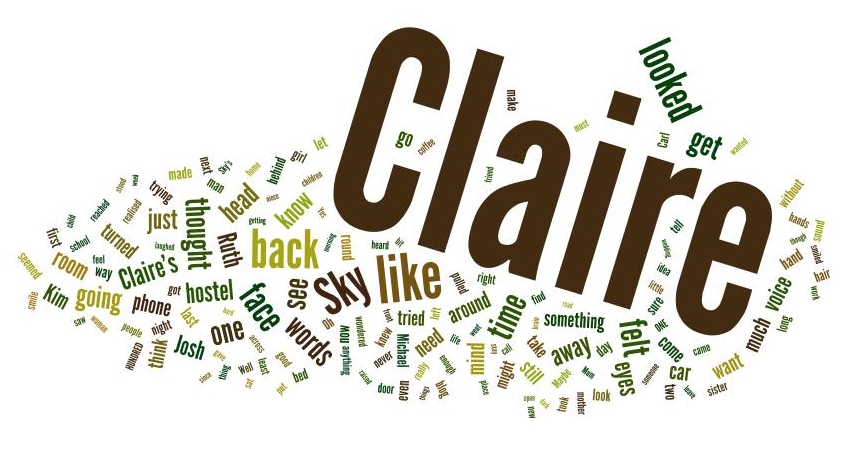
Top 200 words in Two-Hundred Steps Home

Top 200 words in Two-Hundred Steps Home

Today is a milestone day. Two-Hundred Steps Home reached 150,000 words and this is the 200th installment in my daily blog challenge for 2013. Wow.

It seemed fitting for Claire to receive some recognition, so I’ve given her a little pat on the back and sent her to a gorgeous-looking hostel that I quite fancy visiting myself! (I investigated, but it would be cheaper to stay in a hotel, although not the same as a Victorian Gothic Manor House!)

I’ve also been playing with Wordle: creating word maps of the most frequent words used in the novel (top 150 and top 200 words). I’m concerned that ‘like’, ‘felt’, and ‘thought’ are up there: a bit too much telling and not enough showing going on! Making word maps was a lovely way to spend an hour listening to the cricket when I should have been writing. I’ve found a breezy spot at the kitchen table, but the brain is still full of fog.

A time-eating exercise for a creative person

A time-eating exercise for a creative person

It seems fitting to use a milestone post to talk about my second-ever piece on this blog.

As I mentioned yesterday, I originally had the intention of discussing writing craft on Writer/Mummy. However I began following great blogs like Novels from the Ground Up (sadly no longer updated, but still with some great posts worth reading) and Daily Writing Tips, and a hundred others, and realised that I was in no position to preach.

Re-reading those early posts, though, I do think I had something to share. Many people want to write a novel but have a zillion reasons why they can’t. That was me, five years ago. The posts talked through how I turned that around. However, of my top tips for How to write a novel (with young kids underfoot), I only wrote posts on half, because it turned out I didn’t have enough experience to cover them all (even though I was teaching Creative Writing at the time!).

Playing with Wordle to celebrate 200th post

Playing with Wordle to celebrate 200th post

These were my top tips:

1. Throw away the excuses

2. Write what you know

3. Carry your story with you

4. Get Professional Help

5. Find fabulous friends

6. Finish, Finish, Finish

7. Put your critical hat on

8. Get it out there

As you can see, I only wrote posts on the first four points. When it came to writing about beta readers, critique groups or social media I hadn’t a clue. I was too scared to join a critique group and I didn’t have a beta reader, except my husband. The same went for finishing a novel (to final edit, not just the first draft), undertaking critical editing or getting to a point of releasing a book into the wild (either traditional route or via self-publishing).

Hard to choose my favourite (I have 12!)

Hard to choose my favourite (I have 12!)

Now I feel I can write about those things. Apart from critique groups: that fear still stands (and it’s harder to fit that in around a sporadic schedule than any of the other elements.)

It will be difficult not to reinvent the wheel, but at the least I can direct people to some of the amazing websites I’ve since discovered (like Catherine, Caffeinated: the self-publishing guru!)

I just have to decide whether to write them as standalone posts, on top of my daily blog, or cheat and combine the two! I think I’d prefer to do them standalone, and re-blog all five original posts as well, but that might be overkill: what do you think?

________________________________________________________________________________

Below is the next installment in my novel Two-Hundred Steps Home: written in daily posts since 1st January as part of my 2013 365 Challenge. Read about the challenge here.You can catch up by downloading the free ebook volumes on the right hand side of the blog:

________________________________________________________________________________

Claire made it back to the car without crumpling. Her hands shook as she tried to fit the key into the lock and, for the first time in weeks, she missed her Audi with its central locking fob.

Will they take my car back? Claire climbed into the Skoda and ran her hands around the sticky steering wheel. Loathe as she was to admit it, she would miss her little Stella.

Perhaps they’ll gift it to me as a leaving present. Her laugher filled the enclosed space. The idea that anyone would miss her was a joke. I haven’t heard from a single person in three months.

Although Claire had discovered how deep her work-friendships ran at her leaving party, it still hurt to realise she could vanish so completely from their lives without so much as an email to say farewell.

The adrenalin continued to rush through her veins, giving the sensation that she could scale a cliff face or run a marathon. Knowing the payback would be vicious, Claire pushed aside her emotions and shoved the gear stick into first.

Wandering around town earlier, Claire had toyed with the idea of staying the night in Manchester. Maybe Great John Street hotel, where she could lounge in the roll-top bath, safe in the knowledge that someone famous would be sleeping in a room nearby. By the time they saw her expenses it would be too late to challenge the cost.

Now, though, she had no desire to linger in her former home town. Her nose itched with the grit of traffic fumes and her temper frayed as she jostled with the sleek silver commuter cars heading for the suburbs.

Choosing the route south, Claire ran through the map of hostels in her mind, trying to decide the nearest one that she had yet to visit.

I don’t think I stayed in all the Peak District hostels round Buxton. If I have to work to the end of the week, I may as well stay somewhere pretty.

*

Claire pulled up outside Gradbach hostel, glad to finally come to a halt. The drive had taken twice as long as it should have, due to rush hour traffic leaving Manchester. In front of her was a building that looked like an old mill, nestled deep in the trees. Drinking in the clean air as she might a chilled glass of rosé, Claire felt the space and silence surround her, and smiled.

The reception desk welcomed her with polished wood and bright lights. A smiling lady, with a smart dark bob and glasses, approached with a question on her face.

“Can I help you?”

“Yes, I’m hoping you might have a bed for tonight?” Claire’s tummy rumbled and she remembered she hadn’t eaten since breakfast, twelve hours earlier. “And somewhere to eat?”

The woman’s face fell and she shook her head. “I’m so sorry; this hostel isn’t open to the public during term time. School and group visits only. We have a group in at present.”

As she said the words, Claire heard the sound of chatter coming from deep within the converted mill. Disappointment dragged at her limbs and she grasped the reception desk for support.

I could be lying in a bubble bath, looking forward to a rare steak and a gin and tonic.

With a sigh, Claire raised a smile and directed it at the hostel manager. “Can you tell me where the nearest hostel with beds is, please? Or do you have internet so I can get online?”

With a nod, the woman began tapping away at a computer. A frown pulled down her dark eyebrows, and Claire felt ice slide into her stomach.

“Hartington Hall has a vacancy?”

Claire shook her head. “I’ve done that one. And Ravenstor, Yougreave, Eyam.”

Her words brought a puzzled smile to the woman’s face. She turned, as if to speak, but seemed to realise it wasn’t her concern. “How about Ilam Hall?”

It didn’t ring a bell. “Hang on.” Claire pulled out her iPad and looked down her notes. “No, I don’t think so.”

“There’s nothing showing on the website, but I’ll give them a ring. They sometimes reserve a bed or two for emergencies, or someone might not have turned up yet.”

Claire flicked through her guide book to find Ilam Hall. She took in the pictures of the Victorian Gothic manor house, with the double-height windows and sunny, beautifully decorated, rooms. It knocked spots off Great John Street hotel, which she had felt was a bit dark, the one time she had stayed there.

This is why: This is what it’s about. Gorgeous, undiscovered properties. Who knew they were here, or that you could stay in them for a small amount of money? Okay, they’re not all like that, but enough. Who needs the Maldives, or New Zealand, when there are such gems right on the doorstep?

Claire held her breath, as the hostel manager began talking to someone on the phone. Please have space. My soul needs this.

As the woman smiled, Claire felt her heart lift and began to breathe again.

“You’re in luck,” she said, as she hung up the phone. “They’ve had a couple of girls call up to say they’re staying in their current hostel a further night. It’s only a dorm room bed, but I assumed you would take it, given how late it is.”

Claire looked out the window, surprised to see it had gone dark. “Oh yes. Will I still be able to get dinner?”

“I should think so. I’ll call and tell them you’d like to eat when you arrive.”

“Thank you, and thank you for your help.”

The woman hesitated, then spoke in a rush. “I have to ask. Are you the lady writing the blog? About the hostels? Only we’ve really enjoyed it and I wondered when you might come here.”

Surprised, Claire nodded.

“Will you come back? We’re open in the school holidays for families and other travellers.”

Claire thought about her meeting earlier with Carl, and her interview later in the week. “I don’t know. I am thinking about doing something different for a while.”

The manager’s face fell, but she nodded. “I understand. It must be exhausting, moving every day. Let me know, if you do decide to come. We’ll make sure you get a nice room.” With a shy smile, she added, “I understand you probably stay anonymous. Otherwise how could you write a fair review? It’s been great learning about what the other hostels are like. I haven’t been to many. I don’t have time!” She gestured at the mill around her and laughed. “Anyway, I’m detaining you. I’m sure you’re ready for dinner and bed. Do you need directions to Ilam?”

Claire shook her head. “No, I have satnav. Thank you, though, for reading the blog. It’s nice to know the words aren’t just disappearing into the ether.”

With new food for thought, Claire made her way back to the car.

***

Memoirs of a Geisha Moments: 2013 365 Challenge #187

Romance: all about yin and yang

Romance: all about yin and yang

I seem to have a writing tips theme at the moment. Apologies to blog followers who are not writers or interested in writing! It’s nearly the weekend, so normal parenting-chaos blog posts will resume!

One of the articles I read on Jungian Archetypes, after writing my post confessing I didn’t know what they were, talked about the use of archetypes in romance (where there isn’t traditionally an antagonist, in the way there might be in a crime or thriller novel).

On ArchetypeWriting.com there is a post on understanding the Anima / Animus Archetype to create riveting romances. The author, Carolyn Kaufman, explains:

Psychological research shows a mere three things are crucial to human happiness, and one of them is love (The other two are a/ satisfying work and b/ personality, most notably the qualities of high self-esteem, extraversion, and optimism.)

This, I suppose, explains why love stories are so compelling. Even in fantasy novels, thrillers and other genres, a love-story theme is often present, if not central. (I think about my favourite TV shows, Stargate SG-1 and NCIS: the interest comes from the characters, particularly the undercurrents of forbidden love, more than the specific story lines. I digress.)

Kaufman goes on to explain:

This basic human need for romantic, sexual, and marital connections is reflected in Carl Jung’s anima/animus archetype. In essence, Jung believed there is a psychological construct in males (the anima) that creates a strong draw to the feminine as it’s embodied in real women, and a matching construct in females (the animus) that draws them to men. One of the best visual metaphors for the concept is the yin-yang

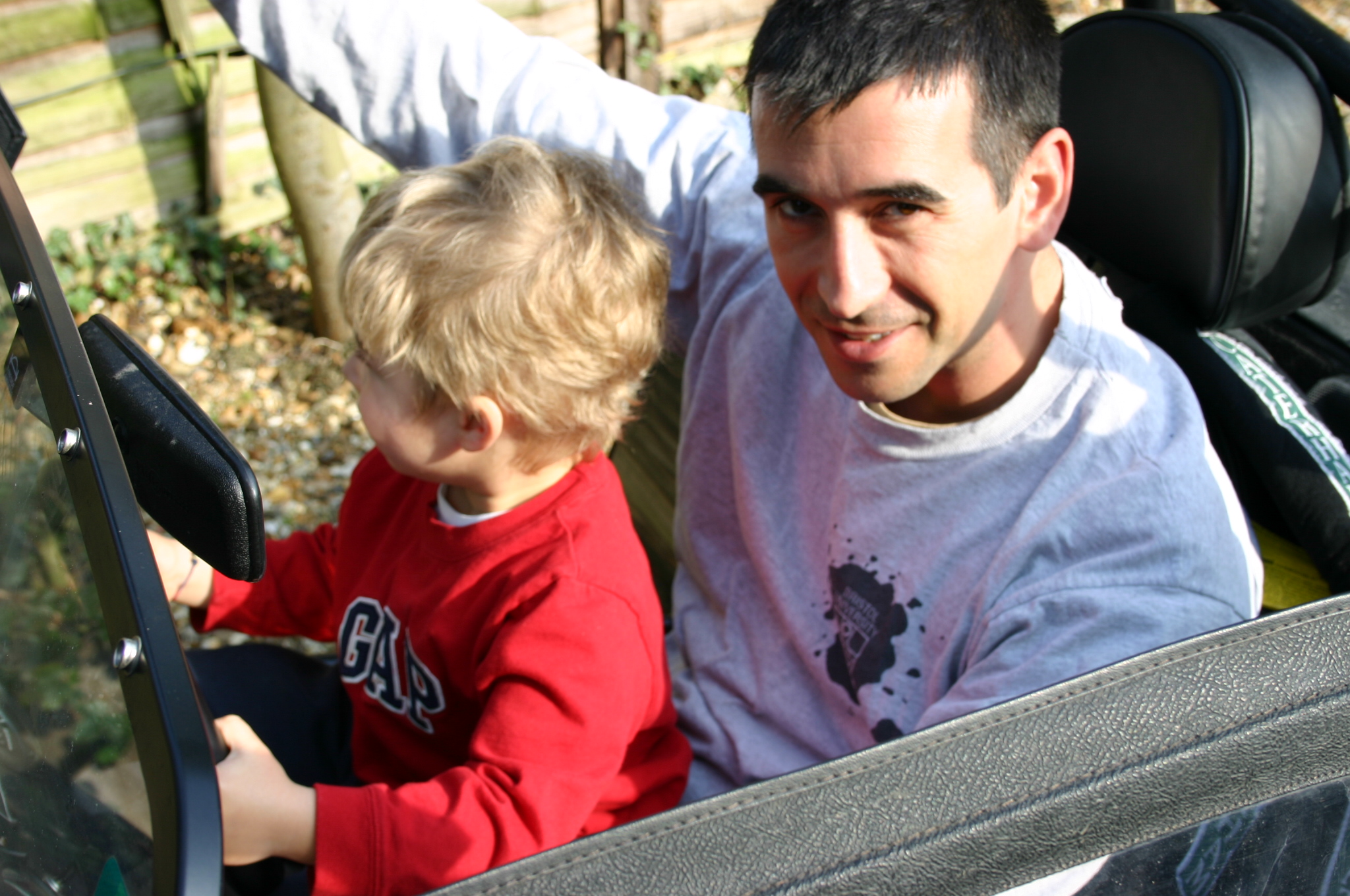
My leading man, before we were married

My leading man (and nephew), before we were married

So far, so good. Romance is about ‘Losing and Finding One’s “Other Half”‘ or ‘Chemistry’. However, Kaufman warns of the danger of making the attraction too physical, too related to an expectation of the perfect man or woman, rather than understanding what draws protagonists together.

I know I’m guilty of this. I read a lot of Georgette Heyers, and there is an element of strong man meets quirky, vulnerable female. Or strong woman fights then falls for equally strong man. There isn’t much depth. (The good Heyer books are the ones where love develops unexpectedly, through friendship, humour and shared experience, like Frederica).

What all of this means is that, just like in real life, your characters should be attracted to their love interests for a reason. The potential love interest’s traits and behavior must resonate with your hero because they somehow make him or her more whole.

This idea of resonation has been in my mind since I read this. Trying to understand what draws my protagonists together. In Baby Blues, Helen is drawn to Marcio because he is a family man: he likes children and therefore stands in contrast to her ex, who told her to get rid of her unborn baby. However, their real resonation moment is early on, when they talk about their creativity. Helen is a photographer, Marcio a freelance journalist / author. Both confess that things don’t seem real in life unless they have either put words around it (Marcio) or photographed it (Helen). It gives them a shared view of the world that transcends their moment in time (the fact that Helen is pregnant and Marcio wants children).

‘Gutted it wasn’t a true story’

In my notes I have written, “What is the ‘Memoirs of a Geisha Moment’ in Class Act?” This refers to a moment in my relationship with my husband when we knew we were destined to be together.

Early on in our relationship we were discussing the novel, Memoirs of a Geisha, which we had both read and enjoyed. However we said, at almost the same time, “Gutted it wasn’t a true story”.

That shared reaction was like a cartoon bell ringing: we understood something about the other person because of that moment.

I don’t know what that point is yet, in Class Act. My protagonists, Alex and Jenny (? I haven’t decided on a name yet. It was Rebecca, and then Katie!) are drawn to each other physically, (initially for Jenny, against her will). After that, they share an interest in literature. But I haven’t discovered their ‘Geisha’ moment yet.

Kaufman’s final point, that I need to take to heart, is this:

[T]he danger is that sometimes we’re actually creating love interests for ourselves rather than for our characters. We may assume that everyone would be attracted to the same things we are, and that little explanation is needed to justify why our heroes and heroines would fall for each other

Guilty! I adore Marcio. It’s the main reason I didn’t just bin Baby Blues when I got frustrated with it. Alex is very similar (physically, he’s almost identical). My protagonists (like my husband) all tend to be 6ft tall with dark hair and brown eyes (although Marcio’s eyes are blue). There are parts of Marcio’s dialogue which are almost verbatim to things my husband might say to me. But, then, most of the female protagonists are at least partly me, so that’s okay. I just have to make sure I explain why they love each other, rather than assuming it is obvious!

________________________________________________________________________________

Below is the next installment in my novel Two-Hundred Steps Home: written in daily posts since 1st January as part of my 2013 365 Challenge. Read about the challenge here.You can catch up by downloading the free ebook volumes on the right hand side of the blog:

________________________________________________________________________________

“Yes, Carl, I know I took holiday at Easter to care for Sky. Now I’m asking for a few more days. I can continue with the blog – I have plenty of extra material – no one will even realise I’m not still on the road.”

Claire regretted answering the phone. What was Carl doing checking his email on a Sunday, anyway? And on a bank holiday weekend. Didn’t the man have a life?

“Just admit it, Claire, your heart isn’t in this project. You’re dashing round the country here and there, with nothing more interesting that castles to write about. That isn’t fulfilling the brief. If this continues, I will be forced to take action.”

Claire laughed. “What action, Carl? You don’t have the balls to do anything. If you did, you would have sacked me already. And good luck with that, by the way. I’ll have you in court for unfair dismissal before you can say ‘you’re fired’.”

After the words were out, Claire wondered if they were entirely wise. He was still her boss, after all. With everything that had happened recently, it was hard to take it seriously. What had once seemed so important – her career, her reputation – now felt like a shackle around her leg.

She heard the in drawn breath, and waited for Carl to begin his annihilation. The attack didn’t come. Something she couldn’t fathom was churning in her boss’s mind. When he did speak, his words didn’t make sense.

“Look, I appreciate this task has been challenging and I understand that you have some family issues. I’m willing to be lenient in the circumstances. You may take a week, in lieu of the weekends you have worked during the assignment.” He paused, and when he spoke again, his voice was sharp.

“But I want you back on the road immediately after that. And I expect you to continue your posts.”

Claire’s head reeled. What the…? She couldn’t have been more surprised, if Carl had told her she had won employee of the year. What is his game?

Realising the phone was dead, Claire dropped it away from her ear. Was Carl really concerned that she might take AJC to court? It had been an idle threat, she knew what legal action did to a director’s reputation. Not that I care about that much anymore.

For some reason the offer made by Roger Hazleton kept floating through her mind. Her explanation to her mother about why she had come home had been an excuse. It was an unrealistic dream, in the aftermath of the wedding fiasco. Yet still it tugged at her mind.

She thought about Ruth and Sky, and tried to imagine being a 24-hour plane flight away, should something happen. No, travelling to the other side of the world was not an option.

***

Story Arcs: 2013 365 Challenge #186

Aaron on his new bike (early bday gift)

Aaron on his new bike (early bday gift)

Following on from yesterday’s post, I was flicking through my notes for Dragon Wraiths today and I came across an eight-point story arc that I found on the dailywritingtips.com website. The eight-points are taken from a craft book by Nigel Watts, called Teach Yourself: Writing a Novel. I have another in the Teach Yourself series (Teach Yourself Creative Writing) which is excellent, so I have ordered Nigel Watts’ book to help me with Class Act.

Running through the eight-point arc against Class Act, I realise that I am about 70% there, and it has really helped clarify the remaining 30%.

In summary the eight points are:

  • Stasis (normal life)
  • Trigger (external to protagonist, sparks the story)
  • Quest (caused by trigger)
  • Surprise (all the conflicts and complications of the story)
  • Critical Choice (reveals real personalities)
  • Climax (result of critical choice: highest peak of tension)
  • Reversal (consequence of critical choice and climax – should change status of characters)
  • Resolution (return to fresh stasis with characters changed and story resolved)

Interestingly I also found notes on the story arc for a Teen Romance by Mindy Hardwick (I’m always impressed when I discover that I did more research than I remembered!) The story-arc for YA Romance is Infatuation, Flirtation, Friendship, Commitment, Love. I think DW follows this, apart a comment Mindy Hardwick makes on the last point. She says

“…teen romances do not necessarily have a happily-ever-after. In fact, most teen romances will not have them. Why? […] Each teen has been changed by this first love, and now the characters will find themselves pulled apart by life events..”

I thought about leaving Luke behind at the end of Dragon Wraiths, unable to join Leah, but – what can I say? – I’m a sucker for a Happy Ever After!

________________________________________________________________________________

Below is the next installment in my novel Two-Hundred Steps Home: written in daily posts since 1st January as part of my 2013 365 Challenge. Read about the challenge here.You can catch up by downloading the free ebook volumes on the right hand side of the blog:

________________________________________________________________________________

Claire froze, unsure how to react. She had never seen her mother cry before. Melanie Carleton did not show her feelings; it was vulgar. The most extreme portrayal of emotion thus far, in Claire’s experience, was irritation or chiding. Nothing to compare with the shuddering sobs shaking her mother’s shoulders. She knew she should offer comfort. Words, a hug. Somehow her body wouldn’t rise from the hard kitchen seat. She sat mute, and waited for the storm to pass.

Eventually, her mother raised her head and brushed at her cheeks, as if angry to find tears there. Claire willed herself to speak, the words dredged from her.

“Can I get you anything? Tea?”

Melanie shook her head. Her lips twisted, as if a bitter taste had filled her mouth.

“I’m fine. I’m sorry you had to see that.”

“Oh, Mum.” Claire rose, finally galvanised into motion. Moving round the table, she wrapped one arm awkwardly around her mother’s shoulders. Melanie reached to grasp her daughter’s hand, and they remained for some time in silence.

After a few minutes, her mother patted her hand, and Claire took the signal to sit back down. She pulled up a chair, sitting knee to knee.

“Why do you think he’s having an affair? That doesn’t seem like Dad.”

Melanie sighed. “Oh, it’s probably nothing. I’m never here, what with picking Sky up from school and making sure Ruth takes care of herself. I can understand your father needing to find something to fill his time.”

“That doesn’t mean it’s another woman.” Claire thought, guiltily, about the conversation she’d had with her father, last time she was home. She wanted to tell her mother, reassure her, but she’d revealed too many secrets recently. But surely it would be better than her mother thinking she was a cuckolded woman.

“There is only so much golf a man can play,” Melanie declared, more spirit in her voice. “But if he’s not playing golf, where on earth is he? He was out all day yesterday, in the pouring rain, but when he came home he wasn’t even damp. Since when did they have indoor golf courses. Besides, I didn’t even think he liked the game.”

Claire inhaled, not knowing what to do for the best. She watched as her mother twisted her fingers, bemused to see that the skin looked papery and thin. When did Mum get old?

Looking up at her face, she saw the weariness dragging at her mouth and darkening her eyes. Poor Mum.

“He doesn’t.” Claire’s words fell into the silence.

“What?” Melanie looked up, her face showing her confusion.

“He hates golf. He told me, last time I was here.”

She watched as the tiredness gave way to fury. That settled it, she had no choice but to give at least something away.

“I don’t think he’s having an affair though. I’m pretty certain you’ll find he’s been at the library. Don’t ask me why,” she added, before her mother could speak. “I’ve broken enough confidences. Ask him.” She put her hand on her mother’s knee, then took it away again and rested it in her own lap.

“You need a break. I’ll go and stay with Ruth for a few days. I’ll look after Sky, make sure they both eat, anything you tell me I need to do. Spend some time with Dad. Talk to him. You might be surprised.”

Relieved to see the fury seep away from her mother’s eyes, Claire got up and went to fill the kettle, wondering what she was going to say to Carl about taking more time off to look after her niece.

***

Using the Senses: 2013 365 Challenge #143

The fields of oil seed rape

The fields of oil seed rape

Good writing is all about recreating a sensation for the reader: an emotion, an experience, a place. To do this we are taught to use all the senses; to show rather than tell. It’s probably one of the hardest parts of writing to do well. I know it’s not one of my strengths.

I do try to include smells and sounds as naturally as possible but it tends to be an element added in a later draft rather than intrinsically there from the beginning. Which is odd because I do live in all my senses. I’m very sensitive to sounds and smells. A piece of music, bird song. Even the dog that’s been yapping at the vacuum cleaner next door all morning, these all create the mood of my day.

As I write this I’m walking through a field of oil seed rape, a plant that gives off a very strong smell. One with equally powerful memories for me. I am instantly transported to my childhood, around ten or eleven, when I would run through the fields with my two best friends at the time – both boys, not that it mattered at that age. We ran free and hid in the fields, racing along the tractor lines between the tall yellow plants.

Even though I smell the darn stuff every year, and have developed an allergy to it in later life so that it makes my eyes itch, the memory that sticks is that one from 25 years ago. Year after year, the smell of the crop reinforces that memory.

I guess the problem with trying to introduce that effect into my writing is that smells always seem to take me off on a tangent, to a memory that bears no relation to my current situation. Still, it would probably be good to dig out some of my old writing exercises on the senses and have a refresher. Find some better way to invoke the senses than endlessly writing about thudding hearts and the smell of aftershave.

________________________________________________________________________________

Below is the next installment in my novel Two-Hundred Steps Home: written in daily posts since 1st January as part of my 2013 365 Challenge. Read about the challenge here.You can catch up by downloading the free ebook volumes on the right hand side of the blog:

________________________________________________________________________________

Claire watched the sensuous lips moving, aware she had no idea what words were being spoken. With a mental shake she tuned back into the conversation.

“…wouldn’t stop coughing, right by the Number Three speaker. I had to ask Simon to offer the woman a throat sweet. I mean, what can you do? I couldn’t throw them out the cathedral for coughing, but it was live on Radio Three. A dreadful dilemma.”

Anthony turned a worried frown towards Claire, seeking reassurance that he had done the right thing offering the persistent cougher a Halls. Realising some response was required, Claire nodded, as if discussing the viral ailments of visitors to Lincoln Cathedral was everyday fare. “I’m sure you did the right thing. So very selfish, coming to a concert with a cough.”

She was rewarded with a grateful smile that caused forgotten regions of her body to flutter in a disturbing way. Cupping her hands around her giant, sadly empty, coffee mug, Claire dredged her mind for a new topic of conversation. Hopefully a more stimulating one.

You’d think being in charge of recording concerts for BBC Radio would be an interesting job. Turns out I was wrong. How disappointing that every job is dull when it’s your job.

“Where to next then, Anthony? What marvellous audio delights do you have to share with the nation?”

Anthony looked vaguely perplexed, as if Claire had spoken in a foreign tongue.

Come on, my accent isn’t so very different from yours, though not nearly so appealing. She gave a small shiver of pleasure. Claire found the Scottish brogue inexplicably sexy, particularly when she was able to understand the words being spoken. Anthony’s silence gave her an excuse to gaze at his attractive face without hiding a yawn.

At last he translated her words in his head, and his face fell, like a school boy discovering he’d got double Latin next instead of Games.

“Opera.” He shuddered, so comically that Claire had to stifle a laugh when she realised he was in earnest. “Britten. The Turn of the Screw.”

Never heard of it. I’m such a philistine.

“Not that I’ve ever heard of it,” Anthony added. “But Opera, eugh. At least it’s back in London, at the Barbican.” He glanced at his watch, as if only now realising he had to get from Lincoln to London in time to oversee set up.

“Christ, is that the time?” He pushed his chair back with a nerve-wrenching screech, and spilt the remainder of his half-drunk latte across the table. Claire stood up just as swiftly, to avoid coffee spilling into her lap. She looked up at Anthony’s soft, wavy hair, the kissable lips, the heavenly eyes framed by eyelashes that wouldn’t look out of place on a cow.

He would be a worthy replacement for Josh in my dreams. If he wasn’t such a boring idiot.

Claire held her hand out to the frazzled man, who took it with a weak grasp, leaning forwards to plant a kiss on her ear, before fleeing the coffee shop.

“Bye,” Claire said to the empty space in front of her. Then she collapsed back onto her chair and gave in to the storm of laughter swirling in her breast.

***

Always get a second opinion

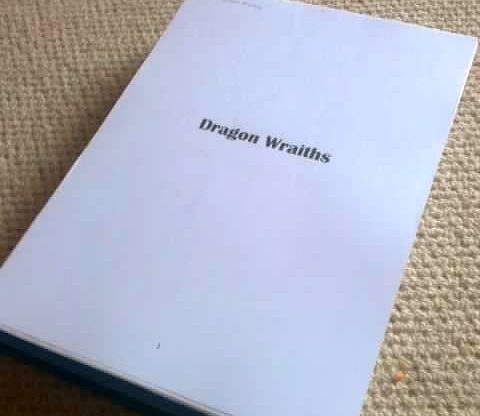
I love a printed manuscript: it LOOKS like 7 months’ work

This week my Young Adult novel, Dragon Wraiths, got long-listed for the Mslexia Children’s Novel Competition. I would like to say I was thrilled when I received the email, but I’d be lying. It came only hours after I had typed up the last second-draft-edit amends and vowed to put the darn novel in the bin/cupboard/big pit in the garden because, seven months after starting it, I still had no idea what it was about.

Instead my overwhelming emotion was fear. How could I send my manuscript off, all 112,500 words of it, with my name on the front (though thankfully the competition is judged anonymously) when I KNEW it was a pile of crap? But I had come so far, invested 7 months of my life, not to say thousands of pounds of nursery fees, plus the competition entry fee. I wasn’t giving up.

So I called in the troops. Sent the novel to my mother and pleaded with her to read it and tell me the most awful plot-hole-disaster bits so I could focus on fixing them before sending the manuscript off a week later.

That was Thursday night. On Friday, when I took the kids over to see her as usual she had to tear herself away from reading the book. My book. Friday night she sent a copy over to my step-dad’s iPad and Saturday morning (early) I got a text to say he was so engrossed she couldn’t get a word out of him. That of course spurred my husband to start reading it again, the edited version this time. I have learned an important lesson about waiting to give out the edited version because he soon couldn’t put it down. (He sat in the car while I took the kids to an indoor play centre on Sunday on the excuse that he had a cold and it was too hot and noisy, when really he wanted to keep reading.)

By Sunday night everyone had finished it.

My step-dad (who isn’t an avid reader, but loved the Twilight series) said “Book 2 Please”.

“What about the plot holes?” I asked, perplexed.

“Well, apart from saying she’s never been camping in part 2 when part 1 pretty much opens with her camping on a hillside, we didn’t find any plot holes.”

“What about the ending? Doesn’t it all feel a bit forced?” It took weeks of agonizing to try to make sense of it all, with me cursing my Pantser habits all the while.

“Ending was great, it all made sense.”

I sat and stared, open mouthed.

So instead of spending this week desperately re-writing huge chunks of my novel I have been calmly tweaking the one or two weak scenes my husband highlighted. Today I printed out all 462 pages and posted it.

Dear manuscript, all my blessings go with you

Leaving me free to start NaNoWriMo tomorrow.

Of course, that’s a different ball game entirely. I was going to rework one of my romances for Nano this year, but now I’m thinking about starting a sequel to Dragon Wraiths. Who knows, unlikely as it seems to me, it might actually go somewhere.


What have I learned?

I’ve always been too scared to relinquish my work to a critique group for fear of being told to give up writing and go back to the day job. I know family members are biased, but my parents don’t give up their weekends lightly. If they read my book non-stop to the end it was because they wanted to. That must count for something. Maybe I need to have more faith in myself.

Writing is a solitary business and editing is worse because you don’t even really have your characters for company. It’s easy to forget what’s good about your novel. You get too close, you lose the ability to feel the suspense, to be swept up in the drama.

My advice? When you have torn your novel apart and rebuilt it from the ground up, and you still think it stinks, remember – ask for a fresh opinion. You might just be pleasantly surprised.


My NaNoWriMo Thoughts

It’s that time of year again when people kiss goodbye to their families, put the takeaway numbers on speed dial, stock up on coffee and chocolate, and launch themselves into NaNoWriMo.

This is my fifth year and most of my novels started life in November. For those of you who have never heard of it, NaNoWriMo stands for National Novel Writers Month, and is about “Thirty days and nights of literary abandon” (or writing 50,000 words in the month of November, but that doesn’t sound as poetic or inspiring!) 

There are plenty of blog posts better than mine that will tell you how to structure your NaNoWriMo novel, or how to edit it when it’s all over. [Oh my, turns out there is actually a National Novel Editing Month, held in March. And I thought it was just my wishful thinking. Count me in!]

There are discussions as to whether you can really write a novel in 30 days and whether it is insulting to “proper” writers for people to think they can. I don’t feel qualified to write on any of those things, even if it hadn’t already been done. I guess everything to do with NaNoWriMo has been done, given what a phenomenon it is. However, for those that have no idea what NaNo is, or are contemplating trying it for the first time this year, I thought I would tap out my top tips.

My NaNoWriMo Top Tips:

1. Write something on Day One. Anything. Even if you’re a Pantser and your mind is blank, make up a character from five items in your work space and think of something awful that might be happening to them. The longer you leave it before getting words on the page the less likely you are to start at all.

2 Try and keep up with the word-count chart but don’t panic if you fall behind. Once you get some momentum you can do astounding things (I wrote something like 17k words in my last 36 hours last year.)

3. Do not re-read more than your last line (just to see where you got to). Even better, end your writing session with a couple of notes about what might happen next so you can start writing the minute you sit at your desk.

4. DO NOT EDIT. If you can handle it by all means leave spell check on and fix as you go. If that causes you to re-read, worry, and question the quality of your work, turn spell check off or – better still – write in Notepad or equivalent.

5. Engage with the community. Read some Facebook posts, follow on Twitter. If you can afford it, donate to NaNo and get all the motivational emails. They’re the reason I come back each year.

At the end of November you won’t have a finished novel. As most novels are nearer 100k than 50k you won’t even have a finished first draft. But you’ll have something. Even if you bin half, or put the whole thing in a hidden folder on your computer, you will still have something to be proud of.

Before discovering NaNoWriMo I was convinced I couldn’t write a novel because I had no imagination. I was wrong. I may not have the sharpest literary mind in the world but I can spin a yarn. I’ve discovered I’m more Pantser than Plotter and my main weakness is generating conflict. I know I can write good dialogue and that I can churn out 50k words of reasonable first draft in 4 weeks, even when it isn’t November.

I have no idea what I’m writing about this year (as you’ll see in my guest interview on Findingmycreature in a couple of weeks) but I’m unfazed. In fact, after weeks of tedious editing, I’m so excited I’m counting down the days. To switch off my brain, commune with my subconscious, tell my inner editor to eff off, & just write?

Bring it on!

“Treat your book like your child”

Parenting or Writing, which is harder?

Over on the NaNoWriMo blog, the Office of Letters and Light, they recently interviewed author Karen M. Cox, whose second novel Find Wonder in All Things was written during a NaNoWriMo. Her novel was awarded an Independent Publishers Book Award, which just shows how great NaNoWriMo can be for unlocking the novel in you.

As part of the interview, Karen gives her top writing, revision, and publishing tips for other NaNoWriMo participants.

These are summarised below:

  • Write every day during NaNoWriMo. The days that I started out ‘behind’ were tough days.    
  • When you stop for the day, know where you’re going tomorrow. It helps eliminate the ‘staring at a blank screen or paper’ syndrome. 
  • Resist the urge to edit until you’ve got the thing out of your brain and onto the stone tablet, paper, or screen. 
  • Find people you trust to give you feedback: [people with] no agenda besides reading good material.
  • Throughout the writing process, treat your book like your child. What I mean is love it, treasure it, brag about it, but be objective and open-minded enough to discipline it—through accepting constructive criticism, editing, rewriting—without losing your long-term vision for when it’s ‘all grown up.’ This is harder than it sounds—you have to weigh others’ opinions without pride and prejudice, yet still stay true to what you want for your ‘child’ in the end.

It was the final point that really stuck in my mind as the most comprehensive piece of advice, but the hardest (for me) to follow. On a bad day the advice would mean me yelling at my book over something stupid and then sobbing in the corner for being a terrible writer, destined to go to Writer Hell in a handcart.

As you can tell, I haven’t sussed parenting yet, particularly the discipline part. I find it hard not to take toddler-defiance personally and I’m often more prone to childish tantrums than they are (I like to think I’m the highly strung artistic sort but that’s probably rubbish!)

I know all the theories of good discipline and on a good day, with lots of sleep, I can be that parent, calmly instigating time-outs and positive rewards. Much as I know the theory of what constitutes good writing and on a good day I can be that writer too, editing with consistency and a clear mind. On a normal day, however, I have as haphazard an approach to editing as I do to parenting: I do what I can do, get frustrated that I’m not doing it better, and constantly fight the urge to throw in the towel.

Maybe I need to write all my first drafts now, play with them and enjoy them, and get to the task of revision and redrafting when I’ve worked out how to be a proper grown-up parent person.

Oh dear, I might never finish a novel.

Marketing Time-line for Self-Publishing

Image representing Lulu as depicted in CrunchBaseWhile I wait (im)patiently for feedback from my beta readers I have been worrying about Marketing.

[As an aside, I have had one comment so far, from my mum, and her feedback was – it’s not as good as your last book (the one that was rejected from Mills & Boon). That’s filled me with confidence.]

I find the marketing of my book far more daunting than anything else I’ve done so far. I’ve talked before about how rubbish I am at selling myself and this includes trying to engage on social media. I am self-conscious even writing on other people’s blogs or twitter feeds (twitter still baffles me) and when I browse around people’s sites, whether on Facebook or Pinterest, I get distracted and forget why I am there.

I have searched around on the internet for advice, but it has been difficult to find a cohesive plan for things you can and should do to help market your book. Until I recently found this great post on the Lulu blog, with a timeline of things to do before you publish.

It starts 12 weeks before launch, so I’m way behind if I want to do all these things before publishing Pictures of Love in August. That said, as I haven’t had any beta reader feedback yet, I don’t know if August is still feasible. If I have a complete re-write to do, on top of finishing Dragon Wraiths by September, it is likely I will have to push back the release date.

I was going to summarise the Lulu post and include the best bits here, but as it is all very useful, I have posted the complete text below. I’m off to work out what I can do in the couple of hours a week I find time to do marketing!

Please let me know how you get on and any other ideas you have to get your book noticed.

The Post:

On Lulu’s blog there’s been a lot of talk about the “how” of marketing (Pinterest, Blogging, Twitter, writing a press release, video chat, etc.) but little focus on the “when,” which is an equally important component of a successful book marketing campaign.

Here are some general guidelines you can follow compiled in a simple marketing timeline to help you plan:

10–12 weeks out: Do your research. Find appropriate blogs and media outlets that might want to review your book and compile a list of media contacts. Come up with a list of friends who can help spread the announcement of your publication and ask each one personally for support. When you reach out to contacts, offer them a free copy of your book and ask for pre-publication quotes to be used in your book’s detail page at various online retailers.

*Expert tip: Make the first chapter of your book available for free for anyone who might want to review your book or include it in a news article. You can do this by creating a free eBook on Lulu.com that includes just the first chapter of your book as well as contact details for press inquiries.

8–10 weeks out: Draft your press release and any announcement emails you’re planning on sending out. Make sure to re-read them numerous times and get friends or family to proof them for you. Ensure that if you’ve not already done so, your Facebook page, Twitter and Pinterest account, and blog include up-to-date info on your upcoming book. Be sure that every update, post, announcement and release includes a direct link to where readers can pre-order your book. (You can use a URL shortener like bit.ly if you like). Now’s a great time to do a cover reveal on social media — unless, that is, you’re planning to work with a blogger for an exclusive reveal on someone else’s site.

6–8 weeks out: Send your press release and start pitching bloggers. This is also a good time to formally announce the release of your book online. When doing so, consider including a question on Twitter and Facebook to encourage engagement and make sure to provide a link where readers can pre-order your book. We know you already know, but double-check that landing page to make sure that your cover image, title, description and reviews are all up-to-date and grammatically correct.

4–6 weeks out: Start thinking about adding “flair” to your social media. Launch week-by-week book giveaways and poll your fans or create extra content (a book playlist, an author interview, etc.) to generate excitement. If you’ve created a video trailer, announce its premiere date on your blog and then post it about four weeks out. As the one-month mark approaches, follow-up with bloggers and other media outlets if you’ve not yet heard back from them.

2–4 weeks out: Post a teaser chapter to your blog — either all at once or split it up to tease out future buyers even longer. Announce winners of any giveaways or contests you’ve run and launch a final giveaway extravaganza (a book plus swag that relates to your book) to coincide with your book’s release date. Continue to make sure that that any good reviews and/or awards you receive are featured on your Lulu, Amazon, BN.com, etc. pages.

0–2 weeks out: You’re in the homestretch! Be prepared, if you’ve done your research right, to be doing blog interviews, updating social media frequently about not only the book, but your excitement, and featuring content and giveaways to celebrate! However, on the day your book goes on sale, give yourself a break. Leave the computer behind and enjoy a breakfast/lunch/dinner out. You deserve it.

Remember, just because your book is out doesn’t mean your marketing efforts end. Continue to look for larger news opportunities to tie your book to, update your social media outlets and blog on a regular basis so your community grows, and keep on top of awards you can submit your book for. More than anything, be creative, take risks, and, later on, hopefully reap the rewards.