Planning and pesky characters


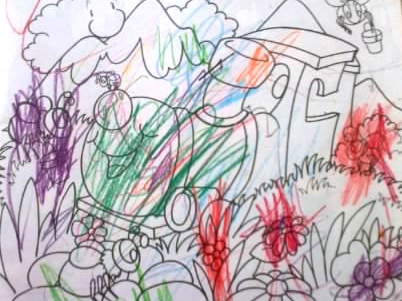
Artwork by Amber Martin

I don’t write plot plans or outlines and this blog explains why.

If you follow regularly you’ll know I’m rubbish at planning what I write, preferring instead to let the story develop as the words (hopefully) flow from subconscious to computer screen.

However after writing my post about the Chicken House / Times children’s book competition, I decided to write a plot plan for my young adult novel, Dragon Wraiths. I had an idea where the story was going, haven written half of it, so it seemed a safe, logical thing to do, particularly as I haven’t got long to draft and redraft before submission in September / October. I hoped that a plan would help me get all the continuity right first time and save some long-term pain. All good.

Except the pesky characters won’t do what they’re told.

I’m two chapters into my ‘plan’ and already I’ve added a whole new section to the novel, extending it from 3 parts to 4. I’ve changed a good character into a barrier and rewritten the whole ending. Twice.

So far my adherence to the plan resembles my children’s colouring: The lines are there only to be scribbled over. As a parent I have tried to let my kids colour how they like, seeing it as too controlling to tell them to colour inside the lines. Am I giving a free-rein to my own creativity by scribbling all over my own plot plan, or am I just scatty?

I have also discovered that, while I find it almost impossible to summarise a chapter into one line, it is easy for one line of planned plot to become two or three chapters.

I have written 7,000 words today and covered only two lines of plot plan.

They find the missing girl and she agrees to help takes no account of how hard it turned out to be to find the girl or the fact that she was rude and uncooperative when they did find her. My whole story depends on the girl being helpful: I didn’t expect her to have a mind of her own. In twenty words of dialogue, written while walking the dog, she has destroyed my whole plot outline with her rudeness. Grrr.

So I am ploughing ahead without worrying too much about the plan. It is still useful as a guide for key plot developments, particularly for the sciency bits that are not my strong point. As for the rest, even I don’t know if the darn woman will help out in the end, or finish up being written out of the book entirely.

That’ll show her.

“Treat your book like your child”

Parenting or Writing, which is harder?

Over on the NaNoWriMo blog, the Office of Letters and Light, they recently interviewed author Karen M. Cox, whose second novel Find Wonder in All Things was written during a NaNoWriMo. Her novel was awarded an Independent Publishers Book Award, which just shows how great NaNoWriMo can be for unlocking the novel in you.

As part of the interview, Karen gives her top writing, revision, and publishing tips for other NaNoWriMo participants.

These are summarised below:

  • Write every day during NaNoWriMo. The days that I started out ‘behind’ were tough days.    
  • When you stop for the day, know where you’re going tomorrow. It helps eliminate the ‘staring at a blank screen or paper’ syndrome. 
  • Resist the urge to edit until you’ve got the thing out of your brain and onto the stone tablet, paper, or screen. 
  • Find people you trust to give you feedback: [people with] no agenda besides reading good material.
  • Throughout the writing process, treat your book like your child. What I mean is love it, treasure it, brag about it, but be objective and open-minded enough to discipline it—through accepting constructive criticism, editing, rewriting—without losing your long-term vision for when it’s ‘all grown up.’ This is harder than it sounds—you have to weigh others’ opinions without pride and prejudice, yet still stay true to what you want for your ‘child’ in the end.

It was the final point that really stuck in my mind as the most comprehensive piece of advice, but the hardest (for me) to follow. On a bad day the advice would mean me yelling at my book over something stupid and then sobbing in the corner for being a terrible writer, destined to go to Writer Hell in a handcart.

As you can tell, I haven’t sussed parenting yet, particularly the discipline part. I find it hard not to take toddler-defiance personally and I’m often more prone to childish tantrums than they are (I like to think I’m the highly strung artistic sort but that’s probably rubbish!)

I know all the theories of good discipline and on a good day, with lots of sleep, I can be that parent, calmly instigating time-outs and positive rewards. Much as I know the theory of what constitutes good writing and on a good day I can be that writer too, editing with consistency and a clear mind. On a normal day, however, I have as haphazard an approach to editing as I do to parenting: I do what I can do, get frustrated that I’m not doing it better, and constantly fight the urge to throw in the towel.

Maybe I need to write all my first drafts now, play with them and enjoy them, and get to the task of revision and redrafting when I’ve worked out how to be a proper grown-up parent person.

Oh dear, I might never finish a novel.

Gardening and Planning

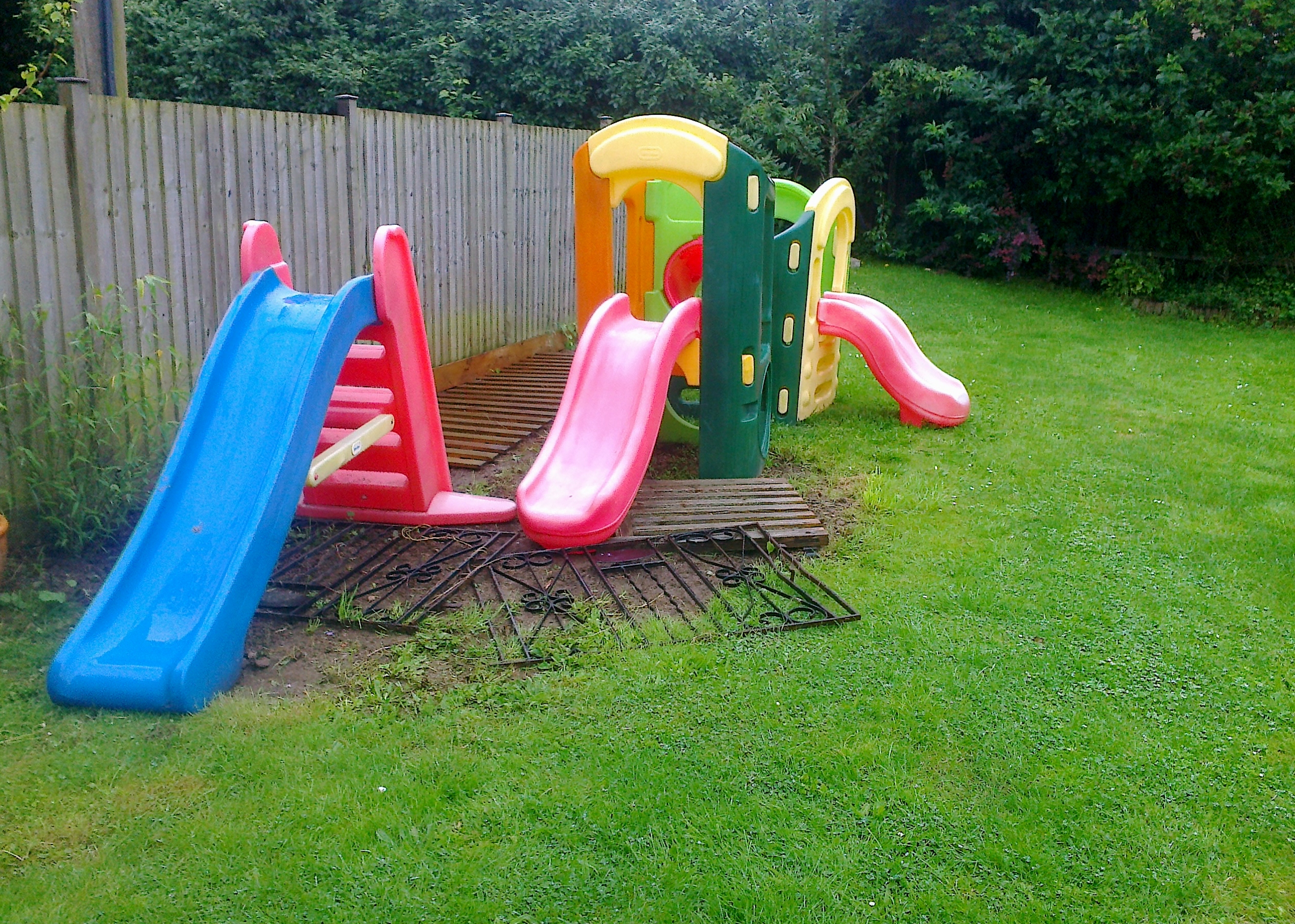
The garden after much levelling and grass-sowing

Last Thursday afternoon I took some time off to tame our feral garden. The sun made an unexpected appearance and I couldn’t miss the opportunity.

We’ve been faffing around inexcusably regarding what to do with bits of our lawn. One large section is a mess, after we had a boat standing there for years (a long story). We sold the boat a few months ago and since then the whole area has been an eye-sore and child-trap: full of bits of rubbish, holes the dog dug under the boat and many vicious weeds.

Husband wanted to fill the holes with top-soil, roller it flat, make it as gorgeous as a cricket pitch. I want somewhere the kids can play without getting stung or covered in mud or breaking their ankle.

In our family, husband is responsible for all things outside and DIY, while I do all things indoors and domestic. I have recently taken over lawn mowing while husband has been away with work, much to my 3-year-old daughter’s bewilderment.

The first time I dragged the lawnmower out of the shed she looked at me as if I’d grown horns.

“Mummy, that’s daddy’s job.”

I couldn’t figure out how to get the mower started and after twenty minutes I was sweating and cursing. Her response was:

“Better leave it to daddy.”

Needless to say she had a quick lesson in woman’s lib and not giving up and I was given the motivation required to approach the task more calmly and find the dead-switch.

As well as mowing this Thursday I decided to tackle the ugly-eye-sore spot. First thing was to shift a giant tarpaulin and wood pile, trying not to scream too loudly when I uncovered a nest of tiny mice. (I covered them with a plant pot and they were later relocated by their mummy.)

As I was moving planks, filling holes, scattering grass seed and generally trying to reclaim half my lawn for the kids, I got to thinking about writing (as I often do when my hands are busy but my mind is not.)

I see metaphors everywhere; it was easy to get distracted by what it symbolised to leave baby mice safely hidden, only to trap them later when they venture into our house, or the futility of planting grass seed for the birds to eat. Maybe the wasted effort of reclaiming lawn when it hasn’t stopped raining for three months and the long-term forecast isn’t much better.

In the end what stuck in my mind the most was the conflicting lures of planning versus getting stuck in. When I write, I generally just get stuck in, and the ideas follow (hopefully) one upon another as I type. I’ve often thought I should plan more. One writer I know sketches every scene before writing anything and has a prescribed number of chapters in a book and so on.

That fills me with awe and terror.

Awe because I can’t write like that and terror because I feel I probably should. How can I call myself a writer when I stumble along hoping a story comes to me as I type?  Except I recently read that even well-known published authors occasionally have the same approach.

Looking at our garden my conclusion was it’s okay to just get stuck in, although a little planning doesn’t hurt. If I had got stuck in at the beginning of summer, without worrying about a plan, we’d have lawn by now. A lumpy lawn, full of weeds and holes, but a lawn nonetheless. In this case planning equalled procrastination (to be fair, mostly it was due to my husband being just too busy). However I did lose an hour of gardening time on Thursday having to go buy grass seed, so some planning might have helped. The main thing is, when I look at the flat seeded area now (see photo) I am filled with a huge sense of satisfaction and progress, no matter how uneven the end result.

I have reached deadlock with my Young Adult novel, Dragon Wraiths, because I have to create a new world and a history. I am dealing with two planets and two timelines, and planning really is essential to keep it all straight.

But I hate planning.

I don’t like reaching the end of a day with no increase in word-count. There is no sense of satisfaction, just a growing confusion, and sense that I could probably plan forever and never be fully satisfied. My creativity doesn’t function unless I am actually writing. I may as well be doing school essays.

Reading what I’ve written so far I realise that lack of planning hasn’t held me back from writing some good stuff.  I mostly know where the story is going, in my mind, I just don’t always know how it is going to get there until I start writing it down.

So, I could fart about worrying about the details of my world and have no story to enter in the Mslexia competition in September. Or I could break a dozen rules, just keep writing, and add the history in the second draft.

Maybe sometimes you just have to get stuck in and not worry if it’s lumpy and full of holes. After all you can’t edit a blank page any more than you can mow dirt.

When is it good enough?

Once again I woke with a story in my head. Well, not so much a story as a What if on my own life. Actually much of my fiction is based on that premise, so much so that I sometimes write the real names instead of the pseudo made up ones. This was definitely one of those.

Of course, me being me, I immediately abandoned my current novel (the one that also came in a dream, the one where, 35k words in, I still have no idea what it’s about) to write this story. Luckily it came out as a short story, two scenes, 2,700 words. I’d nailed it in less than two hours over tea and toast in the coffee shop, after dropping off the kids.

Problem is, I think it’s great. I bought a copy of Woman’s Weekly Fiction Special on the way home (I don’t know a lot about where to sell short stories, so it seemed a good place to start) and I’m all set to send it in. Besides I need to get something published soon before the bills send me back to work.

And that’s my Achilles Heel.

Having been told in the past that my writing was dull, any time I pen anything vaguely readable I’m just so excited I think This is it!

Of course, in reality, I should add ‘sh’ to the beginning of that last word because, as a first draft, it undoubtedly is. The difficulty for me is, once I’ve accepted the ‘sh’ bit, I don’t know what I need to do to make it better.

I write in a certain style, quite simple and chatty. Should I be more descriptive, build in alliteration, metaphors, similes? More sounds, smells, colour? Make my plots more complicated or daring. Make my characters suffer more, make them funnier? And if I do all that (assuming I can, of course, which is another issue entirely), will it retain what I love most; the easy going chatty style? And more importantly, will it sell?

I was always told to write for intrinsic rather than extrinsic reasons: I do love to write and that’s mostly why I do write, but, you know, the bills still need to be paid. I know that only a lucky few make a fortune as a writer, and not that many make a living. I just need to make enough to pay for childcare.  

Hmmm. Answers on a post card please!

Get Professional Help

Cover of "Plot & Structure: (Techniques A...

Even if the story is burning in you and flowing out faster than you can type, you still might benefit from professional help, particularly when it comes to editing your first draft.

If you are disciplined enough to work solo there are some amazing books to help you start writing or to hone your skills as a writer. These are my favourites (I intend to review them when I get a chance, so watch this space.)

General Books on Writing

Teach Yourself Creative Writing, published by Hodder Education, London, By Stephen May (2008)

Starting to Write, published by Studymates Limited, Abergale, By Dr Rennie Parker (2007)

Creative Writing, published by How To Books Ltd., Oxford, By Adele Ramet (2007)

More Specialised Works

Dialogue: Techniques and exercises for crafting effective dialogue, published by Writer’s Digest Books, Cincinnati, Ohio. By Gloria Kempton (2004)

Beginnings, Middles & Ends, published by Writer’s Digest Books, Cincinnati, Ohio By Nancy Kress (1993)

Description & Setting [Techniques and Exercises for Crafting a Believable World of people, places, and events], published by Writer’s Digest Books, Cincinnati, Ohio By Ron Rozelle, (2005)

Plot & Structure [Techniques and Exercises for Crafting a Plot that Grips Readers from Start to Finish], published by Writer’s Digest Books, Cincinnati, Ohio, By James Scott Bell, (2004)

Characters & Viewpoint, published by Writer’s Digest Books, Cincinnati, Ohio, By Orson Scott Card, (1988)


If, like me, you need to be led, cajoled or terrified into getting pen to paper there are various course options. Try your local government or college website for free or low-cost Creative Writing courses. I taught a couple of free PCDL (Personal and Community Development Learning) courses at New College Stamford with a lovely group of students, who went on to form a writing group.

If you want something more detailed, then a university or distance learning course might be an option. The Open University does a range of Start Writing short courses or they have a nine-month creative writing course (which I highly recommend).

Finally there is no substitute for reading as widely and as voraciously as you can. Learning from the people who have already been published is a good step in the right direction to getting there yourself. Don’t limit yourself to your chosen genre – there is much to be learnt from reading outside your comfort zone.

As Stephen May puts it in his Teach Yourself Creative Writing,

“Writers choose their own mentors. Anyone still in print or still available on the shelves of a library is there to help guide you towards expressing yourself clearly and well. To help you find your own voice.”

Who are your favourite mentors?

Throw away the excuses

Gatorade Rain bottles lined up on a supermarke...

 “I don’t have the time,”

             “I don’t know where to start,”

                     “I just can’t write,”

“My writing is boring.”

Let’s explore the common excuses (the ones I said most often to myself) and how they can be banished.

“I don’t have the time”

To produce a 100,000-word novel in a year you need to write 274 words a day. Scan this section (down to imagination). It’s 274 words. That’s not much really, is it? To put it into context, it’s 10 tweets or 9 text messages. If you touch-type at an average speed you can type 274 words in 4 minutes (learn to touch-type if you want to become a writer, particularly if your you-time is limited.)

You’ll hear many suggestions on how to foster a daily writing habit. Anyone offering advice about writing will tell you that you must write every day. And of course, in an ideal child-free life, you could do that.

I don’t write every day. I get two days a week to do my writing, when my children go to nursery.

I am very lucky.

However, when I’m consumed by a new plot twist, I’ve been known to sneak in writing time on mummy days. I write when I’m walking the dog (being able to touch-text is handy), or I pull into a lay-by when the kids are asleep in the car and fire up the laptop. Or bribe the children with Peppa Pig so I can sit and tap out a few hundred words. (Did I mention this isn’t a blog about good parenting?)

I can’t tell you how to fit time into your day, as I have no idea about your schedule. All I’m saying is, if it matters to you, you can find the time. Sacrifice a tea break, an episode of Grey’s Anatomy or your twenty minutes of Facebook, and delve into the murky world of your imagination.

“I don’t know where to start,”

This is the excuse that scuppered me for the longest time. I owe it to the OU and their marvellous Creative Writing course that I ever got past it. I realise now that I fell into a very common trap: I was too self-critical. I tried to write whilst listening to the evil genius on my shoulder telling me how rubbish it all was, making me re-craft every line, every word.

Big mistake. Big. Huge.

The OU use a technique called Freewriting, the basic concept of which is that you tell your evil genius to go down the pub, and then you hurry up and get writing while he or she is gone. You can freewrite using a prompt, or just sit with a blank sheet of paper and write the first thing that comes to mind. I find working with a prompt is best. I’ll probably do a post on freewriting and prompts but, for now, I’ll suggest a couple of ideas that really got me going (my first novel came entirely from a freewrite using technique #1)

#1: characters from objects.

Get someone you know to write a list of random objects (a telescope, some tarot cards, a box of matches, an amber necklace, a seashell, it can be anything).

Now sit and think who might own some or all of the objects and why. Don’t analyse, just write for ten minutes without stopping.

#2: freewriting from prompts.

Take one of the following prompts and write for ten minutes without stopping (set an alarm. Do Not Stop until it rings.)

The sunshine makes me happy because…

When the kids leave home I want to…

He said it was all my fault…

“I just can’t write,”

Yes, you can. You do it already. Every time you tell someone about your day, relate a funny story you’ve heard or share something your children did this morning, you are writing.

When I first started thinking about this blog, I worried that I wasn’t one of those people who just had to write. You know, someone like Virginia Woolf, who wrote diaries, letters, stories because she was compelled to. Then I realised that I have always written; it’s just that much of it was in my head. I would retell my day, sometimes changing bits to make it the day I wished I’d had. I’d often write the conversation between me and my boss where he did appreciate all my hard work. Or, better still, the one where I told him to take a long walk off a short pier. I would construct amazing scenarios where the boy who had just dumped me drove across town and found me, just to tell me he’d made a terrible mistake.

Okay so maybe I lived in a self-delusional fantasy world, but it has given me amazing fodder for my fiction. Particularly when I tried to turn my hand to Mills & Boon. That’s for another time.

“My writing is boring.”

How do you know? Has anyone read it but you? If they have, if (like me) your friends or family suggested that maybe your writing wasn’t the most entertaining they’d ever read, then remember one key thing: you are writing your first draft.

I consider my first draft to be the rough pencil sketch that I will paint in with colour later. I hope, of course, that I won’t have to re-write it all, but I know for a fact I’ll have to work hard on some of it to move it from tedious bunkum to something worth reading.  Plenty of time to worry about that later. As I’ve said before, you can’t edit a blank page.

The important thing to focus on when you start writing is to just write. Go with the flow of the story, follow the twists and turns of the plot, and get to the finish line. When you’ve done that you can polish every sentence until it shines with brilliance. I guarantee your first draft will not be your last. And it won’t all be boring. Yes, bits of it will drag: those are the bits to shine or slash later. But parts of it will shine so bright you’ll wonder who drugged you and added them into your story when you weren’t looking. Those are the morsels that make writing addictive.

So, what are you waiting for. Get writing!