Revision blues

I have revision blues. I was so excited about starting to revise my WIP but I still have no real understanding of how to go about it, and when I can’t do something it makes me sad. Not very helpful or grown up, I know. If my daughter said such a thing to me I’d tell her it just takes practice and it’s okay to ask for help. She’s three. It’s okay not to know how to do something when you’re three!

I like to think it’s the impossible deadline (combined with a killer cold) that has sucked my motivation, but that’s just an excuse. I’m good at excuses. If I’m honest (in a way you can only really be with yourself at 1am) the difficulty with revision is that it exposes how little I truly know about writing.

I hate being a novice.

I nearly sobbed in rowing today because the coach was telling me I was doing it all wrong. It was only my fourth lesson but I’d done so well the week before it was crushing to be told I was rubbish. No one is more critical of me than me and I get extremely frustrated at myself if I can’t do something. To the point that – like my stroppy three-year-old – I stomp my foot, yell “Can’t do it!” and chuck whatever item I’m holding across the room. (Did I mention I’m more of a child than she is sometimes?)

I read another instructive blog by Kristen Lamb this week, this one was about structure and how it separates the beginners from the professional writers. I confess I didn’t completely understand the blog which probably puts me firmly in the not about to be published anytime soon camp! I do at least own the Plot and Structure book she quotes from: I just need to read it.

So, as well as trying to polish a first draft in an impossible six weeks, just in case I’m shortlisted for the Mslexia award, I’m trying to learn how to write and how to revise all at the same time. It’s no wonder I’ve picked up Garth Nix’s Keys to the Kingdom again. I’m already on Drowned Wednesday. I may not know much about scene and sequel or Goal – Conflict – Disaster but when it comes to displacement activity I’m a master.

The one positive I’ve had so far is discovering a useful revision summary by KittyB78. It doesn’t tell me how to revise but it does give some things to look for, such as scene flow and characterisation. I like the idea of highlighting different parts, like dialogue, internal thought, characterisation, in different colours. There are also some other great revision tips in the comments.

My biggest challenge this year might be resisting the urge to do NaNoWriMo again. I love it and several of my (unfinished) novels were born in November. However the last thing I need right now is another first draft to nag at me and distract me from actually finalising one of my existing manuscripts. Kristen Lamb is always talking about writers being distracted by the next new shiny.

That’s me!

Writing first drafts is so easy compared with revision and yet seems more like Writer work, so I don’t feel guilty for being unemployed as I do most days. If only they could do a revision equivalent of NaNoWriMo, to help and motivate you to beat a Nano first draft into shape. Now that I’d sign up to!

Anyway I think my darling son is finally asleep, despite the tap-taping of my mobile phone and the eerie sight of me up-lit in the darkness, so it’s back to bed for me. I haven’t revised more than a page in a week so must get a good day in tomorrow.

May the muse be ever in your favour.
Renewing my love affair with dragons (and editing)

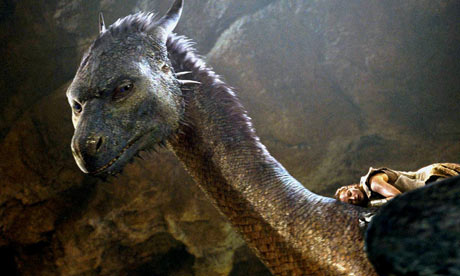
Still from Stefen Fangmeier’s 2006 film Eragon.
Photograph: 20th Century Fox/Allstar

I find myself in the unprecedented position that I am itching to start editing my work in progress, Dragon Wraiths.

Usually I only enjoy the writing part and approach revision and editing much as I would a trip to the dentist. This time, though, I am having to force myself to finish the four or five chapters in the final section before I start taking it all apart. Thankfully I decided on a structure of nine 3,000-word-ish chapters per section (although I have added a whole extra section in my usual scope-creep), otherwise I would take the easy way out and decide the first draft is done already.

For most of my novels I am aware that I have underplayed the climax because I ran out of steam, or ideas, or a new book lured me away. So I am determined to battle through my battle scenes before I let myself review the whole and start drawing out the themes.

This time I think my last-chapters-lethargy is caused by things other than exhaustion or boredom (although with an average word count of 10,000 a day on the two days a week I get to write, exhaustion of ideas is definitely a factor. Hence no blog posts for a couple of weeks – all out of words!)

Firstly I’ve already closed out the love story and written the final scene. A mistake, but an unavoidable one. The final scene presented itself while I was walking the dog (see next post) and I never look gift words in the mouth. As a result I have written the bit of the story I’m interested in and skimmed over the same parts I often skim-read, namely the battle scenes.

The other problems are more positive. I am nervous, elated and excited about this book. It feels good. I have ideas about themes, character development, setting and so on that I want to build on during revision. All the wonderful blogs I read have clearly had an influence and I am eager to put them into practice.

I have also been reading some excellent and varied middle grade and young adult books about dragons, including Eragon by Christopher Paolini (written when he was fifteen!) and The Dragon’s Eye by Dugald A. Steer. These were complemented by an interesting blog post from 2009 that I discovered when searching for an image for this post: Dragons in Literature by Imogen Russell Williams, adding yet another great blog writer to my growing list.

As well as my eagerness to get going on revision I am also conscious of my deadlines. I am writing this book to enter in two Children’s Novel competitions, with deadlines of 10th September and end October. Clearly there is not enough time to revise properly so I need to get started as soon as I can or face a difficult decision: Whether to forget the competitions and focus on finishing the novel to the best of my ability or do a rush job (including reducing word count from 110k to 80k) and hope for the best.

What are your views on dragons in literature?

Have you ever had to rush revision to hit a deadline? All advice gratefully received. 

This interview with Christopher Paolini contains some great advice for writers.

Gardening and Planning

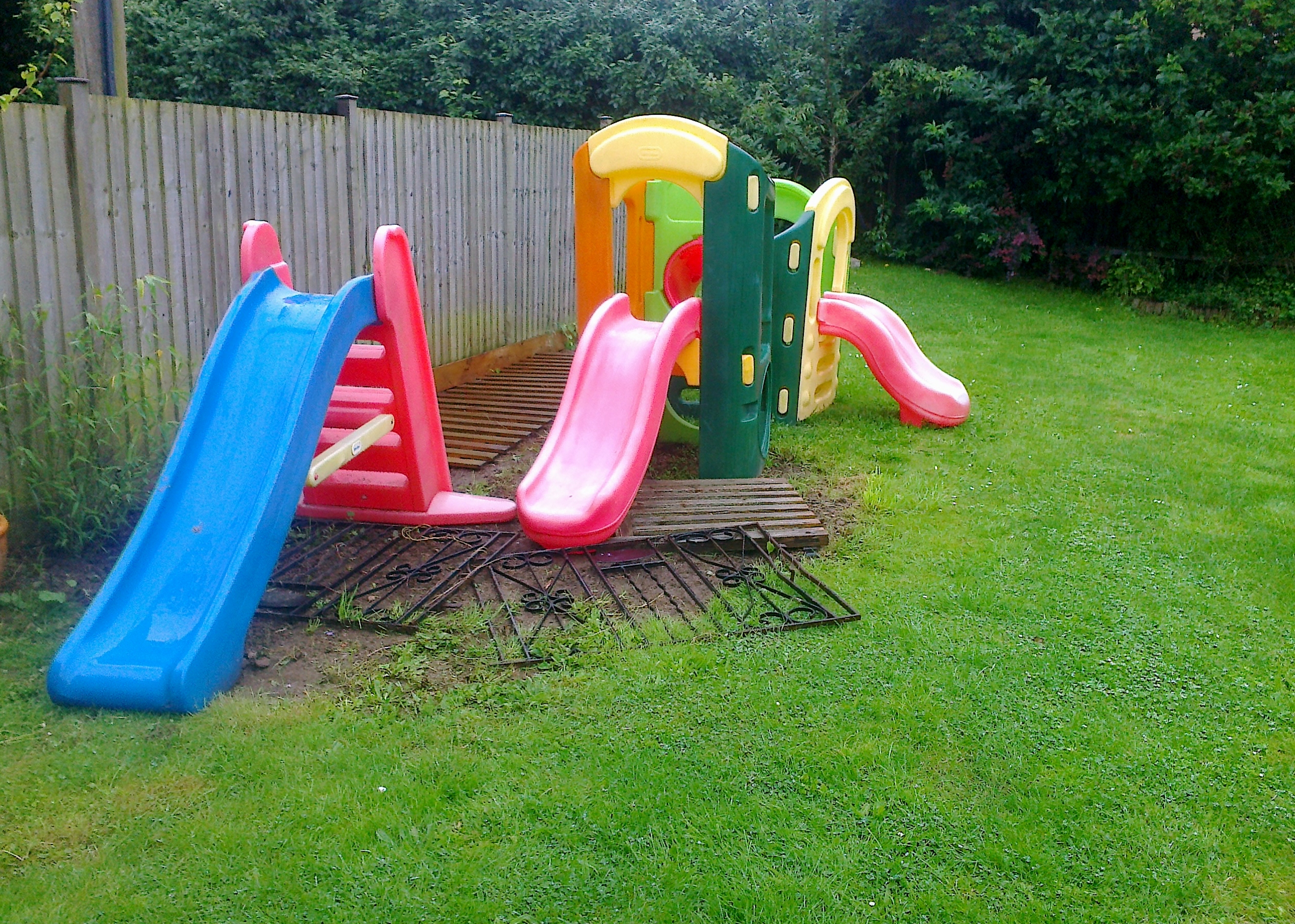
The garden after much levelling and grass-sowing

Last Thursday afternoon I took some time off to tame our feral garden. The sun made an unexpected appearance and I couldn’t miss the opportunity.

We’ve been faffing around inexcusably regarding what to do with bits of our lawn. One large section is a mess, after we had a boat standing there for years (a long story). We sold the boat a few months ago and since then the whole area has been an eye-sore and child-trap: full of bits of rubbish, holes the dog dug under the boat and many vicious weeds.

Husband wanted to fill the holes with top-soil, roller it flat, make it as gorgeous as a cricket pitch. I want somewhere the kids can play without getting stung or covered in mud or breaking their ankle.

In our family, husband is responsible for all things outside and DIY, while I do all things indoors and domestic. I have recently taken over lawn mowing while husband has been away with work, much to my 3-year-old daughter’s bewilderment.

The first time I dragged the lawnmower out of the shed she looked at me as if I’d grown horns.

“Mummy, that’s daddy’s job.”

I couldn’t figure out how to get the mower started and after twenty minutes I was sweating and cursing. Her response was:

“Better leave it to daddy.”

Needless to say she had a quick lesson in woman’s lib and not giving up and I was given the motivation required to approach the task more calmly and find the dead-switch.

As well as mowing this Thursday I decided to tackle the ugly-eye-sore spot. First thing was to shift a giant tarpaulin and wood pile, trying not to scream too loudly when I uncovered a nest of tiny mice. (I covered them with a plant pot and they were later relocated by their mummy.)

As I was moving planks, filling holes, scattering grass seed and generally trying to reclaim half my lawn for the kids, I got to thinking about writing (as I often do when my hands are busy but my mind is not.)

I see metaphors everywhere; it was easy to get distracted by what it symbolised to leave baby mice safely hidden, only to trap them later when they venture into our house, or the futility of planting grass seed for the birds to eat. Maybe the wasted effort of reclaiming lawn when it hasn’t stopped raining for three months and the long-term forecast isn’t much better.

In the end what stuck in my mind the most was the conflicting lures of planning versus getting stuck in. When I write, I generally just get stuck in, and the ideas follow (hopefully) one upon another as I type. I’ve often thought I should plan more. One writer I know sketches every scene before writing anything and has a prescribed number of chapters in a book and so on.

That fills me with awe and terror.

Awe because I can’t write like that and terror because I feel I probably should. How can I call myself a writer when I stumble along hoping a story comes to me as I type?  Except I recently read that even well-known published authors occasionally have the same approach.

Looking at our garden my conclusion was it’s okay to just get stuck in, although a little planning doesn’t hurt. If I had got stuck in at the beginning of summer, without worrying about a plan, we’d have lawn by now. A lumpy lawn, full of weeds and holes, but a lawn nonetheless. In this case planning equalled procrastination (to be fair, mostly it was due to my husband being just too busy). However I did lose an hour of gardening time on Thursday having to go buy grass seed, so some planning might have helped. The main thing is, when I look at the flat seeded area now (see photo) I am filled with a huge sense of satisfaction and progress, no matter how uneven the end result.

I have reached deadlock with my Young Adult novel, Dragon Wraiths, because I have to create a new world and a history. I am dealing with two planets and two timelines, and planning really is essential to keep it all straight.

But I hate planning.

I don’t like reaching the end of a day with no increase in word-count. There is no sense of satisfaction, just a growing confusion, and sense that I could probably plan forever and never be fully satisfied. My creativity doesn’t function unless I am actually writing. I may as well be doing school essays.

Reading what I’ve written so far I realise that lack of planning hasn’t held me back from writing some good stuff.  I mostly know where the story is going, in my mind, I just don’t always know how it is going to get there until I start writing it down.

So, I could fart about worrying about the details of my world and have no story to enter in the Mslexia competition in September. Or I could break a dozen rules, just keep writing, and add the history in the second draft.

Maybe sometimes you just have to get stuck in and not worry if it’s lumpy and full of holes. After all you can’t edit a blank page any more than you can mow dirt.

Waiting, Dragons, Tennis and Sleep

Wimbledon 2007 – photo by Kol Tregaskes on Flickr

Pictures of Love, my WIP, is out with beta readers. I’ve never had anyone but family or agents read my work before. The former have always loved it, the latter rejected it. So I wait with more than a small amount of trepidation.

To use the time well (hopefully) I have gone back to my Young Adult book, Dragon Wraiths, which I hope to enter in the Mslexia Children’s Novel competition in September. I had put the idea on hold, because the rules state: Women who have had a novel published commercially, for any age group, in any country, are not eligible.

As I hope to self-publish Pictures of Love in August, I figured that meant I couldn’t enter. But I read the rules again, more closely, and it says Self-published manuscripts are eligible, so it’s game on.

Only now I’ve read the rules again I’ve spotted that the entry is 3000 words with no synopsis.

Eek.

The dragons don’t come in until Part Two, a third of the way through the book, and the weighty stuff about global warming etc comes in Part Three, (assuming I can research enough by the September deadline; it’s a new addition to the story).

How can I get enough plot into 3000 words to hook a reader, and still have character development, voice, YA themes and all that jazz, without a synopsis? I guess I have to finish the first draft and see how much time I have left before I worry about it.

That’s if I can stay awake.

Youngest child has had an ear infection, together with a lovely temperature of 39.2 for days, so sleep has been a rare commodity all round. Husband and I have been staggering about sighing I’m so tired; so much so that it’s my eldest child’s favourite excuse every time she has the screaming heebie-jeebies (by the way, I love that Word has that in its dictionary!).

“But mummy I’m just so tired, that’s why I lashed out and threw something at you.”

I have to bite my tongue on snapping back, “You slept for ten hours last night, I’ve barely had that this whole week!”

One of the by-products of sleep deprivation is that I, too, become a tiresome three-year-old.

As a result, my return to writing today, after two weeks without penning a word, as I wrestled with Lulu printing and e-book formatting (posts to come), only lasted until lunchtime. Then I had to admit defeat, close the laptop and turn on the tennis. I saw about three shots before I fell asleep.

Now I’m walking the dog, hoping the rain and soggy trousers will wake me up enough to finish my chapter before I collect the kids.

Or I might go nap in front of Murray.

This is WriterMummy saying night night.


P.S. Can’t sleep. Murray is making me too nervous. Come on Murray, hold your serve!

Life, recycled

www.amanda-martin.co.ukBefore I decided to try my hand at writing, and discovered an overwhelming need to pen novels, I took various other paths to a creative future.

I worked in marketing, designing the horrible colourful mailing packs that arrive on your doormat, which you chuck in the bin. I worked in PR, writing the internal communications magazines and announcements that make you chuckle and shake your head in disbelief, when you get them from head office.

I went self-employed and tried to make money selling my abstract paintings. I took a study course with the Open University to improve my photography and tried to make that my next endeavour. I set up a small company, Daisy Chain Marketing, and built websites for small businesses.

Nothing really took off, mostly because they all required me to sell myself, and it turned out that was the one thing I was rubbish at.

When I found creative writing, and nanowrimo found me, my whole world changed. Writing was what I wanted to do. That self-selling part is still a sticking point, but in terms of time, I only have to worry about it at the end. I can write merrily for nine-months before I have to poke my head out my shell and worry about what to do with my work.

Having found writing, I then berated myself for not finding it sooner. All those years, pre-kids, when I was farting around trying to be an artist, a photographer, a marketer, I could have been writing novels.

What a waste.

Except it turns out not to have been a waste at all. Because I’m at the sticky end now: I am thinking about selling my first novel. And I am discovering that I can recycle all those old skills I learnt. Skills I didn’t know I had, or took for granted.

Need a book cover? Easy. Source an image online, using all the marketing sites from old. Need to put it in the right format? No worries. Use the adobe photoshop software from my photo-editing course. New website? A doddle. All that time building simple websites with Mr Site meant I could knock one up on a Saturday afternoon, while watching the kids build sandcastles in the garden. Need to send out a press release for the forthcoming publication of Pictures of Love? Not a problem. I have press release templates a-plenty.

Okay, so nothing looks quite as good as it would if I had paid a professional to do it. My front cover probably screams self-designed/self-published. My website is a bit sparse and basic (I don’t do html). The press release may well get consigned to the waste-paper basket. But it hasn’t cost me anything, and I have had a lot of fun.

And who knew those old redundant skills could be recycled so effectively?

Another by-product of my sporadic career is subject matter. In Pictures of Love, Helen wants to be a photographer. In The Real Gentleman, my leading lady has a painting exhibition. Sam, from In bonds of love, travels around New Zealand, and a chunk of Finding Lucy  is set at the kind of corporate events I used to help organise during my time in Internal Comms.

I guess write what you know is easier if what you know and what you’ve done covers a lot of ground. So, there you go, when I thought I was being flaky, I was actually building up a stock of experiences to write about later and a whole bunch of skills to promote it afterwards.

What skills from your former life have you found to be useful during your writing/publishing?

P.S. you can find my website at www.amanda-martin.co.uk. If it would be useful I would be happy to write a post about any or all of these ‘skills’, such as designing book covers or building easy websites.


Beta Readers

Apologies for my silence, to those of you who are kind enough to follow my novel writing exploits. As well as drying out my soggy soul in sunny Italy for a few days, I have spent weeks immersed in major editing of my WIP Pictures of Love.

It seems the nearer I get to pressing save on my final draft, before sending it to my lovely beta readers, the more I feel compelled to rewrite the whole bloomin’ thing from the first page.

I understand the need for my novel to be the best it can be before going out into the world at large. But how polished does it need to be for beta readers? I mean, what if I spend hours filling in all the extra bits of back-story for a secondary character only to be told she adds nothing to the plot?

Or – my biggest fear, certainly in my academic days – what if I remove something, only to have someone suggest it’s exactly the thing that is missing for them? Do I take out the long words – as has been suggested – when I know most of my readers will understand and expect them? Most importantly, do I take out the sex?

I have one sex scene, right at the beginning, to show my main character’s relationship is based only on lust. There is no more sex after that, well none shown explicitly. What if I set the expectation that it’s an erotic novel when it’s nothing of the sort?

Sigh.

I knew writing novels was going to be hard but, like parenting, it’s hard in all different places to the ones I expected.

Reach for the prize

Cover of "Notes From An Exhibition"

Every year about this time I start thinking about writing competitions. More specifically the Bridport Prize.  I did the same when I was painting. The theory goes something like this: enter prestigious competition, win competition (or get shortlisted at least) and therefore have something to talk about in query letters when trying to sell my other work.

I never do enter though, not with my writing. With the abstract paintings I used to gamble the entry fee on the rare chance someone would connect with one of my pieces: art is even more subjective than literature. Not that it ever paid off, mind you. I spent a fortune in entry fees before I accepted the truth.

With writing, though, I always talk myself out of it. The usual litany of excuses: I can’t see my brand of frothy romance getting past the first round; I don’t have the time; I’ve never really been a short story writer (I’ve probably written half a dozen since I started writing again four years ago and they were all for my university course.)

This year though I felt something different.

Determination.

For lots of reasons: I’ve just started thinking about short stories, after waking up with one in my head last week (see last entry). That one ended up in the post to Woman’s Weekly on Friday. I enjoyed writing it, but mostly – surprisingly – I enjoyed editing it. Working with a few thousand words instead of a hundred thousand meant I had the patience to think about every line, every word. Okay, mostly that was because I was cutting 800 words out to fit the Woman’s Weekly word count. But whatever the reason, I was forced to tighten up my prose and I felt pleased with the result.

So Bridport popped into my head again. Maybe this year I could read some award winning short stories, try and understand what it takes. Come up with a less frothy theme than my usual romance. Give it a go. I was further spurred on by noticing the short story judge this year is Patrick Gale, whose novel Notes from an Exhibition is one of my all-time favourite reads.

Then I noticed they’ve moved the deadline from end of June to end of May. Four weeks away. It also happens to be my husband’s 40th birthday, as well as being the week before we take our annual family trip to see the rellies in Italy.

I’ve basically got seven nursery days to sort out a birthday pressie for the man who wants nothing, buy new clothes for the kids, pack and all that jazz, plus read a hundred short stories, come up with an amazing concept, write a fantastic story and edit it until it glows.

Or I could just wait until next year…

I’ll keep you posted.

P.S In my Bridport frenzy I came across some interesting blog entries. See below, particularly the first one, which is a brilliant interview with a previous winner.

http://www.multi-story.co.uk/guestspot-archive-emmadarwin.html

http://www.jonathanpinnock.com/2010/09/the-bridport-prize/

http://teresa-stenson.blogspot.co.uk/2010/05/brief-bits-and-bridport-advice.html

http://teresa-stenson.blogspot.co.uk/2012/04/bridport-prize.html

Rejection

I received my first rejection letter today. I feel a bit empty. Not because I care, really. Despite wild delusions that any agent would, of course, immediately demand to see the full manuscript (and who doesn’t have those?), I didn’t really expect to be accepted that quickly or easily. I anticipate many rejections before I find success (assuming I ever find it). I didn’t even expect a personalised letter detailing why my novel was rejected.

Which is lucky.

In fact, I think the real reason I feel flat is because I got a response so quickly. My Mills and Boon submission disappeared into the ether, regardless of assurances that a response would be received inside six months, and despite several attempts to elicit said response from them. Somehow that not knowing gave me hope, at least for a while. (I can safely assume that, after nine months, I am not a Mills & Boon writer!)

Maybe hope is what it is all about. Possibly that is why I have only recently sent my first submission to an agent, despite having written four novels in the last three years. Until it has been rejected, there is still the hope that your novel is the next big thing.

But here’s the rub. My novel could still be the next big thing. One rejection is just one person’s opinion. As my rejection letter was signed ‘Bryony’ rather than the name of the agent I sent my submission to, I assume my novel was perused by a reader. So that one opinion wasn’t even the agent’s.

I think the bit that leaves me feeling insecure is not knowing how far into my first three chapters the reader got before they hit the ‘no thanks’ button and moved on. What if they hated it after the first paragraph? I’ll never know.

My rejection letter recommended the services of a literary consultant. I admit I have considered getting a professional view of my work. I just can’t quite bring myself to pay someone – it makes me nervous, with hints of vanity press and the like.

Does anyone have any experience of literary consultants?

In the meantime, I shall plough on with novel #5 and eventually, after another few months, I might find the courage to send some chapters of one of my growing stack of novels to another agent.

Until then, I have hope.

Life vs. Writing Update: A New Beginning

Picture of a dragon

Okay, so sometimes sleep deprivation can have its advantages. After a week of broken nights I woke up yesterday, out of a deep three-hour sleep (a miracle in itself), with a complete novel in my head.

Unfortunately, since the new carpets were fitted, I haven’t got around to putting my notebook and pen back under the bed. Plus I had smallest child asleep on me, and eldest child wriggled into our room in her sleeping bag shortly after. Needless to say, by the time I’d got my mobile fired up and tapped out some of what was in my mind, I had lost most of it.

I remember the gist though, because it couldn’t have been further from my last four novels.

This one is going to be a young adult book. In the first person. A mystery, mostly in real-time.

Oh and it has dragons in it.

Not really chick lit or romance. Though it might have some romance. I haven’t worked that bit out yet.

I’m quite daunted about the whole thing. I’ve never written in the first person; I haven’t been a teenager for almost two decades (my kids are nearer being teenagers than me, how horrific is that? They’re only 1 and 3); I don’t have any writing skills or techniques for real-time, suspense or mystery, and I know next to nothing about writing fantasy.

Still, it certainly comes under the Option 2, try something new. (See previous post).

Anyway, with it being Easter and all, my next writing day isn’t until next Thursday. In the mean time, I’m trying not to think about the ideas too much, as I know from experience I need to start writing without thinking, or I’ll kill it before it’s born (I’m a master at self-censure).

I do know the first line (for now), I wrote it down in my phone before the vision faded.

“My name is Leah, and I know the time and place of my death.”

Well, that may well change, but my first lines rarely do, as they are usually the freewrite prompt for the whole novel concept. We shall see.

Exciting though.

Get Professional Help

Cover of "Plot & Structure: (Techniques A...

Even if the story is burning in you and flowing out faster than you can type, you still might benefit from professional help, particularly when it comes to editing your first draft.

If you are disciplined enough to work solo there are some amazing books to help you start writing or to hone your skills as a writer. These are my favourites (I intend to review them when I get a chance, so watch this space.)

General Books on Writing

Teach Yourself Creative Writing, published by Hodder Education, London, By Stephen May (2008)

Starting to Write, published by Studymates Limited, Abergale, By Dr Rennie Parker (2007)

Creative Writing, published by How To Books Ltd., Oxford, By Adele Ramet (2007)

More Specialised Works

Dialogue: Techniques and exercises for crafting effective dialogue, published by Writer’s Digest Books, Cincinnati, Ohio. By Gloria Kempton (2004)

Beginnings, Middles & Ends, published by Writer’s Digest Books, Cincinnati, Ohio By Nancy Kress (1993)

Description & Setting [Techniques and Exercises for Crafting a Believable World of people, places, and events], published by Writer’s Digest Books, Cincinnati, Ohio By Ron Rozelle, (2005)

Plot & Structure [Techniques and Exercises for Crafting a Plot that Grips Readers from Start to Finish], published by Writer’s Digest Books, Cincinnati, Ohio, By James Scott Bell, (2004)

Characters & Viewpoint, published by Writer’s Digest Books, Cincinnati, Ohio, By Orson Scott Card, (1988)


If, like me, you need to be led, cajoled or terrified into getting pen to paper there are various course options. Try your local government or college website for free or low-cost Creative Writing courses. I taught a couple of free PCDL (Personal and Community Development Learning) courses at New College Stamford with a lovely group of students, who went on to form a writing group.

If you want something more detailed, then a university or distance learning course might be an option. The Open University does a range of Start Writing short courses or they have a nine-month creative writing course (which I highly recommend).

Finally there is no substitute for reading as widely and as voraciously as you can. Learning from the people who have already been published is a good step in the right direction to getting there yourself. Don’t limit yourself to your chosen genre – there is much to be learnt from reading outside your comfort zone.

As Stephen May puts it in his Teach Yourself Creative Writing,

“Writers choose their own mentors. Anyone still in print or still available on the shelves of a library is there to help guide you towards expressing yourself clearly and well. To help you find your own voice.”

Who are your favourite mentors?