Yesterday’s post doesn’t count, it’s actually about a year old. I needed to add my blog to a job application, and realised half the photos were missing. Seems about right.
How to sum up the last 9 months? What’s the phrase, ‘There appears to have been a struggle’.
Menty Bs aplenty, not all of them mine. Lots I can’t discuss, lots I can’t remember.
Burnout. Brain fog. Bumpy roads.
Sounds like the title of a self help book, not that the world needs any more of those.
Things I can share:
I am Officially Autistic. As if we were in any doubt. 😂 But it’s affirming to know I’m not a crap horse, I’m a zebra.
Daughter sat some GCSEs and made it to prom. There was plenty of doubt that would happen, when we weren’t sure she had a school place for Year 11. I am indescribably proud, but also exhausted like I’ve been in labour for two years. We’re now at the start of a new – equally exhausting but also exciting and positive – chapter, as she starts her hairdresseing apprenticeship. Assuming we can find a college that doesn’t cancel its course and not tell us.
Just a wee bump in the road. 😂
I’ve started an Etsy shop. All those friends who told me to do it have finally won. I haven’t sold anything, so I’m running at a loss, but it looks pretty, and I have an excuse to paint and make videos for my Instagram page.
Expect to see posts of art and not many words for a month or two. All my words are going on cover letters and job applications at present.
Um. More positive news? My kids are mostly happy, we’re keeping pets and houseplants alive just about. I’ve taken up tame swimming (like wild swimming, but I pay to use a little lake, rather than risk E. coli in the local river!) I’ve read some great books. I’ll share a few.
That’s about it for now. Just checking in really. Waving not drowning.
It’s no secret to anyone who knows me that I love a Disney movie. The stories are clear but still complex, the language accessible but not dumbed down. Relatable characters with flaws, and of course awesome belting songs. Not to mention a happy ending full of justice and redemption.
One of my favourite movies of more recent times is Frozen, particularly because the happy ending isn’t reliant on the girl being saved by a man. Even better, it cleverly turns the traditional story on its head with a twist that blew me away the first time I watched it.
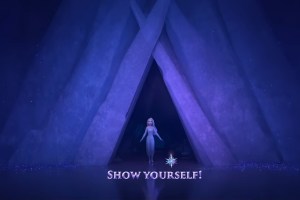
Rather unusually, however, I preferred the sequel. If I relate to Let it Go, and really who doesn’t? (I even wrote a parent version), the song that hits me hard these days is Show Yourself.
If you’re unfamiliar with the Frozen story, the main protagonist, Elsa, was born with a unique and frightening power, and ends up hurting her sister because her family don’t understand it and so can’t teach her how to control it. She is told to “conceal, don’t feel, don’t let it show”. When that mask slips, she becomes an outcast, and only her sister doesn’t give up on her.
In the second movie, Elsa is content surrounded by the few people who love and accept her, but she still feels different. She still feels she could be more. She is pulled by a voice, a sense of yearning, but is scared she’ll lose what she already has.
In the end, she has no choice but to follow the voice. And in the song Show Yourself, Elsa finds the source of the secret siren she has sought for answers.
I can sense you there, like a friend I’ve always known.
During the song, the spirit of her mother shows Elsa that she herself is the voice.
Show yourself, step into your power,
Grow yourself into something new.
You are the one you’ve been waiting for.
I’ll be honest, I get goosebumps every time I reach this part, although I only recently realised why. I feel like it’s my song, and the song for anyone who grew up feeling like they didn’t fit. Like they had more to give, if only they were given permission, if only it wasn’t so terrifying.
And the discovery that I am (probably) neurodivergent is that moment where I feel, “I am found”.
The more I learn about autism and ADHD, the more I understand these “cold secrets deep inside” me that are different and powerful and frightening, that make me different and often friendless, but that can be harnessed to create amazing things.
The message in the Frozen movies is that love is what is needed to control and harness the power.
However, friendships are hard for NDs to make and keep. Self confidence, self love, is even harder, when “Research has shown that children with ADHD have often received 20,000 more negative messages about their behaviour than a neurotypical child by age 12.” [Source]
It might take a lifetime, but I am going to follow the voice I hear now inside me that tells me that, while I might be different, I am not broken. I am ready to learn.
I’m on week four of my new job and just about hanging in there, juggling parenting and working.
Thankfully having teenagers in the summer holidays is mostly about making sure there is lots and lots and lots of food and driving them places. Throw in a bit of laundry, cleaning, and some body-doubling for my daughter, and that’s it. It will be more challenging when they go back to school, as they will need a lot more scaffolding.
If you haven’t come across the term scaffolding in a neurodivergent sense, it’s simplifying tasks other people find very easy, to free up spoons for the essential or more difficult tasks.
When I went to see my son’s head of year to talk about reducing his timetable, I was given a long list of all the reasons why he was thriving at school and didn’t need any accommodations: He turned up to class on time, he had all of the things he needed to learn, he remembered all the ingredients for his food tech, he was always smartly dressed. These are all things that I put scaffolding in place for, to allow him the spoons to get through the day.
He still comes home exhausted.
For an average teenager, I would be encouraging them to weigh out and label their own food tech ingredients, make sure they have ironed shirts or that their laundry has been done. I would tell them to find and polish their own shoes or put together their own PE kit. This would be ‘preparing them for adulthood’.
But the thing is, my son already knows how to do it all, but each tiny task takes spoons.
He also has his own scaffolding: multiple alarms to remind him to get up, shower, brush his teeth, and other things an allistic person might not even have to think about never mind be reminded to do. By the time he leaves for school, he’s used up so much of his capacity already, the least I can do is help.
Unlike the scaffolding on a building, this scaffolding may never come down. He may end up with an understanding partner, or he may need a housekeeper, or like me he might rely on AI (Alexa, Siri, and ChatGPT are my team.) These are accommodations for an autistic person in an allistic world.
The same is true in my new job. I have a reputation for being very organised, which always makes me laugh as someone with ADHD. What people don’t realise, but I’ve become much more open in discussing, is that the organisation is essential for me to have any idea of what I’m supposed to be doing on an hourly or daily basis.
I have links from spreadsheet to spreadsheet, I have bookmarks in sub-folders in folders. I have to-do lists and checklists and calendar reminders and even with all these things I still have to go through my notes every day to remember what I should be doing.
It is exhausting.
Like my son at the end of a school day, I have been crawling into bed early and sleeping late.
The analogy of the swan, calm on the surface and furiously paddling underneath, is a flippant image I use often. But imagine the swan is on an apparently slow-moving river with a very fast undertow: you would have no idea how exhausted the swan was just trying to stay in one place. Now imagine someone built a dam or a jetty to break the undertow.
In case it helps, here are my favourite tech/AI scaffolding tips:
Alexa shopping list
Alexa devices in every room
Calendar reminder to check Echo app shopping list
Alexa timers and reminders (particularly cooking pasta!)
Talking work problems through with ChatGPT
Smart watch linked to phone so I hear calls
Airpods to hear messages
Tile to find my phone when watch tells me it’s ringing
Alexa to find my keys to activate my tile
It’s so much easier for my husband, he just has Wife™. 😂
When I went on my honeymoon, I cried. Every day. I had no idea why. I wondered if I didn’t want to be married (I did). Later, I thought I’d had a breakdown. Now, I know it was burnout.
The year I got married, I also lost my dad unexpectedly, finished my Masters dissertation (on Divorce in 18th Century Literature!), moved house – twice – and turned 30, all while working full time in a stressful job. We honeymooned at Christmas in New Zealand, a place full of conflicting memories, and that 12 months caught up with me like an avalanche.
My husband dealt with it pretty well. We’d been together two years and knew each other a bit by then, though we’d not actually lived together all that long. I knew to give him food if he got snappy. He knew not to run after me if I left our accommodation and just kept walking. I’d come back eventually.
Years later, with two young children, I would often break down when we arrived at our holiday accommodation. I would have arranged everything, so would take every disappointment personally. There’d be tears and shouting. There still are sometimes.
The difference now is there is also understanding. For all of us.
I know I get disregulated with the pressure of packing and remembering everything. My RSD kicks in if I think I didn’t choose the perfect cottage, or I forgot to pack my son’s breakfast bowl and spoon. And we get it.
When we arrive at a holiday destination, we separate to our own spaces (and accommodation is always booked to allow us LOTS of space) and we regulate. Scroll social media, drink tea, nap, unpack, have a lovely shit. 😂
And throughout the holiday, we practice low demand.
It’s hard.
Sometimes I really just want us all to go out for a meal in a nice restaurant. Or even a crappy café. But with tonnes of anxiety and ARFID, that’s never going to happen. Eating is a constant challenge and being in public is stressful. So I cater, even if that means less of a holiday for me.
*I’m pausing writing this because I’m on holiday and my daughter needs help regulating.*
Two days later…
And there, that’s exactly how we survive and even enjoy holidays. We lower our expectations and then lower them a bit further. And even if it feels like we’re giving up a bit of ourselves and a lot of what we might want to do, the result is a holiday that we can share together in our own unique way.
I have learned that the accommodation is everything. The largest expense always goes on the perfect Airbnb, because there’s a chance we might not leave it. It has to have three bedrooms rooms, hideaway spaces, a well-equipped kitchen, because I’ll be making all the food.
WiFi is paramount. We learned that the hard way, when we couldn’t even get 4G in a place and my husband spent a lot of time parked in a Supermarket car park so my daughter could communicate with friends.
The second luxury is food. An all-expenses trip to Aldi on arrival has replaced the Waitrose home delivery now the children are older. If you’re not going to restaurants, you can splurge on all the best packet food, enough that hopefully someone will find something their anxiety allows them to eat. And then food intake MUST be monitored. Disaster is often caused by hanger.
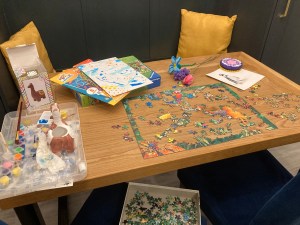
We pack as if we’re moving, even for an overnight trip. Craft, puzzles, colouring, games, gadgets. The two-night break I just had with my daughter included the glue gun (to make pipe cleaner flowers).
When they were little, it was a £50 Baker Ross order of easy craft kits. ADHD needs to be busy, but anxiety and autism get easily overwhelmed. If you can’t get entertainment on the beach or in the arcades because the anxiety-stars won’t align, then entertainment has to be available. It’s walking a tightrope, it gets easier with practice.
There are loads more little learnings, but they’re probably unique to us. The last bit that might be worth sharing is the most challenging.
Day trips.
It’s hard to book something in a low demand house. You might buy tickets you don’t use. We often do. Or we bear the ND-tax of paying on the gate, because booking ahead is too risky.
Much research goes into something we can all do. Space to roam. Not too much walking. Interaction. Flexibility. Food. Toilets. Easy parking. Weather proof (especially in wind-phobia days). The learning curve was steep.
I took my kids to our nearest seaside town when they were both under 3. It’s a two-hour drive in summer, but I grew up by the sea and wanted them to have that.
When we arrived, my daughter fell and cut her knee. I hadn’t yet learned to carry a first aid kit. We got to the beach, pebbly and very British. It turned out my son didn’t like the feeling of the sand. My daughter was scared of the moving water. I didn’t know we were all neurodivergent, but I knew we needed a different plan.
And there was Sealife.
My first visit. It was perfect. Pushchair friendly. Doors sealed so children could roam safely. Interesting, but not sensory overwhelming. Animals, fishes, stickers. A playground (which is sadly now gone, I noticed yesterday). A café. Even a lovely member of staff who agreed to plaster my daughter’s knee.
We were there for hours. And Sealife is a firm favourite in our lives. My daughter and I went yesterday, 12 years later, and the magic was the same.
Places like Sealife, where the children know what to expect, are a lifesaver for us. We have a few – Woburn Safari Park, Warwick Castle, the different Sealife centres – where we know we can survive. We might only stay a short time. One parent might need to sit in the car to regulate. We might divide and conquer. But it works.
The other thing about our holidays is making sure I know everyone’s ‘Must Haves’ list. My son’s ‘must haves’ are the amusement arcade, preferably every day to earn tickets for a prize, and mini golf. My daughter needs to shop for souvenirs and to watch a sunset. I need to have walked along the shore and to have a daily proper coffee. My husband is happy to do anything as long as he can have a lie in and some downtime. Once we’ve ticked all of those, we’ve had a holiday, even if we have to leave early because we’re all out of spoons. But don’t tick one? Not good.
I used to think holidaying with my wonderful neurodivergent family meant I was missing out. I’d see friends’ vacation photos and envy the museums and restaurants and theatre visits, when mine were of shingle beaches and captive penguins. They go on trips abroad to Paris or Disneyland or – now the kids are older – skiing and safari. Things we will never do as a family.
But not things I have never done. As a lone traveler I have seen so many amazing places, and hope to again. But this time in my life is not about me. And that’s okay.
I take my moments. Sitting up late painting while everyone is plugged in watching YouTube. Early mornings on the beach watching the sun rise. Or walking in the freezing rain, as I did this morning while my daughter packed. I could sneak out, because she was regulated. And then I was ready to do what she wanted, which turned out to be come home. And that was okay.
My last little observation is that, actually, those Facebook photos are important. I used to feel disingenuous, posting smiling photos of sunny beaches, when that might have been the one light moment of a difficult day. But my social media feed isn’t to show off to others, it’s my journal. In a year, two, five, Facebook will remind me, and I will smile. I’ll barely remember the hardships, I’ll just recall that I was with my family and there were glimmers of joy.
It’s been a while since my last post. It feels like forty years. Given the nature of Invisible Illness, I thought I’d better check in and say I’m still here, just about.
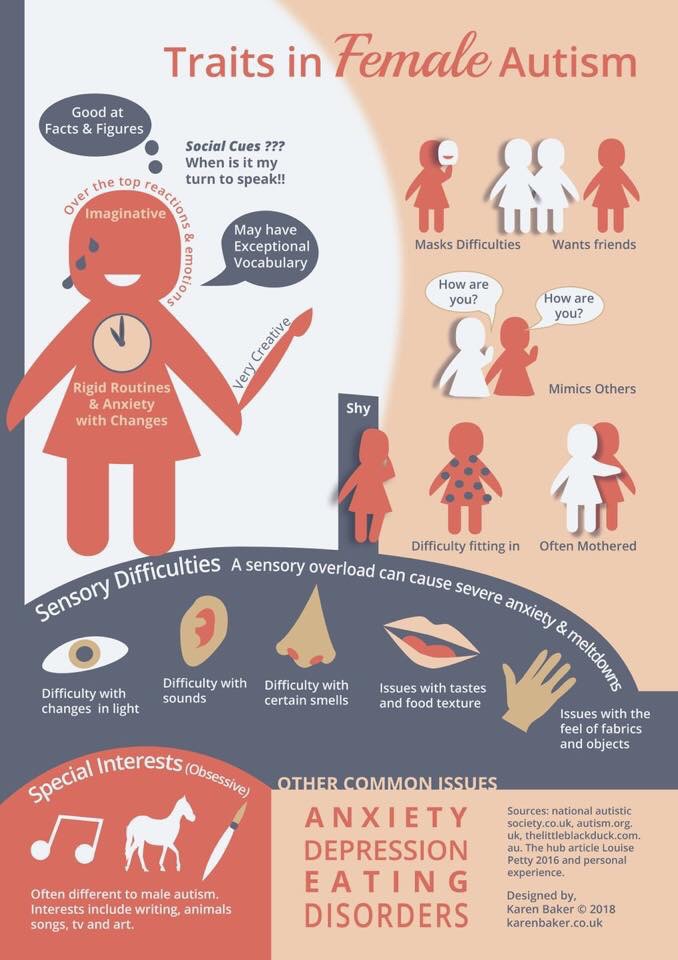
You see, after my last post, a follower and friend messaged me to ask if I’d ever considered I might be autistic. Strangely enough, about a year ago another friend shared this image on Facebook on autism in girls, and I commented how that was me as a child. But I couldn’t go 42 years without knowing something like that about myself, surely?
Erm, yes. Turns out I could. I’m still awaiting an official diagnosis (not a priority for the NHS) but my GP concurs that I show all the traits of high-functioning autism, what once would have been called Aspergers.
It was like being given glasses for the first time, or maybe a tiny bit like finding out you’re adopted. Suddenly life made sense. Turns out 42 is the answer to life, if not the universe and everything.
I’ve spent the last six weeks reading everything I can and replaying my life through this new filter. Exhausting but incredibly enlightening. All the parts of me, of my life, that I thought were broken were actually a result of me being ‘neuro-divergent’. The phrase ‘normal, not normal’ springs to mind. Mostly, for the first time in forever I don’t feel alone. (Go on, who now has a Frozen song playing in their head)
There’s a whole post to write on female autism and why it goes unrecognised. A second on high-functioning autism and why that’s a misnomer. A third on realising other family members also show traits, and the stress that’s put on our family unit, while at the same time bringing hope. Another on having a (suspected) autistic child and helping the world understand them without making them a victim.
I don’t have the energy to write any of them right now. If you’ve ever had therapy, or even a soul-bearing heart-to-heart, you’ll know how draining that is. Re-playing my whole life, all the complicated lonely anxious mess of it, and picking out new patterns has left me with an exhaustion I haven’t felt since having two babies under 2. (And realising some of those horror years of acrimonious self-doubt might have been avoided if I’d realised two out of the three of us were not neuro-typical is heartbreaking).
Anyway, it’s all good. It can only get better. We can only get stronger. There might not be a lot of NHS support, but there is plenty from friends living the same life.
And it turns out that most of the girl protagonists in my children’s books could be considered on the spectrum, so I can thank them for helping me make sense of my differences, even if I didn’t know it at the time.
More than anything, I am grateful beyond words to the very good friend who messaged with her suspicions about my place on the spectrum. There is a strong chance she literally saved my life.


 It’s been a while since my last post. It feels like forty years. Given the nature of
 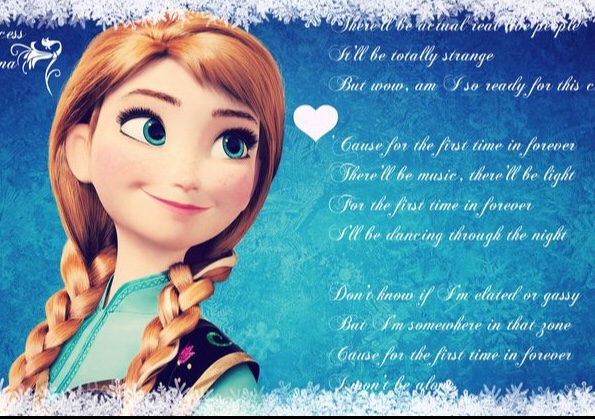 I’ve spent the last six weeks reading everything I can and replaying my life through this new filter. Exhausting but incredibly enlightening. All the parts of me, of my life, that I thought were broken were actually a result of me being ‘neuro-divergent’. The phrase ‘normal, not normal’ springs to mind. Mostly, for the first time in forever I don’t feel alone. (Go on, who now has a Frozen song playing in their head)
 writermummy