Always get a second opinion

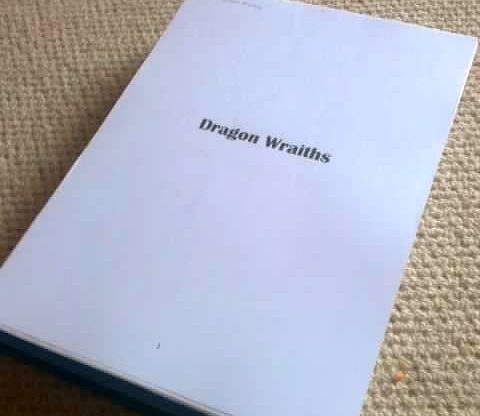
I love a printed manuscript: it LOOKS like 7 months’ work

This week my Young Adult novel, Dragon Wraiths, got long-listed for the Mslexia Children’s Novel Competition. I would like to say I was thrilled when I received the email, but I’d be lying. It came only hours after I had typed up the last second-draft-edit amends and vowed to put the darn novel in the bin/cupboard/big pit in the garden because, seven months after starting it, I still had no idea what it was about.

Instead my overwhelming emotion was fear. How could I send my manuscript off, all 112,500 words of it, with my name on the front (though thankfully the competition is judged anonymously) when I KNEW it was a pile of crap? But I had come so far, invested 7 months of my life, not to say thousands of pounds of nursery fees, plus the competition entry fee. I wasn’t giving up.

So I called in the troops. Sent the novel to my mother and pleaded with her to read it and tell me the most awful plot-hole-disaster bits so I could focus on fixing them before sending the manuscript off a week later.

That was Thursday night. On Friday, when I took the kids over to see her as usual she had to tear herself away from reading the book. My book. Friday night she sent a copy over to my step-dad’s iPad and Saturday morning (early) I got a text to say he was so engrossed she couldn’t get a word out of him. That of course spurred my husband to start reading it again, the edited version this time. I have learned an important lesson about waiting to give out the edited version because he soon couldn’t put it down. (He sat in the car while I took the kids to an indoor play centre on Sunday on the excuse that he had a cold and it was too hot and noisy, when really he wanted to keep reading.)

By Sunday night everyone had finished it.

My step-dad (who isn’t an avid reader, but loved the Twilight series) said “Book 2 Please”.

“What about the plot holes?” I asked, perplexed.

“Well, apart from saying she’s never been camping in part 2 when part 1 pretty much opens with her camping on a hillside, we didn’t find any plot holes.”

“What about the ending? Doesn’t it all feel a bit forced?” It took weeks of agonizing to try to make sense of it all, with me cursing my Pantser habits all the while.

“Ending was great, it all made sense.”

I sat and stared, open mouthed.

So instead of spending this week desperately re-writing huge chunks of my novel I have been calmly tweaking the one or two weak scenes my husband highlighted. Today I printed out all 462 pages and posted it.

Dear manuscript, all my blessings go with you

Leaving me free to start NaNoWriMo tomorrow.

Of course, that’s a different ball game entirely. I was going to rework one of my romances for Nano this year, but now I’m thinking about starting a sequel to Dragon Wraiths. Who knows, unlikely as it seems to me, it might actually go somewhere.


What have I learned?

I’ve always been too scared to relinquish my work to a critique group for fear of being told to give up writing and go back to the day job. I know family members are biased, but my parents don’t give up their weekends lightly. If they read my book non-stop to the end it was because they wanted to. That must count for something. Maybe I need to have more faith in myself.

Writing is a solitary business and editing is worse because you don’t even really have your characters for company. It’s easy to forget what’s good about your novel. You get too close, you lose the ability to feel the suspense, to be swept up in the drama.

My advice? When you have torn your novel apart and rebuilt it from the ground up, and you still think it stinks, remember – ask for a fresh opinion. You might just be pleasantly surprised.
 

Writer Wednesday – Interview with Chris Baty (founder of NaNoWriMo)


There is a great interview with Chris Baty (founder of NaNoWriMo – see previous post) over on the Bookinthebag blog. I wanted to paste the entire interview here, but it’s probably best just to go and read it!

My favourite answer:

I think the biggest thing I’ve learned is that everyone has a wealth of stories in them, and that folks who who claim to be storyless just need a good deadline and a tiny bit of encouragement to help get things flowing

via Writer Wednesday – Chris Baty.

There you have it in a nutshell, all the reason you need to participate in NaNoWriMo this year. Go on, you know you want to. 🙂

My NaNoWriMo Thoughts

It’s that time of year again when people kiss goodbye to their families, put the takeaway numbers on speed dial, stock up on coffee and chocolate, and launch themselves into NaNoWriMo.

This is my fifth year and most of my novels started life in November. For those of you who have never heard of it, NaNoWriMo stands for National Novel Writers Month, and is about “Thirty days and nights of literary abandon” (or writing 50,000 words in the month of November, but that doesn’t sound as poetic or inspiring!) 

There are plenty of blog posts better than mine that will tell you how to structure your NaNoWriMo novel, or how to edit it when it’s all over. [Oh my, turns out there is actually a National Novel Editing Month, held in March. And I thought it was just my wishful thinking. Count me in!]

There are discussions as to whether you can really write a novel in 30 days and whether it is insulting to “proper” writers for people to think they can. I don’t feel qualified to write on any of those things, even if it hadn’t already been done. I guess everything to do with NaNoWriMo has been done, given what a phenomenon it is. However, for those that have no idea what NaNo is, or are contemplating trying it for the first time this year, I thought I would tap out my top tips.

My NaNoWriMo Top Tips:

1. Write something on Day One. Anything. Even if you’re a Pantser and your mind is blank, make up a character from five items in your work space and think of something awful that might be happening to them. The longer you leave it before getting words on the page the less likely you are to start at all.

2 Try and keep up with the word-count chart but don’t panic if you fall behind. Once you get some momentum you can do astounding things (I wrote something like 17k words in my last 36 hours last year.)

3. Do not re-read more than your last line (just to see where you got to). Even better, end your writing session with a couple of notes about what might happen next so you can start writing the minute you sit at your desk.

4. DO NOT EDIT. If you can handle it by all means leave spell check on and fix as you go. If that causes you to re-read, worry, and question the quality of your work, turn spell check off or – better still – write in Notepad or equivalent.

5. Engage with the community. Read some Facebook posts, follow on Twitter. If you can afford it, donate to NaNo and get all the motivational emails. They’re the reason I come back each year.

At the end of November you won’t have a finished novel. As most novels are nearer 100k than 50k you won’t even have a finished first draft. But you’ll have something. Even if you bin half, or put the whole thing in a hidden folder on your computer, you will still have something to be proud of.

Before discovering NaNoWriMo I was convinced I couldn’t write a novel because I had no imagination. I was wrong. I may not have the sharpest literary mind in the world but I can spin a yarn. I’ve discovered I’m more Pantser than Plotter and my main weakness is generating conflict. I know I can write good dialogue and that I can churn out 50k words of reasonable first draft in 4 weeks, even when it isn’t November.

I have no idea what I’m writing about this year (as you’ll see in my guest interview on Findingmycreature in a couple of weeks) but I’m unfazed. In fact, after weeks of tedious editing, I’m so excited I’m counting down the days. To switch off my brain, commune with my subconscious, tell my inner editor to eff off, & just write?

Bring it on!

The Knife of Never Letting Go ~ All about conflict

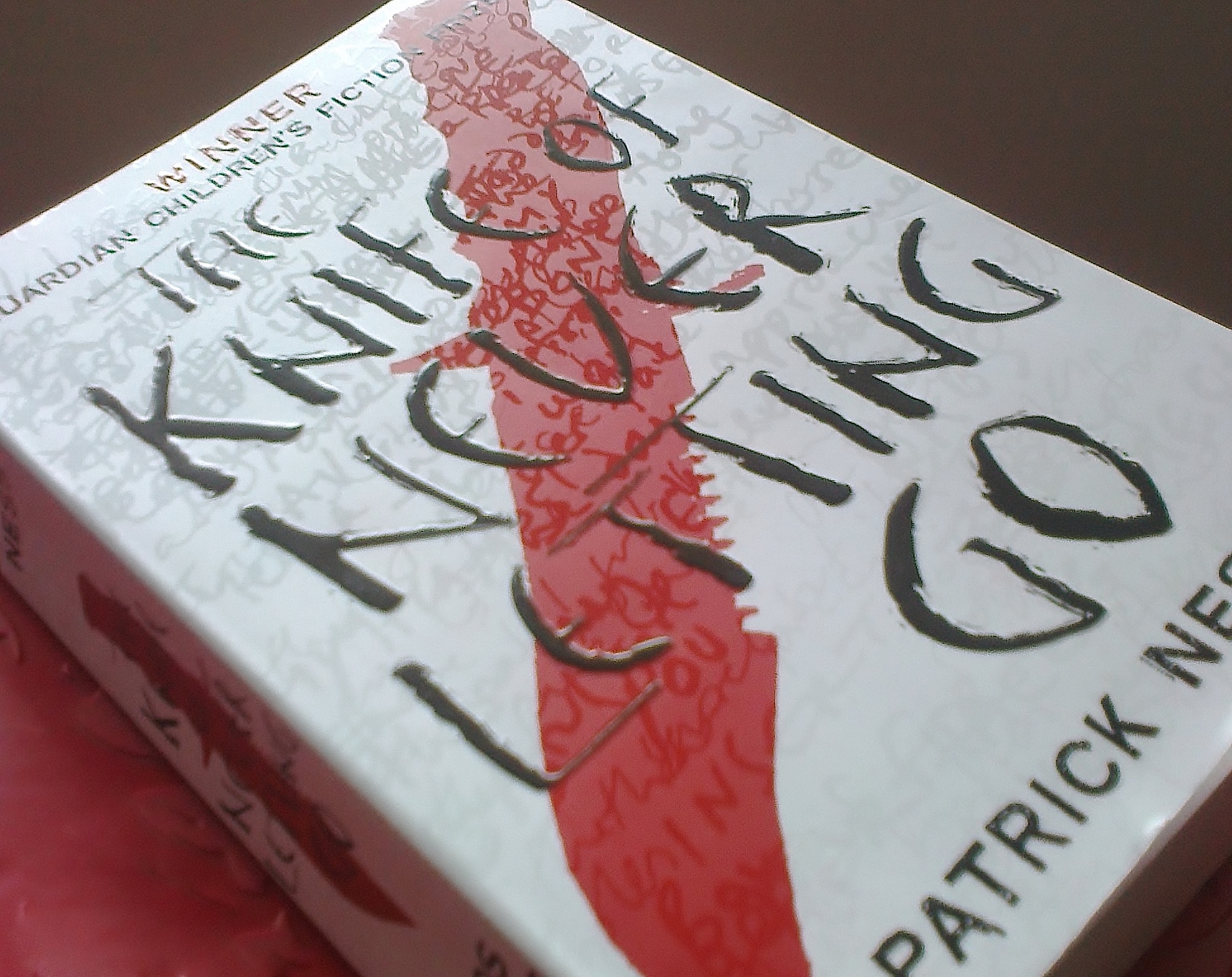
I have just finished reading The Knife of Never Letting Go by Patrick Ness – part of the reason why I have been quiet on the blog for a while. That and I have been writing a guest post for Findingmycreature, which will hopefully be on her blog sometime in November.

The Knife of Never Letting Go is a stunning book, one that drags you along from the first sentence to the last. I have learned a great deal from reading it, as it consolidated some of the lessons I have been taught through reading blog posts such as Kristen Lamb’s on the role of conflict and Annie Cardi’s on the importance of voice in Young Adult literature.

The voice of Patrick Ness’s main character, Todd Hewitt, is so well realised I almost wept with envy. It has made me revisit my Young Adult book, Dragon Wraiths, and realise there is little distinction between my voice and my lead protagonist’s voice, despite Leah being 20 years younger than I am. I have a lot to learn about creating the voice of a teenager and I may have to wait a decade until my daughter is one before I can recreate the voice as authentically as Ness has.

The book also has conflict in bucket-loads. There is conflict in every scene right through to the very last line. The pace is relentless and the story so compelling it made me sit up until 2am to finish it, even though I knew there was a chance the kids would then kept me awake the rest of the night (they did).

However the book also left me bereft and unsettled because (for me) there was too much conflict. Even when there was the occasional scene without conflict, I knew it was just creating the calm before storm, setting up the irony for when it all went pear-shaped again.

I’m a Libra, we like balance and harmony. My inner peace is wrenched apart by too much conflict. As a result, even though I accept the advice from people like Kristen Lamb about the importance of Goal – Conflict – Disaster, I find it very hard to write. My attempts either become terribly predictable: Oh look, my character is happy, let’s throw some crap at them and make them feel rotten, or I shy away from the places where I could ratchet up the tension and let my protagonist off far too easily.

Reading through Dragon Wraiths I found myself noting again and again – Make more of this, build up this scene, make it harder for Leah. When there’s a sentry in Leah’s way he doesn’t chase her for a league making her terrified and sweeping us up in her fear. Instead he’s distracted by his grumbling tummy and she sneaks past. Another security guard is conveniently on the floor above when she needs to avoid detection. She’s running from the authorities but not once is she approached by a policeman or gets accosted by some busybody in the street who has seen her face on TV. The entire book has less conflict than an episode of Noddy.

I guess the problem for me is that my life is full of enough (generally internal) conflict that I read to escape. At times in The Knife of Never Letting Go I found myself skipping ahead during the most tense and dramatic scenes, to find out the end result, because they were so drawn out I couldn’t sustain that level of suspense for so many pages. It was so expertly written, and I was so caught up in Todd’s exploits, particularly as a result of the very intimate first-person-present prose, that I had to metaphorically hide behind a cushion for some of the scenes. Only Doctor Who ever normally makes me do that (and the only characters in Doctor Who that have made me do that since I was eight are the Angels).

All that aside, Patrick Ness has written an amazing novel with a brilliant concept, 4D characters (my favourite being Manchee the talking dog) and enough things to get me thinking about my own characters’ voices and motivations to keep me re-writing Dragon Wraiths for a decade. It’s just a shame about the cliff-hanger ending. The characters were left in danger. I hate that. And I’m not ready to read the next one in the series yet. After a novel that edgy I need at least three Georgette Heyers to restore my equilibrium. Now, where did I put Friday’s Child?

Revision blues

I have revision blues. I was so excited about starting to revise my WIP but I still have no real understanding of how to go about it, and when I can’t do something it makes me sad. Not very helpful or grown up, I know. If my daughter said such a thing to me I’d tell her it just takes practice and it’s okay to ask for help. She’s three. It’s okay not to know how to do something when you’re three!

I like to think it’s the impossible deadline (combined with a killer cold) that has sucked my motivation, but that’s just an excuse. I’m good at excuses. If I’m honest (in a way you can only really be with yourself at 1am) the difficulty with revision is that it exposes how little I truly know about writing.

I hate being a novice.

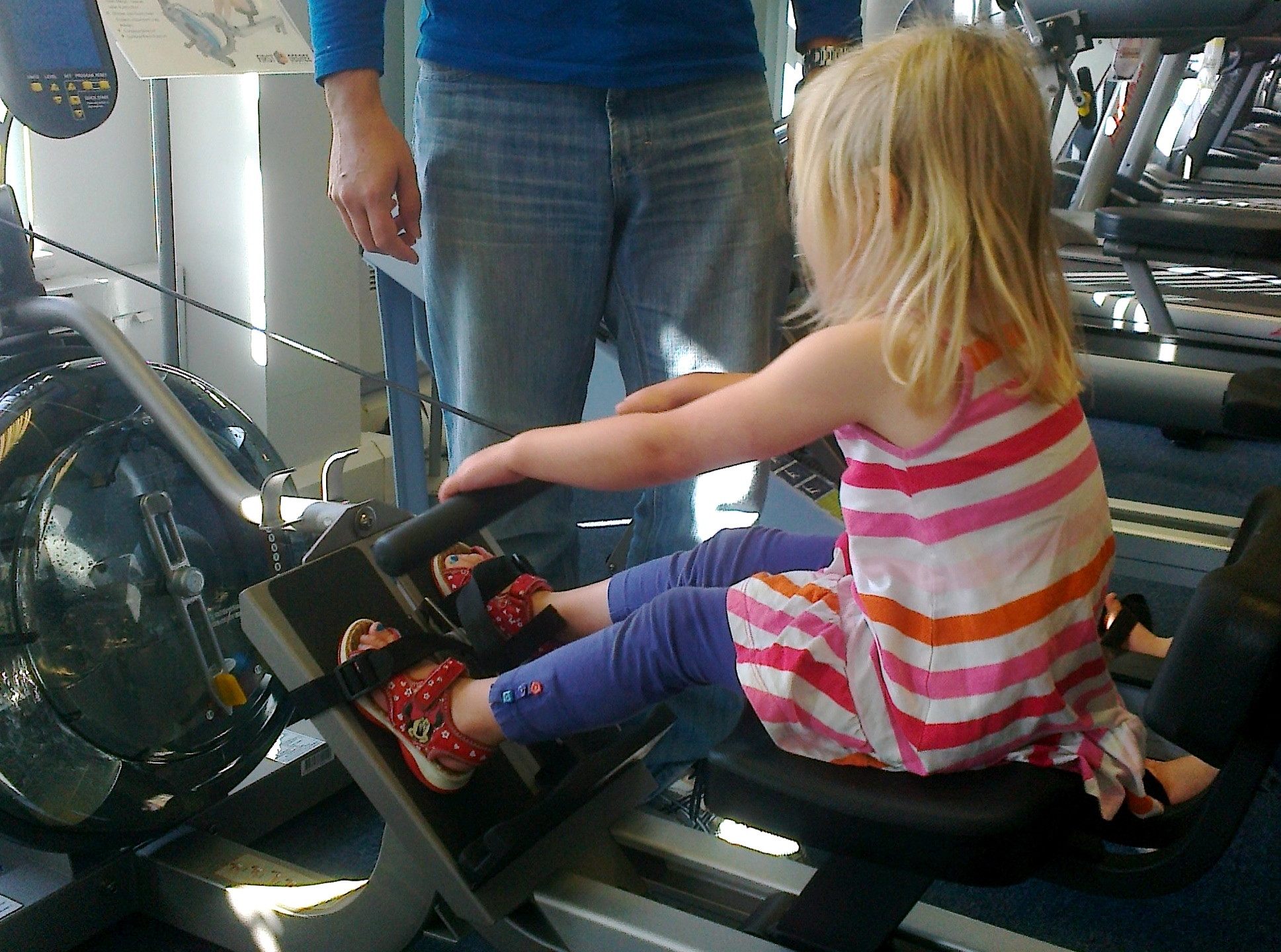
I nearly sobbed in rowing today because the coach was telling me I was doing it all wrong. It was only my fourth lesson but I’d done so well the week before it was crushing to be told I was rubbish. No one is more critical of me than me and I get extremely frustrated at myself if I can’t do something. To the point that – like my stroppy three-year-old – I stomp my foot, yell “Can’t do it!” and chuck whatever item I’m holding across the room. (Did I mention I’m more of a child than she is sometimes?)

I read another instructive blog by Kristen Lamb this week, this one was about structure and how it separates the beginners from the professional writers. I confess I didn’t completely understand the blog which probably puts me firmly in the not about to be published anytime soon camp! I do at least own the Plot and Structure book she quotes from: I just need to read it.

So, as well as trying to polish a first draft in an impossible six weeks, just in case I’m shortlisted for the Mslexia award, I’m trying to learn how to write and how to revise all at the same time. It’s no wonder I’ve picked up Garth Nix’s Keys to the Kingdom again. I’m already on Drowned Wednesday. I may not know much about scene and sequel or Goal – Conflict – Disaster but when it comes to displacement activity I’m a master.

The one positive I’ve had so far is discovering a useful revision summary by KittyB78. It doesn’t tell me how to revise but it does give some things to look for, such as scene flow and characterisation. I like the idea of highlighting different parts, like dialogue, internal thought, characterisation, in different colours. There are also some other great revision tips in the comments.

My biggest challenge this year might be resisting the urge to do NaNoWriMo again. I love it and several of my (unfinished) novels were born in November. However the last thing I need right now is another first draft to nag at me and distract me from actually finalising one of my existing manuscripts. Kristen Lamb is always talking about writers being distracted by the next new shiny.

That’s me!

Writing first drafts is so easy compared with revision and yet seems more like Writer work, so I don’t feel guilty for being unemployed as I do most days. If only they could do a revision equivalent of NaNoWriMo, to help and motivate you to beat a Nano first draft into shape. Now that I’d sign up to!

Anyway I think my darling son is finally asleep, despite the tap-taping of my mobile phone and the eerie sight of me up-lit in the darkness, so it’s back to bed for me. I haven’t revised more than a page in a week so must get a good day in tomorrow.

May the muse be ever in your favour.

Learning to row and little ones growing up

Turns out rowing is in my family’s blood!

I must apologise for my prolonged silence. When my babies were born a childminder I met said, “As a parent of very young children your world will shrink to a tiny point where the only things that matter are whether they eat and sleep and are happy. As they grow older you will begin to remember that there’s a whole other world out there.”

As my son’s second birthday approaches (this Friday – I can’t believe it) that prophecy has become true. All of a sudden I have re-joined the human race. As a result, some things – like my writing and this blog – have been forced into the background, despite my best intentions that that wouldn’t happen. I’m particularly concerned that I have entered my young-adult novel Dragon Wraiths into the Mslexia competition without the final draft being completely finished. I’m taking a gamble that I’ll be able to at least fix any continuity errors before I might have to submit the full manuscript, which they estimate as being in November for the short list. To be honest I don’t really expect to make the short list so it will be a nice dilemma to have.

For those paying attention to my on-going ramblings about my young adult book I have had to forgo entering the Chicken House competition, as the final first draft came in a third over their word count limit of 80,000. I’m not an enthusiastic (or experienced) enough editor to lop off thirty-five thousand words in a month.

So what have I been doing in the real world?

Learning to row

I married into a family of rowers and always vowed I would learn one day. I vowed I’d learn Italian too (my husband is half-Italian) but that’s proving more tricky. My husband planned to teach me to row after our second child was born, but a premature baby and postnatal depression put paid to that idea.

Then this summer our local Adult Education brochure arrived and I read it cover to cover, as I always do. I’m an academic junkie as well as always being on the lookout for local Italian classes. No joy on that front but there was a five-week Ladies Only Learn to Row course. Fate.

I changed the kids’ nursery days, swore my husband to secrecy, and signed up. Three weeks in and I’m loving it: Now I can actually propel the boat without facing the prospect of a cold bath that is. The first two weeks were HARD. My brain wasn’t used to concentrating for two hours at a time and I got very cross with my lack of coordination. The lady from British Rowing seemed to think I was the antithesis of a natural.

Today, though, the boat flew. It was amazing. I rowed with my eyes closed. Literally. To start out rubbish and get better – to feel myself improve and to get instant feedback (if I sense I’m about to join the ducks I’m doing it wrong) – is exhilarating.

If only writing was like that. Or parenting.

After nearly four years of feeling like a failure it was fantastic to be proud of myself for once.

Little ones growing up

The other thing we’ve been doing this week is looking at primary schools for my daughter. Scary stuff. I’ve thought about where I would like my children to go to school pretty much since my daughter was born. Several of my friends are teachers and my sister moved her family to America partly because of a school she wants them to attend. Education is important.

I think back to the various schools I went to as a child and I can see the different shifts in my personality that came with each one. To make that decision now, when my daughter is not even four and my son (who will hopefully go to the same school) is not quite two, seems madness. Thankfully we are blessed with an array of great state schools around us so the choice is more small village school versus larger town school, and whether to take current friendships into account. No decisions yet. I’ll keep you posted.

In the meantime I am trying to get my head back into writing, to plod on with editing Dragon Wraiths (harder than I hoped it would be) and writing query letters for Pictures of Love (which I still intend to self-publish but, as I haven’t got time to do the final proof-read at the moment, I may as well rack up a few more rejection letters!)

Have any of you recently sent your first child to school or started a new hobby? What keeps you away from editing and blog writing?

Some great rules for writers! I particularly like “Rule 6: Nothing is a mistake. There’s no win and no fail. There’s only make.” And “Rule 7. The only rule is work.”
Rule 9 is the one I take for myself.

Unknown's avatarAnnie Cardi

Even if you’re not headed back to school in the next couple of weeks, this is a great time of year to get back in that productive groove. This list by Sister Corita Kent and popularized by John Cage provides great inspiration for artists of all kinds:

Another good one to post above the writing desk.

(image: Brain Pickings)(via swissmiss)

View original post

Renewing my love affair with dragons (and editing)

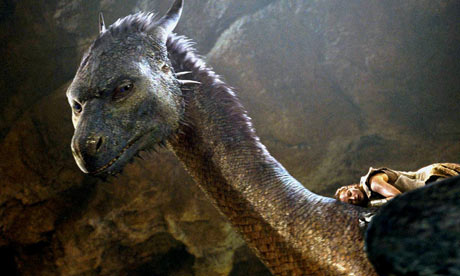
Still from Stefen Fangmeier’s 2006 film Eragon.
Photograph: 20th Century Fox/Allstar

I find myself in the unprecedented position that I am itching to start editing my work in progress, Dragon Wraiths.

Usually I only enjoy the writing part and approach revision and editing much as I would a trip to the dentist. This time, though, I am having to force myself to finish the four or five chapters in the final section before I start taking it all apart. Thankfully I decided on a structure of nine 3,000-word-ish chapters per section (although I have added a whole extra section in my usual scope-creep), otherwise I would take the easy way out and decide the first draft is done already.

For most of my novels I am aware that I have underplayed the climax because I ran out of steam, or ideas, or a new book lured me away. So I am determined to battle through my battle scenes before I let myself review the whole and start drawing out the themes.

This time I think my last-chapters-lethargy is caused by things other than exhaustion or boredom (although with an average word count of 10,000 a day on the two days a week I get to write, exhaustion of ideas is definitely a factor. Hence no blog posts for a couple of weeks – all out of words!)

Firstly I’ve already closed out the love story and written the final scene. A mistake, but an unavoidable one. The final scene presented itself while I was walking the dog (see next post) and I never look gift words in the mouth. As a result I have written the bit of the story I’m interested in and skimmed over the same parts I often skim-read, namely the battle scenes.

The other problems are more positive. I am nervous, elated and excited about this book. It feels good. I have ideas about themes, character development, setting and so on that I want to build on during revision. All the wonderful blogs I read have clearly had an influence and I am eager to put them into practice.

I have also been reading some excellent and varied middle grade and young adult books about dragons, including Eragon by Christopher Paolini (written when he was fifteen!) and The Dragon’s Eye by Dugald A. Steer. These were complemented by an interesting blog post from 2009 that I discovered when searching for an image for this post: Dragons in Literature by Imogen Russell Williams, adding yet another great blog writer to my growing list.

As well as my eagerness to get going on revision I am also conscious of my deadlines. I am writing this book to enter in two Children’s Novel competitions, with deadlines of 10th September and end October. Clearly there is not enough time to revise properly so I need to get started as soon as I can or face a difficult decision: Whether to forget the competitions and focus on finishing the novel to the best of my ability or do a rush job (including reducing word count from 110k to 80k) and hope for the best.

What are your views on dragons in literature?

Have you ever had to rush revision to hit a deadline? All advice gratefully received. 

This interview with Christopher Paolini contains some great advice for writers.

Quick Post: Latest from Kristen Lamb: “More than Magic and Gadgets”

Lion Dragon Shinto Shrine by Sara F Fujimura

Kristen Lamb’s Blog is fast becoming my favourite place to get writing tips.

Kristen’s latest post is essential reading for anyone contemplating writing a sci-fi/fantasy/YA Paranormal novel.

Or any novel for that matter.

There is no point me re-hashing her post as it is all relevant. You can read her great advice here:

http://warriorwriters.wordpress.com/2012/08/13/more-than-magic-gadgets-taking-science-fiction-and-fantasy-to-another-level/

I’m off to revise Dragon Wraiths right now…

Planning and pesky characters


Artwork by Amber Martin

I don’t write plot plans or outlines and this blog explains why.

If you follow regularly you’ll know I’m rubbish at planning what I write, preferring instead to let the story develop as the words (hopefully) flow from subconscious to computer screen.

However after writing my post about the Chicken House / Times children’s book competition, I decided to write a plot plan for my young adult novel, Dragon Wraiths. I had an idea where the story was going, haven written half of it, so it seemed a safe, logical thing to do, particularly as I haven’t got long to draft and redraft before submission in September / October. I hoped that a plan would help me get all the continuity right first time and save some long-term pain. All good.

Except the pesky characters won’t do what they’re told.

I’m two chapters into my ‘plan’ and already I’ve added a whole new section to the novel, extending it from 3 parts to 4. I’ve changed a good character into a barrier and rewritten the whole ending. Twice.

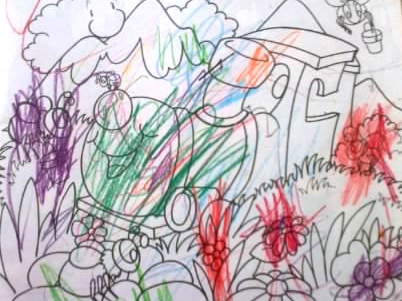
So far my adherence to the plan resembles my children’s colouring: The lines are there only to be scribbled over. As a parent I have tried to let my kids colour how they like, seeing it as too controlling to tell them to colour inside the lines. Am I giving a free-rein to my own creativity by scribbling all over my own plot plan, or am I just scatty?

I have also discovered that, while I find it almost impossible to summarise a chapter into one line, it is easy for one line of planned plot to become two or three chapters.

I have written 7,000 words today and covered only two lines of plot plan.

They find the missing girl and she agrees to help takes no account of how hard it turned out to be to find the girl or the fact that she was rude and uncooperative when they did find her. My whole story depends on the girl being helpful: I didn’t expect her to have a mind of her own. In twenty words of dialogue, written while walking the dog, she has destroyed my whole plot outline with her rudeness. Grrr.

So I am ploughing ahead without worrying too much about the plan. It is still useful as a guide for key plot developments, particularly for the sciency bits that are not my strong point. As for the rest, even I don’t know if the darn woman will help out in the end, or finish up being written out of the book entirely.

That’ll show her.