All. The. Things.

Homeschooling ADHD style

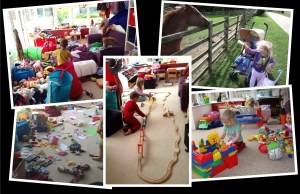
Turns out, when an AuADHD adult tries to homeschool an AuADHD child, what you get is chaos. Creative, messy, fun, imaginative, spoon-depleting, stress-inducing, brain-exhausting chaos.

When the kids were little, they moved from activity to activity at lightning speed. 

With the first child, I had a 25-labeled-box wall unit, and all activities went away. The farm, train, blocks, playdoh, paints, dolls, craft. I spent more time setting up and packing away than we did playing. But when you have a messy brain, you need a calm environment. Tricky, when you also have zero executive functioning skills.

Once there were two of them, only 19 months apart, I settled for containing it in one part of the house and ignoring it.

Thankfully, we escaped the house every day. To the Farm, the zoo, the supermarket, the park. Anywhere, to entertain without mess. I used to call Farm trips ‘Farm Calm’. A clean(ish), pushchair-friendly outside space, with endless variety, in a predictable, safe environment. With food and changing facilities and easy parking. One year we visited over 60 times. Value for money on an annual pass that paid for itself after four trips! We knew all staff and animals by name.

ADHD Parenting

These days, our day trips are to Aldi and Primark, and sadly they don’t do passes. I might buy shares.

At home, chaos reigns once more. And now there are two brains that get disregulated by mess, but need to do All. The. Things.

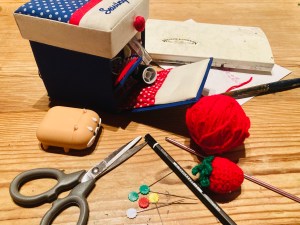
My current projects include decorating, crochet, sewing, fitness, video editing, writing, reading, lesson planning and feeding everyone. 

The daughter has rediscovered craft (which heals my heart) and lego and jigsaws and origami and painting and the glue gun. At Aldi yesterday, we bought stickers and colouring books and puzzle kits. Because, tiring as it is to keep up, I want to feed the embers of the girl I once knew, coming back to life.

It’s hard. 

There’s little down time, particularly as my creative side is also seeking fulfilment, now there are no LinkedIn campaigns or PowerPoint presentations to fuel it. I might even start another novel. If I can herd the excitable puppies racing round my brain all into one place. I wake at 5am to get some time alone to drink coffee and process in silence. She’s often up by 6am.

With it all, what I’ve realised most is that healing has to come before homeschooling. 

School lacks the creative stimulation for an ADHD brain. There’s little-to-no dopamine for a child who doesn’t want to dance or play an instrument. By GCSE, there’s no art or DT or cooking. If you can’t turn it into an exam, a career, it’s deemed worthless. But if you have no energy left at the end of a day to do those things, then what is left?

And she’s so worried about falling behind. I keep saying, behind where? Who set these goal posts? Even if she does return to full time school at Easter (and I doubt it), GCSEs are modular. She can catch up enough to pass five, and that’s all she needs to do. If that.

Education systems, teachers, the government, parents, they all love to convince kids that their whole futures depend on getting excellent GCSEs. 

It’s such rubbish. 

For a start, thanks to Bell Curve marking, a percentage will always do worse than they deserve. A child could give the exact same answers two years in a row and achieve different grades. The system is so flawed.

And who says GCSEs need be done now

She has her whole life to get qualifications, but if she destroys her passion for life, what’s the point?

Obviously it’s easier, cheaper, if she takes them next year. I’m still aiming for those five. I’ll still plan lessons each week, and weep at my inadequacy to even understand half the topics, never mind teach them. But if there’s more lego than lesson? If we spend two hours making origami hearts, or even two hours in Primark (sigh), then so be it. 

I have my daughter back. I’m getting myself back. I’m just not getting a lot of rest.

Pass the coffee. Black, no sugar, strong as you like. 😂

Coffee?

TW: suicidal ideation

I’ve written a lot before about depression, and shared the excellent article I read about passive suicidal ideation and looking for things to keep you afloat. Rereading some of those articles today made me realise that January is always a really hard time. But this year has been different, because it’s been winter blues mixed with grief, hopelessness mingled with determined optimism.

Mostly what has been new for me in the last few weeks, some of the worst I’ve had recently, is how dangerous RSD makes it all.

There are some powerful videos circulating at the moment around men’s mental health, and the importance of reaching out. I find them hard, because I think they ask the impossible. 

Whether it’s presenting the grieving family left behind, or the close friend that didn’t see the signs, for me they all add up to guilt. Guilt that perhaps people I know have struggled as much as I have in the last six weeks, and I haven’t been there when they sought support. Or guilt about the impact depression has on loved ones, when sometimes it’s the pressure of being so needed that suffocates me. Or just guilt that my family suffer as much as I do but I get lost in my own pain.

But the impossible part is the reaching out. Because RSD is great at perceiving rejection, even if it isn’t there.

So when my messages go unanswered, or my desperation is met with solid advice rather than concern, I take it as rejection. I figure I’m just being annoying. I imagine everyone rolling their eyes at yet another text, I can picture them picking up their phone at the notification, sighing and putting it down again. And so the loneliness intensifies.

Thankfully for me there are at least three voices in my head at all times. So the one telling me I’m invisible, unloved, pointless, is shouted down by the one that recognises the extreme reaction of RSD, and another that reasonably reminds me that people have lives. They have their own struggles. It’s not for them to save me. I save me.

But it is still lonely.

And I worry about the people that don’t have the balancing voices in their brains. I worry about people I care about being in the same place and me not noticing.

Someone once told me they didn’t realise I was drowning because I was still joking about it. Remember Robin Williams? Levity is a coping mechanism as much as drugs or alcohol.

So how can we notice? How can we be sure no one around us is drowning? I don’t know that we can, really. We can only encourage people to talk, ensure they’re able to be vulnerable without judgment. Listen without fixing. Yeah, I am crap at that one most of all.

I want to give everyone a code word that says ‘this silly cat meme is actually me reaching out before I slip under’.

If anyone I know is reading this, the code word is ‘coffee?’ 🥲

It’s ironic that the person who has been there time and again for me with the life belt is my daughter. The one I am meant to be pulling into the lifeboat. The one it’s my job to save.

I guess we’ll rescue each other.

RSD: A really serious disability

https://cdn.pixabay.com/photo/2019/09/30/18/41/golan-heights-4516524

Part of healing from burnout for me has been having the space to realise how damaged my relationships with my family are, after the two years of neglect. Neglect, because I have been pouring all my energy into negotiating the even more complex relationships that a job brings for me.

My neurodivergence comes with massive empathy wrapped up in a complete inability to read people, and a physical discomfort when I get it wrong or hurt someone. What could possibly go wrong?

Let’s unpack that. 

care

I can’t just go to work and have colleagues. I care about them. Let them in. Treat them like family.

It’s not always a good thing, in an office. Lines get blurred. Piss me off, and I get upset, angry, mean. I will literally do anything to help the people that come under ‘work family’ but if I feel betrayed or let down, I hurt. And lash out. Or I drown in self doubt and believe I have to quit because I just can’t do it. I think my boss talked me out of resigning at least every couple of months.

It’s no wonder I have only managed about 10 years’ proper employment in the 25+ years since I left school.

Because, together with the feeling-everything that makes me overly-emotional comes the inability to read people. I mean I am really bad.

It can occasionally be useful. 

In the past, I haven’t noticed when blokes in the office have been trying to hit on me until they make a drunken move at an office party (and then I am shocked.) 

But it also means I can’t always read sarcasm. I can’t tell if someone is tired/busy/sad/distracted or actually mad at me. And my default belief is that they hate me (more on that below).

Since I realised I’m AuADHD I am more aware of it. I will ask for clarification, from the person or a neutral third. Even that is dangerous, though, as it comes close to gossiping. And you have to trust that the other person you’re speaking to isn’t also going to misconstrue, because of their own potential neurodivergence. 

It’s a minefield.

And for me – and apparently up to a third of people who are Autistic / ADHD – that minefield is armed.

Enter RSD.

RSD stands for Rejection Sensitivity Dysphoria. Like ADHD, the acronym hides the depth of the iceberg. ADHD doesn’t just mean ‘oooh squirrel’. And RSD doesn’t just mean you’re a bit sensitive to criticism, poor wee snowflake, build some resilience.

For me – and I can only talk for me – it means pain. Broken relationships. Hurting people I care about. Losing friends. And did I mention pain? Actual physical my-life-isn’t-worth-living pain.

If someone tells me I am wrong about something, or that I made a mistake, my flight-fight kicks into overdrive. My ears start ringing, my pulse quickens, adrenaline floods through me until I fizz. A knot of tension tightens in my stomach and I feel like I’m falling backwards into a dark place. It’s not dissimilar to a panic attack (or, if you haven’t ever had one, to being uncomfortably drunk.)

I might lash out, depending who has said it. And if I’m with people I love, there’s a strong chance they’re neurodivergent and also RSD, so the exact same process then happens to them. And I can see they’re hurt. So the RSD ramps to the next level, because not only am I wrong (a horrible thing) I am also evil for hurting them. I don’t deserve to exist. Depending on the severity of the feeling, I can get suicidal thoughts.

At that point, flight-fight expands to include freeze or fawn. So one of four things will happen now, all out of my control. 

  • Yell
  • Leave
  • Go mute
  • Apologise endlessly

None are conducive to healthy relationships, especially if the other person a) doesn’t know what’s happening and/or b) is experiencing the same thing.

Eventually the physical reaction will fade. That’s when the real pain starts. 

The racing, intrusive thoughts. The need to apologise, explain, beg for forgiveness. The overthinking. Replaying, trying to understand. Knowing I am overreacting but being unable to control it. 

And the echo can last decades. Waiting for my brain to retrieve it at my lowest moments. Stupid incidents from age 16 still make my ears ring and my pulse race at 2am. And still my brain will actively seek those memories out and replay them. Stupid brain.

It’s no wonder I don’t have many friends, or that I was reported more than once at work for upsetting someone in a meeting or email. 

Because the passion and energy that makes me good at my job comes from a need not to fail. That perfectionism I always put on my CV? Turns out it’s RSD driven. If I always deliver, on time, above expectation, no mistakes, you have no need to criticise me. The RSD beast lays dormant. Unless you tell me I am overdelivering and that’s why I’m in burnout. You’re trying to help, but it’s a criticism and so it triggers the fight-flight. (Sorry, boss!)

Knowing about RSD has helped. I have dropped off calls when I felt the adrenaline in overdrive. I’ve walked (stomped) round the building a few times to calm down. Sat in a toilet cubicle and sobbed.

But if everyone else around me has no idea, I just look hysterical, overly-emotional, unstable, or plain out of order. And that’s at work.

In a house where 3/4 of us have RSD, and getting it right matters so much more, but we all feel more. Well. Exhausting.

I recently read a great post on RSD on LinkedIn https://www.linkedin.com/posts/adhd-asc-dyslexia-family-resources-belgium_rsd-neurodivergent-rumination-activity-7132409562745204736-OMQV

It includes this checklist:

Do you often feel intense emotional reactions in response to perceived or actual criticism or rejection?

🔹 Can seemingly minor feedback trigger a mental tail spin or emotions and thought spirals?

🔹 Do you have trouble containing your emotions when you feel rejected and your responses may be disproportionate to the situation?

🔹 Do you experience #rumination and perseveration and are unable to let comments go?

🔹 Do you frequently engage in people-pleasing behaviors to avoid potential rejection or #criticism?

🔹 Do you feel highly sensitive about other peoples opinions of you?

🔹 Are you prone to high levels of self-doubt, low self-esteem, or negative self-talk?

🔹 Do you find it challenging to navigate social or professional situations due to the fear of judgement or rejection?

🔹 Do you at times feel constantly attacked and on edge?

🔹 Do you avoid starting projects, tasks or goals where there’s a chance of failure?

Kate Halpin

I tick every. single. one.

Imagine carrying that all the time with no one knowing? Imagine finding out there is a name for it and you’re not just a failure or a terrible human being?

There isn’t a cure. Only knowledge. Therapy. Being open.

We need to talk about RSD, especially at work. Look for the signs in others. Support them, come up with strategies or signals to help in a moment of crisis. Don’t judge. We’re not snowflakes, we have a mental condition.

And, most importantly, find a friend that tells you it’s the RSD talking when you’ve left all your work WhatsApp groups because you think everyone hates you.

And then have the bravery and humility to ask to be let back in 😊

Full Craft Ahead

It’s been nearly a month since I left work to care for my daughter, and I can finally feel the burnout fade. Like a cold you didn’t realise you had until you can actually breathe, I don’t think I understood just how depleted I was.

I was aware of the lack of spoons, the poor sleep, the zero energy. But I hadn’t appreciated just how much my job consumed me inside, like a smouldering fire. 

My daughter said the other day how happy she was that we were friends again, now that difficult colleagues weren’t stealing my energy. That hurt, I’ll be honest, because it’s true. I don’t have barriers, so negative people can and do bleed me dry. 

The other difference, now that I’m not problem-solving all day, is that there’s room for creativity at home. 

So many projects. 

All at once, because ADHD.

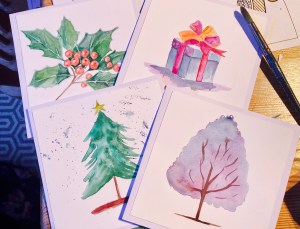
I’ve decorated the bathroom, painted Christmas cards, made lego, moved furniture, baked.

And now I’m restless, so very restless. Because projects need to have purpose (my worth is defined by productivity, payment and praise remember!) I can’t just create for the sake of it, there’s not enough dopamine in that. It needs to be for something or someone.

So, apologies friends if you have a birthday coming up, because you just know something painted, knitted or crocheted is coming your way. 

Sorry, not sorry. 😂

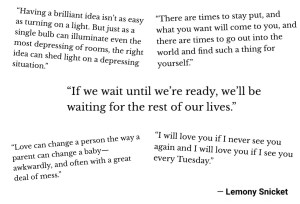
Lemony Wisdom

When life gives me lemons, I tend to glare at both the giver and the lemon, say gee fucking thanks, and throw the lemon as hard as I can against the nearest wall. Stew in my petulant rage for a bit. Slip into pity. Sleep. Cry.

Eventually I’ll get restless. I’ll walk and think, listening to sad songs on repeat, and imagine if life had only given me strawberries.

Then, when I’m tired of drowning in self pity, I will switch to warrior songs. Walk a bit further and a bit quicker, read inspiring memes and posts.

Eventually my brain will start picturing lemon recipes. It will come alive and embrace all things lemony. I will see the impulsive idiot I was, chucking away the lemon, and go buy ALL the lemons (way too many, because ADHD after all) and vow to become the best lemon chef ever.

Then I’ll get bored and wonder what you can do with oranges, but at least I’m not sulking any more.

Well, I’m not entirely convinced that works as an extended metaphor but hopefully you get the idea!

I’m currently at the ‘new recipe and regret’ stage. I regret leaving all my work WhatsApp groups just because my husband said work colleagues didn’t become friends. (I usually turn to him to interpret life, because my RSD makes me read people all wrong and I didn’t want to appear needy or a naïve idiot). With a clearer mind I would have remembered that ALL my friends were once colleagues. Even at school. How else do you meet people? But it takes time. Hopefully any that want to remain friends will look me up.

And my brain is coming up with all the things that I can do and sell to make myself feel worthwhile again, because sadly my self-worth is linked to productivity, payment and praise, and homeschooling aint gonna give any of those.

This is the time where I usually focus on all the wrong things. Set up a complete company persona, with business cards and webpage and flyers, spending more money than I’ll ever make back. Thankfully I’ve realised that’s because those things should have always been the point. I’m a creator at heart. And two years of being given the space to strengthen both my skills and confidence as a creator, rather than shoehorned into jobs I don’t enjoy (project management and data analysis) means I can get straight on with the work bit.

I still have confidence issues. I still don’t know how to sell myself. I still see my skills as dime-a-dozen. But that’s the imposter syndrome. And thankfully I’ve had a good coach who has taught me to believe in myself a little bit.

I’m still reining in the impulsivity and RSD. Still oscillating between wanting to take up permanent residence in the work coffee shop to see friendly faces and so scared of rejection I couldn’t even drive past yesterday. But it’s been less than a month. Patience.

Because I’m so good at that 😂

From Player to Coach

I had a meeting at school this week to discuss my daughter’s educational provision going forward. I went into battle armed with advice from online forums and a very good friend, together with school policy printouts and a mask (because what’s the prospect of homeschooling without catching blooming covid as soon as I leave work?)

But in the end there was no war. The research, prior negotiations, medical diagnosis, and the long discussions with my daughter about what good looked like (thank you, work, for that phrase!) meant it was surprisingly painless.

I know the deputy head from my invigilator days, sitting through his safeguarding training year on year. He’s one of the good guys. In fact, despite everything we’ve been through in the last three years, we are actually one of the lucky ones. We have a school with both the capacity and the understanding to meet us as a point of compromise. 

When we chose the school (against my better judgment, because it was MY school, and who wants to inflict that on their kids?) it was very much because the Head made us believe that children came first. We haven’t always seen that in practice, but today I truly believed it, within the limitations of what they are able to do under government policy.

Only parents of SEND children or children who can’t be in school due to a long-term medical condition, will appreciate the immense relief I now feel to have a solid concrete plan in place for the next few months. Even if that does mean brushing up on 19th Century literature, the Black Death, Shakespeare and trigonometry. Google is going to have to cover RE and science!

After months and months of running on adrenaline, I am depleted. Covid has taken advantage and run riot, but if that’s the price, so be it.

I might not have chosen this life, this way. I still miss Work Me, and my work team. I hope to find some space to keep learning graphic design. But if this is the team I’m playing with now, if I need to be Coach rather than a star player, they will still get the best me I have to offer.

Is it the school holidays yet? 😉

A little bit lonely

I thought I was ready for what it meant to give up work to support my daughter, and for my own mental health. I knew that it was going to be a test of my patience. I knew it was going to potentially mean boredom. I knew I might struggle to be present. What I hadn’t appreciated was the gut wrenching loneliness I would feel, like a part of me has died.

I know it’s only been a week but I feel like I’ve slipped out of time. There’s a whole world going on, but mine has gone back to having preschoolers, only with much more complex situations, like secondary school head teachers, to negotiate.

I can’t even put it into words, which is rare for me.

I guess, when the children are younger, you’re in survival and less aware of the passing of time. Then, when they get to primary, there is the camaraderie of the school gate. But now the only people who could understand our situation are in worse situations themselves, and even if I did go online to those forums, I want to escape where we are not read more heartbreaking stories. I want to talk about Bake Off and weekend plans and what’s for dinner, or even the next marketing campaign. I want to laugh at silly jokes and eat banana bread with people that, after two years, have become like family, even though we worked remotely most of the time. I’m so used to chatting all day on Teams, it’s taking all my self restraint to not spam them on WhatsApp. I miss them, but they’re busy getting on with life.

And I am trying to do that too.

All those things you say you’ll do ‘when you have time’. Decorating and napping and painting Christmas cards with my daughter. Writing again. And I’m grateful that I can. I’m grateful not to be juggling work with a poorly child at home. But being ND hasn’t left me with many friends and the ones I have, funnily enough, have busy lives too.

Our School Academy has a Policy on supporting pupils with medical conditions that includes the line, “No parent/carer should have to give up working because the academy is failing to support their child’s medical needs.” I realise they mean more administering insulin rather than recovering from neurodivergent burnout, but it did emphasise how much our school system is failing children with mental health issues. Because how can an Academy, with its limited resources and government targets, support a child who can’t be in school? Unless we’re all home for a pandemic, of course.

Things will get better. When the days get a bit longer and we fall into a routine. I nearly didn’t share this post, because it sounds like complaining. But it isn’t. It’s just spreading awareness that, just maybe, that person leaving work isn’t celebrating their freedom as much as you might think.

Becoming a Warrior

It’s been four days since I said a sad farewell to my full-time job and went back to my other full-time job of stay at home parent.

My brain’s been racing like a pen full of puppies since I handed over my work laptop, wondering how it was going to keep itself occupied. Should I start another novel, decorate the bathroom, take a video-editing course, or investigate part time jobs to help pay the mortgage? All while traipsing around after the teenage daughter with a shopping basket and a credit card for retail therapy (in the true meaning of the word therapy).

Today was the first day without the children home, as they were both off poorly last week, and I did none of the things. I made a bunch of medical appointments, did three loads of laundry, changed some beds, put up the Christmas lights, and took a nap.

There’s a lot of sleep to catch up on. I haven’t been burning the candles at both ends so much as chucking them wholesale on the fire for the last few months.

And then, as I left for the afternoon school run, I got the text message that I’ve been waiting for and dreading. I’ve known it was coming since my daughter was about five years old. ‘Mum, can we talk about homeschooling?’

In the car on the way home, I could see we’d reached that point. I spent Sunday decorating the Christmas tree with my happy, funny, rude, outrageous, motivated teenage daughter. Sitting next to me in the car, after six hours at school, was a zombie. 

However, we’ve been in dialogue with school for years and so far not made much progress. We’ve managed to drop one subject, but it’s been made clear that there is no more room for manoeuvre, as the government believes the only place for a child to be is in school.

Honestly, I don’t disagree, if only school were a safe place. My daughter has ADHD. She needs distraction, she loves learning, and she likes to be around people. 

But school is just too much right now. 

Too much sensory input for her overwhelmed ND brain, too many arbitrary rules for her autistic mind, too unfair and too harsh for her endless empathy, and way too much expectation for her anxiety and RSD.

And now I know how I will keep my brain busy. I will be her advocate, just as my manager was for me at work, helping me negotiate and survive all those same things. I learned so much from them and wouldn’t have lasted a month in the role without them. Now I get to pay it forward.

I will try to become a warrior, an expert in educational policy and government rules. I will fight for support, and I will do what I need to do to ensure that my child thrives rather than survives her remaining teenage years.

And so this evening, I have been printing off statutory guidance and school policies and advice and researching where we go from here. I’ve chased up her EHCP and the next ASD assessment. I’ve reassured her I’ve got her back.

And the shiny new laptop I just bought so I can continue to learn graphic design and video editing? Well, I’m sure my teenage son will find a use for it.

Feeding ARFID

It’s 7:15 am, and I have just been to Tesco’s to buy emergency supplies of ham, spicy crisps and white bread. This is not what Annabel Karmel told me feeding my children would look like. This is ARFID.

In case you haven’t heard of it. ARFID is an eating disorder that is often concurrent with autism, anxiety, and other sensory processing neurodivergence. It stands for Avoidant/restrictive food intake disorder and both my children have had it since birth.

I could see it in my son and I have been managing his for years. But when my daughter was diagnosed recently by a psychiatrist, at the age of 14, I admit I was shocked and mortified. Because she ate what would be considered ‘normal’ foods, or normal foods for a teenager: chicken nuggets, chips, fruit. It’s only looking back that I realise the sensory elements involved in her food, right from when she wouldn’t breastfeed and I thought I was a monster for putting her on formula. Formula which always tastes the same.

And now she is also battling depression, those sensory constraints have become much more obvious. At present, there are very few foods that she feels she can eat and if she can’t get the specific food that she knows she can manage, she just won’t eat. She is anaemic and keeps fainting.

One thing ARFID is not is fussy eating. So the doctor that told me her children ate ‘because she told them to’, when I went in tears of desperation with my malnourished son, was very lucky. I hope she never knows what it feels like to see her children sob in remorse because I have prepared something that they can no longer eat even though they are starving. 

Enter safe foods. 

The foods that always taste the same and have smell, sight, texture that is (nearly) always acceptable. There are very few safe foods and they’re usually expensive because they come in a packet. The ‘healthier’ the safe food (Bear Yoyos I’m looking at you) the pricier they are. My loyalty to Waitrose is not just the free coffee but the fact they stock the right flavour of Bear Yoyos and they’re often discounted.

And I’m grateful for teachers who make toast, for restaurants that happily serve chips and peas, and for whoever dictated that breakfast cereal and bread be fortified with iron. Have you ever tried to give iron to a child with sensory needs? Our fridge has three flavours of liquid iron, none that can be disguised in juice, and I’ve tried every chewy vitamin I can buy, because they can’t swallow tablets.

I will go upstairs later and find a half eaten ham sandwich, and be thankful. I’ll message the SEND hub at school and ask them to make toast. And then I’ll go to work.

Spoon Theory

So, it’s been a couple of months since I went back to work and, I’ll be honest, it’s a struggle. I’m definitely in the ‘not waving but drowning’ phase.

Don’t get me wrong, I love the work. It’s frustrating and bitty and annoying, but it feels so good to be using my brain again. I feel like a part of the world; I feel useful.

But, oh my days, am I out of spoons. If ever I wanted to explain spoon theory, now’s the time. So, here goes.

Spoon theory was coined by Christine Miserandino as a way to describe units of mental or physical energy. For Christine, who had lupus, it was physical energy, but I have always heard it in context of the mental energy associated with neurodivergence. And that’s what I’ll describe here. This is purely from my own experience of my neurodivergent family.

When I say that a spoon is a unit of physical or mental energy, I mean it’s what’s required to do those tasks that aren’t done automatically. You probably don’t need a spoon to go for a wee, unless of course you do. It’s hard to define because it’s different for everyone. I see it as any task that needs that extra push. Think of it like a car using fuel – you use more at 20mph than you do idling, and you use a lot more at 80mph. But it varies by car. And some cars have bigger fuel tanks. 

Each of my family members has an invisible illness – anxiety, ADHD, ASD, depression. They’re not all diagnosed, but they’re all there, especially for me. My job for the last decade or so has been to dish out spoons to keep the family functioning. When the children were little, it wasn’t so obvious that that was what I was doing. Nurturing, providing for their needs, is natural when they’re five. It isn’t until they’re ten or more and you’re still doing it that you realise there might be something more.

Let’s take a normal school day morning. My son can get up without prompting, he makes his own breakfast. But there it gets tricky. He needs reminding to get dressed on time, he needs a nudge to brush his teeth. He needs help finding the right clothes for whether it’s PE or not, or if I haven’t put the laundry away. He’ll need to be told to pack his homework – several times – and to fill his water bottle. I’ll pack his lunch and make sure his shoes are clean and where he can find them. We’ll find his coat and make sure he has his phone. Now, let’s list that:

  • Find right clothes
  • Get dressed
  • Brush teeth
  • Pack homework
  • Fill water bottle
  • Get lunch
  • Find shoes
  • Find coat
  • Find phone 
  • Track the time

These are all tasks that require a bit of extra mental energy to make sure they happen, especially to make sure they happen in time to leave the house at 8.15am. So, each one of these is a spoon. Ten spoons, and we haven’t even started the day.

Then I make sure my daughter is awake, is mentally able to go to school, has breakfast if she wants it (three spoons), I make sure my husband has eaten breakfast, because he won’t without a nudge, and then his day is harder (spoon). Then I need to make sure I’m fed, dressed, brushed my teeth, fed the dogs, fed the hamster, walked the dogs, (six spoons) maybe put the dishwasher on because none of us managed it the night before. Sign my daughter’s diary, or check school emails, maybe it’s World Book Day or my daughter needs a new notebook or can’t find a glue stick. All spoons.

Before I went back to work, that would be it for the morning, more or less. After the school run (which my husband now does, so that’s a couple of spoons gone for him), I would have until 3pm to get my mind straight. Catch up on tasks that hadn’t been done. Rest. Do something creative. Often sleep. Basically, top up my dopamine levels (ADHD), although I didn’t realise that’s what I was doing.

Then I would do the afternoon school run (also now my husband’s responsibility), which would require working out where my son wanted picking up from. Then home. To another few hours of dishing out spoons. Different meals for each neurodivergent person. Different after school activities. Mental exhaustion to soothe from the three who had been out in the world. More dog feeding and walking, more chores. Asleep by 9pm at the latest. 

And now? Now I do most of that still, but between 9am and 5pm I have a job. A complex one, with lots of stakeholders, lots of deadlines and remembering things and keeping track of things. I have three different to-do lists on my desk. And still, I carry a lot around in my head, to make sure I don’t miss anything important. So. Many. Spoons. And because I need extra support to make sure I remember all the steps in a process, I have process-mapped a lot of my tasks. I had a call from the Project team yesterday, saying my process maps were great, and could I add them as a project. It’s easy, here are a couple of forms. Another task, another stakeholder. More spoons.

There’s this view that I’m organised. It makes me laugh. I’ve heard it before, and I used to let people believe it, and then work oh so hard to keep up the pretence. I’m not organised. I have ADHD. My brain is like someone emptied out the scrabble bag and now I’m trying to read it like a book. I have process maps and to-do lists and printed out plans because I’m NOT organised. It’s scaffolding. The same scaffolding that I put around my children so that they can seem ‘fine’ in school (hint: they’re not). I’m lucky that I work somewhere that I can say ‘I have ADHD’ and their response is ‘how can I help?’ Unfortunately, I don’t have an answer to that question.

The scary part? I’m only doing about half of the work I will need to be doing in a few months. If I’m still there in a few months. I am so tired. I’m asleep by 7pm. But it’s not restful sleep, because my brain is still trying to create order out of the chaos. I’m eating non-stop, constantly searching for dopamine because I’m too tired to exercise. And exercise takes spoons to start, even if it replenishes once it’s done.

This is not a whinge. I am so lucky. My husband and children have really stepped up to fill the gaps in what I used to be able to do. But I’m tired of eating takeaway. I’m tired of an even more chaotic house. I’m tired of once more having a constantly full laundry basket and a constantly messy kitchen. 

I used to wonder if there was something wrong with me, that I couldn’t work and run a house. I didn’t have the skills, maybe, or I was lazy, or I just needed to try harder, or make my family do more, or hire a cleaner. (We’ve been through three cleaners. Too many spoons.)

It turns out there is something, not wrong, but different about me. And now I must decide what’s more important – having a job, an identity, a chance to use my skills, feeling alive and part of the world, but having my home life a stressful chaotic mess. Or having enough spoons to have a happy home, but not use my brain. It appears I may not be able to do both.