And I Am Free

The view from my childhood home

The view from my childhood home

Did you ever run away from home, as a child? My childhood memories are sketchy at best. I recall the hullabaloo when my sister ran away, and was subsequently discovered hiding out in the neighbour’s garden.

I seem to remember a similar ruckus to do with me walking to or from Brownies by myself (it was several miles away along a deserted road) because Mum couldn’t take me.

My childhood comes back in vague flashes that I’ve learned not to rely on as the truth. But I do know that I was often away from the house. I roamed the fields, climbed trees, waded through rivers, either with friends or alone. Home was not a happy place and I avoided it when I could. (When a psychiatrist asked me to name a significant adult I remembered from childhood, I couldn’t, settling eventually on a neighbour who used to breed rabbits and whose house I used to haunt.)

The other place I escaped to was inside a book. No friends outside school? No matter. I had the Sweet Valley High twins, Nancy Drew and the Famous Five. No boyfriend? Never mind. I had a hundred romance stories, from Georgette Heyer and Mills and Boon, to Jane Austen and Emily Bronte. All the happy ever afters you could desire (what they did to my expectations of love and marriage is another post entirely.)

Roaming the fields near home

Roaming the fields near home

As an adult little changed. My roaming got further afield, to the Lake District and Scotland, Morocco and New Zealand. My reading switched, unfortunately, to Nineteenth Century Russian History, to be rescued by Shakespeare and Gerard Manley Hopkins.

And now? Now I long to run away. To roam the fields unfettered without rushing for the school run. I long to drive more than ten miles from home, to be by myself with wide open skies and roaring rivers. To not be ruled by the clock and the routine and the responsibilities. To get through a night without drawing on compassion that doesn’t come naturally or survive a day with no need for patience.

So I escape, into books, and discover that writing has become my salvation. Many writers I know have always been writers. They’ve known from the beginning that that is what they were meant to be. Not me. I wanted to an academic and control words, as I couldn’t control life. I had all the freedom I needed in the mountains I climbed and the books I read.

Escaping to the Lakes

Escaping to the Lakes

Then I became a mother, and my world contracted to a tiny point of endless worry. Even reading wasn’t always an escape (husbands and children don’t understand “this is a good bit” and are sure to interrupt at the climax, never mind my new inability to read anything where people suffer.)

I couldn’t find the books I needed, so I wrote them. I write of all I’ve learned, all the things I’ve done, the people I’ve been, to remind myself. I write of painting huge canvasses or taking photographs, hiking mountains and travelling far from home. I write to remember and I write to forget.

And I read, with my fingers in my ears. I hoard the last chapter until I know I can enjoy it uninterrupted. I read fantasy books by brilliant authors who let me live other lives for a while and make me want to be a better writer. I read at the school gate, and write in the supermarket, and plot and plan in the dark hours of coughing and crying and complaining and cuddles.

And I am free.

Revisions and The Raven Boys

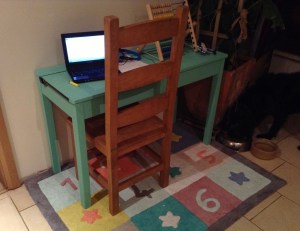
My new workstation - the kids' homework desk!

My new workstation – the kids’ homework desk!

I finally managed to get back to some work today, having packed my almost-better children off to school and nursery. I felt guilty about it, because they probably should have been at home, but I needed the space and silence and absence of sick to start feeling human again.

It felt good to work on my manuscript for the first time in ten days, even though I failed at the numbers game. That’s the thing with revision: you write and write and cut and edit and, at the end of several hours, you have 200 words fewer than you started with.

It’s disheartening.

I’m editing and expanding with this novel, so there are still thousands of words to write to fill the gaps. It’s not uncommon for me. When I write my first drafts I tend to write the highlights; something like an extended synopsis. I write for the romantic ending, the big scenes, the turning points. Then, fifty thousand words later, I look through what I have written and think what?! How did I get from there to there? How did she go from hating to loving him? Why have I given all the secrets away in the first chapter? How much backstory? Then I have to go through and unpick the mess. Fill in the motivations, flesh out the hundred-word paragraphs that really should be two-thousand word chapters. It’s tiresome work, because I write to discover the ending. Once I’ve reached the end, I’m not that interested in filling in the spaces.

I read that way, too. I usually have to read a book twice because, the first time through, (if the book’s any good at story pace or suspense) I skim-read whole chapters to get to the essence, the plot point, the drama. I miss all the great language, the unfolding of characters and personalities, the subplots, the themes. I devour the book, barely tasting it, and then have to go back through and vacuum up the crumbs.

Revision leaves me feeling like this

Revision leaves me feeling like this

I’m reading the sequel to The Raven Boys – The Dream Thieves – at the moment (despite my rant about the abrupt and unsatisfying ending of the first one) and I’m utterly hooked. Now that I know it’s a four-parter, I’m not worrying too much about story resolution (although I’m still skimming ahead for the drama, of which there is plenty). I feel that I’m reading the book in a language other than my native tongue, as if it’s in Old English or something, because the writing is dense and complex and poetically beautiful, but for some reason that’s okay.

But it hasn’t helped my revision. Because, when I put the book down and reluctantly get back to work, I read through my oh-so-obvious story line, with my two-dimensional, unintriguing characters, and I want to chuck the lot in the bin. My Alex and Rebecca are pale imitations (not imitations, because I wrote them before I read Maggie Stiefvater, but you know what I mean), pale shadows of Gansey and Ronan, Adam and Blue. And I want them to shine and live, like Maggie’s characters do. It’s exhausting.

No one says writing a novel is easy. Actually, writing it is the easy part. Making it make sense, making it shine: that’s the impossible task. Reading the words of a master is at once both inspiring and crushing. Never mind. I shall slog on, ignoring the expert sprinting past to the finish, and climb my own climb, one step at a time. It’s worked before. I have faith. I’ll see you at the summit!

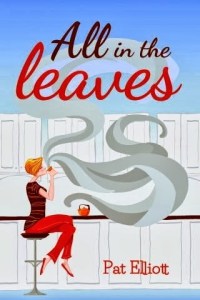
Author Interview: Pat Elliott – All In The Leaves

All In The Leaves by Pat Elliott

All In The Leaves by Pat Elliott

Today I am thrilled to welcome Pat Elliott, author of All In The Leaves, which tells the story of Anna, nearly thirty, living at home and single. When a chance bout of tears leads to a tea leaf reading she is shown a wonderful future: new career, new home, new husband. All by Christmas. All she has to do is get on and make the necessary changes to ensure it happens. When calamity strikes, the battle for happiness begins.

Pat spent eighteen years of her working life in a magazine company, before becoming self employed as a reflexologist. She has had factual pieces published on reflexology and on adopting a dog. All in the Leaves is her first novel, with a second, Leaves for Chloe, currently being written. She has also written a volume of short stories, called At Sanctuary’s Gate.

Pat was born in the Alexandra Palace area of London and currently resides in the Essex countryside, with her husband and adopted terrier. She has a great love for dogs, and is delighted when a rescue dog gets a second chance in life. She also loves to paint in watercolour. Her blog can be found here.

I asked Pat a few question about life, writing and All In The Leaves. I hope you enjoy learning more about her and her novel.

1. Tell us a little about yourself and how you decided to write fiction, after a life working in magazines?

I left the magazine world to set up my reflexology practice. I took up reflexology initially to help my husband, who had a back injury and suffered with subsequent depression. I feel that people who suffer injuries and depression are given short shrift in this world of ours – and if I can help them, I will. Living with injury and depression is not an easy road – either for the person suffering, or the one who tries to help. I see quite a few people who fall into this category. For the helper, it is paramount to maintain outside interests. With that in mind, I like to learn something new. I enrolled on an adult education course which attracted me – Creative Writing, Short Stories. This was such a fabulous course that I signed up for the follow up – Creative Writing, Novels. I was attracted to the fact that after initial instruction, you were out there on your own, getting on it with it. That fits my working life much better than something rigid.

It also means that I can be at home, yet still have an outside interest. The life of a writer can be one of any life they choose to write about. It’s a wonderful escape.

2. Your novel features dogs a great deal. Tell us about the dog(s) in your life

Pat and Missy

Pat and Missy

Yes, indeed. The love of dogs is a theme that runs in my novel. Anyone who owns a dog knows the unconditional love you get from these creatures. We are none of us so full of love, that we couldn’t do with a little extra.

My first dog was a jack russell, Spotty. She lived originally with my neighbours, but they were cruel to her. They’d split her head open by hitting her with a roofing tile – and then refused to take her to the vet. I took her. We spent our first night together under the duvet, on the sofa – after the vet had told us that her life hung in the balance. The first 24 hours were crucial. She lived, and stayed safe in our love for the next 16 years, until she passed, aged 18.

Once Spotty passed away, we went to Battersea Dogs and Cats Home to adopt another, where we met the wonderful Missy. Still a russell, but long legged and long haired – the opposite of Spotty. That was important to me, so that we’d never compare the two. Missy was in Battersea for almost two years, waiting for a home. I have nothing but admiration for the care that Battersea took over her. She was 8 years old when we adopted her. She’s 16 now and still a cheeky little minx – but I like that in a dog.

3. All in The Leaves is about tea leaf reading and has sections that are very spiritual. Are these drawn from your own experiences?

There are elements of my own experiences in the story. I did indeed have an Irish relative who could read tea leaves and was surprisingly accurate. Being the daughter of a Irishman, there is great Celtic lore and spirituality in my genes – and this shows in my writing. I like to weave some of that into my stories. I feel it adds another dimension.

4. The novel explores the beauty of Scotland, and Edinburgh in particular. As someone who lives in Essex, is there a secret yearning to live over the border? 🙂

I do live in Essex, yes! Originally my family were from Waterford, then Wexford, Eire. When the work situation forced some of the younger members of the family to spread their wings, some moved to London and some to Scotland. So I feel quite attached to both. Would I live there? I’d certainly consider it, should the opportunity present itself.

5. All in the Leaves is the first in a series of novels. Did you always intend to write a series?

No, originally, I didn’t. I started to write All in the Leaves as part of my novel writing course. When I spoke to other book reader friends, they asked would it be a series? I quite like each book to have an ending, so that’s what I did in Leaves, but I also saw the possibility that there could be other tea leaf readings and other books. Each complete to themselves. That’s when I decided to make a series.

6. The next book will be about Chloe. Tell us a little bit about it; is it set after All in the Leaves (and will we see more of horrid Howard and adorable Angus)?

Leaves for Chloe is set after All in the Leaves. It charts what happens to Chloe in the year after the end of the first book. Yes, horrid Howard does appear a fair bit in book two, like a bad penny, he always turns up! The adorable Angus also returns, patient and kind as ever. Some may say pushover, but he does have a core of steel.

7. You self-published your first novel. Was that something you intended from the start? How did you find the experience?
All In The Leaves - about tea leaf reading

All In The Leaves – about tea leaf reading

Originally, I would have been thrilled to have an agent and a publisher. However, the more research I did, that route did not feel fine to me. The absolute decider was when I read about one poor man, who’d spent two years of his life writing his book, only to see it pulped after a few months on the bookshelves. It hadn’t performed as well and as quickly as the distributors wanted, so it was pulled.

I understand that they are a business, and shelf space is at a premium, but my heart went out to the man who’d lost his dream. I decided that if I self published, All in the Leaves could stay on the virtual shelves until it found its own market.

I chose to use ebook partners to convert and distribute my book. I couldn’t be happier with their service. I am not the person to spend hours over the computer, trying to work out how to format a book. Nor spend time dealing with different countries’ tax requirements. I much prefer to pay someone to do all that, so that I can concentrate on what I enjoy. Plus, they only take a fee. No percentage of your sales. That was a big plus to me, because it fit my idea of a professional service

8. You’re an artist and a reflexologist as well as an author; how do you manage your time? Do you find yourself torn between your different creative outlets?

No, I’m never torn. Reflexology is my bread and butter. That time comes first. In any spaces between clients, I balance the other two. As a writer yourself, you know there are times that you could bang your head on a wall, in frustration at not finding the right plot or device. In those times, I paint!

9. You have also published a collection of short stories, At Sanctuary’s Gate; how is writing short stories different to writing novels? Which do you prefer?

Short stories are for me quick insights. A novel is more of a slow, developmental burn. My short stories are more observational than dialogue filled, my novel is more about dialogue and personal interaction. I like them both. That’s not a cop-out – they both fulfil a different need in the writer me.

10. Finally, what advice would you give to someone just starting out in their writing career?

Firstly, write! If there’s a class available, get some instruction. A good tutor will encourage, instruct and inspire. If there’s no class, find the resources online or in your library. Help is there, if you look for it.

You can find out more about All in the Leaves and purchase a copy here. Thanks for reading.

Money and What Does It Mean to be Normal?

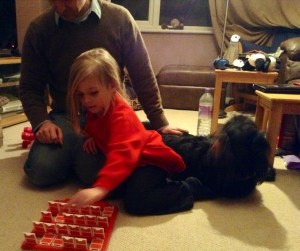
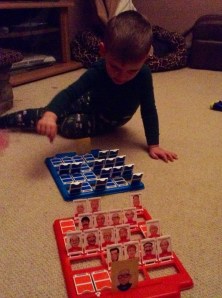
Playing Guess Who with my family

Playing Guess Who with my family

I’m feeling a bit bruised today. I feel as if this month, or more precisely these last few months, have been a real battle, mostly about money. It’s easy for money not to be an issue when you have enough.

Hubbie and I have fought hard to arrange our lives so that money isn’t an issue. We’ve made many choices that have put lifestyle over income and possessions. But some things, like Christmas, or birthdays, bedroom furniture and children’s parties, all fall under lifestyle rather than unnecessary expense.

And that’s fine and as it should be.

But when they all come at once, along with some other sources of income not happening when they should, it all leads to stress. And the biggest stress for me is that I don’t earn anything. For all the rationalisation that hubbie couldn’t do his job if I didn’t look after the house and kids, I still hate spending ‘his’ money.

I knew writing was not the lucrative financial choice. I used to make more in a day contracting than I made all last year selling books. And that’s okay. Right up to the point where I want to spend money on something other food and fuel and don’t feel like I can.

Concentrating hard!

Concentrating hard!

I don’t want to give up writing, but I know hubbie is tired of me crying all time because I’m worried about money, because I feel worthless without an income. And I worry I’m risking friendships because I don’t want to spend money on a day out, night out, weekend away or other expensive thing. One short contract would make it all easier. I could pay for my daughter’s party, new bed and bike, and still have enough left over to proofread my next manuscript.

But I can’t even think where to start. Now my daughter’s at school I’d have to arrange childcare before and after school. Not to mention having to buy a whole new wardrobe of suits in my post-baby body size. And then I’d have to convince one of my old contacts that I still know anything about insurance and/or marketing. After five years out, I probably don’t. It’s a fast moving industry – new regulations, new channels; five years ago social media barely existed.

Even if I did find something, it wouldn’t be on my former salary. I’d probably not actually bring in much extra money, after we’d paid for childcare, not to mention the extra pressure on the family if mummy wasn’t at home cooking, cleaning, washing and ironing. There’s a meme going around facebook that says:

Normal is getting dressed in clothes that you buy for work and driving through traffic in a car that you’re still paying for – in order to get to the job you need to pay for the clothes and the car, and the house you leave vacant all day so you can afford to live in it ~ Ellen Goodman

Craziness. Do I really need to put my children in childcare and put us all under stress just so I can feel I have my own money to spend? Instead of doing what I love – walking the dog, taking care of my family and writing novels? Having time to play board games and cook dinner, with time over to learn how to bake cakes? Put like that it’s all a bit silly. But still, earning a few hundred pounds a month might be nice!

A Curious Novel

My latest read

My latest read

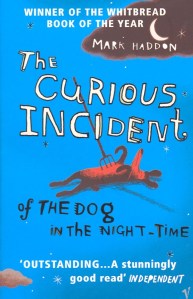
I finished reading The curious incident of the dog in the night-time by Mark Haddon last night and I really want to capture my thoughts on this interesting novel. I began reading it with no expectations. I’d heard of it, that’s all, when I saw it in the library. I had no notion of what it was about, or the author, or anything (including the fact that the title comes from a Sherlock Holmes quotation.) I merely selected it as part of my aim, this year, to read more and select a wider range of books.

I’m glad I did. It is a strange novel, about a fifteen-year-old boy with Aspergers Syndrome. I feel privileged to have read it. Yes, that’s my overwhelming impression. It wasn’t a rip-roaring read, a heart-warming romance, or an unputdownable thriller, but still it dragged me through to the end with little effort (which is a big ask of a book these days because I’m very quick to give up on something that doesn’t keep me awake!)

It is funny, quirky and endearing, but mostly it’s a clever book. Written in the first person, from inside the mind of an autistic teenager, it presents the world in a new way. It also gave me a new respect and understanding for autistic children and their parents. But not in a way that demanded sympathy or forced ideas on me.

Instead, through an evolving set of anecdotes and an unravelling mystery story, it revealed immense detail about the character, his family, his life and his interpretation of the world. Some of the apparently peripheral discussions, for example about God, or time, or the universe, were both enlightening and profound.

As a writer, the book is a master class in RUE (resist the urge to explain). The reader is left to put the pieces of the jigsaw together in a way that the main character often isn’t able to. And, despite it being written in the first person, an entire world is unveiled surrounding the main character. I can’t begin to explain how so much was revealed with so little being said (certainly not without giving away spoliers.)

I think the enjoyment came from this, though. The reason the novel kept me awake was because I was actively involved in constructing the text, fleshing out the story, connecting the dots. The same was true of The Raven Boys, now I come to think about it. I’m starting to think of it as the art of secrets. Not glaringly obvious secrets, of the kind I might clumsily put in a novel – like Josh’s big secret in Two-Hundred Steps Home, or why Claire broke up with Michael. But more a subtle revelation of the bigger picture, like panning out in a movie and seeing the full context.

It is a goal I intend to aim for in my own novels, although I know I’ve got years of practice ahead of me before I get there. I don’t think it’s something that can be taught, but something that has to be learned through hard effort. I suspect it will also require me to become more a planner than a pantser. My natural writing style is to reveal everything as soon as it occurs to me (I’d make a rotten poker player). Instead I need to play it more like chess. Think fifteen moves ahead, prepared to change my plans if necessary, but keeping the moves secret for the reader to discover at the best moment.

I feel like my daughter; only just learning to read but wanting to be able to read adult books. I’m only just learning to write and I want to be able to write like that. Now! Now! Now! *Pouts*. Time to read a few craft books, consume a stack of fantastic novels, dip into a load more blogs and, more importantly, practice, practice, practice. I can feel (another) rewrite of Class Act coming. Bring it on.

2013 365 Challenge: Some Lessons Learned

Conquering mountains

Conquering mountains

For anyone new to the blog (where have you been? *grin*) I spent last year undertaking a writing experiment I called the 2013 365 Challenge.

I set myself a tri-fold task: I would write a blog post everyday, I would include pictures in every post (mostly from what I had been doing that day) and I would write an installment of a novel every day. Not just serialise a novel already written, or write 10,000 words at the beginning of the month and parcel it up, but sit down every single day and think of something new to happen in my novel.

I set myself rules, too. I would try and post by 10am every day (which I mostly did!) I would collate each set of installments into a free monthly ebook and publish it by the last day of the month (which I mostly did). And, most importantly, I would not go back and change things (which I didn’t, aside from typos and spelling mistakes, which slipped through due to tiredness, and – once – when I accidentally changed the name of a character to one in the novel I was also editing at the time. I changed that for the sake of readers’ sanity. But I never changed more than a word at a time).

I think reaching the end of my challenge, the end of Claire’s (my protagonist’s) story, and realising I had written 285,000 words in a year and published them, counts as one of my greatest life achievements.

Me before kids (when I got sleep!)

Me before kids (when I got sleep!)

It isn’t Pulitzer Prize winning fiction. In some places it rambles. In many places I’m sure the lack of editing is obvious. But, still, hundreds of people read it and enjoyed it (as far as I can tell, by almost as many copies of the later volumes being downloaded as the first one). I felt like I reached the mountain top and the view was amazing.

Most importantly, I learned so much about being a writer that, even if I hadn’t had a single download, I think I would consider it time well spent. (Although, if I hadn’t had a single download I probably wouldn’t have made it past January, as knowing people were expecting the next installment was often the only thing giving me the motivation to write when all I wanted to do was sleep.)

I’m still processing all the things I learned from my challenge, but I promised in yesterday’s post that I would write some of them down. So these are the things that occur to me right now:

  • It really is important to write every day. That is probably more true for the blogging than the novel challenge, actually. I’m working on my current novel only three days a week (as I used to before the 2013 365 Challenge) but writing something everyday keeps the words flowing
  • You can write great prose even when you’re tired and uninspired (in fact, sometimes having half my brain worried about other things kept my conscious brain busy and left my creative sub-consciousness to get on with it)
  • Writing to a deadline sharpens the mind. Knowing you have to write something, anything, in the next hour, frees you from restraint.
  • Writing to a deadline can also cause terrible writer’s block. Knowing you have to write something, anything, in the next hour can make the white screen the most terrifying thing in the world
  • If the white screen scares you, turn it off and write somewhere else. Tap out a text message, scribble on an envelope. Once the words start flowing, it’s easy
  • Walking sets a great rhythm for dialogue. If I ever got stuck with a scene of dialogue, getting outside and walking the dog helped the words come. The conversation would run in my head in time to my footsteps and all I had to do was write it down
  • Research can spark off new and exciting ideas. Many of my best installments were triggered from a Tripadvisor review. Reading about other people’s experiences can set off a train of thought that leads to a new story, character, or source of conflict.
  • Keep your characters moving. If they must have internal dialogue or introspection, having the protagonist physically moving can give interest and momentum. Claire did some of her best thinking while hiking along cliffs or driving country lanes. It also makes it easier to match scene to mood: a lashing thunderstorm made a great backdrop for a moment of angst
  • Weather is important. It isn’t always sunny. Using Google StreetView to look at different parts of the UK also gave me impetus to write about different types of weather. Now I know to think about the weather and make sure it’s appropriate both for the time of year and mood of scene (see above)
  • Character arcs are fun. Having Claire change from a shallow work-driven career woman into a nature-loving, child-hugging, self-aware woman was very satisfying.
  • Nasty characters can be fun, too. When Claire’s brother turned out to be an utter git (which I hadn’t completely anticipated) I absolutely loved writing his scenes. We don’t often get to say mean things in real life and not feel guilty afterwards. Writing is cathartic
  • Your own experiences are a limitless resource. I used many things from my own life, including (but not exclusively) my time in hospital having my second child; my father’s cancer; my breakdown and subsequent depression; my year living, working and travelling around New Zealand; summers spent in Swanage with my father; hiking holidays in the Lake District, my time working as a Marketing Manager
  • Friends are also great resources. Two examples that spring to mind are when I used emotional anecdotes (not the details) from my paediatrician friend to get inside Josh’s mind, and an accidental conversation with a friend who used to live in the Lake District that greatly enhanced my Grasmere episode.
  • The mind is a well that can run dry. Whether I write 1,000 words a day for a week or 8,000 words in a day, my overall work rate stays fairly level. I just can’t generate the ideas to write more than 10,000 words in a week. The brain needs time to refill and replenish
  • Coffee shops and town centres are great places to refill the mind. Eavesdropping on conversations and watching how people interact can help to create stories
  • Reading is just as important as writing. Immersing yourself in a well-written book can fill the word-well in the mind and reinvigorate an exhausted muse
  • Formatting for Smashwords and Kindle are really boring but actually fairly straightforward. It helps to format as you draft, if it isn’t too distracting. I’ve learned to do it when I’m waiting for the next idea to come, or while watching TV
  • People don’t leave reviews for free books

I’m sure there are loads more things I’ve learned and I’m equally sure that some of these things only apply to me and not to all writers. Looking at the list, though, it makes me realise how far I have come as a writer and how much my confidence has grown. Turning up to work every day, whether I wanted to or not, moved me from “aspiring writer” to “writer”. I just need to make sure I keep it going! This year’s (unofficial) challenge is to build on my learning and concentrate on the craft of writing. Quality over quantity. I’ll keep you posted.

2013 365 Challenge Aftermath

Life Since Claire

Life Since Claire

Last night I realised it’s been nearly a month since I finished my 2013 365 Challenge (although I’m still blogging daily). Twenty-four days since I had to hold a story in my head every day; to remember who was in scene, all the strands of plot that needed completion, all the characters and their stories and flaws and mannerisms.

Four weeks since I had to format a word document for Smashwords, search for the perfect cover image or wonder what the weather was like on a random day last summer. To worry if I was taking Claire through a development arc as well as a physical journey.

I felt a bit sad, especially as I no longer get any downloads on Smashwords – checking my stats always picked up a gloomy day. I wondered if some of my sense of being adrift is due to not having that thread of continuity with me all the time. like leaving work or finishing a university course, or breaking up with a partner.

Then, in my new spirit of Happiness, I thought I would list all the great things about finishing Two-Hundred Steps Home.

  • Finally being able to read all the novels I’ve wanted to read for ages, rather than just reading Tripadvisor reviews and the YHA website
  • Catching up on blogs and actually leaving comments. Okay I’m still behind on my aim of three comments a day, but I probably managed fewer than three a month last year
  • Eating lunch while watching Bargain Hunt instead of researching tourist attractions or driving routes with Google Streetview
  • Going to bed before midnight
  • Getting stuck into crafting a novel, including all the pain of fixing continuity errors and plot holes, and being able to work on any chapter rather than having to stick to a strict linear timeline
  • Writing poor prose, just to write something, and knowing I can change it!
  • Walking the dog without tapping out dialogue into my phone: feeling the wind on my face and not falling into rabbit holes
  • Sitting down after dinner and the kids-to-bed routine without that lead weight in my stomach and the dread words “I have to write my post”
  • Spending time after the school run; getting my head straight, listening to the radio, drinking tea, and not feeling guilty that I’m not writing
  • Going out. I actually went to the cinema this evening for the first time in years, and afterwards talked about something other than my blog and Claire
  • Spending time with new characters and getting to know them

My work rate has dropped off as a result – I’ve only written around 12,000 words this month instead of the usual 20,000-25,000 (uncrafted words, too, whereas I proofread every Claire installment) – but I barely feel like I’ve done any writing and still the words pile up. I wrote 600 words on my iPad while waiting for an appointment yesterday. Before the challenge, I would have seen anything less than 5,000 words in a day a failure, but I could go days without writing anything. I have now learned that daily 600-word scenes quickly add up to a significant amount.

I learned so much from the challenge, although I’ll probably save that for another post. But, in some ways, I’m having to learn to live without it. It’s good to realise there are loads of positives. Mostly I feel there is time to breathe.

Now, time for another cup of tea.

Essential Empathy

Sherlock Series 1 Finale

Sherlock Series 1 Finale

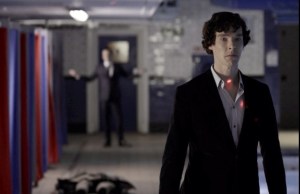
Sat with hubbie watching Sherlock this evening, for only the second time (the finale to series 1 it seems and yes, I know; we’re always behind the times!), and I’m not enjoying it as much as the first episode I watched (which I think was series 3).

In this episode, Sherlock is tracking down someone who has set him puzzles to solve in a set time or he will blow up random strangers strapped to explosives. (Sorry, loglines have never been my forte!)

Sherlock has no empathy for the lives of the strangers, barely even registering them as people. It is difficult to watch. He explains to Watson that sympathising with the suffering of the victims wouldn’t help him solve the cases. I find his lack of emotion disturbing and, for me, it makes his character hard to relate to. The clever language and problem solving still make it compelling viewing, but empathy is essential to me. It’s interesting that, under ‘strengths’ in my character crib sheets, my female protagonists generally list empathy first.

Sherlock reminds me of Psych, another problem-solving drama, where the lead has exceptional powers of observation (which he explains away as being due to psychic powers). Psych, however, is much more lighthearted and the lead character, for all his occasional idiocy, has a big heart.

My latest read

My latest read

Maybe I am noticing it more because I have started reading The Curious Incident of The Dog in the Night-Time by Mark Haddon. The story is written from the perspective of a fifteen year old boy with Asperger’s Syndrome. It offers a unique insight into the mind of someone who understands “very little about human beings.”

Thinking about the characters in books and films that I love the most, they are all people with huge hearts (often despite hard exteriors): Gibbs in NCIS, for example, or Daniel in SG-1. People who understand people and not just so they can manipulate them.

Maybe Sherlock has a journey to go on. Perhaps I liked the series 3 episode better because he showed some heart. Certainly the hardest thing in fiction is portraying growth in a character and still being able to make them sympathetic characters before they start on their journey. Many a chick lit book has started with a protagonist I wanted to slap.

It’s a great excuse to keep watching Sherlock: to see if he grows, to see if he finds some empathy. To learn to write better fiction. And of course because you can’t beat clever TV.

Finding Sense in Stories

Horrible headlines

Horrible headlines

Sat here on a Saturday morning, trying to think of something to write for my blog post, my mind was blank. After a night of The Raven Boys type dreams (always the danger of reading a powerful book at bedtime) I couldn’t pull together a story. I started flicking through my Reader, catching up on my favourite bloggers, like Miss Fanny P, looking for inspiration.

And then I came across a post that stopped me like a punch to the stomach. On Wednesday this week, over the border in Scotland, a three year old boy went missing from his first-floor flat, some time between bedtime and morning. The kind of story that twists inside you as a parent and makes you rush to hug your child.

I’ve been following the story with latent hope, as the people of Edinburgh poured out in their hundred to search for the missing boy. As is usual in such circumstances, we discussed whether our children could leave the house by themselves (they could) and whether there was more to the story than a boy running away from home (it seems there possibly was).

So, when I saw in my Reader this post by a resident of Scotland, whose children were involved in the search for the missing boy, I felt physically sick. We all want a story to have a happy ending. As an author (an author who lives for the HEA) I can’t bear a story that doesn’t end as I think it should. One that involves the death of a small child is the worst there is.

The Facebook appeal

The Facebook appeal

It’s not the only story that has wrenched at me this week. There’s the case of a child who died within hours of their first day at nursery, or Jordon, the autistic boy who locked his mother in the house and disappeared on 9th January.

The latter story, like the story of the missing three-year old boy in Edinburgh, was one I discovered first on Facebook. I always share missing people or pets messages because Social Media ought to be good for something. In the case of Jordon, the story had a happy ending, with the boy being found alive and well. But during my internet search to see if he was okay, I discovered another dozen stories of missing children found dead.

They haunt me, these stories. Not just as a parent, imagining something happening to one of my children (which I can’t imagine, or I’d never let them leave the house again). I think of the families blown apart. The scars that won’t heal. The blame, the recriminations, the guilt. Of all the people touched, all the people searching with hope in their hearts. The policeman holding back tears as he breaks the terrible news. The assumptions that will be made, as the authorities search for the truth.

Mostly I think about the mother (who is often the first one questioned). I no longer judge mothers. No matter what we see from the outside, we have no idea and we must not judge. I am sure there are evil people in the world, but there are just as many desperate, overwhelmed, frightened people and we cannot know the truth of their lives.

As a writer, I live these stories with full emotion. It isn’t just a news story, it’s life in all its messy detail. There aren’t heroes and villains, winners and losers. Just the complicated horrible terrible beauty and tragedy of life. And it’s why I write love stories, women’s fiction, journeys of self discovery. The world needs hope and Happily Ever After. It needs to make sense of life and wrap up the loose ends, to have themes and symbolism and resolution.

Because life doesn’t. Life has sadness and questions and fear. It has grieving families and worried parents. We’ll all hug our little ones just a bit tighter today, and maybe we’ll look for escape in a book. I know I will.

Research and The Raven Boys

What Alex's London flat might look like

What Alex’s London flat might look like

I miss Claire. There, I’ve said it. I miss writing an installment of her journey each day, with a reasonable idea of where she was in the world, at least, and where her story was going. I miss guaranteed word count.

I’m in redrafting hell at present, trying to rescue two characters I love from a badly plotted and planned novel awash with backstory. The problem with loading a first draft with backstory is that changing one thing has a rippling effect across the entire manuscript, especially if you’re trying to rewrite two lines of throwaway history into a whole chapter or even two.

My lead man Alex has a friend called Philip who is essential to the story. Starting In Media Res I didn’t have to worry too much about their relationship before; where they first met, how they met, considering they’re so different. Now, though, we first see them catching up down the pub, setting up the rest of the story’s action, and I have to understand all these things. How do people from different backgrounds meet? How do their different careers and incomes affect their friendship? What’s the age difference? I managed 700 words of stilted dialogue today and gave up in disgust.

I’m also trying not to be overly influenced by the book I’m reading – The Raven Boys by Maggie Stiefvater – as her novel contains a character that could be, or at least have known, Alex as a public school boy. Maggie Stiefvater’s character is so convincing I’m finding parts of him creeping into my prose: except Raven Boys is set in America, whereas Alex would have gone to an English boarding school (which I know very little about, another fact that wasn’t especially important before.)

As each of these random strands of research crop up, I keep losing the flow of writing because I need to research the role of a stage hand or investigate pubs in North London or apartments in Chelsea. I might even have to watch an episode of Made in Chelsea – *shudder* – to try and understand Alex’s present girlfriend Paige more, as again she has moved from a paragraph of explanation to a speaking part.

I swear this is the last time I rescue an old manuscript by moving the timeline back a few months. Next time it starts where it starts and that’s that!