The Tricky Task of Combining Craft with Draft

Editing Class Act

Editing Class Act

For the last few days I have been immersed in re-reading Class Act a final time before sending it to the editor next week, having decided the words were just not going to come on my children’s book after the Easter break.

I find it excruciating rereading my own novels. It usually starts out okay, as time away gives enough distance for me to fall in love with my characters again. After a few chapters, though, each sentence is painful. I know the story inside out and I start to second and third guess myself. I wonder if there’s enough action to be interesting, whether the characters are annoying, whether there is too much introspection and not enough plot. Should I have read more craft books, planned and analysed the text more?

Yesterday I impulsively purchased two books recommended by Kristen Lamb in her post Everybody Arcs: How to use emotional growth to propel the story and capture the reader – Angela Ackerman and Becca Puglisi’s Negative Trait Thesaurus and Positive Trait Thesaurus (I already own The Emotion Thesaurus)

Unfortunately owning craft books doesn’t help if you never make time to read them. I dipped in, but then I became obsessed with what Rebecca and Alex’s positive traits and flaws might be, and whether they arc during Class Act. It was a short step from that to feeling I wasn’t a proper writer because I didn’t have all that detail straight in my head when I hope to publish the novel by the end of June.

It’s not the right time to be worrying about that. I’m not saying it’s too late – I hope some of that detail will come out in the edit – but it isn’t something to dwell on during a line-by-line read through. However, it does highlight one of my biggest difficulties with writing: merging draft with craft.

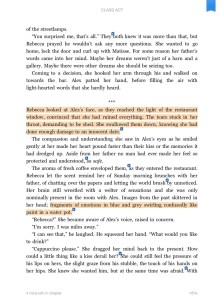
Just some of the hundreds of amends

Just some of the hundreds of amends

I’m a pantser rather than a planner. I don’t want to be. I have ground to a halt on my MG novel because I can’t visualise the ending and am stuck in a soggy middle. But every time I try to sketch out what happens next, my characters decide on a different path, and hours of effort are wasted. Either that or I plan the life out of the story and can no longer be bothered to write it. To some extent I write to find out what happens – if I already know every twist and turn of the plot I get bored.

Writing that way makes it difficult to consciously craft, however. I read posts by authors like Kristen Lamb and it all seems so clear: what positive and negative traits a character needs and how they can drive the plot. So, buy a useful thesaurus, select some traits, and off I go. But every time I sit down and try to figure out that kind of detail I draw a blank (and usually lose the will to write).

Somehow, without conscious thought, my characters develop flaws and tells. But their journey, their growth, isn’t really controlled by me. If they grow, learn, change, during the story, that’s more by accident than design. Ditto for making every paragraph multi-functional : contributing to the story, character development, conflict or climax. Of course that’s what the revision process is for. When I start to deconstruct my writing, however, that’s when I start to think it all sucks. The more I stare at the words the less they make sense, until I’m convinced I should chuck the lot in the bin and start again. I feel like my husband, who can play the piano beautifully but thinks it’s just noise because he can’t read music.

Until I can learn to combine craft and draft I suspect my novels will never really sing, but reading craft books makes me judge my own writing too harshly. It’s a quandary. And that’s what editors are for, I guess. Hopefully a good one will help a book find its voice. Certainly I hope mine will help with Class Act. That’s assuming I wade through the words and get the manuscript sent off next week, of course. Back to work!

Back To Work… I Hope

Partners in Fun

Partners in Fun

It’s 6.50am on Wednesday morning. Not just any Wednesday, but my first day without children in seventeen days. In two hours, after the chaos of the school run, dropping reluctant (and probably tearful) children at school and nursery, I can finally get back to my work in progress. And my mind is blank.

I’ve been reading like mad these last two weeks, to keep my writer’s brain active, in between trips to the park, scraping up sand and dishing out snacks. But still I can barely remember how to write, the ideas are all gone and I haven’t a clue what my WIP is about.

It doesn’t help that I have to give a progress report to my Doctor at 10am on how the medication is working. I think I can say ‘fine’, given that we’ve survived the holidays still smiling (more or less!)

Actually, the kids have been amazing. Thanks to two weeks of incredible weather (for England, especially in April), they’ve played together almost non stop, with few arguments. It has made me so proud to watch and listen to them co-operating and scheming. Maybe the long vacation won’t be so awful (provided it doesn’t rain all summer…)

And on a positive note, I re-read the first chapter of Class Act and was quietly impressed, if I’m allowed to say that of my own novel. I’m going to select an editor this week, which is exciting. There are only four and a half weeks until half term, when we’re away visiting rellies in Italy, so I need to crack on and find some inspiration from somewhere. Pass the coffee!

Messages Sent and Received

Petronus Towers

Petronas Towers

Author Richard Wright set himself a challenge this year to write a story each week based on photographs sent in by his blog followers. I was lucky enough to have one of my pictures chosen, of the Petronas Towers in Kuala Lumpur. Below is the story that Richard wrote, based on my photograph. Do stop by his blog and have a read, there are some great stories.

—————

The 52: Messages Sent And Received

Every Monday I’ll post a new short story here, based on an image somebody out there has sent me. Welcome to the 52. There’s been a bit of a hiatus around here, because of reasons, but we should be back to normal for the next couple of months at least. This week I’m collaborating with Amanda Martin for your reading pleasure. She sent a picture of the Petronas Twin Towers in Malaysia, which entirely by coincidence I was able to visit last month. They’re majestic in their own right, but it’s difficult in light of modern history to appreciate them in isolation.

Messages Sent And Received by Amanda Martin and Richard Wright

The Petronas Twin Towers are Malaysia’s modern jewel. Those who live in Kuala Lumpur and turn their eyes to the sky of a night draw comfort from their pale white glow, and are filled with strange pride that their city hosts the tallest twin towers the world has ever seen. Visitors fly in from across the globe just to gawp at them.

Kevin barely glances up as he returns to work that September evening. The smoggy, twisted streets are crowded, and he does not appreciate having to go back to the office for a late night conference call. While Tower One houses the behemoth that is the Petronas Group, Tower Two is rented out to a host of multinational companies, Kevin’s included. Life in Malaysia suits and fascinates him, with its heady layers of exoticism, technology, and squalor. The occasional requirement to touch base with his masters in the US is only cross he bears in grudging trade for the year long opportunity to work there at the company’s expense.

Walking up to the plaza on which the towers stand, he casts a glance skyward. No matter how often he sees them, the twin sentinels always impress him with their serene beauty. Were it not for the double decker skybridge shackling them to one another like conjoined twins, they would each seem like a vast syringe poised to vaccinate the clouds. From the top floors it is possible to see the stars, though from ground level that can be difficult to believe. The banks of pollution make the sky a flat void at this time of year.

In the absence of constellations, the towers define the sky. They are vast antennae, waiting to capture signals transmitted on a scale beyond human comprehension.

As ever, tourists surround the ghostly structures, craning their necks as they try to find ways to capture the whole edifice in a single snapshot. All nations mingle as one in the attempt, a ring of flesh around the towers that grows loose at the edges and bunches like tense muscle at the entrances to the bright shopping centre at the base of the structure. Security guards wander among the visitors, hunting out the pickpockets who float up from the city’s dark corners to prey on those made careless by wonder. With so many faces cast to the heavens, sly hands have open access to pockets and purses.

Kevin is crossing in front of the mall’s guarded doors at 20:30, weaving between shoppers and tourists, when his skin turns clammy and his pulse quickens. Claustrophobia plagued him as a young man, but he has not had a serious attack for five years or more, a period which not coincidentally matches the length of his relationship with Tasha almost exactly. He makes that link for the first time. They have not seen one another since her visit three months ago, and her absence is a dreadful ache. She is almost exactly half a world away, twelve hours behind him in New York, and will be arriving at her own workplace at that very moment.

Tasha is his soul mate. They are connected.

Closing his eyes, he fights the need to get out, find air, find space. It doesn’t work, and so he tries and fails to swallow it away. It will be better inside, he thinks. Away from the crush and din of the crowd he will feel calm.

The din has vanished, and when he opens his eyes and looks around at the crowd he realises that he is not alone in his strange trepidation. Everybody has fallen silent. Most are walking away from the building, an almost thoughtless drift that their expressions suggest they are not conscious of. They stare up at the towers. Allowing himself to look up too, he understands that it is not the towers that are so fascinating. It is the flat, dark sky and the thing that it conceals.

That there is a thing approaching, borne of nightmare, is something he believes to be true even though he does not know why.

Tasha stops him from backing away, putting space between those luminous towers and himself. It had occurred to him moments earlier that when he was finished with Head Office, he could call her at her desk and bid her good morning. Kevin loves Tasha a great deal, and it is that which makes him force his unwilling legs onwards to the staff entrance at Tower Two.

It is not a pleasant journey, nor an easy one. Every instinct he has wants him to run away. Logic tells him otherwise, for nothing is happening, nothing is wrong.

Logic is simply a means by which a person can be wrong with authority, but he lets it bully him into the building anyway.

*

Inside it is better. He has the open plan office on the sixty-first floor to himself, save for a solitary cleaner who cleans each surface with a slow precision borne of tiresome routine. Kevin has a desk beside the window, and stares out as his managers in New York drawl on about market share and next quarter predictions. While making reassuring noises at appropriate moments he watches the dancing fountains far below as they arc and spray in time to music he cannot hear. The coloured lights playing through the water are hypnotic, and make his eyelids heavy.

At 20:46 something vast fills his vision, even though it is not there. It has such weight and size that it gives the illusion of travelling very slowly, even as it rockets into the building.

Except it doesn’t, because it does not exist. A vast, encompassing roar does not deafen him.

Screaming, he throws himself to the floor, away from the window, and a blast of shattering glass and steel does not shred his face and clothes. He lifts his head, sure that tremors should be rocking the building, not understanding how everything can be so still. The telephone dangles on its cord over the edge of the desk, and he can hear tinny concern from his boss. Although he wants to pick up the phone and make some attempt at explanation, he cannot bring himself to step closer to the window. There is danger at the window, even though there isn’t.

The cleaner has gone. Kevin is alone. Easing across the carpet, as though the wrong step might cause something to implode, he makes his way towards the door.

He is terrified, hyperventilating, and does not know why.

*

At 21:02 Kevin pushes open the fire door and steps into the stairwell. For ten minutes he had stood by the elevator, willing himself to press the button to summon the car but unable to make himself do so. The lesson was too strongly ingrained. Elevators are to be avoided in an emergency.

There is no emergency. Nothing is wrong. He wants to go back to one of the offices and call Tasha, but the need to get out is stronger.

At 21:03, as he makes his tentative way down to the floor below, he feels the echo of an echo of a second collision. The building doesn’t move at all, but his body feels it anyway, as though somebody has pulled the stairs out from under him. Losing his feet, he topples backwards, landing painfully on his tailbone with a cry. Instead of standing, he huddles with his head in his hands, not knowing how to fight back the incomprehensible sensations wracking him.

For a few moments it is peaceful, and then something catches his throat. He coughs, which makes it worse. Now that he has started he cannot stop, and he hacks and splutters as phantom smoke fills his lungs. Although the temperature does not change at all, he begins to sweat.

With his eyes streaming, he makes his way back up the stairs on all fours like a parched man in a desert. Only when he reaches the corridor at the top and closes the door behind him does the burning cease.

*

Back in the office he huddles beneath Sayid’s desk, still too frightened to approach the windows and the sense of lethal void they represent. For the longest time he cowers, hugging his knees to his chest. The scale of what isn’t happening overwhelms him. There are no coping strategies to deploy, no defences to erect. It steamrolls over him.

For forty-five minutes he weeps, a swirl of regrets and longings. Tasha looms large over him, but when the taste of phantom smoke started to permeate the room, drying his throat and making him gag, it is not his lover that he calls.

Dragging the phone off the desk by its cord, he dials his mother like the frightened boy he has become. The call goes to the answering machine, and he babbles his love, and his regret, and tells her he is sorry even though he does not quite know what for.

Half a world away, she does not hear his muted voice in her hallway because she has the volume on the television up as she watches the world end.

Kevin stops talking when he can no longer breathe. The room is a blur seen through burning tears. He punches the underside of the desk as sweat drenches him, then claws at his throat and eyes as tiny choking noises spill from his lips. It is too much. It is unbearable.

Crawling out from under the desk, he staggers to his feet. The windows are dark patches, and he stumbles towards them, picking up speed, willing to die for just a touch of the cool Autumn air. He is on the sixty-first floor, but that has ceased to matter. He needs to get out. He needs to breathe.

He hits the window at a sprint, and if it had blown in earlier then he would plummet into the sky and drop like a rag doll, full of terror and regret and relief.

The windows did not blow in earlier, and he bounces back from the reinforced glass with a sick thud that drives stars through his mind.

It is 21:59, and he knows that the floor has dropped away, and there is rubble and crushing and hot death awaiting him.

*

It ends.

The floor is just the floor. There is a nauseous pounding across his forehead from where he hit the window, and the dull heat of his self-inflicted scratches on his neck and throat. When he raises his hands so he can see them he notes the blood beneath his fingernails.

But it has ended. Whatever it was, it is over. Nothing has happened. Nothing is wrong.

Weak, he drags himself to his feet. The room spins, but that is only because he has hit his head. Limping to his desk, he lowers himself into his chair, retrieves his dangling handset, and punches Tasha’s number. Shaken and in pain, he wants her voice to soothe him and make the world a solid place again.

There is no answer, but that is not possible. If she were not at her desk then the call should route to the switchboard. Instead he has nothing but an ominous single tone to listen to. Kevin squeals with need and high-pitched frustration, then hangs up and dials again. When he gets the same result, he tries again. Still nobody answers, his heart kicks up a little warning. Something is wrong. He is calling the World Trade Centre in New York City. It is 2001, and the switchboard is manned twenty-four hours. It is not possible that nobody is there to answer.

He tries over and again, but it will not be until many hours have passed that he realises he has already taken the last message Tasha had to send.

*

A rather blunt and to the point affair this week. I shall save subtlety for another time. If you enjoyed the story, please do tell your friends to come and read it too. Nobody will ever know it exists if you don’t.

This story, and the whole of The 52, is yours for free. Please enjoy it on that basis. If you want to support my writing and the publishers who’ve worked with me over the years, then consider buying a book. My latest novel is The Flesh Market, and is an excellent place to start. If short stories are your thing, why not take a look at my story ‘Skins’ in Nightscapes?
 

Why I Might Be a Paranoid Android

Marvin the Paranoid Android

Marvin the Paranoid Android

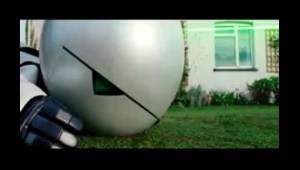
I’ve come to realise that my depression might be because I’m like Marvin the Paranoid Android from Hitchhiker’s Guide to the Galaxy. A lot of my problems stem from having a super computer in my head that’s always on, always analysing. If it can’t analyse sales figures and response rates to predict market trends and consumer behaviour, or compare tender applications to choose suppliers, or negotiate partner meetings to produce joint marketing targets, then it will analyse being an author, wife and mother.

It will calculate how many portions of fruit and veg the children have eaten, or it will treat the husband like a business partner, detailing his reactions and responses as if there is a need to feed back to the Board.  It will check book sales figures several times a day, as if month end charts make it necessary to keep up with the numbers, despite being able to tally up the amount of books downloaded on one hand (two on a good month).

Round and round the thoughts go with nothing to work on, like cattle chewing a field back to mud until it may never grow again. Writing gives an outlet for my creativity and, when I’m editing, it answers some of my need to analyse. But, oh my, I think I’ll never be happy unless I get a job and wear my brain out with productive thinking. Except I don’t want to get a management job again, because I wasn’t exactly happy when I had one.

In the meantime I’m walking the dog and simultaneously analysing the episode of NCIS I watched last night, tallying how much good food the kids have eaten this week (not much, although we did have a fantastic time in Skegness. More on that later), wondering if my SSRIs are finally settling, reminding myself to email the editors I contacted last week, making a mental note to text my friend about a playdate, and remembering I have to get my niece a gift for her fourth birthday next week. Oh, and writing this blog post in my phone. No wonder I’m restless and exhausted at the same time.

Maybe I’ll be better when the children’s homework is more taxing. A few quadratic equations to see if I recall any of my A Level maths. Perhaps I should buy some year 4 workbooks and get practising: judging by the curriculum evening we went to at our daughter’s school that tried to explain their new way to teach maths, I might need them!

All Quiet on the Blogging Front

Busy busy...

Busy busy…

This is just a quick note to explain my silence on the blog recently and to say that normal service will hopefully resume in a week or two.

This week I’ve been concentrating on drafting my children’s book (working title George and the Arch, but that will change!) I’m around a third through, at 22,000 words, and have realised that writing a first draft uses ALL my energy and inspiration.

My daughter’s school teacher pointed out that there are only 11 full weeks of school left before the summer vacation, which means I have that much time to get George ready for the Chicken House competition AND get Class Act ready to publish (I haven’t even sourced an editor yet). Argh!

The reason for my silence over the next two weeks (more specifically the next four days) is that the children are on their Easter Holidays. In four hours the children and I will drive to Skegness to stay in a static caravan for the week with my good friend and her two children. I’m terrified. Please God don’t let it rain!

I’m looking forward to it too, but the idea of four days in a small box with four kids aged 2-6 does fill me with fear! Ear plugs and wine at the ready! 😉 I don’t even know if there will be internet…

So, enjoy the peace and quiet and I’ll hopefully have some new things to write about when I get back! Wish me luck.

How to Get Out of Writer’s Block

Designing plot: like trying to assemble a marble run

Designing plot: like trying to assemble a marble run

For me the most effective way through writer’s block is to become like my three-year-old and son ask questions. “Mummy, why?” is something he repeats ten times a minutes and, as infuriating as it is, it’s how he learns about the world around him. Most of my answers start with “I don’t know, maybe because…”, or, “Let’s google it”.

Working out what’s going on in a new novel is no different. The more questions you ask, the better the story gets. The harder you search for answers the further you get away from clichés and predictable plot lines. But when asking what happens next and why comes up with nothing, you can start questioning the characters instead. What are their motivations? What are they yearning for, even if they don’t know themselves? What are their greatest fears? What might happen to chuck them out their comfort zone.

Like many younger siblings, my protagonist George is looking for his own identity. He knows he isn’t smart like his sister or sporty and musical like his brother. He thinks his mum doesn’t love him, that he’s always useless. Only his dad understood him, and he vanished a year ago. The thing he likes to do most is kill aliens in his computer games. But he also likes to cook.

As the story progresses, George is discovering he’s fitter and smarter than he thinks he is, and his cooking ability is earning him respect. But, now that I’m at a dead end in the plot, I’ve been questioning him to see if he can help me work out what happens next. And he’s reminded me he loves computer games, which means he is observant and tactical. If the games he plays are like the Tomb Raider games I loved as a teenager, he has to work out puzzles and keep trying until something works. He must be tenacious and brave and good at lateral thinking.

So far his co-protagonist Merula has been leading them both and making the decisions. They are in her world and she has the answers. But he’s been challenging her thinking, questioning things she’s always believed in, and now they’re at an impasse. I think it’s time for George to come into his own and develop a clever strategy to take the action forward, using his game-playing skills.

Now if only I knew what games ten-year-old boys are playing these days I would feel on more solid ground. Any ideas?

Stuck and Sahara Dust

Under a dust cloud

Under a dust cloud

I got stuck on my WIP today, despite flying along this week. Yesterday was a 6,000 word day – my first for a year or so I should think – and I managed 2,500 in 90 minutes this morning. And then stuck. Not from writer’s block but from world-building block.

I don’t have a particularly active imagination – a funny thing to admit for a writer. Or, I should say, I don’t have a world-building imagination. I can do characters and dialogue, but scene building is tougher. When I wrote Dragon Wraiths the details of the world and its history kept me puzzled for weeks. I would wander round the fields walking the dog trying to figure out how it all worked; what happened to the body, how did the mind transfer to Taycee and so on. I’m not entirely sure I figured it all out but, shhh, don’t tell anyone!

And now I’m having the same problems with my children’s book. The world is a mishmash of all the books I’ve read recently – not intentionally I hasten to add. I never set out to steal an idea – I’m a pantser, I very much make it up as I go. But when I review what I’ve written, I can see the influences coming through my subconsciousness. A world covered in cloud? That’ll come from The Curse of The Mistwraith (Janny Wurts). A world like ours but different, where the animals can speak? That’s The Divide (Elizabeth Kay). A missing father? That could be The Extincts (Veronica Cossanteli) or To Be A Cat (Matt Haig). A bunch of boys who mess around? That’s probably from Johnny and The Bomb (Terry Pratchett).

We live in the purple bit...

We live in the purple bit…

But now we get to the nitty gritty of my story – where my characters are themselves, not parodies or plagiarisms – and I’m stuck. Merula’s a fairy who goes through blending when she’s twelve (or younger, haven’t nailed down ages yet), but what is blending? And when she’s banished she visits the wild ones, but who the hell are they? A baddy called Vulpini has cast the spell to cover the sky in cloud, but whatever for? And why have all the parents disappeared and where are they?

I love pantsing – I write to find out what happens next (as my husband often says) – but sometimes the drive in the dark is along a nice straight road and sometimes you sense there are cliffs and chasms either side. It’s the same road but one is easy and the other terrifying, even though you’re equally blind.

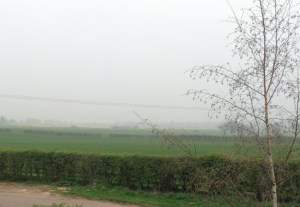
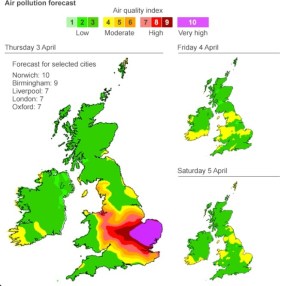
I tried my usual trick of wandering round the field with the dog, asking and trying to answer questions, but we’re currently sitting under a cloud of Sahara dust and the view is as hazy as my mind. With eyes full of grit and a throat clogged with dust, I returned home defeated. Maybe there’s a reason I write Chick Lit. World building? Give me one that’s already made, please.

Random Reasearch and Character Naming

Photo inspiration

Photo inspiration

I started work on my Middle Grade novel this morning. Well, I wrote 300 words this time last year, but never got further with it than that. I only added 2,000 words today, but as I’m a Pantser, the beginning of a story is always slow. Once it gains momentum, and I have a clue what the story is about, it should hopefully pick up speed. The start of a new novel is always time consuming as well because there is an element of necessary research. I try not to jar the flow too much when I’m writing, as it’s easy to lose hours to internet research, but I do like to check facts as I go. I always have the iPad next to me for quick searches like “When do skylarks nest?” and “When are potatoes harvested?” (Both from this morning.)

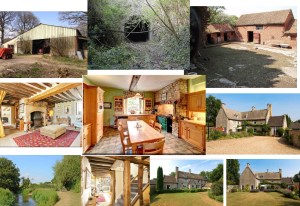
I also like to have some photographs of my story setting to help me make it more three-dimensional. The 300 words I wrote last year were all dialogue, with no setting at all. If I don’t have something to prompt me, I do tend to only write dialogue and feelings. This story is set on a traditional small farm, starting in the kitchen, so I looked for a few images to help me. Once upon a time I would have searched until I found the perfect property, so I could steal all the photos, layout, floor maps, street view images, the works. But I’ve lost valuable hours and chunks of sanity to that task in the past, so now I look for general images and piece them all together into one page that I can have beside me when I’m working.

Character names made easy

Character names made easy

As this book will be fantasy, I wanted to come up with an easy way to generate names: I really struggle with character names and often find the same ones cropping up time and again (I have two Daniels as main roles in different manuscripts, for example, even though – or possibly because – I don’t know anyone called Daniel.)

I wanted quirky names for my ‘other world’ people, but ones still more or less easy to pronounce. I find, reading fantasy, that I get irritated if the names are too complicated.

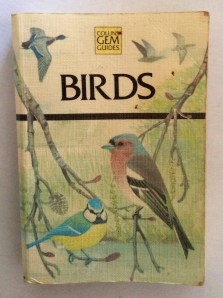
Anyway I came up with the idea of using latin bird names, using a little pocket book that used to belong to my dad (that I think I’ve rescued from hubbie’s charity shop pile more than once!)

So far I have my female protagonist Merula, from Turdus Merula – Blackbird. Naevia, her friend, from Locustella Naevia – Grasshopper Warbler. Otus, from Asio Otus – Long-eared owl, and Alba, from Tyto Alba – Barn Owl. How easy is that? 🙂

I’m quite nervous starting something completely new, and in a new genre (middle grade fiction). It’s been two years since I wrote Dragon Wraiths, and I had such a strong sense of the story when I started it. This time I’m driven more by a desire to try my hand at the genre and hopefully write something my children might like to read before they’re twenty! It’s daunting and exciting at the same time. I know so much more than I did two years ago, and I write more self-consciously, having done a LOT of editing in that time. I don’t know if I can lose myself in a story and just write. Time will tell, I guess! In the meantime, I’m just keeping my fingers crossed and tapping out the words.

Blog Post Revisited: Using Life’s What Ifs

My Three Darlings

My Three Darlings

I finally sent a complete draft of Class Act to my fabulous Beta Reader yesterday, and found myself at a loose end. I know it needs more work but, quite frankly, I’m sick of the sight of it and am starting to doubt whether it even works as a story. Time for a change.

I want to start something new, rather than working on one of the three or four half-finished manuscripts I have on my laptop, courtesy of years of NaNoWriMo. But I’m a bit all chick-litted out, after Two-Hundred Steps Home and working on Class Act. So I got to thinking about other ideas I’ve had, and I remembered the Middle Grade Novel idea I had nearly a year ago. This is a bit on how it started.

A few days after writing that post, I wrote the one below. A little insight into where some of my writing ideas come from.

-––––––———

Writing out some of the background for my new novel today I realised I was inadvertently writing a ‘what if’ about my own life, or one tiny aspect of my life. I think sometimes that’s what writers do. They use their words, their imaginations, to explore different lives they might have lived. Mine is a little thing that might have been huge.

Close Siblings

Close Siblings

I was late for my period this month: second month in a row. Now, we’re careful. We have two beautiful children and I’m in my late thirties. My first child was born at 37 weeks, the second at 35 weeks. My pediatrician friend said that a trend to premature babies could easily continue.

So, even if we wanted more children (which we don’t – only when I get occasionally broody) the risks are far too high. And I KNEW I wasn’t pregnant. I’m more likely to be menopausal, as early menopause runs in the family. But, still, you start putting two and two together and making five. I was tired, grumpy, teary and, above all, late.

The protagonist in Baby Blues & Wedding Shoes gets pregnant against the odds. These things happen. I worried. I read up about menopause at 2am on my phone. And, being me, I re-planned my future with a third child in it. I needed to be prepared, just in case. I worked out the age gap, when the third would start school. I decided it would be nice for my son to have a play mate when my daughter starts school in September. I tried to decide whether I’d prefer a boy or a girl. I’m a writer: I wove stories.

Drove hubbie nuts.

Then I decided I ought to actually get a test and part of me was actually a bit excited (damn you, breeding hormones). I didn’t need the test, as it turned out. As if just buying it was enough, I knew before I got home that it was no longer required. In a tiny way I felt as if I’d lost a baby, even though no baby existed. Because I had made the scary future so plausible.

I wasn’t going to talk about it on the blog – it seems to come under the ‘too much information’ category. Until I started writing out my character list for the new book this morning:

George: 11. Two siblings, Ben (14) and Susie (16). George suspects he wasn’t planned. His sister tells him their mother used to say ‘I’ve only got two hands’ or ‘one of each, job done’. George feels unwanted and an outsider. Susie is academic, Ben is musical. They’re close. George likes football and computer games and being lazy.

My Little Bean

My Little Bean

I realised, half way through writing it, that George is my imaginary third child. The things I worried about at 2am were all there: that any other children born into our family would feel left out because my two are so close in age; that my eldest would remember me saying ‘one of each, job done’; that a third child would feel alienated, like my Uncle and my Mum – both the last of three kids.

The loss of my imaginary child, that hurt for a day, doesn’t hurt so much now. When I see the kids needing another play mate I do wish I had started my family earlier, so more children was a possibility. But now I can write them in to existence instead.

So much cheaper and no need for cots, bottles, stretch marks, swollen ankles and endless dirty nappies. Hurrah.

Medicate Me: Day Fifteen

Sleeping Family

Sleeping Family

Day fifteen on my antidepressants and I have found a love for life. I laugh more. I am more gentle on myself. I take time to read my book with a cup of tea, or cook dinner while watching Homes Under the Hammer on the iPad, instead of trying to blog, fold laundry and iron at the same time, doing all four things badly.

I leave early for the school run and read my book in the car, arriving at the school gate with a smile on my face. I walk the dog mid-morning rather than running around ten minutes before I need to collect the children. I sleep when I need to, preferably in a sunbeam in the playroom.

I haven’t bellowed at the children or sworn at them in a fortnight.

I’m still not sleeping. I still feel anxious about lots of things (schools, food, teeth!) My writing and particularly the blog have taken a back seat. I miss it. I miss logging on in the morning and seeing blog post likes and new comments. I worry I’ll lose everything I fought so hard to build up last year. But not having to come up with a new topic to discuss everyday is giving me time to breathe. Not having to make time to take pictures to go with my posts is increasing my reading time.

I'm awake!

I’m awake!

It isn’t all a result of the medication. Reading The Five Love Languages brought smiles and understanding back to my marriage and increased my ability to see when the children need my time or a cuddle. The longer days, the sunshine and warmer weather are all mood enhancers, especially for me.

But most of all I have given myself permission to heal. I’ve accepted I don’t have to do everything all the time. I don’t have to fill every minute with sixty seconds run. I accept I am the luckiest woman in the world to be able to cook dinner calmly at 11am while watching TV, or to be able to read my book.

But also I acknowledge that I get up at 5am to wipe bums, crawl out of warm covers at 2am to replace blankets that have fallen off chilly children, and fold laundry at midnight when hubbie is already asleep.

Mine is the responsibility to cook, clean, empty the bins, iron and shop. Mine is the juggling routine of remembering when to collect the children and when to make them packed lunches or sign forms.

I realise I’ve been competing mentally against working mums, needing to prove I work just as hard as they do. Why? What does it matter if I don’t? We made choices for me to be at home. We go without meals out, babysitters, expensive holidays. Surely a happy mummy is an important part of that?

It reminds me of the poem I read at my Mum’s wedding; the Desiderata: “Go placidly amid the noise and haste, and remember what peace there may be in silence … Be gentle with yourself. You are a child of the universe, no less than the trees and the stars; you have a right to be here.”

Words to live by.