Feeling Crap and a Cry for Help

My novel for 9yos

My novel for 9yos

My radio silence during and after a school break seems to be getting longer and longer. I think as parenting becomes increasingly complicated, and my children’s language and questions become more and more sophisticated, my brain is squeezed dry when they’re home for twenty days straight!

I did write one blog post during the Easter holidays, but I couldn’t find enough silence to finish it.

Then, once the children were back at school and nursery, there were doctors, dentists and vets to see, housework to catch up on. A mountain of ironing. But mostly there was apathy, illness and subsequent writer’s block.

Every time I even thought about writing, a massive headache crushed my brain and I slept instead.

I have, however, read LOADS! The blog post I’ve half written is all about the great children’s authors I’ve discovered. It turns out fiction for nine year olds is also perfect for harassed mummies with little free time and a microscopic attention span.

The only downside is it increases my nervousness about writing children’s fiction. While there are admittedly some mediocre books for under tens, there are also some amazing ones. It’s going to be a difficult market to crack. Especially as I can’t find anyone I trust to give me an honest opinion on my progress so far.

So that’s where you come in. I’ve cobbled together an ebook of my first complete novel for c.9yo children, currently called Cat Girl Sophie (working title!). It’s only second draft, it certainly shouldn’t be live in the web world. But I’ve made it five bucks, so hopefully no one will buy it!

But if it happened that anyone reading this blog also regularly reads (or writes!) children’s fiction, or has a child that does, and would be prepared to give some honest and constructive feedback, well that would be marvellous. Or perhaps not, if the feedback is ‘give up now.’

You’re a nice bunch, though, and I know you’ll take into consideration this is only a draft. If you are interested, visit Smashwords and use the code SD75M for a free copy. Thank you! 🙂
Advice vs Example: How Best to Write Dialogue

The Tricky World of Children's Fiction

The Tricky World of Children’s Fiction

Ever since I started taking my writing craft seriously, I have read a lot of advice on how to write dialogue. Specifically on dialogue tags.

Whether I’m reading writing advice books, studying creative writing, or perusing blogs on what to do and what not to do, the advice is all the same.

1. Don’t be afraid to use ‘said’.

People don’t see ‘said’. More importantly, don’t suffer from Dialogue Tag Thesaurus Syndrome.

E.g.

“Where are we?” Marina whispered.
“I don’t know,” Jacob answered.
“It looks like a cave,” Marina replied.
“It’s too dark to tell,” Jacob murmured.

This is good advice. There’s nothing worse than the obvious ‘trying too hard to avoid said‘ you see in some writing. Although I think there is a place for using some of these words sparingly to help add to the description and texture of the dialogue. Especially where word count is tight, like in children’s fiction.

2. Where possible, avoid using dialogue tags at all. Instead work in some action to help move the dialogue on and make it flow better.

E.g.

“It’s so beautiful.” Marina bent down and looked at the flower.
Jacob glared. “It’s girly.”
“No it’s not!” Marina gave him a furious look.
“Well, I think it is.” Jacob shrugged and turned away.

This is fine in moderation, but used too much I think it slows the dialogue down and makes it hard to read.

3. If you only have two characters speaking, you only need to identify them every few lines.

E.g.

“Come on, let’s go, Jacob.” Marina ran through the woods.
“Okay, I’m coming. Slow down!”
“Can’t catch me!”
Jacob heard Marina giggling and followed the sound. “Oh yes I can.”

I use this a lot in adult fiction, but I would use it sparingly when writing for young children. They read slowly and get lost and it’s easy to forget who is talking, unless it’s obvious from the voice of the character.

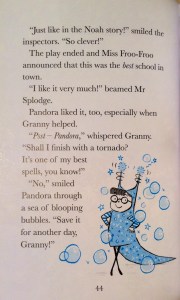
Plenty of examples of 'she beamed'

Plenty of examples of ignoring advice no.4

4. Don’t use dialogue tags that have nothing to do with talking. You cannot grin, laugh, giggle, sneer, sigh, groan, moan and talk at the same time. You can whisper, yell, shout, murmur, cry out, but only in moderation.

E.g.

“I bet you can’t climb that tree,” Jacob sneered.
“Oh yes I can,” Marina chuckled. “Watch me.”
“You’ll hurt yourself,” Jacob cautioned. “Girls can’t climb.”
“Don’t be silly,” Marina sighed. “You’ve seen me do it a hundred times.”

Now this is the advice I have the biggest problem with. I hear it everywhere, particularly in the writing course I’m doing at the moment. I’ve trained myself to always put the action separate. “Oh yes I can,” she said, grinning. or to use a full stop. “Oh yes I can.” She grinned at him. But since starting to write children’s fiction, I’ve discovered two things.

a) Using she said, grinning uses too many words. It makes the dialogue slow and static

b) No one else cares about this rule. Seriously. I’m reading a children’s book a day and every single one happily uses, She grinned, she giggled, she chuckled, she frowned. They even use, she hissed, when the dialogue doesn’t contain a sibilant word. (Advice says you can’t hiss ‘Granny’ because it doesn’t contain an s.)

So, here’s the rub. As a new writer, do I follow the writing advice or the examples? I have trained myself so well I actually cringe when reading ‘she sniggered’ as a dialogue tag, especially when reading out loud to my children. But they don’t care. To them it’s normal. It makes the writing flow, it adds texture, and – best of all – they understand it.

Anyone who thinks that writing for children is easy is wrong, wrong, wrong. 🙂

Have you come across this? Do you have a problem with ‘she grinned’? Do you always follow writing advice?

The Hardest Part About Becoming An Author Is Patience

My children's book

My children’s book

I chose the title for this blog post carefully. Author not writer. Becoming not being. I already consider myself a writer. What I want to be, though, is a published author. Not self-published, great as that is. I want to be able to answer the question ‘can I find your books in the library?’ with a resounding YES.

Maybe that’s silly. It should probably be enough that I’ve self published four novels, they’ve each sold a few copies (some over a hundred, which some say is the benchmark for a new author). They’ve all had good (and bad) reviews.

But it isn’t enough. I want validation. I want an agent to say, ‘you’re just what I’m looking for.’ I want to have a poster in the library and give talks to schools about my journey as a writer. I want my family to be proud. I want my daughter to know I did something other than raise babies for a decade. Not because raising babies isn’t a worthwhile job, but because I want her to know there’s a choice.

I want to write the books my daughter wants to read but can’t find in the library. I want to write books for my son that aren’t about animals and fairies, because – quite frankly – there’s a massive hole in our library where books for early-reader boys should be.

I want all that, and I want it NOW.

I tell my children that you get nothing without practice and patience. When my son is frustrated at learning to read or my daughter can’t draw as well as the YouTube video she’s watching, my response is always “you just need to practice.”

But we’re all hypocrites right? I’ve written one children’s book and I’m already looking for agents accepting submissions. Even though I know it isn’t going to pass muster.

Actually, it’s the second children’s book I’ve written. The other one has been (almost) wiped from my memory after I (arrogantly? Naively?) sent an early draft to an editor and was hurt and surprised when she told me (nicely) that it was awful.

Children’s books are hard to write. I knew that before I began the writing course I’m doing. I know it even more now. (Plus it’s really hard to find beta readers – any ideas?)

I also recognise that, more than any other genre, it’s all about the market. It’s a business. Books have to sell. Which is possibly why there is a gap in the boys’ market, although I’d say that was a catch 22. You can’t buy what isn’t available.

So I’m writing this as a public declaration of my intention to be patient. I will write at least a dozen children’s books before I approach an agent. I will practice my craft, I will continue to read a book a day. And I will try not to be hurt when my target audience (my daughter) thinks Mummy’s book is rubbish and she could write it better.

After all, practice makes perfect, right? Or at least better…

P.S. If you’re in the UK, Happy Mothering Sunday and I hope, like me, you’re in bed with your ipad writing blogs because Daddy has told the children Mother’s Day doesn’t start until 8am

How Critcal Reviews Are Making Me a Better Writer

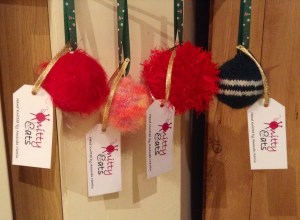
Knitted Christmas Baubles

Knitted Christmas Baubles

When I released Class Act back in the summer I think I knew it was rushed. As a self-published author, the only way I see that you can make success (rather than it coming through luck or good fortune) is by writing more books. So I took an old manuscript, gave it a few months’ polish, paid for a light edit, and released it, happy that my Beta Reader loved it.

It bombed.

Okay, one or two people have enjoyed it, but the critics have been harsh and eloquent. And fair. Much as I would have preferred not to have the debate about my book in public, through Goodreads (and thank you to the critics for not writing their reviews on Amazon), it has been like having extra Beta Readers who don’t know me and are therefore not afraid to tell it as they see it.

Some of the criticisms I can answer – they’re a matter of personal taste – but others are completely valid. For example there is a general view that Rebecca is a cow, or at least unlikeable. I have been trying to work out why that is the case, when Helen (Baby Blues) garners sympathy. While walking the dog last night the answer came to me: I didn’t live with Rebecca long enough for her to become fully herself rather than a version of me.

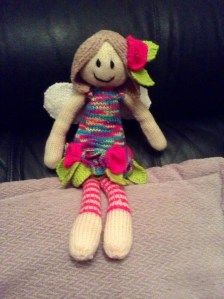
Finished Rainbow Fairy

Finished Rainbow Fairy

All my characters start out from an element of my life and my experience. With Helen it was having postnatal depression, with Claire (Two-Hundred Steps Home) it was disillusionment with the corporate world and finding myself through travelling. Rebecca started out from a few instances in my childhood when I felt belittled by people who acted like they had privilege (someone saying to me at school ‘you’re my grandmother’s secretary’s daughter’ as if that made me scum).

The difference is I lived with Claire and Helen for a long time. Baby Blues took two or three years from start to finish, Claire racked up 280,000 words. They became people in their own right. Rebecca, not so much. I wasn’t even happy with the name Rebecca, changing it several times before deciding it was as good as any. Alex I loved, Alex was real, but Rebecca remained a character.

So I have learned not to rush Finding Lucy. It isn’t just the characters who need to find her – I do too. I think that’s why I find the male protagonists easier to relate to (and therefore probably they’re more likeable to the readers) – they might start out with a trait or two from people I know, but they quickly become three-dimensional in my mind. Despite it being six years since I started drafting Finding Lucy, I still don’t have her clear as a real person in my head.

The other, more specific, piece of feedback I’m following is the review that complained about Class Act opening with Rebecca’s father dying.

“I found that when our heroine, Rebecca, is introduced, the scene is not the best way to warm up to a character. Yes, her father had just died, so she is entitled to be upset. But perhaps this is not the best way to introduce a main character, one who is completely vulnerable and who is constantly sobbing in the scene, it unfortunately had me rolling my eyes and wanting to skip ahead. Not a great start for the character. Sorry. “

Don’t apologise! This is great feedback. Finding Lucy also opens with a death. It’s where the story starts. But I see now that it’s hard to feel sympathy for a character you don’t know. So I’ve had a shuffle and now it comes a few chapters in. I’m also working hard on making Lucy more likeable. It’s hard. I’ve decided to think about Pixie Lott. Watching her on Strictly Come Dancing this year I realised she is one of the few people I can look at and say they’re genuinely adorable.

Christmas Cookies for teachers

Christmas Cookies for teachers

The problem with writing for me is balancing the character’s flaws which make for conflict with the traits that make people love them. It’s not hard to see why – I’ve never managed it with myself. I’ll always feel like a bad mother, a bad person, no matter the evidence to the contrary. To quote Pretty Woman, “The bad stuff is easier to believe”.

I haven’t managed much writing this month – Farmville, knitting and Christmas have derailed me completely. But I have invited the characters from Finding Lucy to live in my head. Edan and Andrew are there, making themselves at home and squabbling over the remote. Lucy is still dithering at the door. “Are you sure you want me?” she says. Yes, come in! Let me get to know you. This novel could be my best yet, if only I take the time for it to mature.

In the meantime, have a great Christmas/Hanukah/Festive Season and here’s to a creative 2015.

How Knitting is Like Writing

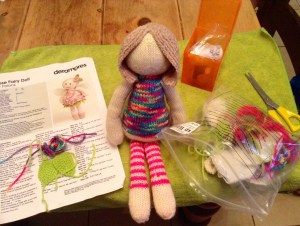
Can you tell what it is yet?

Can you tell what it is yet?

Two days in to assembling my 38-piece fairy doll puzzle, and I am beginning to see how creative endeavours are all the same. What looks like the hard part is often the easy bit, and coming up with a finished product that shines takes a lot of painstaking detail that is lost on the person who recieves the final product.

I thought following a pattern and knitting my 38 pieces of doll was the hard part. It turns out that, like childbirth, that was the easy bit. The impossible part is putting it all together so that it resembles the pattern or – failing that – at least looks a bit like a doll.

I’m learning that not all DK wool is created equal, so some of my pieces are bigger than others. I’m discovering that fluffy wool doesn’t sew all that well, and that pillow stuffing isn’t a patch on the proper stuff. Most of all, I am learning that it’s worth the effort to polish and take time to make the end product as good as it can be. Not something I’m always good at in writing.

So many people say, “I’d love to write a book,” – almost as many people as have said to me recently, “I wish I could knit.” The answer is the same for both – anyone can. I only started knitting in August but, through passion, practice and a willing audience cheering me on, I’m now creating something I can be proud of. The same goes for writing.

I started my first novel six years ago and now I’m writing my fifth. And in that time I’ve learned that it isn’t the rush rush bit of making the raw materials that makes you a writer, it’s being prepared to take time putting it all together. Slowly, carefully, with consideration and a willingness to pull bits apart. Actually I haven’t got there with my knitting! I should have redone the hair piece and the wings, but it takes me so long to knit something I haven’t the willpower to pull it down again. But with my writing I do – that’s what five years has taught me.

Next time I watch my very talented mum pulling down a piece of knitting that would have taken me a week, because she didn’t like it, or the wool was wrong, or there was a mistake, I won’t wince. I will just think – there is someone who is such a master of their craft, they know what it takes to create a masterpiece. In the mean time, I’m still practicing, learning. And, more importantly, having fun.

Write Every Day. Seriously

Chatter Boy

Chatter Boy

I hate it when advice turns out to be spot on.

When you start writing, the advice you are always given is ‘write every day’. I’ve managed to skirt around it for the last five years, with the excuse that I have young children (apart from last year, when I took writing every day to a new extreme).

And, to be fair, for a long time I survived on writing only on a couple of days a week. But what I did in between didn’t seem to clutter my brain, and I managed to sustain my story in my head.

Now the children are older, my mind is constantly filled with someone else’s words. Even now as I write this my daughter is showing me photos, videos, making up poems and asking questions. She knows I’m working – this is her ‘not interrupting’.

No wonder when I have sat down to write recently, I’ve been more caught up in whether the children have finished their homework or what’s for tea than why Edan hates his dad.

Yesterday I was full of cold so hubbie gallantly volunteered to have our youngest while I went to bed (there are some advantages to having hubbie at home). It threw me completely, because usually I work Monday, Wednesday and Friday and have my son home the other days. Even though I slept most of the day and did very little writing, I had a break from the endless chatter and need to listen to words other than the ones in my head. (They are my children after all – they have so many words!)

As a result of the extra child-free day I thought today must be Tuesday. Realising it was a work way was marvellous. I got so much done. I wrote several scenes and rearranged a few more. I stopped trying to over-think my plot while the kids watched Dora, and just wrote some stuff down. I remembered that I know how to write.

I used to have my nursery days together, two days mid-week. I think I would need to do that again if I am going to finish this darn book (I can’t though because the nursery don’t have space.) Thankfully, the darlings will both be at school from next September. Even though that will mean double the homework, ironing and paperwork, it will also mean five glorious consecutive mornings of writing time.

Bring it on.

My Brain Hates Me

This is my brain

This is my brain

My brain hates me.

Ever since I started back writing after the summer holidays, when I sit at my laptop and stare at the shambles that is my current work in progress, my brain shrugs and says, “nah, I got nothing.”

But 4 a.m. after a crazy day of laundry, school runs, home work sessions and Rainbows drop offs, it comes up with the most Technicolor, conflict-laden, heart-wrenching epic dreams.

Take last night: My dream included a man chasing me through a hotel, where the darn door locks wouldn’t work and I had to climb out the window, only to discover some pots by Tibetan Monks being sold as tourist junk, inscribed with, ‘free my people’ and ‘I live on one cup of rice every fourteen days’ (?!), and a journalist insisted on taking photos of me holding them in awkward poses, while in the background two people were uncovering a dead infant beneath the foundations of the hotel.

I mean, WTF? In the day time, I can’t decide if one of my lead characters in Finding Lucy is gay, but I can construct some warped version of an NCIS program in my sleep? Where’s the fairness in that?

I can only assume that my creativity is buried beneath Christmas shopping, school paperwork, reading homework, ironing, shopping, cooking and concern that hubbie is still between jobs, and it only manages to free itself from the shackles when my conscious brain is out for the count. I’m going to have to stop eating chocolate and reading Harry Potter at bedtime!

Oh for a virtual iPad to record my dreams, then I really would Be A Bestseller (I sent my entry in last week and now wait in terror for Friday, just in case by some scary freak accident I get selected and have to appear on TV!)

I Want to Be a Bestseller, Oh Yes (Oh No)

The judges don't look at all scary

The judges don’t look at all scary

This week I’ve been working on a competition entry, flagged up to me by fellow blogger and authors Pat Elliott and Helen Yendall.

The UK based competition is being run by ITV This Morning and Curtis Brown (an agency I’ve submitted to in the past). The entry has to be the first 3,000 words of a work in progress (I wonder how many NaNo first drafts will be entered) together with a one-page synopsis.

As my WIP has three POV characters, back story, tarot mysteries and hidden secrets, I found it almost impossible to write a coherent one-page synopsis. I’m also reliably informed that having three POV characters in the first four chapters is pretty confusing, so I don’t expect to go far.

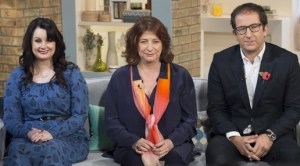
And actually that’s fine with me, because even though one of the judges is my idol Marian Keyes, and the prize includes a six month writing course and representation by Curtis Brown, the idea of being shortlisted leaves me quivering like a cowardly jelly.

Why?

No desire to sit on these sofas!

No desire to sit on these sofas!

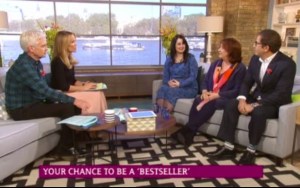
Because the five finalists have to go to London in a couple of weeks and appear on live TV. I think they might even have to read out some of their novel. I genuinely can’t imagine anything worse. Even meeting Marian doesn’t tempt me. I couldn’t get a book signed by Joanne Harris, even though I love her novels, because I was too embarrassed.

Shy, introvert, HSP, anxiety, whatever my affliction is, meeting new people terrifies me.

So, I’ve entered, I’ve worked hard on my entry and I’m reasonably pleased with it. But don’t wish me luck because I’m not sure I want it! Thankfully, having watched the launch program, I don’t think I’m in any danger of having to sit on that couch!

Oh for the days when writers sat in their drafty garrets and spurned the public!

Learning Characterisation from Humans Of New York

HONY Facebook Page

HONY Facebook Page

I’ve talked about the Humans of New York Facebook page many times before, mostly in passing. Today I wanted to discuss what an amazing resource the page is for writers.

For me, one of the hardest parts of being a writer is coming up with three-dimensional characters. When I start a first draft my characters are usually pretty vague. I know their motivation or I know the key story problem (Helen getting pregnant, Rebecca’s dislike of the upper class, Lucy’s need for a family and to fit in), but the character starts out as a hazy version of me at some earlier point in my life. They move on from that, and by the end of the first draft they become living, breathing, talkative people in my head. But I think one of the reasons I like my male characters better is because the starting point for them is more often men I know and admire or love, rather than versions of me. (There’s a lot of hubbie in Marcio!)

The problem now is that my novels are starting to have mirror scenes. I’m stuck with Finding Lucy because it starts with a death and a funeral – as does Class Act (although Finding Lucy came first.) Now, it’s unlikely many people will read both, as Class Act bombed, but I can see the reviews now. “Amanda Martin’s latest novel is dull and repetitive, with chunks lifted directly from her previous release.” Oh joy.

Similarly, the protagonists often have similar upbringings and backgrounds because I write more authentically when I can really live it (or have lived it!)

Brandon's Latest Post

Brandon’s Latest Post

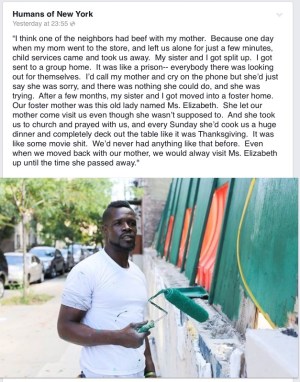
So where does HONY come in? I’ve been editing Dragon Wraiths this week for one final time before entering it in the Chicken House/Times competition, after having had the lovely lady who proofread Class Act run through it. She pointed out the bits where I lose the sense of Leah being a teen (my editor has teenage kids, which is fantastic). But she also pointed to the bits where I evoke Leah’s backstory well, when she was in foster care.

I did a lot of research online for the care scenes, and the snippet of Leah’s time on the streets. I wanted it to be realistic but not sensationalist, genuine but not too gritty. A fine line. But then I read a HONY post yesterday which gave an insight into care in one paragraph. In fact it created a whole story and three-dimensional character in a couple of hundred words. Each HONY post does.

When Brandon Stanton (the amazing man behind Humans Of New York) was on his UN tour, the stories were beyond my ability to visualise, but now he’s back in New York the wealth of material is incredible. Not just for main characters. I think one of the reasons Baby Blues resonates with people is because all the characters have stories of their own. I chose not to develop the bit-characters in Class Act, because some reviews of Baby Blues said it was crowded with people, but I’m learning you can’t please everyone!

What Brandon shows is that a person’s whole life and character can be depicted in half a page. He has a way of getting under people’s skin to their very essence. He gets them to tell the core of their life story succinctly but with feeling. I read his posts to keep me grounded in the stories of the world, but also I read them to learn from a master.

Searching For The Next Novel Idea

A book of ideas

A book of ideas

I’ve decided to park Finding Lucy for now, as I need to start writing now to get back into the swing of things and the draft needs far too much analysing to write anything more on it yet. So today I ran through my scribbled list of projects looking for inspiration. I didn’t find it, even though the list is rather long!

Current Drafts:
Finding Lucy (needs too much work)
Bonds of Love (ditto, plus has overlap characters with Finding Lucy)
Annie and Phoebe (about a Georgette Heyer novel that isn’t in public domain, so a no go for self-publishing)
Dragon Wraiths part two (don’t have the energy to pick through the hot mess of the last few chapters)
Alfie and the Arch (don’t feel qualified to write kids’ fiction at the moment)

Pencilled in Sequels
Sequel to Two Hundred Steps Home (don’t have energy to re-read the 200k original to pick up the story thread)
Sequel to Baby Blues following Ben and Sharni (isn’t grabbing me, lots of cultural research required)

Totally New Ideas
The Pudding Club (an idea that floats around every time I catch up with my old colleagues – a novel or play written just through dialogue at regular catch-ups. Bit worried my friends will try out work out which one is them or take offence.)
Dad Starts Dating (a YA about a girl whose divorced parents start new relationships – based on personal experience; I worry I would end up offending my mum!)
Colony on Jupiter (YA? – one of the dream stories I actually wrote notes on rather than immediately forgot. A bit like the TV series 100, although my idea predates watching it, but where the space station is a functioning community with shops, school etc)

So far NONE of these is remotely grabbing me. I want to write something with a bit of pace; I’d love to write a series, to help sales and because I loved spending a whole year with Claire last year, and I’d love to write something fantasy/sci fi, even though that’s considerably out my comfort zone.

But a) I worry that straying from the stye of Class Act and Baby Blues will be a mistake (although I can’t give Class Act away, so there isn’t much to break) and b) I’m really not sure I have the imagination to pull it off without plagiarising something. It’s no coincidence that my characters are loosely based on me: my biggest fear is stealing someone else’s idea/style/world. I found it happened a lot with Dragon Wraiths, whereas it was easy to imagine the settings for Class Act and Baby Blues.

I feel like when I can’t decide on a new book to read, which ironically is also a problem I’m having. I have three or four good novels half-finished on the kindle and have reverted to the failsafe of Harry Potter just to keep reading. It feels like I poured all my creativity into loombands and knitting and art in August and now I’m empty (and have RSI!)

Arrgghh. Writers out there, where do you get your ideas from when you’re stuck? How do you choose your next project? I have been working on old manuscripts for so long I’ve forgotten how to start something new, and I’ve never started something without a glimmer of an idea from a dream or a character or an idea how the story ends. Maybe it’s time to get an early night and hope I remember my dreams!