I’m on week four of my new job and just about hanging in there, juggling parenting and working.
Thankfully having teenagers in the summer holidays is mostly about making sure there is lots and lots and lots of food and driving them places. Throw in a bit of laundry, cleaning, and some body-doubling for my daughter, and that’s it. It will be more challenging when they go back to school, as they will need a lot more scaffolding.
If you haven’t come across the term scaffolding in a neurodivergent sense, it’s simplifying tasks other people find very easy, to free up spoons for the essential or more difficult tasks.
When I went to see my son’s head of year to talk about reducing his timetable, I was given a long list of all the reasons why he was thriving at school and didn’t need any accommodations: He turned up to class on time, he had all of the things he needed to learn, he remembered all the ingredients for his food tech, he was always smartly dressed. These are all things that I put scaffolding in place for, to allow him the spoons to get through the day.
He still comes home exhausted.
For an average teenager, I would be encouraging them to weigh out and label their own food tech ingredients, make sure they have ironed shirts or that their laundry has been done. I would tell them to find and polish their own shoes or put together their own PE kit. This would be ‘preparing them for adulthood’.
But the thing is, my son already knows how to do it all, but each tiny task takes spoons.
He also has his own scaffolding: multiple alarms to remind him to get up, shower, brush his teeth, and other things an allistic person might not even have to think about never mind be reminded to do. By the time he leaves for school, he’s used up so much of his capacity already, the least I can do is help.
Unlike the scaffolding on a building, this scaffolding may never come down. He may end up with an understanding partner, or he may need a housekeeper, or like me he might rely on AI (Alexa, Siri, and ChatGPT are my team.) These are accommodations for an autistic person in an allistic world.
The same is true in my new job. I have a reputation for being very organised, which always makes me laugh as someone with ADHD. What people don’t realise, but I’ve become much more open in discussing, is that the organisation is essential for me to have any idea of what I’m supposed to be doing on an hourly or daily basis.
I have links from spreadsheet to spreadsheet, I have bookmarks in sub-folders in folders. I have to-do lists and checklists and calendar reminders and even with all these things I still have to go through my notes every day to remember what I should be doing.
It is exhausting.
Like my son at the end of a school day, I have been crawling into bed early and sleeping late.
The analogy of the swan, calm on the surface and furiously paddling underneath, is a flippant image I use often. But imagine the swan is on an apparently slow-moving river with a very fast undertow: you would have no idea how exhausted the swan was just trying to stay in one place. Now imagine someone built a dam or a jetty to break the undertow.
In case it helps, here are my favourite tech/AI scaffolding tips:
Alexa shopping list
Alexa devices in every room
Calendar reminder to check Echo app shopping list
Alexa timers and reminders (particularly cooking pasta!)
Talking work problems through with ChatGPT
Smart watch linked to phone so I hear calls
Airpods to hear messages
Tile to find my phone when watch tells me it’s ringing
Alexa to find my keys to activate my tile
It’s so much easier for my husband, he just has Wife™. 😂
At one of the many many meetings I’ve had with school over the last half a dozen years, the teacher I was seeing said, “we both agree, don’t we, that the best place for a child is in school.” I was able to respond, “No, the best place for a child is in education.”
It sounds like splitting hairs, but as an English teacher he understood the importance of the distinction. He met my comment with a raised eyebrow and a wry smile. As a part of the school’s senior leadership team, he couldn’t be seen to agree that my child might get a better education away from the school building, but he couldn’t deny the truth.
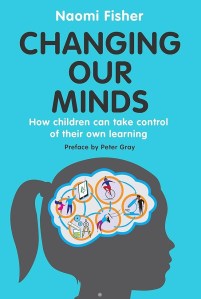
The confidence and knowledge that allowed me to make that statement, to win that skirmish in a really long fight that shouldn’t be a war, came in a large part from following Clinical Psychologist Dr Naomi Fisher, and other professionals like her, on social media.
I don’t normally willingly read non-fiction and when I do it takes time and concentration. Not this one. I got 10% through in an hour of straight hyperfocus, even with reading on my phone.
It helps that the book mentions Sudbury Valley in the US, a democratic school where my nephew and niece go, and one that I would love to have sent my children to. But, more than that, it articulates everything I’ve come to learn about school vs education.
Schools were designed for obedience, not critical thinking. They are out dated and no longer fit for purpose, not just for SEND kids like mine, but for the future of our society.
Standardised testing, where a percentage are always going to fail due to bell curve marking, is no way to prepare children for a happy or productive life. Kids aren’t robots. And the more AI enters our world, the more we need humans to be human, in all its imaginative, creative, diverse brilliance.
I wish I could follow the advice of this book, for my SEND daughter who is currently facing Year 11 with no school willing to educate her in a way she can manage. We did try home education, as regulars will know. It was sadly too late for us, for a myriad of reasons, but the knowledge and the choice are still important. For her, as much as for me. She knows that she hasn’t failed at school, school failed her.
I have also witnessed her self-directed learning. I can see for myself how it can work, how even the small opportunity she has had to experience it has given her so much hope for the future. Still, the shortest escape route for us at this point is to get her the GCSEs she needs for college in the least painful way. Which is to fight for school to see her as more than a waste of resources.
Seriously, don’t ask. 🤐
However, for any parent who just knows their child isn’t thriving in school, who has the time and energy to embrace a different way, or even just wants to learn a new perspective to the Department of Education’s indoctrination that school attendance is essential, I encourage you to read this book.
Even reading the preface and first chapter is worth 99p.
Honestly. If I could have read this four years ago, when it was written, our lives would perhaps have been far less traumatic and my daughter wouldn’t feel utterly rejected by the very place society keeps telling her she has to be to have a successful life.
But I didn’t.
So, we’ll don armour for the next battle. And share our story so maybe others won’t have to.
Allora, il mio marito è italiano (ma è cresciuto a Luton).
Purtroppo, io non capisco l’italiano. Studio, ma da solo è noioso. Ma ora la mia figlia bisognio di studiare l’italiano! E quando mia figlia vuole fare qualcosa, noi la facciamo!
Translation
So, my husband is Italian (but grew up in Luton).
Unfortunately, I don’t understand Italian. I study, but it’s boring alone. But now my daughter needs to study Italian. And when my daughter wants to do something, we do it!
Last week, my daughter decided she needed her own bit of garden.
Now, here in the UK it’s been raining for a hundred years. The ground is sodden. Outside is damp and mossy and miserable and I’d prefer to pretend it doesn’t exist until June.
But I bought her some plants and I showed her the tools. And off she went. She needed help. I was grumpy and grudging and we fell out, because all of our RSD is turned up to ten. But she persisted.
And it’s beautiful.
And it made me do a little bit more weeding and tidying, and it was even nice. Until the skies opened again.
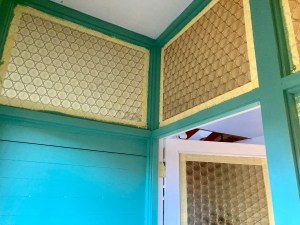
Yesterday she decided to paint the porch. I was reluctant, although I tried to be supportive. It felt like a big job and I’m poorly. We fell out. And then we bought paint, and she painted it with a bit of help. It looks great.
The same happened with the bathroom last year. She cleaned the tiles and suddenly we decided maybe we could just repaint it rather than redo the whole thing. And so I spent two weeks painting it and we re-did the floor and it’s great.
Spot the theme? She is so determined, it’s very hard to say no.
One of the common ADHD screening questions is ‘do you feel driven like by a motor’. Er, yes. And her energy pulls us along with her.
Which is fortunate, because my husband and I are overwhelmed by the immensity of renovating this neglected house and garden. So we do nothing. But we’ll do anything for our kids.
And it’s not just house stuff. I’m doing regular skin care and taking care of my hair. I do more craft. Cook more. I am caught up in her ADHD whirlwind, not always willingly, but the results are the same.
Life is more.
Which is how, despite many many attempts over the 20 years of being with someone half-Italian, I am consistently doing my Duolingo. 100 day streak. I wrote the opening paragraph with only a little bit (okay a lot!) of help from Google. I understand it, though.
The learning doesn’t come easily, my memory is awful, my pronunciation worse. I still can’t talk in Italian to my family (so embarrassing!) but it’s a start.
So, one of the things I haven’t wanted to talk about recently is my husband and his team being made redundant. It didn’t seem right to talk about it when it was so emotive and raw. Nine years is a long time to work somewhere to then find out you aren’t wanted. Aren’t needed (although we’ll choose to disagree on that). The problem with talking about it is that it’s the same place I worked, and hope to return to. And his team were friends, and they were all treated badly.
All the feels.
But in some ways, my husband leaving that job is a good thing. I’ve said for a long time that he needed a change. A break. A chance to rest and rethink. To do All. The. Things. It isn’t fair that I got to heal from burnout if he doesn’t as well.
It also means that I might be able to return to work sooner. Maybe to the same place if they’ll have me. If I’ll have them. But it feels like a betrayal to consider going back, even though it’s a big company and, stressful and spoon-depleting as it was, I appreciated being in a neurodivergent-friendly team.
But it makes me feel selfish to leave husband and daughter and hustle back to what I want to do, so that’s a not-to-talk-about-for-now.
Part of my stay-employable strategy, though, while I support my daughter, has been to improve my adobe skills and build a portfolio page. I’m doing a video-editing course with the OU, and playing with animation in Photoshop and Premiere. Not the best software for it, but it’s what I know.
What I didn’t expect was how healing it would be to review the things I’ve done, the lives I’ve lived and places I’ve been. To remember I’m more than a mum. I heartily recommend it, if you’re in a rut or need a confidence boost. In the end it was more than practice or a portfolio piece. It was an affirmation. With an irritatingly catchy bit of music 😂
I hadn’t realised how hard it was going to be, returning to regular writing now that the children are older. Now I am older.
Life at the moment is all about the difficult stuff. My weeks are not filled with visits to the farm, or getting the paddling pool out on a sunny day. School isn’t about World Book Day or cute concerts, once you have teens. Especially SEND teens.
And while there is a LOT to say about our education system, being a SEND teen, negotiating life and friendships in an interconnected world, they are not my tales to tell. I am sure my children will tell their stories in their own words one day.
It will blow you away.
So, I wait. I support, where I can. I feel the big emotions and lock them away. I have long conversations in my mind at 2am about all the things unsaid.
And, because I am me, I craft. And try to stay optimistic. Keep my sense of humour, even if no one else seems to get it. Enjoy nature. Soak in the spring sunshine. Breathe.
I’ll find a new story that I can share. Patience please.
When I went on my honeymoon, I cried. Every day. I had no idea why. I wondered if I didn’t want to be married (I did). Later, I thought I’d had a breakdown. Now, I know it was burnout.
The year I got married, I also lost my dad unexpectedly, finished my Masters dissertation (on Divorce in 18th Century Literature!), moved house – twice – and turned 30, all while working full time in a stressful job. We honeymooned at Christmas in New Zealand, a place full of conflicting memories, and that 12 months caught up with me like an avalanche.
My husband dealt with it pretty well. We’d been together two years and knew each other a bit by then, though we’d not actually lived together all that long. I knew to give him food if he got snappy. He knew not to run after me if I left our accommodation and just kept walking. I’d come back eventually.
Years later, with two young children, I would often break down when we arrived at our holiday accommodation. I would have arranged everything, so would take every disappointment personally. There’d be tears and shouting. There still are sometimes.
The difference now is there is also understanding. For all of us.
I know I get disregulated with the pressure of packing and remembering everything. My RSD kicks in if I think I didn’t choose the perfect cottage, or I forgot to pack my son’s breakfast bowl and spoon. And we get it.
When we arrive at a holiday destination, we separate to our own spaces (and accommodation is always booked to allow us LOTS of space) and we regulate. Scroll social media, drink tea, nap, unpack, have a lovely shit. 😂
And throughout the holiday, we practice low demand.
It’s hard.
Sometimes I really just want us all to go out for a meal in a nice restaurant. Or even a crappy café. But with tonnes of anxiety and ARFID, that’s never going to happen. Eating is a constant challenge and being in public is stressful. So I cater, even if that means less of a holiday for me.
*I’m pausing writing this because I’m on holiday and my daughter needs help regulating.*
Two days later…
And there, that’s exactly how we survive and even enjoy holidays. We lower our expectations and then lower them a bit further. And even if it feels like we’re giving up a bit of ourselves and a lot of what we might want to do, the result is a holiday that we can share together in our own unique way.
I have learned that the accommodation is everything. The largest expense always goes on the perfect Airbnb, because there’s a chance we might not leave it. It has to have three bedrooms rooms, hideaway spaces, a well-equipped kitchen, because I’ll be making all the food.
WiFi is paramount. We learned that the hard way, when we couldn’t even get 4G in a place and my husband spent a lot of time parked in a Supermarket car park so my daughter could communicate with friends.
The second luxury is food. An all-expenses trip to Aldi on arrival has replaced the Waitrose home delivery now the children are older. If you’re not going to restaurants, you can splurge on all the best packet food, enough that hopefully someone will find something their anxiety allows them to eat. And then food intake MUST be monitored. Disaster is often caused by hanger.
We pack as if we’re moving, even for an overnight trip. Craft, puzzles, colouring, games, gadgets. The two-night break I just had with my daughter included the glue gun (to make pipe cleaner flowers).
When they were little, it was a £50 Baker Ross order of easy craft kits. ADHD needs to be busy, but anxiety and autism get easily overwhelmed. If you can’t get entertainment on the beach or in the arcades because the anxiety-stars won’t align, then entertainment has to be available. It’s walking a tightrope, it gets easier with practice.
There are loads more little learnings, but they’re probably unique to us. The last bit that might be worth sharing is the most challenging.
Day trips.
It’s hard to book something in a low demand house. You might buy tickets you don’t use. We often do. Or we bear the ND-tax of paying on the gate, because booking ahead is too risky.
Much research goes into something we can all do. Space to roam. Not too much walking. Interaction. Flexibility. Food. Toilets. Easy parking. Weather proof (especially in wind-phobia days). The learning curve was steep.
I took my kids to our nearest seaside town when they were both under 3. It’s a two-hour drive in summer, but I grew up by the sea and wanted them to have that.
When we arrived, my daughter fell and cut her knee. I hadn’t yet learned to carry a first aid kit. We got to the beach, pebbly and very British. It turned out my son didn’t like the feeling of the sand. My daughter was scared of the moving water. I didn’t know we were all neurodivergent, but I knew we needed a different plan.
And there was Sealife.
My first visit. It was perfect. Pushchair friendly. Doors sealed so children could roam safely. Interesting, but not sensory overwhelming. Animals, fishes, stickers. A playground (which is sadly now gone, I noticed yesterday). A café. Even a lovely member of staff who agreed to plaster my daughter’s knee.
We were there for hours. And Sealife is a firm favourite in our lives. My daughter and I went yesterday, 12 years later, and the magic was the same.
Places like Sealife, where the children know what to expect, are a lifesaver for us. We have a few – Woburn Safari Park, Warwick Castle, the different Sealife centres – where we know we can survive. We might only stay a short time. One parent might need to sit in the car to regulate. We might divide and conquer. But it works.
The other thing about our holidays is making sure I know everyone’s ‘Must Haves’ list. My son’s ‘must haves’ are the amusement arcade, preferably every day to earn tickets for a prize, and mini golf. My daughter needs to shop for souvenirs and to watch a sunset. I need to have walked along the shore and to have a daily proper coffee. My husband is happy to do anything as long as he can have a lie in and some downtime. Once we’ve ticked all of those, we’ve had a holiday, even if we have to leave early because we’re all out of spoons. But don’t tick one? Not good.
I used to think holidaying with my wonderful neurodivergent family meant I was missing out. I’d see friends’ vacation photos and envy the museums and restaurants and theatre visits, when mine were of shingle beaches and captive penguins. They go on trips abroad to Paris or Disneyland or – now the kids are older – skiing and safari. Things we will never do as a family.
But not things I have never done. As a lone traveler I have seen so many amazing places, and hope to again. But this time in my life is not about me. And that’s okay.
I take my moments. Sitting up late painting while everyone is plugged in watching YouTube. Early mornings on the beach watching the sun rise. Or walking in the freezing rain, as I did this morning while my daughter packed. I could sneak out, because she was regulated. And then I was ready to do what she wanted, which turned out to be come home. And that was okay.
My last little observation is that, actually, those Facebook photos are important. I used to feel disingenuous, posting smiling photos of sunny beaches, when that might have been the one light moment of a difficult day. But my social media feed isn’t to show off to others, it’s my journal. In a year, two, five, Facebook will remind me, and I will smile. I’ll barely remember the hardships, I’ll just recall that I was with my family and there were glimmers of joy.
I’m reposting this from ten (!) years ago as I stumbled across it today and realised that a) it’s still relevant and b) I still need to work on listening and not interrupting/fixing 😂
A potentially life-changing book
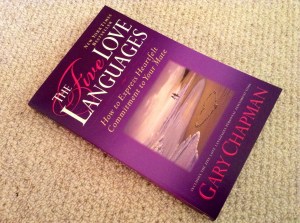
I started reading a (for me) life-changing book, yesterday, which I wish I’d read years ago, called The Five Love Languages by Gary Chapman. I haven’t finished reading it, so I won’t write too much about it here, but the basic premise is that we all speak one of five love languages and for us to maintain healthy relationships (be it parenting or marriage) we have to understand the other person’s language and learn to speak it.
The languages are Words of Affirmation, Quality Time, Receiving Gifts, Acts of Service and Physical Touch. (If you want to learn more before I finish reading the book, visit www.fivelovelanguages.com).
Rather like Valerie Alexander’s Happiness as a Second Language, it teaches hope, as it reassures that we can all learn these unknown languages, whatever our upbringing. I grew up in a house where happiness wasn’t really spoken and, equally, love wasn’t an open dialogue either. I’m slowly learning to speak these foreign tongues, and having phrasebooks is essential.
The part of the book that sparked today’s blog post came during the discussion of the love language Quality Time. The author speaks of each language having different dialects. For example, Words of Affirmation can include ‘verbal compliments’ or ‘encouraging words’ or ‘kind words’. Quality Time is about giving full attention to another person but this can include ‘quality conversation’ or ‘quality activities’.
On p.67 Chapman explains how hard it is for people to listen, particularly when a loved one wants to rant about a problem at work or similar. He says, “[w]e are trained to analyze problems and create solutions. We forget that marriage is a relationship, not a project to be completed or a problem to solve.”
This was particularly relevant for me yesterday as hubbie came home from work frustrated after having had to work on his personal development plan all day. Admitting there were things he wasn’t good as was hard. Instead of listening sympathetically, “with a view to understanding the other person’s thoughts, feelings, and desires,” I tried to fix the issue. And when he wouldn’t accept my brilliant advice I got angry. Crazy.
Chapman has some great (well worn) advice on listening attentively, but it was point five (p68) that grabbed me.
“Refuse to Interrupt. Recent research has indicated that the average individual listens for only seventeen seconds before interrupting and interjecting his own ideas.”
Oh my goodness, yes, guilty as charged. Interrupting is one of my greatest flaws and I hate myself every time I realise I’ve done it. Even when I’m interrupting to agree, to share an anecdote to say ‘me too!’ or to offer words of sympathy, I am still interrupting. I’m even worse with the children, because for the past five years I’ve had to interpret what they’re trying to say. Now, when they’re capable of explaining it themselves, I still do it and it drives them bonkers, especially the youngest one.
My head fills with words and it’s like I can’t actually carry on listening because my need to speak fills my mind and my words are too precious to waste. How arrogant. When the children interrupt me and I stop them, they often cry and say “I’ve forgotten what I wanted to say now”. My response is usually, “if it was important it will come back to you” but I know from experience that isn’t true. For me, words not said or written down are lost forever (especially the blog posts or character scenes I write in my head at 2am and don’t capture because I don’t want to wake everyone up by getting out of bed.)
I’ve been known to lose track of whole conversations with other people because of the nagging sensation that I was about to say something brilliant. Maybe it’s time to let that go and trust that the words, if important enough, will come back eventually.
Thinking about all this at 5am this morning I realised that is why people love blogging so much and why I love reading posts that other people write. You cannot interrupt. I can write all the way to the end of a thought, or read all the way through to the end of someone else’s explanation, discussion or revelation, without interruption. In a world where we are all so eager to speak, blogging teaches us to listen and allows us to be heard. I hit the like button (where there is one, and I hate it when there isn’t) when I get all the way to the end of a blog post, as if to say “I have listened”.
I also realised that, by reading all the way to the end of a post without interrupting, I often don’t have anything to say. There is nothing to fix, no need for shared anecdotes. The writer has often answered their own question or revealed that actually their situation isn’t exactly like that time when I … at all.
So, my mission is to learn to listen, to learn to let my words go so that I can hear the words of others. How can I write stories if I won’t ever listen to them?
And I’m also going to try really really hard not to beat myself up about past failures. My favourite quote so far in Chapman’s book is “I am amazed how many individuals mess up every new day with yesterday. They insist on bringing into today the failures of yesterday and in so doing, they pollute a potentially wonderful day.” (p47) The sun is shining outside, the children are happy and the husband is smiling. Who would want to pollute this day?
Turns out, when an AuADHD adult tries to homeschool an AuADHD child, what you get is chaos. Creative, messy, fun, imaginative, spoon-depleting, stress-inducing, brain-exhausting chaos.
When the kids were little, they moved from activity to activity at lightning speed.
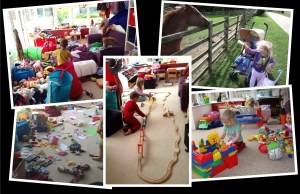
With the first child, I had a 25-labeled-box wall unit, and all activities went away. The farm, train, blocks, playdoh, paints, dolls, craft. I spent more time setting up and packing away than we did playing. But when you have a messy brain, you need a calm environment. Tricky, when you also have zero executive functioning skills.
Once there were two of them, only 19 months apart, I settled for containing it in one part of the house and ignoring it.
Thankfully, we escaped the house every day. To the Farm, the zoo, the supermarket, the park. Anywhere, to entertain without mess. I used to call Farm trips ‘Farm Calm’. A clean(ish), pushchair-friendly outside space, with endless variety, in a predictable, safe environment. With food and changing facilities and easy parking. One year we visited over 60 times. Value for money on an annual pass that paid for itself after four trips! We knew all staff and animals by name.
ADHD Parenting
These days, our day trips are to Aldi and Primark, and sadly they don’t do passes. I might buy shares.
At home, chaos reigns once more. And now there are two brains that get disregulated by mess, but need to do All. The. Things.
My current projects include decorating, crochet, sewing, fitness, video editing, writing, reading, lesson planning and feeding everyone.
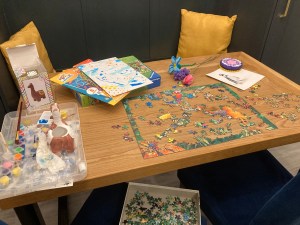
The daughter has rediscovered craft (which heals my heart) and lego and jigsaws and origami and painting and the glue gun. At Aldi yesterday, we bought stickers and colouring books and puzzle kits. Because, tiring as it is to keep up, I want to feed the embers of the girl I once knew, coming back to life.
It’s hard.
There’s little down time, particularly as my creative side is also seeking fulfilment, now there are no LinkedIn campaigns or PowerPoint presentations to fuel it. I might even start another novel. If I can herd the excitable puppies racing round my brain all into one place. I wake at 5am to get some time alone to drink coffee and process in silence. She’s often up by 6am.
With it all, what I’ve realised most is that healing has to come before homeschooling.
School lacks the creative stimulation for an ADHD brain. There’s little-to-no dopamine for a child who doesn’t want to dance or play an instrument. By GCSE, there’s no art or DT or cooking. If you can’t turn it into an exam, a career, it’s deemed worthless. But if you have no energy left at the end of a day to do those things, then what is left?
And she’s so worried about falling behind. I keep saying, behind where? Who set these goal posts? Even if she does return to full time school at Easter (and I doubt it), GCSEs are modular. She can catch up enough to pass five, and that’s all she needs to do. If that.
Education systems, teachers, the government, parents, they all love to convince kids that their whole futures depend on getting excellent GCSEs.
It’s such rubbish.
For a start, thanks to Bell Curve marking, a percentage will always do worse than they deserve. A child could give the exact same answers two years in a row and achieve different grades. The system is so flawed.
And who says GCSEs need be done now?
She has her whole life to get qualifications, but if she destroys her passion for life, what’s the point?
Obviously it’s easier, cheaper, if she takes them next year. I’m still aiming for those five. I’ll still plan lessons each week, and weep at my inadequacy to even understand half the topics, never mind teach them. But if there’s more lego than lesson? If we spend two hours making origami hearts, or even two hours in Primark (sigh), then so be it.
I have my daughter back. I’m getting myself back. I’m just not getting a lot of rest.
Pass the coffee. Black, no sugar, strong as you like. 😂
I’ve written a lot before about depression, and shared the excellent article I read about passive suicidal ideation and looking for things to keep you afloat. Rereading some of those articles today made me realise that January is always a really hard time. But this year has been different, because it’s been winter blues mixed with grief, hopelessness mingled with determined optimism.
Mostly what has been new for me in the last few weeks, some of the worst I’ve had recently, is how dangerous RSD makes it all.
There are some powerful videos circulating at the moment around men’s mental health, and the importance of reaching out. I find them hard, because I think they ask the impossible.
Whether it’s presenting the grieving family left behind, or the close friend that didn’t see the signs, for me they all add up to guilt. Guilt that perhaps people I know have struggled as much as I have in the last six weeks, and I haven’t been there when they sought support. Or guilt about the impact depression has on loved ones, when sometimes it’s the pressure of being so needed that suffocates me. Or just guilt that my family suffer as much as I do but I get lost in my own pain.
But the impossible part is the reaching out. Because RSD is great at perceiving rejection, even if it isn’t there.
So when my messages go unanswered, or my desperation is met with solid advice rather than concern, I take it as rejection. I figure I’m just being annoying. I imagine everyone rolling their eyes at yet another text, I can picture them picking up their phone at the notification, sighing and putting it down again. And so the loneliness intensifies.
Thankfully for me there are at least three voices in my head at all times. So the one telling me I’m invisible, unloved, pointless, is shouted down by the one that recognises the extreme reaction of RSD, and another that reasonably reminds me that people have lives. They have their own struggles. It’s not for them to save me. I save me.
But it is still lonely.
And I worry about the people that don’t have the balancing voices in their brains. I worry about people I care about being in the same place and me not noticing.
Someone once told me they didn’t realise I was drowning because I was still joking about it. Remember Robin Williams? Levity is a coping mechanism as much as drugs or alcohol.
So how can we notice? How can we be sure no one around us is drowning? I don’t know that we can, really. We can only encourage people to talk, ensure they’re able to be vulnerable without judgment. Listen without fixing. Yeah, I am crap at that one most of all.
I want to give everyone a code word that says ‘this silly cat meme is actually me reaching out before I slip under’.
If anyone I know is reading this, the code word is ‘coffee?’ 🥲
It’s ironic that the person who has been there time and again for me with the life belt is my daughter. The one I am meant to be pulling into the lifeboat. The one it’s my job to save.
It’s been nearly a month since I left work to care for my daughter, and I can finally feel the burnout fade. Like a cold you didn’t realise you had until you can actually breathe, I don’t think I understood just how depleted I was.
I was aware of the lack of spoons, the poor sleep, the zero energy. But I hadn’t appreciated just how much my job consumed me inside, like a smouldering fire.
My daughter said the other day how happy she was that we were friends again, now that difficult colleagues weren’t stealing my energy. That hurt, I’ll be honest, because it’s true. I don’t have barriers, so negative people can and do bleed me dry.
The other difference, now that I’m not problem-solving all day, is that there’s room for creativity at home.
So many projects.
All at once, because ADHD.
I’ve decorated the bathroom, painted Christmas cards, made lego, moved furniture, baked.
And now I’m restless, so very restless. Because projects need to have purpose (my worth is defined by productivity, payment and praise remember!) I can’t just create for the sake of it, there’s not enough dopamine in that. It needs to be for something or someone.
So, apologies friends if you have a birthday coming up, because you just know something painted, knitted or crocheted is coming your way.






 writermummy