Pinteresting

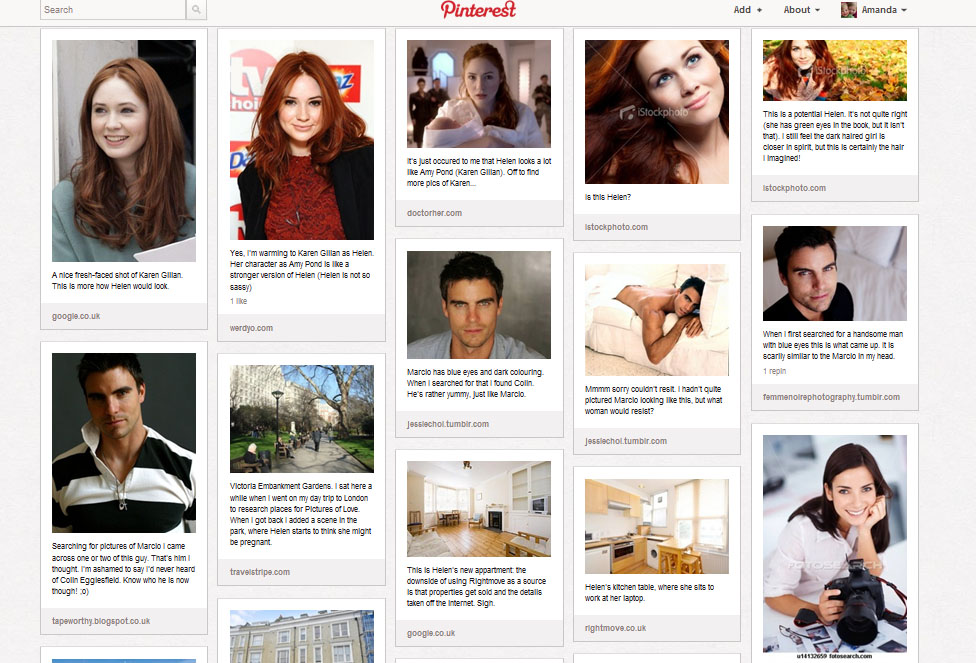
Amanda Martin's Pinterest board for Pictures of LoveI’m always late.

I was late getting the kids to nursery this morning. We were late to a Christening yesterday, although, thankfully, so were the baby’s parents. I am always sliding into the chair at the doctors or the dentist hoping that they, too, are running late.

The thing I am usually proud of being late for is getting on a band wagon.

Who wants to jump on a band-wagon too quickly? 

Sometimes it’s because it’s a band wagon and I don’t want to climb on until rush hour has past and it’s a bit less noisy and smelly : I didn’t read any Harry Potter until the third book was out. I only saw Avatar last month and I’m resisting the urge to see what all the fuss is about with Fifty Shades of Grey.

Sometimes I’m late on a band wagon because I’m stupid. I don’t think something will work for me or I don’t see the point. Like Twitter and Pinterest. Now I’m still there with Twitter: I have an account and tweet occasionally (see, I know the terminology, just about) but I can’t get into it. I think maybe you need to be able to see it all the time on your phone or computer to make sense of it. My technology isn’t there yet. It leaves me feeling like the person arriving late at a party, who comes in mid-conversation and doesn’t understand the punch-line to a joke because they didn’t hear the beginning.

Pinterest though, now that’s a different matter. I originally dismissed Pinterest as not useful or relevant to me, although I enjoyed seeing my friends’ posts; links to lovely crafty things that I might have the time one day to do with my children. I hope. Then I read an article, sent to me by LinkedIn, about how photographs can help people engage with your brand. I don’t have a brand, but I am about to self-publish my first novel. So I thought I’d better see what Pinterest was all about.

And oh my how much do I love it?

I love photos anyway, photography being a former attempted-career. And I have always had scrapbooks for my novels (usually on my laptop but sometimes actual physical cut and paste ones.) For my first novel, Finding Lucy (currently unfinished because I inconveniently went into labour before completing the first draft) I have a giant scrapbook of pictures of the main characters, taken from stock photo sites. There are also biographies, timelines, star signs, pictures of their houses including floor plans for ease of writing scenes. It is my treasured possession.

I haven’t done a scrapbook for Pictures of Love, my current WIP, because if I get scissors or selotape out now, the kids are on me like ants on jam. So I have a file on my computer, full of photographs I took when I went to London to visit my locations in Fleet St, Earl’s Court and so on, as well as headshots of people I have found that look like my characters do in my head.

And now I can pin all those pictures in one place and carry it around with me anywhere I can get internet access. I can share it with my friends, show my beta readers what I think my characters look like and see if they agree.

I can put pictures on a site without worrying about copyright, as everything is sourced. [Update: it turns out this isn’t enough to stop you worrying about copyright. Since writing this post I have deleted most of the content from my Pinterest boards for fear of infringing someone’s copyright. I may be over-reacting, but better to be safe than sorry. You can read about someone who has learned this the hard way here and here (comment #76).]

And because everything is sourced I erase another problem – file location. For some of the images in my scrapbooks I wasn’t organised enough to keep internet URLs.

Idiot.

I have spent the last two days trying to track down all the images online (sorry family). And thankfully I have found most of them. My husband is not so lucky. I designed a fab (if I say so myself) front cover for his children’s novel Max and Shady, and got a copy printed for Christmas a couple of years ago. Only now he wants to publish it online and we can’t use the cover because we can’t find the image in order to purchase usage rights.

So Pinterest I thank you: for keeping me in tune with the zeitgeist, for giving me something fun to do while watching Euro 2012 (not that I need to worry about that so much now) and most of all for keeping me organised.

If you want to check out my Pinterest boards, to see what my sexy leading men (and women) look like, you can find them here.

Have you used Pinterest to plan out your novels or create your universes? How has it worked for you?
Beta Readers

Apologies for my silence, to those of you who are kind enough to follow my novel writing exploits. As well as drying out my soggy soul in sunny Italy for a few days, I have spent weeks immersed in major editing of my WIP Pictures of Love.

It seems the nearer I get to pressing save on my final draft, before sending it to my lovely beta readers, the more I feel compelled to rewrite the whole bloomin’ thing from the first page.

I understand the need for my novel to be the best it can be before going out into the world at large. But how polished does it need to be for beta readers? I mean, what if I spend hours filling in all the extra bits of back-story for a secondary character only to be told she adds nothing to the plot?

Or – my biggest fear, certainly in my academic days – what if I remove something, only to have someone suggest it’s exactly the thing that is missing for them? Do I take out the long words – as has been suggested – when I know most of my readers will understand and expect them? Most importantly, do I take out the sex?

I have one sex scene, right at the beginning, to show my main character’s relationship is based only on lust. There is no more sex after that, well none shown explicitly. What if I set the expectation that it’s an erotic novel when it’s nothing of the sort?

Sigh.

I knew writing novels was going to be hard but, like parenting, it’s hard in all different places to the ones I expected.

Making the goal visible: Self-Publishing, Book Covers and the Blurb

Proposed book cover for my WIP

I’ve read a few blogs recently on the topics of self-publishing, designing your own book cover and writing your book blurb.

It got me thinking.

Maybe what I need, to help me get to the end of my final revisions, is a nice visual goal. So I’ve wasted several days of precious writing time pulling together a book cover for either paper print or e-book publishing.

 I haven’t actually decided yet whether I am going to go down the self-publishing route or continue with the plan of applying to agents. I admit I still tend towards the latter, for two very important reasons.

1. I cannot afford to hire a professional editor, and I am terrified of publishing something full of grammatical or typing errors.

2. I am rubbish at self-promotion. I have set up various ventures in the past, all of which required me to sell my talents, and I know already that I’d rather pull out my own teeth.

I could add a third barrier, but it is one that should be surmountable, if I can get enough enthusiasm to do it, and that is the need to fill the gaping hole in my knowledge about social media. From everything I have read, promoting your book on social media sites and building up a following are both essential if you want to sell your book to more than family and friends. I can just about negotiate my way around Facebook, but even that is a challenge. I’m far too young to be such a Luddite, but there you are. I need the kids to grow a bit, so they can teach their old mum a few tricks!

I cannot describe how many hours it took me to find a photograph that encapsulated what I wanted to say about my novel. I wanted to catch the eye, to make sense of the title, but not give anything away about the plot. (I hate spoilers.) And I wanted to be able to afford it. The first image I fell in love with was about £80 for the size I needed, in case I have it printed. This one, thankfully, was considerably less. Thank you www.dreamstime.com

If you are interested in creating your own book cover, Keri Peardon has some very useful lessons on her blog: http://keripeardon.wordpress.com/2012/05/17/how-to-make-your-own-book-cover-lesson-5/. I use Photoshop Elements (currently on a free 30-day trial which would be plenty for getting your book cover done).

As for the blurb, I’m sure I will do a few more re-writes before I’m happy. It’s not an easy thing, getting someone interested in your story without giving any key plot points away (did I mention, I hate spoilers?) 

There has been an interesting discussion on blurb agony over on Keri Peardon’s fab blog. Definitely worth a look.

Anyway, diversionary activity over, time to get back to editing, with my lovely new book cover to inspire me (if I can just resist the urge to tweak the colours, layout, font, text, images….)

Other great links:

http://keripeardon.wordpress.com/2012/05/31/7-reasons-why-e-books-are-great/

http://catherineryanhoward.com/self-printing-home/self-printing-posts/ (Catherine is currently offering her book on self-publishing – The Best of Catherine – Caffeinatedfree on www.amazon.co.uk. Go check it out.)

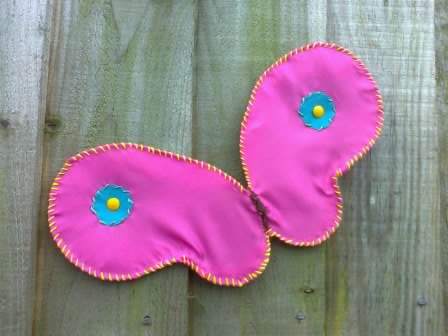
Making Butterflies

Today I made butterflies.

It seemed the only productive thing to do, and they look pretty.

Sometimes when my brain is full or aching or lost I find it soothing to sew things. I am rubbish at sewing, but I like having my hands busy and my mind blank. Well, never blank, but drifting, if you know what I mean.

I seem to have reached a crisis point in my life; a quiet creeping sort of crisis that has fallen on me like fog, rather than crashing into my life like a runaway train in a disaster movie as my crises normally do. It is a fog with all sorts of horrible things lurking in it. I hate horror.

All the things I have struggled with my whole life seem to have come crunching together this week. My lack of confidence and self-belief have crunched against my delusional confident sense of self. A see-saw of I’m a crap writer, I can write, I’m a crap writer, I can write. Alongside that, my lazy self is yelling at my hardworking persona. My lazy self says It’s good enough, just move on. My hardworking persona says; you know that’s rubbish. The whole thing needs tearing apart and putting back together again. My Mummy self says, give it up and focus on the children. My working self says; you gotta earn some cash.  My sensible self says, well you aint going to do that writing, which prompts the realistic voice to pipe up; best get a proper job if money is what you want.

In the end I arrive at the same point I have reached many times in my life. I want someone else to tell me what to do. So I read some blogs, some books, a load of web pages. I read the helpful feedback on my blog and on other blogs.

And then I go slightly crazy.

They say being a writer is a lonely business, but once you tentatively reach out to the internet, there are a million voices, all offering advice. I started listening to those voices sometime last week, and now my ears are ringing worse than tinnitus.

So I asked myself, what do I want? And here are my answers, in the order they came to me:

1. I want to make money

2. I want positive feedback from my endeavours

3. I want to write

Now even in my delusional state I know that those three things are in the wrong order, and actually the middle one shouldn’t be there at all.

I know that the only way to write anything worth reading is to do it because you are passionate about it, not for financial gain.

I know that if you rely on glowing reviews to give you confidence you are destined to be miserable forever.

I know that very very few people make a living out of writing.

I know all those things as facts, but I cannot change the way I feel. I cannot still the voice that wants those three things. And because those three things are, essentially, mutually exclusive, I am frozen.

Do I go back to attempting to write Mills & Boon, as the way most likely to provide an income, if I can hit upon the style of writing they are happy with?

Do I sign up to a course, such as the HTRYN that has been recommended to me, to beat my current WIP into shape, fixing all the things I know that are wrong with it, such as lack of a decent main character (It needs  lots of work to be the novel I know it can be)?

Do I tidy my novel up around the edges and keep sending it out to agents, hoping to get lucky because, hey, I’ve read a lot worse?

Or do I pack it all in for another year, as I did when my son was born, and focus instead on being the Mummy I should be, rather than the Writer I want to be?

I have no answers.

In the meantime, I will keep making butterflies. At least the kids agreed, when they got home, that they are pretty.

Maybe I’m not lazy after all

Edit Ruthlessly

I think I’ve discovered my problem with editing. I always thought I was just lazy, each time I found myself resisting the necessary process of honing and polishing my work. After all, serious writers spend months and years editing and I can hardly bring myself to do a few days before I’m ready to start writing a new novel from scratch. I’m clearly not a serious writer, just a housewife with delusions.

But maybe it isn’t that at all (well, perhaps the delusions bit is true).

I think the problem is to do with visible progress.

When you write a first draft you can watch the word count growing, the number of chapters increasing. Characters develop and do crazy things, taking your carefully crafted outline in a new and unexpected direction. It creates a buzz, fills you with euphoria. It’s like going for a run, when everything is working properly and you feel like you could fly if only you knew how.

With editing there is no way to track progress. Word count, if anything, goes down. Chapters need to be moved, re-numbered, scrapped. And who’s to say the chapter you’ve just spent three hours rewriting is actually any better? It’s more akin to doing housework: five hours’ of effort and what is there to show for it, particularly after the kids have been home five minutes.

I get confused, too, with what I’m actually doing. Am I checking for readability? Grammar? Continuity errors? If I’ve spotted a character gap do I go fix that, trying to find the right place to add in extra scenes or sentences that will make the character work, or do I stick with my linear progression through the novel?

I’m not the most organised person and I find it hard keeping track of what needs changing, particularly when I only work on it two days a week, with two or three days of childcare in between. (There’s nothing like 57 verses of Wheels on the Bus to dam your creative flow.)

I could do with a tool that magically highlights everything written about one character in green, another in red. All adverbs could be in blue, all passive tense in orange. Clichés could be highlighted in flashing letters so you can pick them off one by one. Even better would be a tool that says ‘This bit’s great, this bit is pants, re-write it.’ (I know, now I’m just being silly.)

Thinking about it seriously though, there are probably thousands of writing programmes out that that might make me more organised. Maybe I should look for one. Or is that just another form of procrastination (like starting a new novel or short story) to take me away from the unavoidable hard slog of editing? I think I probably know the answer.

Still, if anyone knows of super-organising software that won’t kill my netbook, I’d love to hear about it.

P.S. Since writing this post (while out walking the dog, as usual) I have downloaded the free trial of Scrivener, which I have been meaning to do since completing Nanowrimo last November. So far I’m half an hour in to the two-hour tutorial and it does look as if it might be helpful, if only I can figure how to use it!

Anyone used it before?

Writer’s Block

Chick Lit

It’s amazing how the act of trying to think up a brilliant idea can bring on Writer’s Block. Normally I don’t suffer from anything like writer’s blankness, only writer’s fatigue. You know, when even you are a bit sick of your characters and the woes that continually befall them.

I’ve never opened my laptop on a writing day and failed to write five hundred words, even if the quality of said words means they’ll be on the cutting room floor at some point in the future. (Or not, as is too often the case. I’m a terrible editor.) Today, though, after finally locating dry wellies for the children and packing them off to nursery, grateful to finally be writing after missing Monday due to the bank holiday, I came up against the wall of the blank word document.

I was sat in a car park, waiting for someone I was due to have a meeting with, and I tried to at least freewrite about my surroundings. Describe the wind through the trees or the wall surrounding the car park. I managed a painful two hundred words before giving up in disgust.

The thing is, I know the cause. It comes from my desire to enter the Bridport prize.

Suddenly I’m back to the person I was four years ago, before I discovered freewriting with the OU, before I was introduced to Nanowrimo, before I was given permission to just write, without peering over my own shoulder critiquing every word that appears on the page. Because, of course, just writing isn’t going to be enough for a Bridport entry. It needs to be a moving or clever story with compelling characters and amazing momentum. The kind of story that lingers long after you’ve finished it, that hovers round your mind and raises new thoughts, new questions.

I don’t even know where to start.

Chick Lit, now, that’s easy. It’s genre writing; there’s always somewhere to start. But coming up with something original, something unique enough to get through round after round of vetting? I’ve as much chance learning how to fly. I’m not even sure I can write good chick lit because I’ve only sent my novel to one agent so far, and I know that my synopsis doesn’t do the novel justice.

I think it is time to focus, stop faffing, concentrate on what I can do, and put dreams of £5000 prize funds and fame and glory away for another year.

Besides I have a synopsis to write.

Reach for the prize

Cover of "Notes From An Exhibition"

Every year about this time I start thinking about writing competitions. More specifically the Bridport Prize.  I did the same when I was painting. The theory goes something like this: enter prestigious competition, win competition (or get shortlisted at least) and therefore have something to talk about in query letters when trying to sell my other work.

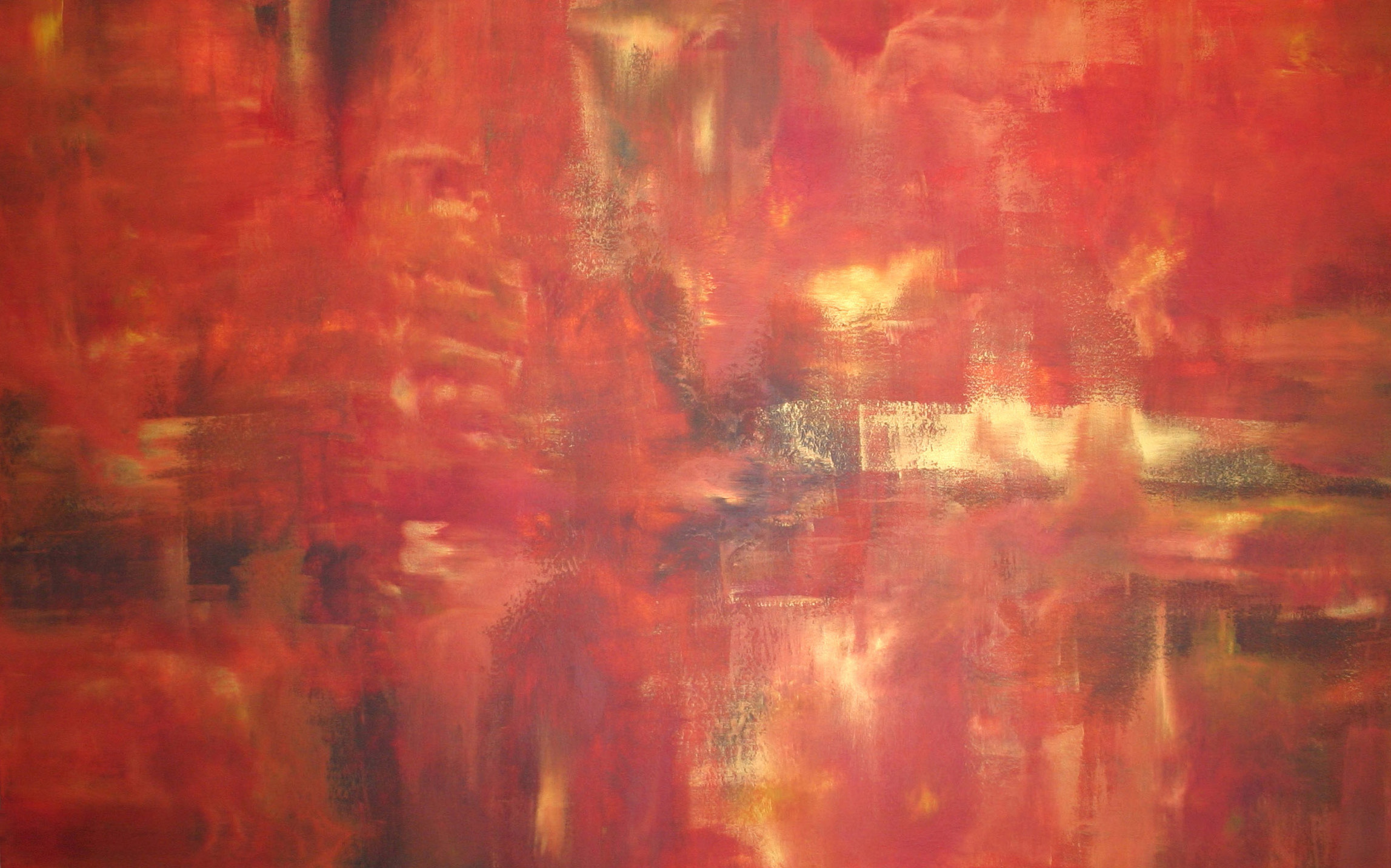
I never do enter though, not with my writing. With the abstract paintings I used to gamble the entry fee on the rare chance someone would connect with one of my pieces: art is even more subjective than literature. Not that it ever paid off, mind you. I spent a fortune in entry fees before I accepted the truth.

With writing, though, I always talk myself out of it. The usual litany of excuses: I can’t see my brand of frothy romance getting past the first round; I don’t have the time; I’ve never really been a short story writer (I’ve probably written half a dozen since I started writing again four years ago and they were all for my university course.)

This year though I felt something different.

Determination.

For lots of reasons: I’ve just started thinking about short stories, after waking up with one in my head last week (see last entry). That one ended up in the post to Woman’s Weekly on Friday. I enjoyed writing it, but mostly – surprisingly – I enjoyed editing it. Working with a few thousand words instead of a hundred thousand meant I had the patience to think about every line, every word. Okay, mostly that was because I was cutting 800 words out to fit the Woman’s Weekly word count. But whatever the reason, I was forced to tighten up my prose and I felt pleased with the result.

So Bridport popped into my head again. Maybe this year I could read some award winning short stories, try and understand what it takes. Come up with a less frothy theme than my usual romance. Give it a go. I was further spurred on by noticing the short story judge this year is Patrick Gale, whose novel Notes from an Exhibition is one of my all-time favourite reads.

Then I noticed they’ve moved the deadline from end of June to end of May. Four weeks away. It also happens to be my husband’s 40th birthday, as well as being the week before we take our annual family trip to see the rellies in Italy.

I’ve basically got seven nursery days to sort out a birthday pressie for the man who wants nothing, buy new clothes for the kids, pack and all that jazz, plus read a hundred short stories, come up with an amazing concept, write a fantastic story and edit it until it glows.

Or I could just wait until next year…

I’ll keep you posted.

P.S In my Bridport frenzy I came across some interesting blog entries. See below, particularly the first one, which is a brilliant interview with a previous winner.

http://www.multi-story.co.uk/guestspot-archive-emmadarwin.html

http://www.jonathanpinnock.com/2010/09/the-bridport-prize/

http://teresa-stenson.blogspot.co.uk/2010/05/brief-bits-and-bridport-advice.html

http://teresa-stenson.blogspot.co.uk/2012/04/bridport-prize.html

When is it good enough?

Once again I woke with a story in my head. Well, not so much a story as a What if on my own life. Actually much of my fiction is based on that premise, so much so that I sometimes write the real names instead of the pseudo made up ones. This was definitely one of those.

Of course, me being me, I immediately abandoned my current novel (the one that also came in a dream, the one where, 35k words in, I still have no idea what it’s about) to write this story. Luckily it came out as a short story, two scenes, 2,700 words. I’d nailed it in less than two hours over tea and toast in the coffee shop, after dropping off the kids.

Problem is, I think it’s great. I bought a copy of Woman’s Weekly Fiction Special on the way home (I don’t know a lot about where to sell short stories, so it seemed a good place to start) and I’m all set to send it in. Besides I need to get something published soon before the bills send me back to work.

And that’s my Achilles Heel.

Having been told in the past that my writing was dull, any time I pen anything vaguely readable I’m just so excited I think This is it!

Of course, in reality, I should add ‘sh’ to the beginning of that last word because, as a first draft, it undoubtedly is. The difficulty for me is, once I’ve accepted the ‘sh’ bit, I don’t know what I need to do to make it better.

I write in a certain style, quite simple and chatty. Should I be more descriptive, build in alliteration, metaphors, similes? More sounds, smells, colour? Make my plots more complicated or daring. Make my characters suffer more, make them funnier? And if I do all that (assuming I can, of course, which is another issue entirely), will it retain what I love most; the easy going chatty style? And more importantly, will it sell?

I was always told to write for intrinsic rather than extrinsic reasons: I do love to write and that’s mostly why I do write, but, you know, the bills still need to be paid. I know that only a lucky few make a fortune as a writer, and not that many make a living. I just need to make enough to pay for childcare.  

Hmmm. Answers on a post card please!

Writing a Synopsis

I spent last night searching the Internet for agents that accept email submissions (I don’t mind being rejected, but I’d rather not use a tree’s worth of paper doing it).

During my search, I came cross a great page of tips on the 3 Seas Literary Agency website, which included this advice for improving your manuscript’s chances:

Write a Great Synopsis

  • The synopsis for fiction works should include the beginning, the conflicts, the resolutions and the ending.
  • It must be written in the present tense.
  • A synopsis represents you and your work. Take your time, make it interesting, read it out loud, and wherever necessary, improve…improve…improve it, until you are happy with the final result.

(There are also great tips on writing a query letter, which I should also have followed!)

I’m sure there are other sites offering more detailed help. In fact, I’m sure I taught a lesson covering the same stuff. It’s not rocket science, but I particularly valued point three, the reminder to “improve… improve… improve.”

It’s amazing how quickly you can forget the basics, in a rush of blood to the head. I spent six months carefully crafting and re-crafting my novel. When I finally decided to be brave and send it to an agent, I spent about 90 minutes writing a cover letter and synopsis.

This wasn’t just the usual laziness, lack of time or child intervention. I found writing the synopsis harder than writing the novel. Also, foolishly, I didn’t see it as that important: after all, the agent has my first 3 chapters, surely if they’re hooked they’ll want to read more and if they’re not, what difference would a good synopsis make?

Silly really.

After all those weeks pouring heart and soul into my novel, surely I could afford to spend more than an hour or two trying to sell it? That’s when I realised the problem: I find it impossible to sell myself or anything I have created.

Before commencing my life as writermummy, I worked as an abstract artist – leaving my “proper job” to paint full-time. After six months, I had to return to the real world to earn a living, because I couldn’t sell my work to strangers. It turns out there is only so much art you can sell to friends (even lovely friends with a farmhouse in Luxembourg!)

Now I face the same barrier. I have to sell something I have created.

So my challenge, should I choose to accept it, is to find some objectivity and learn how to sell my own novel. If I can’t convince you, or an agent, or a publisher, to read it, then I may as well not have bothered writing it in the first place.

Any Synopsis-writing Tips gratefully received.

Rejection

I received my first rejection letter today. I feel a bit empty. Not because I care, really. Despite wild delusions that any agent would, of course, immediately demand to see the full manuscript (and who doesn’t have those?), I didn’t really expect to be accepted that quickly or easily. I anticipate many rejections before I find success (assuming I ever find it). I didn’t even expect a personalised letter detailing why my novel was rejected.

Which is lucky.

In fact, I think the real reason I feel flat is because I got a response so quickly. My Mills and Boon submission disappeared into the ether, regardless of assurances that a response would be received inside six months, and despite several attempts to elicit said response from them. Somehow that not knowing gave me hope, at least for a while. (I can safely assume that, after nine months, I am not a Mills & Boon writer!)

Maybe hope is what it is all about. Possibly that is why I have only recently sent my first submission to an agent, despite having written four novels in the last three years. Until it has been rejected, there is still the hope that your novel is the next big thing.

But here’s the rub. My novel could still be the next big thing. One rejection is just one person’s opinion. As my rejection letter was signed ‘Bryony’ rather than the name of the agent I sent my submission to, I assume my novel was perused by a reader. So that one opinion wasn’t even the agent’s.

I think the bit that leaves me feeling insecure is not knowing how far into my first three chapters the reader got before they hit the ‘no thanks’ button and moved on. What if they hated it after the first paragraph? I’ll never know.

My rejection letter recommended the services of a literary consultant. I admit I have considered getting a professional view of my work. I just can’t quite bring myself to pay someone – it makes me nervous, with hints of vanity press and the like.

Does anyone have any experience of literary consultants?

In the meantime, I shall plough on with novel #5 and eventually, after another few months, I might find the courage to send some chapters of one of my growing stack of novels to another agent.

Until then, I have hope.