More Than My CV

This week marks 6 months of job hunting:

  • 50+ tailored applications and probably the same again in Easy Apply
  • 8-10 HR screen calls & interviews
  • Half a dozen presentations and interview tasks
  • 1 explanation of rejection

I’m in discussions with the job centre about getting IDM qualifications to fill gaps I might have, since marketing roles seem to be increasingly about specific experience rather than transferable skills (one job ad required 2+ years experience in a niche industry). But when my liaison asks ‘will this training get you a job’ how do I answer?

Without an explanation of rejection how do I know what needs addressing?

I had a 3-hour on-site second interview last week and the email (not phone call) I got two says later said “After careful consideration, we regret to inform you that on this occasion your application has been unsuccessful.”

I actually know why. Three hours is plenty long enough to know you’re not the right fit, but still, a bit of constructive feedback wouldn’t hurt.

I wrote the above on LinkedIn this week, in a fit of despondency that I’m no longer qualified to do my job because the requirements have shifted. Then, as I was folding laundry, I got to thinking about all the things I can do and have done. And posted the following…

Things I have done in previous jobs/life that I wish I could add to my CV:

  • I got a distinction for the final-year dissertation I wrote in ten weeks (of 10-hour days) on Russian History
  • While running an event during my first job out of uni, the CEO of GUS, Lord Wolfson, said ‘Ah, there’s always an Amanda behind the scenes’
  • I helped design, build, and train contact centre staff on how to use a phone-based gift finding service. In 1999
  • While helping run a hostel in NZ, I learned how to fold fitted sheets into neat squares
  • In the first month of a new marketing planning exec role, I presented plans to the South African Board
  • I ran a solo exhibition for my abstract art, finding out I secured it while still in hospital after the birth of my child
  • While raising my ND kids, I wrote and self published 12 novels, getting two long-listed for awards, and illustrating two of the ones written for children
  • I audio-typed interviews for the Compassion in World Farming CEO’s book 60 Harvests Left, learning so much about conservation and soil
  • I edited, and designed the cover for the autobiography My Life in Colour: From Bali to Brighton and Back by entrepreneur Paula Harward
  • As an invigilator, I walked the hall listening for sniffers, rocking desks, and pen tappers and fixed accordingly, to help those around them
  • I learned how to make and edit social media videos in Photoshop because a supplier wanted one and there was no resource
  • In two roles, I compiled a 30+ page Campaign Manager’s handbook, so future recruits wouldn’t have to figure it all out from scratch
  • In two years, with the support I could offer after leaving a job I loved, my AuDHD, MADD, ARFID, self-harming teenager secured 5 GCSEs, including two 7s, and is now a full-time hairdressing apprentice

Do I know how to use Hootsuite or Google Ads? Not yet. Do I have the experience to relate to all your customers and tell their stories? Absolutely.

And then, as you do at 3am, I realised I’d missed off the biggest achievement that’s really kinda relevant to marketing.

This blog.

Particularly in 2013, when I not only blogged daily for a year, but also wrote and self published Two Hundred Steps Home. All 285,000 words of it. Maybe when my ADHD assessor snidely remarked on my ‘excessive, rapid, and tangential speech’ we both forgot that that is a Strength.

I’m not really sure of the reason for this post, except to say, if you think the world is moving on without you, focus on the can not can’t.

AI stealing your job? Your words trained AI, learn how to use it as a tool. Everything now automated and programmatic? Software still needs intelligent input. And Hootsuite can’t talk round a Brand manager who doesn’t like your ‘Cheep Cheep’ pun, or get a print manager to fast-track a job because you’ve built up a rapport.

If computers are stealing your job, be something they can’t be: be human.
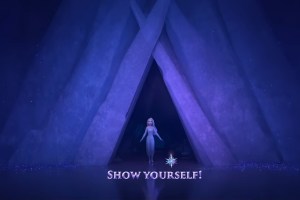
Show Yourself

The image is a shot from the movie Frozen II, where Elsa enters the cave following the sound of the siren. It has the words 'Show Yourself!' and a snowflake beneath Elsa.

It’s no secret to anyone who knows me that I love a Disney movie. The stories are clear but still complex, the language accessible but not dumbed down. Relatable characters with flaws, and of course awesome belting songs. Not to mention a happy ending full of justice and redemption.

One of my favourite movies of more recent times is Frozen, particularly because the happy ending isn’t reliant on the girl being saved by a man. Even better, it cleverly turns the traditional story on its head with a twist that blew me away the first time I watched it.

Rather unusually, however, I preferred the sequel. If I relate to Let it Go, and really who doesn’t? (I even wrote a parent version), the song that hits me hard these days is Show Yourself. 

If you’re unfamiliar with the Frozen story, the main protagonist, Elsa, was born with a unique and frightening power, and ends up hurting her sister because her family don’t understand it and so can’t teach her how to control it. She is told to “conceal, don’t feel, don’t let it show”. When that mask slips, she becomes an outcast, and only her sister doesn’t give up on her.

In the second movie, Elsa is content surrounded by the few people who love and accept her, but she still feels different. She still feels she could be more. She is pulled by a voice, a sense of yearning, but is scared she’ll lose what she already has.

In the end, she has no choice but to follow the voice. And in the song Show Yourself, Elsa finds the source of the secret siren she has sought for answers.

I can sense you there, like a friend I’ve always known.

During the song, the spirit of her mother shows Elsa that she herself is the voice.

Show yourself, step into your power,

Grow yourself into something new.

You are the one you’ve been waiting for.

I’ll be honest, I get goosebumps every time I reach this part, although I only recently realised why. I feel like it’s my song, and the song for anyone who grew up feeling like they didn’t fit. Like they had more to give, if only they were given permission, if only it wasn’t so terrifying.

And the discovery that I am (probably) neurodivergent is that moment where I feel, “I am found”.

The more I learn about autism and ADHD, the more I understand these “cold secrets deep inside” me that are different and powerful and frightening, that make me different and often friendless, but that can be harnessed to create amazing things.

The message in the Frozen movies is that love is what is needed to control and harness the power.

However, friendships are hard for NDs to make and keep. Self confidence, self love, is even harder, when “Research has shown that children with ADHD have often received 20,000 more negative messages about their behaviour than a neurotypical child by age 12.” [Source]

It might take a lifetime, but I am going to follow the voice I hear now inside me that tells me that, while I might be different, I am not broken. I am ready to learn.

I am ready to grow myself into something new.

Just a cold

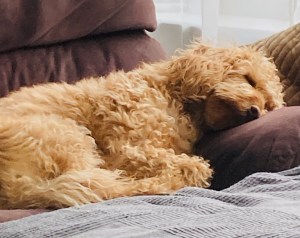
The picture shows an apricot coloured curly labradoodle dog asleep on a brown sofa

It’s just a cold, why are you making so much fuss? 

I think this every time anyone in my family is ill. And then I’m ill, and I remember this is a neurotypical view of the world.

When you’re ruled by sensory difficulties, executive dysfunction, rejection sensitivity dysphoria (RSD), it’s never just a cold.

Your body stops bodying properly. It feels wrong. There’s new pain to process and you’re hyper aware of it. You can’t control it or make it stop. You’re aware of the discomfort of dry lips, weird papery skin, pressure of blocked sinuses, achy fidgety limbs, torture headaches, hot then cold then hot (which actually you’re used to because your temperature regulation wasn’t all that great to start with). Your brain loops on a single lyric or you have lurid dreams until you don’t know if you’re more miserable awake or asleep. You’re maybe thirsty but your body cues have never been obvious and then you chug a litre in one go and feel sick but too tired to pee.

But it’s just a cold. And why are you always ill, you had a cold just last month?

You’re more prone to colds because ARFID means your diet is poor and vitamins only do so much. And you forgot to drink any water yesterday, and caffeine helps you control your ADHD.

Anxiety makes it harder to leave the house and get fresh air, and you’re on the edge of burnout so often that exercise can use the last bit of resilience and actually let the germs take over.

I’ve lost count of the times a new determination to exercise more has ended with a temperature and days in bed.

It’s just a cold, why are you so grumpy, get over it.

You’re all out of spoons and sensitive to your triggers. That’s noise for me, so things like husband snoring or dogs licking become physically painful until I have my fingers in my ears and I’m screaming at the dogs for grooming themselves (not proud of that). So I try to control the noise, but I can’t, so that increases my anxiety until I’m almost hysterical. Which funnily enough doesn’t do much for the headache.

Guilt is rife because if I’m finally taking to my bed it’s because I have nothing. But chances are I’m not the only one ill, so everything falls apart and certainly no one has spoons to check I have water or am taking my meds. Which makes me sad. Then guilty. Then mum mode kicks in and I have to go take care of them, which adds another day to me shifting the darn cold.

For my son, on top of the sensory horror is the loss of routine. His day is controlled by alarms, when to shower, eat, work out etc. A day of ill disrupts all of that. 

My daughter’s is food. Eating is hard, drinking water harder. Feeling poorly makes it harder to do both, so hangry turns up followed by guilt and self blame.

It’s just a cold, you’ll feel better tomorrow, quit moaning.

When you live in a world of now and not-now, it’s hard to think past the headache and inability to breathe and imagine a time you ever didn’t feel this way. It becomes easy to catastrophise, to want to end the misery. Your brain, part of it, tells you to get a grip, but your whole nervous system is fighting you telling you it’s too much to deal with right now.

Then you’re missing commitments, school, work, life, so the RSD pops up and tells you you’re letting everyone down and they all hate you and you’re a pathetic human being because everyone says it’s just a cold. You should just get up and get on. So you do, and the cold lingers, and comes back, and so it all begins again.

Are you ill again? I never get colds, what’s wrong with you?

But it’s just a cold. Right?

Caution: Builder at Work

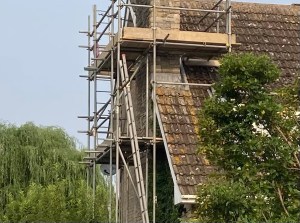
The picture shows the side of a house with scaffolding around the chimney

I’m on week four of my new job and just about hanging in there, juggling parenting and working.

Thankfully having teenagers in the summer holidays is mostly about making sure there is lots and lots and lots of food and driving them places. Throw in a bit of laundry, cleaning, and some body-doubling for my daughter, and that’s it. It will be more challenging when they go back to school, as they will need a lot more scaffolding.

If you haven’t come across the term scaffolding in a neurodivergent sense, it’s simplifying tasks other people find very easy, to free up spoons for the essential or more difficult tasks.

When I went to see my son’s head of year to talk about reducing his timetable, I was given a long list of all the reasons why he was thriving at school and didn’t need any accommodations: He turned up to class on time, he had all of the things he needed to learn, he remembered all the ingredients for his food tech, he was always smartly dressed. These are all things that I put scaffolding in place for, to allow him the spoons to get through the day.

He still comes home exhausted.

For an average teenager, I would be encouraging them to weigh out and label their own food tech ingredients, make sure they have ironed shirts or that their laundry has been done. I would tell them to find and polish their own shoes or put together their own PE kit. This would be ‘preparing them for adulthood’. 

But the thing is, my son already knows how to do it all, but each tiny task takes spoons.

He also has his own scaffolding: multiple alarms to remind him to get up, shower, brush his teeth, and other things an allistic person might not even have to think about never mind be reminded to do. By the time he leaves for school, he’s used up so much of his capacity already, the least I can do is help. 

Unlike the scaffolding on a building, this scaffolding may never come down. He may end up with an understanding partner, or he may need a housekeeper, or like me he might rely on AI (Alexa, Siri, and ChatGPT are my team.) These are accommodations for an autistic person in an allistic world. 

The same is true in my new job. I have a reputation for being very organised, which always makes me laugh as someone with ADHD. What people don’t realise, but I’ve become much more open in discussing, is that the organisation is essential for me to have any idea of what I’m supposed to be doing on an hourly or daily basis. 

I have links from spreadsheet to spreadsheet, I have bookmarks in sub-folders in folders. I have to-do lists and checklists and calendar reminders and even with all these things I still have to go through my notes every day to remember what I should be doing.

It is exhausting.

Like my son at the end of a school day, I have been crawling into bed early and sleeping late.

The analogy of the swan, calm on the surface and furiously paddling underneath, is a flippant image I use often. But imagine the swan is on an apparently slow-moving river with a very fast undertow: you would have no idea how exhausted the swan was just trying to stay in one place. Now imagine someone built a dam or a jetty to break the undertow. 

In case it helps, here are my favourite tech/AI scaffolding tips:

  • Alexa shopping list
  • Alexa devices in every room
  • Calendar reminder to check Echo app shopping list
  • Alexa timers and reminders (particularly cooking pasta!)
  • Talking work problems through with ChatGPT
  • Smart watch linked to phone so I hear calls
  • Airpods to hear messages
  • Tile to find my phone when watch tells me it’s ringing
  • Alexa to find my keys to activate my tile

It’s so much easier for my husband, he just has Wife™. 😂

What scaffolding do you use?

Who Wrote the Rules?

A gold statue of lady justice holding a pair of scales

One of the hardest things for autistic people to get their heads around is injustice.

I noticed it first when my son was at school and he came home angry that his sports team lost a game because others were ‘cheating’. My own outrage matched his, and it took a while to realise that the cheating was in fact what I guess is called gamesmanship.

Gamesmanship is the use of dubious (although not technically illegal) methods to win or gain a serious advantage in a game or sport.

Wikipedia

The problem for autistic people is that there are so many shades of grey in this kind of behaviour, and our brains are more black and white. 

In the classroom, my son would end up in trouble for insisting loudly that a classmate adhere to the rules. My son would be seen as the disrupter and get told off. The injustice of such an accusation would be awful, combined then with a feeling that he had somehow broken a rule. It was my first real indication that he might be autistic.

My daughter struggles with the unfairness of teachers breaking a uniform code that is inflicted on children because they need to be ‘ready for the workplace’. So much wrong with that! Autistic people tend not to recognise hierarchy, so one rule for teachers and one for teenagers isn’t fair. And then there’s the illogical idea of an imaginary workplace that isn’t in fact where teachers work. Or her parents. In fact, noone she knows still wears a tie to work and can’t have jewellery.

I used to think my need for fairness was a Libra trait. I am learning that it’s probably a bit more than that.

Discovering I am (probably) autistic – and how glad will I be, like my daughter this week, when I finally get my diagnosis – makes so much sense of why I have struggled to find and keep an office job.

Firstly there’s not understanding hierarchy: turns out thinking ‘if you’re wrong, you’re wrong, whether you’re an admin assistant or a chief exec’ isn’t a popular view point. 😂

Then there’s following the rules. What rules? Who made them up? Where is it written that I wear heels and don’t swear and don’t tie my hair in a messy bun? It doesn’t affect my ability to do my job. Same with laughing too much, complaining about noise, or not wanting to eat lunch with the team. 

And fairness or things making sense? That’s just a minefield. Challenging that something shouldn’t be done just because it’s always been done that way is hugely unpopular. But if you do what you always did you get what you always got.

Needing to know WHY is another no-no apparently. But if I understand why a project is urgent, where it fits in, I might be able to deliver it quicker and change a process so it’s not urgent next time.

Right now, all these things are very much in my mind, for reasons I can’t discuss. It’s making me very sad, and I need to move on. But a combination of injustice and something just not making sense has caught my brain in a loop, trying to comprehend the incomprehensible.

It’ll pass.

In the meantime, if you have an autistic person in your life, and I hope you do as we’re pretty goddam awesome, try and appreciate their strengths even if it makes you uncomfortable. They might just fight for you with everything they have to make your world a better, fairer, place

All. The. Things.

Homeschooling ADHD style

Turns out, when an AuADHD adult tries to homeschool an AuADHD child, what you get is chaos. Creative, messy, fun, imaginative, spoon-depleting, stress-inducing, brain-exhausting chaos.

When the kids were little, they moved from activity to activity at lightning speed. 

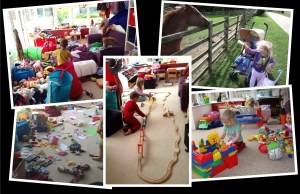
With the first child, I had a 25-labeled-box wall unit, and all activities went away. The farm, train, blocks, playdoh, paints, dolls, craft. I spent more time setting up and packing away than we did playing. But when you have a messy brain, you need a calm environment. Tricky, when you also have zero executive functioning skills.

Once there were two of them, only 19 months apart, I settled for containing it in one part of the house and ignoring it.

Thankfully, we escaped the house every day. To the Farm, the zoo, the supermarket, the park. Anywhere, to entertain without mess. I used to call Farm trips ‘Farm Calm’. A clean(ish), pushchair-friendly outside space, with endless variety, in a predictable, safe environment. With food and changing facilities and easy parking. One year we visited over 60 times. Value for money on an annual pass that paid for itself after four trips! We knew all staff and animals by name.

ADHD Parenting

These days, our day trips are to Aldi and Primark, and sadly they don’t do passes. I might buy shares.

At home, chaos reigns once more. And now there are two brains that get disregulated by mess, but need to do All. The. Things.

My current projects include decorating, crochet, sewing, fitness, video editing, writing, reading, lesson planning and feeding everyone. 

The daughter has rediscovered craft (which heals my heart) and lego and jigsaws and origami and painting and the glue gun. At Aldi yesterday, we bought stickers and colouring books and puzzle kits. Because, tiring as it is to keep up, I want to feed the embers of the girl I once knew, coming back to life.

It’s hard. 

There’s little down time, particularly as my creative side is also seeking fulfilment, now there are no LinkedIn campaigns or PowerPoint presentations to fuel it. I might even start another novel. If I can herd the excitable puppies racing round my brain all into one place. I wake at 5am to get some time alone to drink coffee and process in silence. She’s often up by 6am.

With it all, what I’ve realised most is that healing has to come before homeschooling. 

School lacks the creative stimulation for an ADHD brain. There’s little-to-no dopamine for a child who doesn’t want to dance or play an instrument. By GCSE, there’s no art or DT or cooking. If you can’t turn it into an exam, a career, it’s deemed worthless. But if you have no energy left at the end of a day to do those things, then what is left?

And she’s so worried about falling behind. I keep saying, behind where? Who set these goal posts? Even if she does return to full time school at Easter (and I doubt it), GCSEs are modular. She can catch up enough to pass five, and that’s all she needs to do. If that.

Education systems, teachers, the government, parents, they all love to convince kids that their whole futures depend on getting excellent GCSEs. 

It’s such rubbish. 

For a start, thanks to Bell Curve marking, a percentage will always do worse than they deserve. A child could give the exact same answers two years in a row and achieve different grades. The system is so flawed.

And who says GCSEs need be done now

She has her whole life to get qualifications, but if she destroys her passion for life, what’s the point?

Obviously it’s easier, cheaper, if she takes them next year. I’m still aiming for those five. I’ll still plan lessons each week, and weep at my inadequacy to even understand half the topics, never mind teach them. But if there’s more lego than lesson? If we spend two hours making origami hearts, or even two hours in Primark (sigh), then so be it. 

I have my daughter back. I’m getting myself back. I’m just not getting a lot of rest.

Pass the coffee. Black, no sugar, strong as you like. 😂

RSD: A really serious disability

https://cdn.pixabay.com/photo/2019/09/30/18/41/golan-heights-4516524

Part of healing from burnout for me has been having the space to realise how damaged my relationships with my family are, after the two years of neglect. Neglect, because I have been pouring all my energy into negotiating the even more complex relationships that a job brings for me.

My neurodivergence comes with massive empathy wrapped up in a complete inability to read people, and a physical discomfort when I get it wrong or hurt someone. What could possibly go wrong?

Let’s unpack that. 

care

I can’t just go to work and have colleagues. I care about them. Let them in. Treat them like family.

It’s not always a good thing, in an office. Lines get blurred. Piss me off, and I get upset, angry, mean. I will literally do anything to help the people that come under ‘work family’ but if I feel betrayed or let down, I hurt. And lash out. Or I drown in self doubt and believe I have to quit because I just can’t do it. I think my boss talked me out of resigning at least every couple of months.

It’s no wonder I have only managed about 10 years’ proper employment in the 25+ years since I left school.

Because, together with the feeling-everything that makes me overly-emotional comes the inability to read people. I mean I am really bad.

It can occasionally be useful. 

In the past, I haven’t noticed when blokes in the office have been trying to hit on me until they make a drunken move at an office party (and then I am shocked.) 

But it also means I can’t always read sarcasm. I can’t tell if someone is tired/busy/sad/distracted or actually mad at me. And my default belief is that they hate me (more on that below).

Since I realised I’m AuADHD I am more aware of it. I will ask for clarification, from the person or a neutral third. Even that is dangerous, though, as it comes close to gossiping. And you have to trust that the other person you’re speaking to isn’t also going to misconstrue, because of their own potential neurodivergence. 

It’s a minefield.

And for me – and apparently up to a third of people who are Autistic / ADHD – that minefield is armed.

Enter RSD.

RSD stands for Rejection Sensitivity Dysphoria. Like ADHD, the acronym hides the depth of the iceberg. ADHD doesn’t just mean ‘oooh squirrel’. And RSD doesn’t just mean you’re a bit sensitive to criticism, poor wee snowflake, build some resilience.

For me – and I can only talk for me – it means pain. Broken relationships. Hurting people I care about. Losing friends. And did I mention pain? Actual physical my-life-isn’t-worth-living pain.

If someone tells me I am wrong about something, or that I made a mistake, my flight-fight kicks into overdrive. My ears start ringing, my pulse quickens, adrenaline floods through me until I fizz. A knot of tension tightens in my stomach and I feel like I’m falling backwards into a dark place. It’s not dissimilar to a panic attack (or, if you haven’t ever had one, to being uncomfortably drunk.)

I might lash out, depending who has said it. And if I’m with people I love, there’s a strong chance they’re neurodivergent and also RSD, so the exact same process then happens to them. And I can see they’re hurt. So the RSD ramps to the next level, because not only am I wrong (a horrible thing) I am also evil for hurting them. I don’t deserve to exist. Depending on the severity of the feeling, I can get suicidal thoughts.

At that point, flight-fight expands to include freeze or fawn. So one of four things will happen now, all out of my control. 

  • Yell
  • Leave
  • Go mute
  • Apologise endlessly

None are conducive to healthy relationships, especially if the other person a) doesn’t know what’s happening and/or b) is experiencing the same thing.

Eventually the physical reaction will fade. That’s when the real pain starts. 

The racing, intrusive thoughts. The need to apologise, explain, beg for forgiveness. The overthinking. Replaying, trying to understand. Knowing I am overreacting but being unable to control it. 

And the echo can last decades. Waiting for my brain to retrieve it at my lowest moments. Stupid incidents from age 16 still make my ears ring and my pulse race at 2am. And still my brain will actively seek those memories out and replay them. Stupid brain.

It’s no wonder I don’t have many friends, or that I was reported more than once at work for upsetting someone in a meeting or email. 

Because the passion and energy that makes me good at my job comes from a need not to fail. That perfectionism I always put on my CV? Turns out it’s RSD driven. If I always deliver, on time, above expectation, no mistakes, you have no need to criticise me. The RSD beast lays dormant. Unless you tell me I am overdelivering and that’s why I’m in burnout. You’re trying to help, but it’s a criticism and so it triggers the fight-flight. (Sorry, boss!)

Knowing about RSD has helped. I have dropped off calls when I felt the adrenaline in overdrive. I’ve walked (stomped) round the building a few times to calm down. Sat in a toilet cubicle and sobbed.

But if everyone else around me has no idea, I just look hysterical, overly-emotional, unstable, or plain out of order. And that’s at work.

In a house where 3/4 of us have RSD, and getting it right matters so much more, but we all feel more. Well. Exhausting.

I recently read a great post on RSD on LinkedIn https://www.linkedin.com/posts/adhd-asc-dyslexia-family-resources-belgium_rsd-neurodivergent-rumination-activity-7132409562745204736-OMQV

It includes this checklist:

Do you often feel intense emotional reactions in response to perceived or actual criticism or rejection?

🔹 Can seemingly minor feedback trigger a mental tail spin or emotions and thought spirals?

🔹 Do you have trouble containing your emotions when you feel rejected and your responses may be disproportionate to the situation?

🔹 Do you experience #rumination and perseveration and are unable to let comments go?

🔹 Do you frequently engage in people-pleasing behaviors to avoid potential rejection or #criticism?

🔹 Do you feel highly sensitive about other peoples opinions of you?

🔹 Are you prone to high levels of self-doubt, low self-esteem, or negative self-talk?

🔹 Do you find it challenging to navigate social or professional situations due to the fear of judgement or rejection?

🔹 Do you at times feel constantly attacked and on edge?

🔹 Do you avoid starting projects, tasks or goals where there’s a chance of failure?

Kate Halpin

I tick every. single. one.

Imagine carrying that all the time with no one knowing? Imagine finding out there is a name for it and you’re not just a failure or a terrible human being?

There isn’t a cure. Only knowledge. Therapy. Being open.

We need to talk about RSD, especially at work. Look for the signs in others. Support them, come up with strategies or signals to help in a moment of crisis. Don’t judge. We’re not snowflakes, we have a mental condition.

And, most importantly, find a friend that tells you it’s the RSD talking when you’ve left all your work WhatsApp groups because you think everyone hates you.

And then have the bravery and humility to ask to be let back in 😊

Full Craft Ahead

It’s been nearly a month since I left work to care for my daughter, and I can finally feel the burnout fade. Like a cold you didn’t realise you had until you can actually breathe, I don’t think I understood just how depleted I was.

I was aware of the lack of spoons, the poor sleep, the zero energy. But I hadn’t appreciated just how much my job consumed me inside, like a smouldering fire. 

My daughter said the other day how happy she was that we were friends again, now that difficult colleagues weren’t stealing my energy. That hurt, I’ll be honest, because it’s true. I don’t have barriers, so negative people can and do bleed me dry. 

The other difference, now that I’m not problem-solving all day, is that there’s room for creativity at home. 

So many projects. 

All at once, because ADHD.

I’ve decorated the bathroom, painted Christmas cards, made lego, moved furniture, baked.

And now I’m restless, so very restless. Because projects need to have purpose (my worth is defined by productivity, payment and praise remember!) I can’t just create for the sake of it, there’s not enough dopamine in that. It needs to be for something or someone.

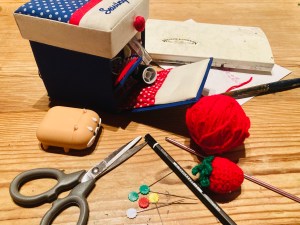
So, apologies friends if you have a birthday coming up, because you just know something painted, knitted or crocheted is coming your way. 

Sorry, not sorry. 😂