Dragon Wraiths and Daughter Days

Iron-on Crayon Art

Iron-on Crayon Art

Phew, how do teachers do it? I spent the day with my daughter today, as my son was in nursery. It’s the only whole day I have with her this half term so we crammed a lot in. Swimming for an hour followed by shopping for new school shoes (how do they get so trashed?!), new waterproofs (why do kids grow so fast?) and new school socks (how can five pairs vanish in as many months?)

Then the obligatory trip to McDonalds (yes, I know, parenting shame. I don’t care, sorry!) followed by more shopping to buy another four birthday gifts to see us through March’s parties. An unexpected extra expense of school has definitely been the birthday parties. Although at least we rarely have to make weekend plans!

You’d think my daughter might have been tired when we got home? Oh no. I barely drank a cup of tea before she was onto the next activity: iron-on crayons that she got for her birthday. I didn’t mind, actually, as I like clever non-messy craft. And I knew those t-shirts I bought for her nativity would come in handy. It took a while to explain the concept of colouring a back-to-front design so it would be the right way round when ironed onto the t-shirt, but I’m pleased with our shared efforts. And I didn’t even interfere that much! 😉

Not Bad (and no unsolicited help. Well, not much! :)

Not Bad (and no unsolicited help. Well, not much! 🙂

A break then? Nah. Then we wrapped up a bunch of gifts (with my fast-dimishing patience put severly to the test. Gift wrapping is one of those things that I find it REALLY hard to leave to her: largely because I foolishly fear being judged as a bad wrapper!) There was just time for a quick sandwich before we had to pick up my son.

The day wasn’t over, as we still had an hour at the library to get through. The kids now want to play board games and I just want to crawl into bed. It’s only 6.30pm. I already had huge respect for teachers but the idea of multiplying today by 25 is just horrific. Give me struggling with character arcs and plot holes any day!

Talking of which, I woke at 4.30am this morning in a cold sweat having dreamed I was being chased by dogs. It was a convincing dream and during the hour it took to calm down (until my daughter woke at 5.30am) I had some great ideas for a sequel to Dragon Wraiths.

I’ve wanted to write a sequel since I finished it, but had so many dilemmas about viewpoints and plot. I’m still pretty vague but I feel a tiny step closer, including deciding that it has to be told by Leah again (my preference was to have it multi-viewpointed from the perspective of the new wraiths. But it felt like trouble!) Now I just have to get Class Act finished! But first, sleep. I’m taking my two terrors to the Space Museum on my own tomorrow: something tells me I’m going to need all my energy!

Filling the Gaps: Where’s the sex?

"Romance" covers show what readers want

“Romance” covers show what readers want

I’ve been working on Class Act today, hurrah! After too many days lost to sickness (me and the children) it was nice to get back to it, even if I didn’t make as much progress as I’d hoped. I had a pretty rough day yesterday and it is hard to write, for me, when I’m emotionally drained.

So I spent the time I had looking through my current draft of the novel to spot areas that needed expanding. As I’ve mentioned before, I tend to write the highlights in my first rough draft, and then have to go back and fill in the gaps during revision.

One thing I’ve noticed that I leave out a lot is the sex. My books are fairly chaste, particularly by modern standards. There isn’t much nookie, even though Baby Blues starts with a sex scene (which was originally more detailed than the final edit). I find it’s not something that gets added in unless I think of it. Maybe it’s because I grew up reading (and loving) Georgette Heyer novels. (Class Act definitely has elements of a Heyer story). Maybe it’s because I’m a mother of two small children, generally too exhausted to give much thought to nookie in my own life (sorry hubbie!)

It’s certainly unusual. Most of the chick lit books I grew up reading (aside from Heyer) have at least one or two sex scenes, from the sweet, to the implied, to the steamy. I enjoyed reading them in my teens and twenties, although I’m not a fan of erotica or books that have sex as the main focus. But it is generally a natural part of relationships and therefore plays a role in the character and plot development, so why do I leave it out?

My Latest Read - lots of kissing!

My Latest Read – lots of kissing!

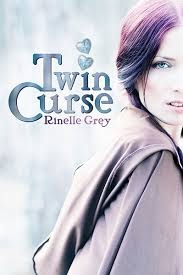
I am noticing, as I read Twin Curse, that there’s lots of kissing and physical contact (and I’m sure eventually sex). And I wondered, is that why my books don’t sell well and don’t get reviews? In the days of Fifty Shades of Grey, am I not fulfilling the need for a bit of action? Certainly if you search ‘romance’ books on Amazon, the covers suggest that bedroom action is a key selling point. When I write my novels, my aim is usually to explore characters at life-changing points in their lives: change of career, change of priorities, change of heart. They fall in love, but that’s only part of the story. The demons they battle are in their minds and in their past. But, to make the relationships genuine, there has to be some physical attraction.

I remember watching an episode of Bones once (a TV show about a forensic anthropologist who is also an author). The lead protagonist is proud of her books, particularly the scientific aspects of them, but her fans buy and read them for the sex. She actually has a friend of hers help her with that aspect of the stories and eventually gives her friend a percentage of the book royalties because she realises it is the sex that is selling the books.

I suppose the phrase “sex sells” didn’t come about by accident. But it feels awkward for me to go through the story and inject sex scenes where there are none. Particularly in Class Act, where the physicality of the relationship is a core part of the story. I was shocked to discover I’d got to the climax scene in the first draft without the couple ever ending up in the bedroom – even though it was a core part of the story! (The same happened in Baby Blues but at least she had the excuse of being pregnant / a new mother!)

And then of course there is the issue of how steamy to be. I prefer implied action, because what is a turn on for one maybe a complete turn off for someone else. I remember reading Mills & Boon as a teenager and giggling over the “throbbing member” type descriptions. Focusing on the sensations and the emotions is probably more my style. But there is a danger that it all gets too introspective and unrealistic: people don’t typically have internal dialogue when they’re in the clinch of passion.

Anyway, I don’t really have the answers, but I was intrigued when I realised how unromantic and chaste my romance novel is in its early drafts. Maybe I should stick with writing YA or move into MG fiction. I’m obviously more interested in plot points than pants! But, for now, I need to fill the gaps. I’m sure hubbie will be happy if I do some research and inject some sex back into things! 😉

Revisions and The Raven Boys

My new workstation - the kids' homework desk!

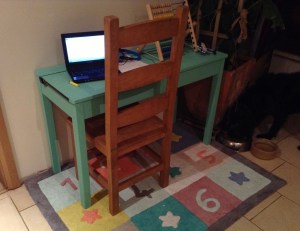
My new workstation – the kids’ homework desk!

I finally managed to get back to some work today, having packed my almost-better children off to school and nursery. I felt guilty about it, because they probably should have been at home, but I needed the space and silence and absence of sick to start feeling human again.

It felt good to work on my manuscript for the first time in ten days, even though I failed at the numbers game. That’s the thing with revision: you write and write and cut and edit and, at the end of several hours, you have 200 words fewer than you started with.

It’s disheartening.

I’m editing and expanding with this novel, so there are still thousands of words to write to fill the gaps. It’s not uncommon for me. When I write my first drafts I tend to write the highlights; something like an extended synopsis. I write for the romantic ending, the big scenes, the turning points. Then, fifty thousand words later, I look through what I have written and think what?! How did I get from there to there? How did she go from hating to loving him? Why have I given all the secrets away in the first chapter? How much backstory? Then I have to go through and unpick the mess. Fill in the motivations, flesh out the hundred-word paragraphs that really should be two-thousand word chapters. It’s tiresome work, because I write to discover the ending. Once I’ve reached the end, I’m not that interested in filling in the spaces.

I read that way, too. I usually have to read a book twice because, the first time through, (if the book’s any good at story pace or suspense) I skim-read whole chapters to get to the essence, the plot point, the drama. I miss all the great language, the unfolding of characters and personalities, the subplots, the themes. I devour the book, barely tasting it, and then have to go back through and vacuum up the crumbs.

Revision leaves me feeling like this

Revision leaves me feeling like this

I’m reading the sequel to The Raven Boys – The Dream Thieves – at the moment (despite my rant about the abrupt and unsatisfying ending of the first one) and I’m utterly hooked. Now that I know it’s a four-parter, I’m not worrying too much about story resolution (although I’m still skimming ahead for the drama, of which there is plenty). I feel that I’m reading the book in a language other than my native tongue, as if it’s in Old English or something, because the writing is dense and complex and poetically beautiful, but for some reason that’s okay.

But it hasn’t helped my revision. Because, when I put the book down and reluctantly get back to work, I read through my oh-so-obvious story line, with my two-dimensional, unintriguing characters, and I want to chuck the lot in the bin. My Alex and Rebecca are pale imitations (not imitations, because I wrote them before I read Maggie Stiefvater, but you know what I mean), pale shadows of Gansey and Ronan, Adam and Blue. And I want them to shine and live, like Maggie’s characters do. It’s exhausting.

No one says writing a novel is easy. Actually, writing it is the easy part. Making it make sense, making it shine: that’s the impossible task. Reading the words of a master is at once both inspiring and crushing. Never mind. I shall slog on, ignoring the expert sprinting past to the finish, and climb my own climb, one step at a time. It’s worked before. I have faith. I’ll see you at the summit!

Reblog: “All Retch and No Vomit”

Freedom: From the Alan Watts video

Freedom: From the Alan Watts video

Things are still hanging on by a feverish thread here in the Martin household, with little man peeling away my last layers of patience with his fractious, “Mummy, but..” “Mummy, can we just…” “Mummy, I’m bored / tired / miss Daddy” and “Mummy, I’m hungry…” followed by a refusal to eat anything, on eternal loop.

I  decided to look back twelve months to see if this is normal January/February stuff. It is. We need to holiday somewhere hot in the winter to avoid this annual decimation of the family health and happiness and to preserve my ongoing sanity.

In the meantime, as I have no words, I’ve decided to steal a post from back then, 9th February 2013 to be exact, to keep the blog alive in my absence. The title seemed very fitting, as it describes the coughing noise that’s become the soundtrack to my life! (Sorry, too much info!). Joking aside, the Alan Watts speech resonated with me back then and, listening to it again, now my daughter has started school, it has even more meaning now. This is the original post:

________

The Alan Watts video, What if Money Didn’t Matter?, came my way today via Facebook. It’s been around a while so I’m sure most people have seen it. If you haven’t, check it out on YouTube.

My favourite line (describing schooling and how we raise our kids to want the things we want) is

“it’s all retch and no vomit.”

You can’t beat that for an image with impact.

Actually the line that truly resonated was this:

“Better to have a short life that is full of what you like doing than a long life spent in a miserable way.”

What if Money Didn't Matter?

What if Money Didn’t Matter?

Now I know if you have kids, responsibilities, mortgages and so forth, this is a difficult thing to fit into your life. Many of the less positive comments beneath the video are along the lines of “that’s all well and good but I’m a single mum / I have a mortgage / I have bills to pay, I can’t afford to do what I want.” Or my favourite, “what; do I tell my kids not to bother with their homework?”.

To me that has missed the point. It doesn’t have to be so black and white. We can knuckle down to hard work and try to direct that towards something we will love doing in the future. And if in some ways we are already caught in the trap, stuck in a career that’s more about money than happiness, it doesn’t mean we can’t try and pass a different ethos onto our children.

Yes kids still need to do their homework.

Having aspirations doesn’t mean it won’t take hard work to realise them. I think the message is to find something you love and put it nearer the centre of your career than the need to get rich.

When my husband first watched the video he realised he didn’t know what he would do if he didn’t have to earn money. That’s a sad realisation at forty. He’s given it some thought and come up with some answers but I think it’s important to know what you love doing even if it isn’t possible to do it.

I’m probably rambling making no sense: it’s been a long day on little sleep and too much coughing. I might revisit this topic when I’m feeling more lucid. In the meantime I love the first screenshot I captured, I think it encapsulates the journey Claire is on as she realises life is about more than earning enough money to buy the next must-have designer shoes.

P.S. Why did I never have Claire parascend into a cave? That would have been amazing! One for the sequel maybe…

A Curious Novel

My latest read

My latest read

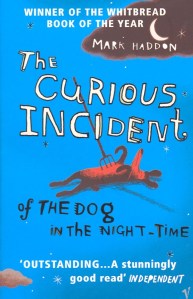
I finished reading The curious incident of the dog in the night-time by Mark Haddon last night and I really want to capture my thoughts on this interesting novel. I began reading it with no expectations. I’d heard of it, that’s all, when I saw it in the library. I had no notion of what it was about, or the author, or anything (including the fact that the title comes from a Sherlock Holmes quotation.) I merely selected it as part of my aim, this year, to read more and select a wider range of books.

I’m glad I did. It is a strange novel, about a fifteen-year-old boy with Aspergers Syndrome. I feel privileged to have read it. Yes, that’s my overwhelming impression. It wasn’t a rip-roaring read, a heart-warming romance, or an unputdownable thriller, but still it dragged me through to the end with little effort (which is a big ask of a book these days because I’m very quick to give up on something that doesn’t keep me awake!)

It is funny, quirky and endearing, but mostly it’s a clever book. Written in the first person, from inside the mind of an autistic teenager, it presents the world in a new way. It also gave me a new respect and understanding for autistic children and their parents. But not in a way that demanded sympathy or forced ideas on me.

Instead, through an evolving set of anecdotes and an unravelling mystery story, it revealed immense detail about the character, his family, his life and his interpretation of the world. Some of the apparently peripheral discussions, for example about God, or time, or the universe, were both enlightening and profound.

As a writer, the book is a master class in RUE (resist the urge to explain). The reader is left to put the pieces of the jigsaw together in a way that the main character often isn’t able to. And, despite it being written in the first person, an entire world is unveiled surrounding the main character. I can’t begin to explain how so much was revealed with so little being said (certainly not without giving away spoliers.)

I think the enjoyment came from this, though. The reason the novel kept me awake was because I was actively involved in constructing the text, fleshing out the story, connecting the dots. The same was true of The Raven Boys, now I come to think about it. I’m starting to think of it as the art of secrets. Not glaringly obvious secrets, of the kind I might clumsily put in a novel – like Josh’s big secret in Two-Hundred Steps Home, or why Claire broke up with Michael. But more a subtle revelation of the bigger picture, like panning out in a movie and seeing the full context.

It is a goal I intend to aim for in my own novels, although I know I’ve got years of practice ahead of me before I get there. I don’t think it’s something that can be taught, but something that has to be learned through hard effort. I suspect it will also require me to become more a planner than a pantser. My natural writing style is to reveal everything as soon as it occurs to me (I’d make a rotten poker player). Instead I need to play it more like chess. Think fifteen moves ahead, prepared to change my plans if necessary, but keeping the moves secret for the reader to discover at the best moment.

I feel like my daughter; only just learning to read but wanting to be able to read adult books. I’m only just learning to write and I want to be able to write like that. Now! Now! Now! *Pouts*. Time to read a few craft books, consume a stack of fantastic novels, dip into a load more blogs and, more importantly, practice, practice, practice. I can feel (another) rewrite of Class Act coming. Bring it on.

Research and The Raven Boys

What Alex's London flat might look like

What Alex’s London flat might look like

I miss Claire. There, I’ve said it. I miss writing an installment of her journey each day, with a reasonable idea of where she was in the world, at least, and where her story was going. I miss guaranteed word count.

I’m in redrafting hell at present, trying to rescue two characters I love from a badly plotted and planned novel awash with backstory. The problem with loading a first draft with backstory is that changing one thing has a rippling effect across the entire manuscript, especially if you’re trying to rewrite two lines of throwaway history into a whole chapter or even two.

My lead man Alex has a friend called Philip who is essential to the story. Starting In Media Res I didn’t have to worry too much about their relationship before; where they first met, how they met, considering they’re so different. Now, though, we first see them catching up down the pub, setting up the rest of the story’s action, and I have to understand all these things. How do people from different backgrounds meet? How do their different careers and incomes affect their friendship? What’s the age difference? I managed 700 words of stilted dialogue today and gave up in disgust.

I’m also trying not to be overly influenced by the book I’m reading – The Raven Boys by Maggie Stiefvater – as her novel contains a character that could be, or at least have known, Alex as a public school boy. Maggie Stiefvater’s character is so convincing I’m finding parts of him creeping into my prose: except Raven Boys is set in America, whereas Alex would have gone to an English boarding school (which I know very little about, another fact that wasn’t especially important before.)

As each of these random strands of research crop up, I keep losing the flow of writing because I need to research the role of a stage hand or investigate pubs in North London or apartments in Chelsea. I might even have to watch an episode of Made in Chelsea – *shudder* – to try and understand Alex’s present girlfriend Paige more, as again she has moved from a paragraph of explanation to a speaking part.

I swear this is the last time I rescue an old manuscript by moving the timeline back a few months. Next time it starts where it starts and that’s that!

Bridport and Baby Blues

My Goodreads Giveaway

My Goodreads Giveaway

I wrote a long rambling post for the blog today about parenting, love and life, following on from a spectacularly low point on the school run this morning, that started with yelling in the traffic jam and ended up with daughter and I both in tears. But, if I’m tired of thinking about my failings as a parent then I’m sure you’re tired of reading about them. So I’m going to talk writing instead.

I finally listed a Giveaway on Goodreads this week to win a paper copy of Baby Blues and Wedding Shoes. It’s open to all the countries I can ship to easily from Amazon, so if you fancy reading it, or just like a chance at a freebie, do pop over to Goodreads and sign up, and tell your friends! 🙂

Continuing on a writing theme, I spotted a couple of my Baby Blues bookmarks in a stand at the library today in what turned out to be a rack of leaflets on the Bridport Prize. For those who don’t know, the Bridport Prize is one of the most well-known short story (plus flash fiction and poetry) competitions in the UK, with a first prize of £5000. I think about entering every year, but I haven’t written anything shorter than 100,000 words in years. If you have, and fancy your chances, the closing date is 31st May 2014. (I can’t put any more details at present because the website doesn’t seem to be working, but this is the link).

Brittle Star Competition

Brittle Star Competition

Next to the Bridport flyer was another writing competition with a March 2014 closing date, again for short stories and poetry. This is the Brittle Star inaugural poetry and short fiction competition closing on 12th March 2014. The prizes are much more modest (£250 per genre) but all winners will be published in Brittle Star and invited to a launch and prize giving event in London (a great chance for networking!)

Incidentally, if you want to keep up to date with UK writing competitions, I recommend visiting (and following) the Sally Jenkins – Writer blog. Sally Jenkins’ frequently lists details of writing competitions both big and small as well as lots of hints and tips and great resources. I learned about the Mslexia Children’s Novel Competition from her and, if I hadn’t, I might never have finished Dragon Wraiths. I’m very grateful!

A Pantser Plans

Using Beat Sheets to plan my revisions

Using Beat Sheets to plan my revisions

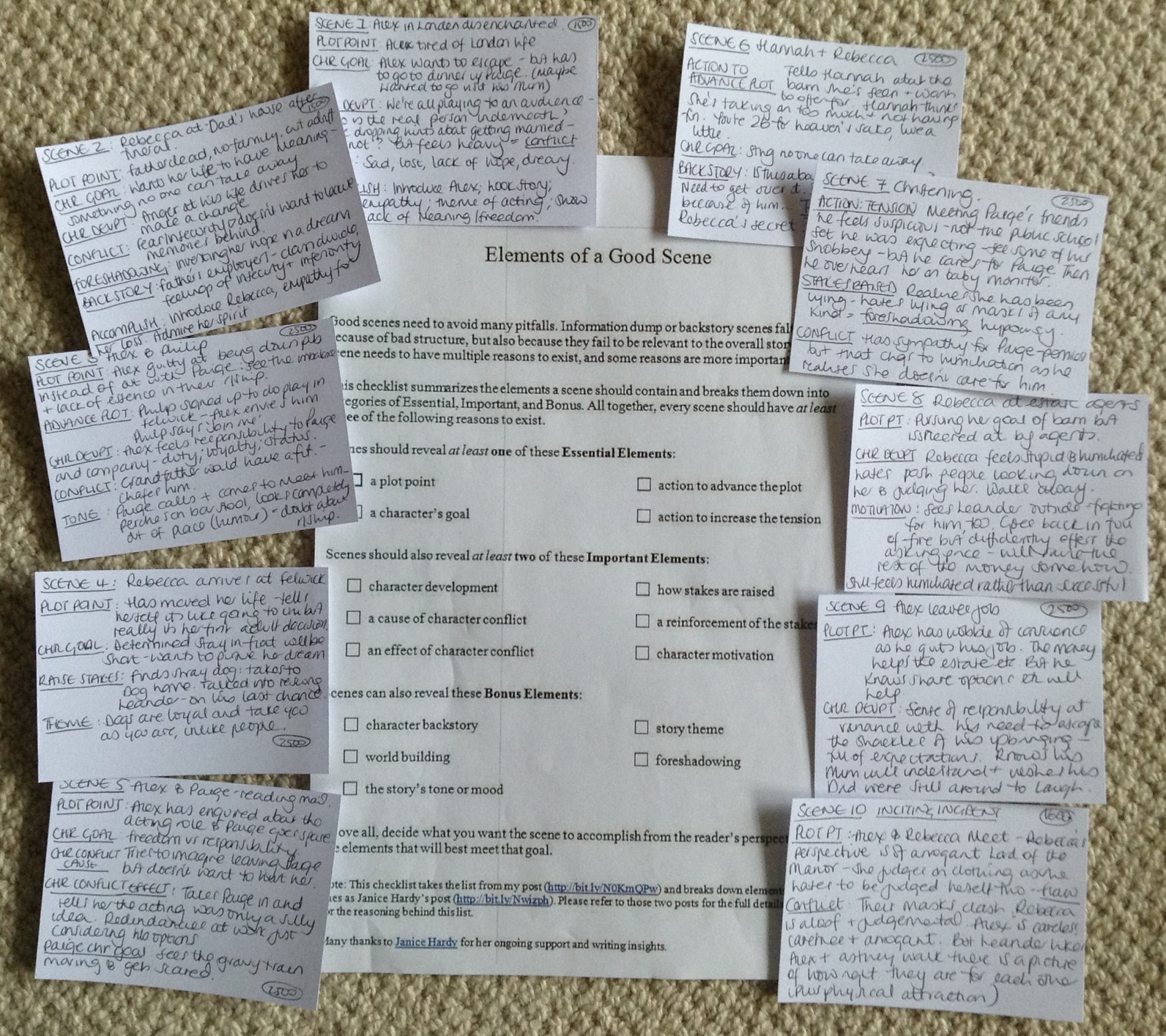
The unthinkable happened today. I did planning. With beat sheets and notecards and everything. I’m a Pantser to the core: analysing a scene down to the tiny details paralyses me. Especially if I do it before I write, as I have done for the extra third of a novel I’m putting at the front of Class Act. But actually, do you know what, it wasn’t so bad.

I’m still working on some of the terminology, for example pinch points and black moments, although instinctively I have a shrewd idea what they are. I have done it before, actually, for all my seat-of-the-pants writing preference, and I’m always relieved at how much of the necessary detail I already have. Sometimes it just needs writing down to reassure myself I do know something (although a VERY VERY long way from everything) about this novel writing lark.

I had gathered much of the required information during my last craft session (the sporadic times when I read through a load of blogs and books to refresh or learn elements of writing craft.). My favourite resource is Jami Gold: as a Pantser and a romance writer, I feel she understands my pain. In fact her Beat Sheet for Romance Writers formed a large part of my morning’s work. She explains that if, like me, you can’t pkan in detail for fear of frightening off the Muse, you can use beats – points in the story – to make sure things are developing as they should.

I also used her posts based on a Michael Hauge workshop she attended to put more thought into my characters’ development, flaws and ultimate romance. The key ones I used were Are These Characters the Perfect Match and An Antidote to “Love at First Sight”. Both of these look at two elements of characterisation – a character’s Mask (the role they play, based on their longings, fears, wounds and beliefs: their emotional armour) and a character’s Essence (who they are inside, behind the masks, or who they have the potential to be). In a good romance, attraction will be based on Essence rather than Mask.

Planning Elements of a Scene

Planning Elements of a Scene

So, in Baby Blues, Helen was attracted to Daniel because his businessman forceful character Mask played to her career orientated Mask. But Marcio was her right love interest, because they both had the same essence underneath: a love of creativity and interpreting the world through their art, and a desire for home and family.

The concept really helps when a character moves from one relationship to another (as mine often do.) You don’t want the protagonist to look like an idiot because the previous relationship was flawed, and also you don’t want the previous partner to be a stereotype or a villain (although Daniel, in Baby Blues, is a bit of both!)

The other thing I’ve been trying to use is an Elements of a Good Scene checklist, which I also found on Jami’s Blog, the idea for which came from Janice Hardy’s blog. I feel exposed, using something like this, as I feel I don’t know the difference between “Plot point” and “action to advance the plot” or “how the stakes are raised” versus “reinforcement of the stakes”. I suspect that might be why I find it hard to write tense page turners! In my head, though, I’ve summarised it as “plot development”, “character development”, “conflict” and “backstory/theme/tone/foreshadowing”. As long as the scene has some of those that’s good. Well, it’s a start!

Of course, I was right – at the beginning when I said planning paralyses me. I need to start writing, before I spend so long on planning I’m fed up with the story or too scared to start. But it was a useful day’s work and hopefully, when I sit at my desk on Monday, I’ll be able to write some of the additional 45,000 words the story needs to get to a full length novel!

Anyway, hopefully now I have a plan this will be the last of the ‘I’ve forgotten how to do manuscript revision’ posts and I’ll get on to writing something more interesting for the non-writers who follow my blog! Thank you for your patience.

The Tricky Question of Backstory

Challenging my views of writing!

Challenging my views of writing!

Following on from yesterday’s request for advice and opinion, I need to ask about back-story. It’s the bane of my life, and Class Act is littered with it. Baby Blues & Wedding Shoes was, too, in the early drafts, and I solved the problem by starting the novel six months earlier.

That will work to some extent for Class Act, (lovely – another massive re-write! 🙂 ) but there are two incidents in the female protagonist Rebecca’s early life that impact on her current personality, and I don’t know how to integrate them. At present they’re written as flashbacks. Shudder. Unfortunately I actually like how they’re written so it’s easy to become attached to the scenes rather than put them in the bin where they should be.

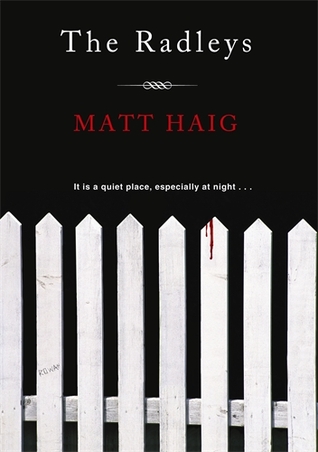
The problem is I get defensive of my characters and want to explain why they have the flaws they do. But how much detail is necessary or desirable, and when should it be revealed? In The Radleys, by Matt Haig, the back story is cleverly integrated and is also overlaid with the character’s perception, so you start out with a half truth that colours your view of a character’s actions, and that view evolves and changes towards the climax of the novel. Masterful stuff. I’m pretty certain I’m not skilled enough just yet to pull it off without getting in a muddle.

The other problem is defining the novel’s inciting incident. Really, both bits of backstory are. Or the moment where the lead protagonists meet, which is where the novel currently opens. Baby Blues originally started with when the love interests meet, too, and after the rewrite that scene ended up a third of the way through the book. I like it, because you get to know the characters first, but then it blows wide open what the first turning point should be. We make decisions every day which, with hindsight, turn out to be inciting incidents. The job we take,   or the bus we catch that breaks down or gets blown up.

Incidentally, Jami Gold has a great post on the importance of getting these elements or ‘beats’ right in a novel and how defining them isn’t always straightforward! See Why Story Structure Matters. Unfortunately, even with her helpful Beat Sheets, getting the right elements into a story at the right time is (for me) the hardest part of writing.

So, right now my options are revelation through phone conversations with a friend (tricky), adding a prologue (generally advised against), or vague hints that might be missed or misunderstood. It was much easier with Claire in Two-Hundred Steps Home, as she didn’t really have a back story that mattered!

What are your views? Any great examples of how inciting incidents in childhood or early adulthood have been successfully integrated into a story? How much do you need/like to relive past experiences that have influenced a character? When do you need to know the details? Do you need to already care about a character, or do they help you care? Sometimes it feels like I’ve forgotten how to write a novel!

How Many Heads?

How many viewpoints in a novel?

How many viewpoints in a novel?

When you’re reading a modern third-person limited perspective novel (he said, she said from inside a single character’s head – see this great post for an explanation on narrative modes in literature) how many heads are acceptable?

When I first wrote Baby Blues & Wedding Shoes, which is written from two key protagonists’ perspectives, I switched from head to head without thinking about it, and would quite often jump into the head of minor characters. Strictly speaking that’s nearer third person omniscient, without that irritating ‘know-it-all-ness’ of an Eighteenth Century narrator.

I didn’t give it much thought, until a Beta Reader pointed out that head-hopping within a scene can be confusing and is generally avoided, and that it wasn’t a good idea to see inside the head of minor as well as major characters. It came as a surprise, because I didn’t really think about it as I wrote – the almost-omniscient style seems to be my default.

That probably reflects the literature I read: authors like Georgette Heyer, who write in what I suppose to be omniscient third person. Even though Heyer spends most of the time following one person’s viewpoint, she’s happy to hop into the thoughts of anyone relevant to explain the scene. Even though I’ve studied the theory and know the principles I still struggle when I write (and even when I read) to always know the difference. I read this great article today that helps to explain it.

That’s why Dragon Wraiths was refreshing – in first-person-present you only know what the main character sees, hears and feels. It adds other challenges to do with character development and so on, but you don’t have to worry about head-hopping.
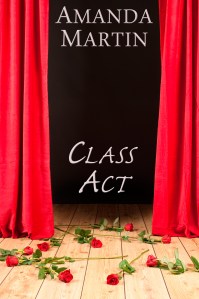
Class Act Cover

Class Act Cover

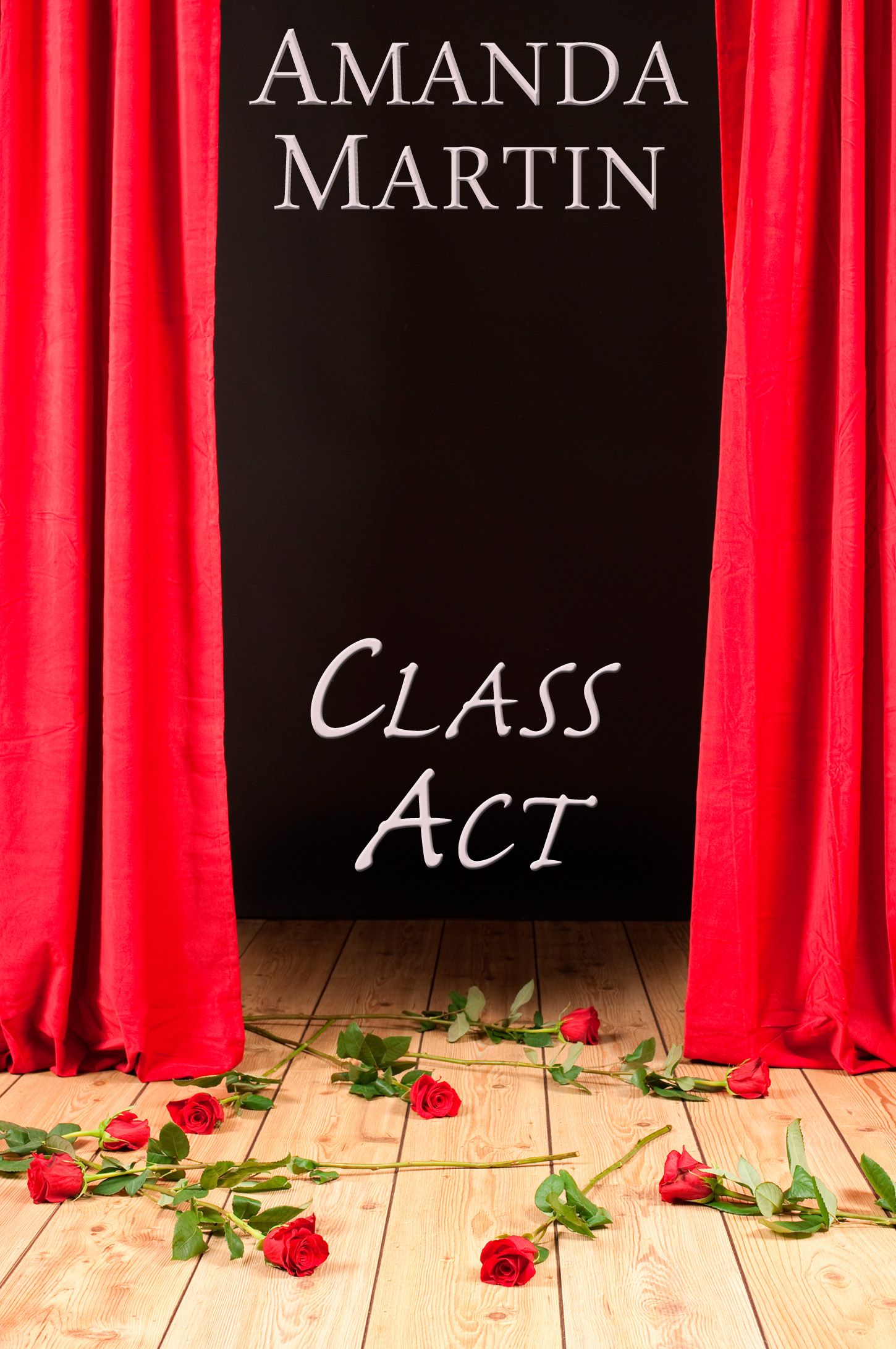
I’ve just been through my first draft of Class Act and, like Baby Blues, it’s littered with head-hopping. That’s fine, I can fix that. But, also like Baby Blues, some of my favourite writing is inside the heads of secondary characters. I cut it all out in Baby Blues but now I’m wondering if that was entirely necessary. Maybe it’s just my voice, my style. Maybe I tend more towards multi-voice perspective or omniscient than tight third person (sticking to one head). Maybe I should embrace it rather than fix it.

I say this only because I’ve just finished The Radleys by Matt Haig and it reads like a soap opera script, seen from everyone’s perspective. I have to admit it added to my enjoyment of the novel rather than detracting from it. (Possibly because I love omniscient authors like Heyer.)

Now Haig is a much more experienced and talented writer than I am, and my execution is bound to fall a long way short, but that’s no reason not to try.

So, my question is, if you were reading a novel that took you on a brief trip inside the mind of the mum or the best friend, would that confuse or irritate you? I guess until I finish my revisions and send it out to Beta readers I won’t know. Here’s an example scene to show what I mean.

Daphne looked up, and her smile was like the sun rising over the horizon. She put the tapestry aside and rose to her feet, holding both hands out in greeting. Alex took two paces forwards and enveloped her in a bear hug, her scent infusing the space between them, bringing with it all the comfort and memories of childhood. He hadn’t been home for weeks, not since he’d started rehearsing the play, even though it wasn’t that far away. He felt terrible, but his mother of all people understood his need to carve his own way in the world, away from Sidderton.

“Alex, darling, how lovely to see you,” she said as she finally released him from the embrace. “Sit down. Does your grandfather know you’re here yet?”

“No, I came to see you first, of course.”

“You mean you crept around the side like a naughty school boy?”

His smile made him look every inch as she’d described him. “Maybe. I need to ask for something and I thought I’d ask your advice about the best approach.”

“You need money? I thought you’d got a handsome settlement when you left your last place of employment? Didn’t you talk of share options?”

“I don’t need money, and as if I’d ask Grandfather if I did! He’d roast me alive. No, it’s more complicated than that.”

“Then it’s about a girl. Have you got someone in trouble?”

“Mother!” Alex was genuinely shocked. “What do you think of me? Firstly, no, I haven’t got some poor girl pregnant. Secondly, this is the twenty-first century, not Downton Abbey. We don’t buy the servants and wenches off with money these days you know.” His tone was ironic and gently chiding. Sometimes he thought living here at the hall had confused his mother into believing they lived in the eighteenth century.

“You are partly right though,” he continued, “it is about a girl.”

“I thought you had decided girls were all fortune hunters out to ensnare you? Has one managed to catch you?” She looked worried, and he laid a hand on hers to reassure her.

“Well, I suppose I have been snared, but not for my fortune. She doesn’t know anything about it.”

“What do you mean? Does she think we are one of those impoverished families who spend every penny on their crumbling manor?”

Alex thought about the immaculate interior of Sidderton Hall – Mother had been an interior designer before she married – and laughed. The laughter lit his handsome face from within, like the sun breaking suddenly from behind storm clouds. Then the clouds drew across the light again, as he realised his charade was no laughing matter. He had to think of a way to make Rebecca love him despite his background. He had to get to the bottom of her dislike of the landed gentry – there had to be more to it than a few idiots being rude to their gardener. That was for another day. He was here to help her build her future, whether that included him or not. Acts of altruism were not part of his general make up, and he found he quite liked the sensation.

Daphne sat patiently whilst these thoughts played out across her son’s even features. She was used to her son’s internal dialogue and knew he would present his conclusions when he was ready. He shifted his position on the ancient and battered leather sofa that dominated the family room and she knew he was ready to speak.

“I need to get grandfather to agree to sell the old hay barn down in the south east corner.”

Whatever Daphne was expecting, it wasn’t that. She spoke aloud her first thought.

“No Sidderton has ever sold one inch of the estate, not even when they faced bankruptcy”.

Alex laughed suddenly as she said it. She gave him a bewildered look and he clarified: “That’s what the estate manager said to me, and I thought the same recently when I was talking with Rebecca about buying property. It must be a mantra that we’ve all been brainwashed with.”

“What makes you think you’ll convince grandfather otherwise, when you know it is so much against the family way?”

“Because I have to,” his voice was urgent, “Because it’s important. Just because that’s the way something has always been doesn’t mean that’s the way it always has to be. Because I want to help the woman I love, and – if I’m really lucky and dig myself out of the huge hole I’m in – it won’t be out of the family for long.” His words came out in a rush, as if to explain it all to his mother suddenly seemed both difficult and vital.

In limited third person the entire scene should be either from Alex’s or Daphne’s perspective, or there should be a scene break when it hops from Alex’s to Daphne’s head. But, to me, the scene works fine as it is. Maybe it’s the subject matter: there is an air of Heyer, or of nineteenth-century romance, about the novel. Should I have the same consistent voice across all my novels or is it permissible to shift it according to the needs of the novel. Answers on a postcard, please… 🙂