My Etsy Shop
When I started this blog, several years ago, (and I am so sorry, blog, for my recent neglect), I called it ‘Writer/Mummy’. I argued that my generation were increasingly the slash/slash generation, with several job titles and careers, and I was opting for Writer-slash-Mummy.
Fast-forward several years and, regardless of all the job titles that ‘Mummy’ incorporates (you know how it goes: cook / cleaner / confidant / taxi / ironing service / dog walker / general shit-scooper), there are now so many ‘me’s that I have lost myself in trying to find myself.
Currently I am trying to juggle personal assistant / etsy crafter / ebay seller / writer / runner / karate student as well as all the usual wife/mother/taxi driver/school-paperwork-handler duties.
And I am going slowly mad.
 On top of that, I’m not actually doing any of the jobs particularly well. Instead I spend all my time playing a daft game called Farmville Tropic Escape, which also has me completing lots of chores and tasks. The difference is the instructions are clear and the rewards are clearer. I never have to wonder what on earth to cook.
I’ve deleted the darn thing twice.
But there is something addictive about knowing what you are supposed to be doing, accompanied by happy smiling faces and cute somersaulting dolphins.
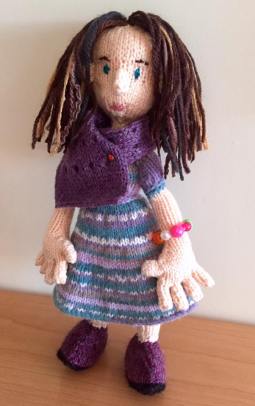
Teacher Gift
With all my different ‘me’s I don’t have a scooby doo what I’m meant to be doing. Should I finish one of the far-too-many knitting projects I’ve started? That’s hard, because I’m used to knitting for individuals, and so am motivated to finish because it’s a gift for someone I know and love.
Now I’m knitting for profit, for a.n.other, and the finishing part (always my downfall) seems impossibly hard. Besides, if I don’t finish the items, and list them, I don’t have to come to terms with the bit I’m even worse at – the trying to get a sale part.
Ditto ebay selling. I had a couple of early successes, picking up new and nearly new stuff at charity shops and selling them on ebay to fund my own charity/ebay shopping obsession. But now I have a few items listed that haven’t sold, and it’s creating more loss than profit.
And as for the PA role. Well. That was a bit of an odd one. I applied to do a gentleman’s typing and ended up responsible for selling one of his properties. Not exactly in my comfort zone, and I’ve tried to quit once already, but he’s such a dear, with no one really looking out for him. So I’m persisting. Just.
 Writing? Well, mostly that’s dead in the water. Except I entered a novel in the Mslexia competition a couple of weeks ago, and the annual Times / Chicken House competition is looming again.
I haven’t missed a year yet. But to enter I really need to dig out an existing manuscript and really work on it until it’s at least half as good as the books I love to read.
There’s that motivation / finishing thing again. Aint gonna happen. But writer is the ‘me’ that’s lasted the longest, and I’m not ready to see it die.
The problem with all these ‘me’s is that I’m Jack of all Trades and definitely Master of None. My son had his birthday this week and, in previous years, I would have arranged a party, made a cake, remembered to buy a helium balloon, and made him feel special. He spent this birthday sobbing because the secondhand nerf gun I bought didn’t work, and instead of a party we’re going to the zoo with a voucher I got last Christmas.
My daughter seems to have hit teenage meltdown a few years early, and yelled at me the other day that I’m ‘Always too busy to listen to her’ despite me trying to get these school-hour jobs precisely so I can be there for them. But my head is so cluttered (and the house even more so) that I’m just a mess.
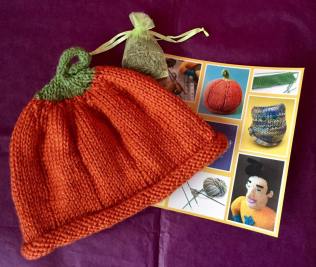
My first and only etsy sale
If I’m honest, I want to do the things that earn me praise. I read a great article about Bliss, and how we lose the passion we had as a child (that gave Bliss) through schooling, switching it for the things that will get us noticed / praised / rewarded.
I’m paraphrasing, obviously, but there’s no doubt I do most of what I do so that someone, somewhere, one day, will pat me on the back and say, ‘well done’, rather than because my passion brings me joy.
Dangerous.
Anyway, I’ve been reading up this morning on the difference between complaining and venting. I’m definitely not complaining. I made this bed, however itchy the sheets and lumpy the pillow.
I’m not really even venting. Perhaps just using the blog as a way to clear my head, as it has always been. Chatting away to a tribe of people who I know understand. Ask any writer / artist / general creative person / parent whether they feel like they’re juggling a hundred different wants / needs / must-dos, and they’ll all say yes.
Really I already know the answer. Take on less. Concentrate more. Delete the app. Finish the knitting projects. Vacuum the lounge and stock the fridge. Look, easy. Right?
Well, at least I can put a tick against ‘write a blog post before you forget how’ even if this post is just a long boring whinge. One step at a time.
 If I’d written that title a decade ago, I would have had only one thought: that working and anxiety are non-compatible. My life as a marketing manager was full of terrible moments of anxiety, inadequacy and much sobbing. It’s taken ten years for me to even contemplate having a ‘proper’ job, rather than freelancing, parenting and farting about writing books. And even though the job I finally got was casual shift work, I still nearly didn’t turn up on day one.
 Recently, it seems I haven’t been able to pick up a major-publishing-house book without finding that it’s littered with editing errors – missed quotation marks, extra words, wrong character names being used, someone present in a scene when they can’t be (because they’re in hospital), or, my favourite, the find-replace. I’m particularly guilty of this – I once replaced a name and didn’t notice that it had replaced the same three letters wherever they appeared, even in the middle of words. And yes, I published it by mistake. Not my finest hour (thankfully noone bought it). But in a seriously published book? Not good.

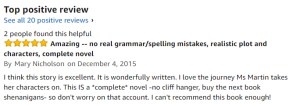 You don’t see an Oxford Press or HarperCollins book getting review headers like, “no real grammar/spelling mistakes” (yes, that’s from one of my reviews, and the reviewer offered to edit future novels of mine free of charge) or “A couple of typos but not enough to take anything away from this great love story.” You certainly don’t ever find books published by big publishing houses with reviews that blame the author for any mistakes, or worse still make it clear the reader has gone looking for them.
 Back in November 2016 I was working for a friend of a friend, typing up audio files, and she asked if I would help one of her dream writers with a final edit of their autobiography. My first response was to say no: I didn’t feel qualified to edit someone else’s work, especially when I pay someone to do a final edit on my own novels. In fact, I recommended that the author speak to my editor, and assumed that would be the end of it.

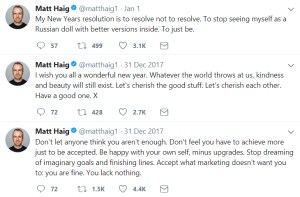 As I was sitting in the coffee shop yesterday, knitting (which is the new writing, don’t you know), I couldn’t help but overhear two concerned mums talking about their children’s schooling. It was a long conversation, and a private one, but the gist was very much balancing the achievement of potential with happiness.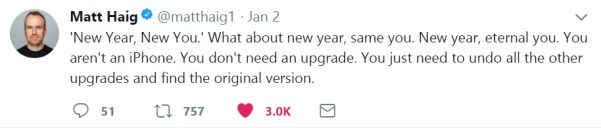
 Can you hear them? All the blog posts I have written in my head over the past few months. Mostly at 2am, when my terrible sleep pattern has me wide awake, brain working, body dead. Unfortunately, by the time I’m up at 5.30am, the body is awake and the mind is numb.