I’m often late to the party when it comes to seeing things on social media. My children laugh that by the time it’s reached Facebook it’s about two years out of date.
I don’t mind.
I get to love the thing without the hype and know it for what it is. I get to quietly search out the story and be moved by it, changed by it.
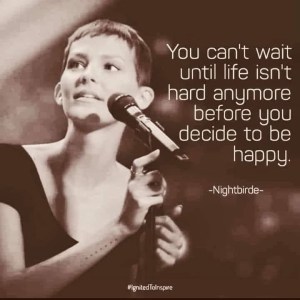
And so I found Nightbirde.
This video appeared in a post on LinkedIn, which is surely last to the party. A video of a girl winning a golden buzzer on America’s Got Talent. A girl with a beautiful smile, a heartbreaking story, a powerful message.
You can’t wait until life isn’t hard anymore before you decide to be happy.
The emotion in her singing and her story and her smile healed my heart. Life is so hard at the moment but still filled with glimmers of joy if I just search for them.
We’re all a little lost and it’s alright.
From the video I found her instagram and then her website. I found her beautiful songs and profound words. I found her on Spotify.
And I swear that I’ll never make you small I’ll never make you say you’re sorry for nothing at all.
I found profound lyrical heart wrenching posts on Facebook
It was early spring and the flowers were opening one eye to see if the winter was over. We stopped at a lookout hundreds of feet above the water. The sun was waist-deep in the ocean, and all the chalk had been wiped off the sky.
I found she died in February 2022 but was more alive than most and lives on still.
The dirt intended to bury me is now the mountain I stand on.
I’m on week four of my new job and just about hanging in there, juggling parenting and working.
Thankfully having teenagers in the summer holidays is mostly about making sure there is lots and lots and lots of food and driving them places. Throw in a bit of laundry, cleaning, and some body-doubling for my daughter, and that’s it. It will be more challenging when they go back to school, as they will need a lot more scaffolding.
If you haven’t come across the term scaffolding in a neurodivergent sense, it’s simplifying tasks other people find very easy, to free up spoons for the essential or more difficult tasks.
When I went to see my son’s head of year to talk about reducing his timetable, I was given a long list of all the reasons why he was thriving at school and didn’t need any accommodations: He turned up to class on time, he had all of the things he needed to learn, he remembered all the ingredients for his food tech, he was always smartly dressed. These are all things that I put scaffolding in place for, to allow him the spoons to get through the day.
He still comes home exhausted.
For an average teenager, I would be encouraging them to weigh out and label their own food tech ingredients, make sure they have ironed shirts or that their laundry has been done. I would tell them to find and polish their own shoes or put together their own PE kit. This would be ‘preparing them for adulthood’.
But the thing is, my son already knows how to do it all, but each tiny task takes spoons.
He also has his own scaffolding: multiple alarms to remind him to get up, shower, brush his teeth, and other things an allistic person might not even have to think about never mind be reminded to do. By the time he leaves for school, he’s used up so much of his capacity already, the least I can do is help.
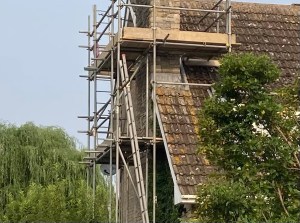
Unlike the scaffolding on a building, this scaffolding may never come down. He may end up with an understanding partner, or he may need a housekeeper, or like me he might rely on AI (Alexa, Siri, and ChatGPT are my team.) These are accommodations for an autistic person in an allistic world.
The same is true in my new job. I have a reputation for being very organised, which always makes me laugh as someone with ADHD. What people don’t realise, but I’ve become much more open in discussing, is that the organisation is essential for me to have any idea of what I’m supposed to be doing on an hourly or daily basis.
I have links from spreadsheet to spreadsheet, I have bookmarks in sub-folders in folders. I have to-do lists and checklists and calendar reminders and even with all these things I still have to go through my notes every day to remember what I should be doing.
It is exhausting.
Like my son at the end of a school day, I have been crawling into bed early and sleeping late.
The analogy of the swan, calm on the surface and furiously paddling underneath, is a flippant image I use often. But imagine the swan is on an apparently slow-moving river with a very fast undertow: you would have no idea how exhausted the swan was just trying to stay in one place. Now imagine someone built a dam or a jetty to break the undertow.
In case it helps, here are my favourite tech/AI scaffolding tips:
Alexa shopping list
Alexa devices in every room
Calendar reminder to check Echo app shopping list
Alexa timers and reminders (particularly cooking pasta!)
Talking work problems through with ChatGPT
Smart watch linked to phone so I hear calls
Airpods to hear messages
Tile to find my phone when watch tells me it’s ringing
Alexa to find my keys to activate my tile
It’s so much easier for my husband, he just has Wife™. 😂
Such a difficult time, as most of the end of term is, for many neurodivergent children and their parents. Social media posts from friends and family are full of academic achievements, reward events, first day/last day photos, smiling faces, holiday plans.
For families whose children do not thrive in school, it’s a time of sadness and exclusion. No attendance reward treat for a girl with 33%, no certificates, no photos. Certainly no firm holiday plans for a girl too broken by school to leave the house without me.
But as I dropped my daughter off for what may be her penultimate day at that school, any school, since the LA have not secured provision for her final year, I was beyond proud.
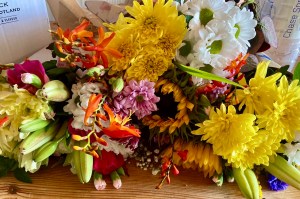
She clutched a bag of flower bouquets she had made herself, with hand written cards and thoughtfully chosen gifts. Gifts for the three ladies who have made the 33% possible, have made toast, made safe spaces, made an effort. They’re not teachers. They’re TAs. Unsung, under-resourced, over worked sticking plasters, holding SEND children together in a place that feels about as safe as a burning building.
School wants children to have good attitude to learning (they score it), resilience, grit. Who scores the school, scores the teachers? Turning up to a school that has let you down again and again, studying subjects no-one is teaching you, aiming for exams you don’t know you’ll ever sit. Well, if that isn’t the definition of all these traits, tell me what is.
So yes, awards are great. I’m as proud of my son’s academic and sporting certificates, his resilience, his attitude to learning. He copes with school, just about, so he gets his moment to shine, he gets his special treats and pats on the back. He also gets expectations and ‘but he’s doing so well, despite being autistic’ when I suggest he might be heading for burnout. Yes, until he isn’t. What then?
My kids are both amazing, both worth celebrating. But in the eyes of our school system, one is a success and one is an uneconomic use of resources.
Both just need to survive school, to finally be free to start living the lives they deserve.
At one of the many many meetings I’ve had with school over the last half a dozen years, the teacher I was seeing said, “we both agree, don’t we, that the best place for a child is in school.” I was able to respond, “No, the best place for a child is in education.”
It sounds like splitting hairs, but as an English teacher he understood the importance of the distinction. He met my comment with a raised eyebrow and a wry smile. As a part of the school’s senior leadership team, he couldn’t be seen to agree that my child might get a better education away from the school building, but he couldn’t deny the truth.
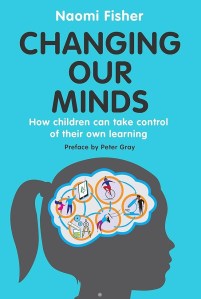
The confidence and knowledge that allowed me to make that statement, to win that skirmish in a really long fight that shouldn’t be a war, came in a large part from following Clinical Psychologist Dr Naomi Fisher, and other professionals like her, on social media.
I don’t normally willingly read non-fiction and when I do it takes time and concentration. Not this one. I got 10% through in an hour of straight hyperfocus, even with reading on my phone.
It helps that the book mentions Sudbury Valley in the US, a democratic school where my nephew and niece go, and one that I would love to have sent my children to. But, more than that, it articulates everything I’ve come to learn about school vs education.
Schools were designed for obedience, not critical thinking. They are out dated and no longer fit for purpose, not just for SEND kids like mine, but for the future of our society.
Standardised testing, where a percentage are always going to fail due to bell curve marking, is no way to prepare children for a happy or productive life. Kids aren’t robots. And the more AI enters our world, the more we need humans to be human, in all its imaginative, creative, diverse brilliance.
I wish I could follow the advice of this book, for my SEND daughter who is currently facing Year 11 with no school willing to educate her in a way she can manage. We did try home education, as regulars will know. It was sadly too late for us, for a myriad of reasons, but the knowledge and the choice are still important. For her, as much as for me. She knows that she hasn’t failed at school, school failed her.
I have also witnessed her self-directed learning. I can see for myself how it can work, how even the small opportunity she has had to experience it has given her so much hope for the future. Still, the shortest escape route for us at this point is to get her the GCSEs she needs for college in the least painful way. Which is to fight for school to see her as more than a waste of resources.
Seriously, don’t ask. 🤐
However, for any parent who just knows their child isn’t thriving in school, who has the time and energy to embrace a different way, or even just wants to learn a new perspective to the Department of Education’s indoctrination that school attendance is essential, I encourage you to read this book.
Even reading the preface and first chapter is worth 99p.
Honestly. If I could have read this four years ago, when it was written, our lives would perhaps have been far less traumatic and my daughter wouldn’t feel utterly rejected by the very place society keeps telling her she has to be to have a successful life.
But I didn’t.
So, we’ll don armour for the next battle. And share our story so maybe others won’t have to.
Anyone that’s followed this blog for any length of time will know that I am 100% a pantser. (And for anyone who is new here, that means someone who writes a novel by the seat of their pants rather than following a structured outline).
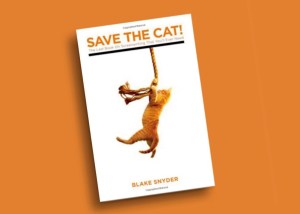
My pantser days were curtailed by the discovery of the book Save the Cat https://savethecat.com by Blake Snyder. His beat sheets gave an easy-to-use structure format, and my last few books were written using that tool.
But my last novel was written five or six years ago, because I don’t seem to have the concentration or ideas to fill out a beat sheet, nor the time to do free writing enough to come up with a new concept. My writing energy has all gone into SEND assessments, school shenanigans, and marketing copy.
In a conversation with my sister last week, we talked about writing a book on how not to manage people, particularly neurodivergents. I joked that we should get ChatGPT to write it, since I’ve appreciated AI help with endless job applications (40 and counting).
Intrigued, I put in the request, “Write a book on how not to manage neurodivergent people” and it came back with a seven-page outline, including references. That’s a book I may look to write someday, but maybe not while I’m trying to get a job 😂
Continuing with my investigation into what the lovely AI assistant could deliver, I asked it to produce a beat sheet outline for a young adult book set in a school, which is an idea that has been floating around my head recently. As I used voice-to-type (another excellent but not infallible tool), the request was for a Beach sheet 😂, but the AI still understood my request and produced a book outline with the structure from Save the Cat. I have to say, mind blown. 🤯
The thing is, the AI isn’t going to write the book, I am. I probably won’t even use more than 10% of the book outline. But the fact that it broke it down into all the key beat sheet points: fun and games, bad guys close in, all is lost and the dark night of the soul, brought it all back to me. I remembered how to do it.
And it took about 30 seconds, instead of the hours it might have taken to find my battered copy, read it, get distracted, cook dinner, put the book down, see it a week later, wonder why I was reading it, pick it up, get distracted…
That’s how AI is a tool.
And like any tool, it needs experience to use it effectively. You have to ask the right questions. You have to be specific. Incidentally, this could be one of those things that autistic people excel at. We’re really good at being very literal 😂
I recently said to a friend who was concerned about using AI that it’s no different to using a Thesaurus. If you pick a word from a Thesaurus without understanding what it really means you’re going to make yourself look like an idiot. However, if you’re just trying to remember a word or clarify a meaning, it can be used to great advantage, particularly when you’re tired or short on time.
And who isn’t busy and tired these days?
I do still have reservations around AI and creativity. I have used the Generate function on Adobe Stock a lot and seen the amazing – but slightly wrong – things that it produces. I have concerns about the production of artwork that draws (excuse the pun) on other artists’ creativity and hard work, particularly if it is then passed off as original.
And don’t get me started on the rarely-discussed environmental impact of AI infrastructure.
However, people will always want or need short cuts. Who hasn’t done a copy-paste on a report (and who hasn’t accidentally left the old name in?)
There will always be plagiarism. Austin Kleon’s book Steal like an Artist is one of my go-to books for inspiration.
From Steal like an Artist by Austin Kleon
And there will always be purists, for example, people that think I should be able to spell when I can’t. I rely on the little squiggly line to tell me when my letters are all jumbled. It’s not because I can’t tell that it’s spelled incorrectly (most of the time) but my brain won’t pull up the right order of letters and I would spend a very long time with the dictionary if I couldn’t use the tool to hand.
A bit like writing a blog post on a phone, using voice-to-text, while walking the dog, and then editing it as I iron the kids’ shirts. ☺️
I’ve heard it said that you need to apply for about sixty jobs before you find a new role. Actually, I’ve seen anywhere from 20 to 100, but sixty suits the purpose of this post, since it means I’m halfway there. [Cue a blast of Living on a Prayer. IYKYK.]
So, what have I learnt through applying for thirty jobs?
Firstly, job hunting these days is hard.
I mean, it’s always been hard. And I’ve always been rubbish at it. Before I knew I was neurodivergent, I thought I was just crap. Now I know I was trying to go through a ritual without anyone telling me the rules in a way that I understood.
Thankfully, there are now so many more tools available online, it’s actually been easier for me personally than ever before. Websites like this one, which not only tells you the questions you might be asked in an interview but also tells you what employers are looking for by asking AND suggests possible answers! Game changer. If only I could type my answers during the interview, so they don’t get garbled between brain and mouth!
But the market is hard. I’m looking for remote or nearby hybrid jobs, so I’m competing with a huge number of people. And, because marketing is the first part of a company to be jettisoned in an economic downturn, and often the least understood, some of the roles being advertised are bonkers (see octopus image above). They might as well say, “Please can you replace the whole brand and performance marketing and creative team we accidentally made redundant and then realised we needed, oh, but in a 40 hour week for a fairly average salary.” Er. No.
Joking aside, one of the skills I am honing is the ability to really understand the role from the job description, and then to judge it against my personal abilities. Not just, could I do that, but could I do that without hitting burnout in six months? I personally love variety in a role. I’m happy to become your email campaign/paid ad/SEO/landing page/adobe expert. But not if you expect me to have ten years’ experience in each of those functions, and not when you throw in expecting full analytics and ROI, event management, staff mentoring, and international travel. That’s just not feasible for one person.
Then the actual applications vary considerably.
The majority of my applications are through sites like LinkedIn and Indeed, and are straightforward – add CV, sometimes a cover letter, hit send. Unsurprisingly, those are the ones that get hundreds of applications.
I’ve been asked to do an online assessment, through LinkedIn as part of an application (not for an interview). Thankfully they only asked once, and I’ve been able to use the results for many more applications. Turns out, I’m Expert level on grammar, punctuation and fact checking/error spotting. Thank goodness for that, or I’m in the wrong line of work.
I was asked to prepare a short marketing outline for the application for Rewilding Britain (again, application stage, not interview stage). Being the overdelivering, out of work and bored marketeer that I am, I created a full webpage of assets, including video. It wasn’t looked at, as far as I can tell. But if you fancy a gander at what I can do, have a look.
Rewilding Britain also made a point of asking that AI not be used for CV, Cover Letter, or the marketing outline, which I found interesting. Because I’ve been using ChatGPT a lot.
There are lots of discussions online about the use of AI in job applications. But, as one person pointed out, if you’re a Plumber (say), then crafting cover letters is not your wheelhouse, and ChatGPT is just a tool. Particularly if you’re applying for the recommended 10-15 jobs a week.
I don’t have that excuse. I’m a wordsmith. However, I am also neurodivergent, and cover letters are another one of those areas that don’t come with guidelines. Do you want war and peace? Do you want me to pick up every part of the job description that I can do and give you an example? Isn’t that what an interview is for? So, I drop the job description into ChatGPT and ask it to provide a semi-formal cover letter up to 500 words. You have to say semi-formal or it sounds like a nineteenth century novel. And then – and this is the important bit – you REWRITE it, with your own experience and in your own style.
Similarly, I did use AI for my marketing outline for Rewilding Britain, despite being told not to. Perhaps that’s why I didn’t make the interview, perhaps they could tell. But I don’t have personal experience of promoting an environmental charity, and I didn’t have a week to research it. (I might have spent that time making videos about soil. Oops.) The lovely AI bot gave me brilliant ideas in about 30 seconds, that I was then able to build into a meaningful plan. It’s a tool, people, not a monster.
I have at least managed to get three interviews so far, which is well within the 8% success rate of application to interview, so that’s encouraging.
The interviews I’ve had have all been very different too. We won’t mention the one that triggered the bout of depression, as least said now is hopefully soonest mended. But of the other two, the online one was far preferable to the in-person one. As I said in my last post, it’s much more neurodivergent friendly. And even though I didn’t get the job, I felt I performed better by being more relaxed.
That was also the first interview where I received the interview questions in advance.
This is the positive of the whole process so far, for me. Being able to own being neurodivergent (even without a diagnosis. No one has asked for evidence. And I do have a diagnosis for Anxiety, which also counts as a disability).
Thanks to creating a wonderful echo chamber of neurodivergent-friendly people on LinkedIn, I feel comfortable asking for accommodations now, whether it’s if a job can be hybrid when it hasn’t been advertised as such, or asking for the interview questions in advance. For the latter, I would say that that’s just common sense. I was able to give much more meaningful answers to the competency questions by having an hour to think it through first.
Anyway, I didn’t meant this to be such a long post, and I’m not sure it’s interesting to anyone but me (and my husband, who I am now also applying for jobs for). I think it’s just useful to see how far I have come.
It’s easy to get discouraged, particularly when I had a job I loved that I had to leave and that wouldn’t have me back. But I do believe that everything, even the shitty things, can have a positive outcome.
Hopefully this one will be a meaningful job that I can do in all my ND weirdness. Preferably before the money runs out!
I originally wrote this on a LinkedIn post a couple of weeks ago, but I feel it deserves to be said again, even if I didn’t get the job!
Virtual Interviews for the win!
There are many ways that the pandemic heralded changes that were neurodivergent-friendly: hybrid working, learning about personal space, normalising not wanting to be touched, and, my favourite, the McDonalds app 😂
I have a job interview at lunchtime today. I’m sat in my PJs, eating breakfast and running through my presentation. I hope to shortly receive the interview questions, two hours in advance, as a requested accommodation.
And I’m calm.
Sort of.
There are still things that can go wrong:
– Dodgy internet – Power cut – Barking dogs – Panic attack
But what I don’t have to worry about is:
– What to wear, particularly on my feet (all shoes are awful, I can be barefoot) – Driving (tiring for my ADHD brain) – Traffic (stressful) – Getting to the right place (something I failed to do on my last interview due to a Google Maps error) – Where to park – How to get into the building – Finding a bathroom – External distractions in a new environment – Somewhere to put my notes to help me focus – The technology for sharing my presentation
Well, actually, that might crop up, as it has before, so I’ll email it over beforehand just in case. [As an aside, I did have difficulties sharing it, and was very glad I had emailed it in advance).
But you get the idea.
Teams interviews aren’t perfect. I have auditory processing difficulties, so sometimes it’s easier in person (where I can lip read). I don’t always know when it’s my turn to speak. It’s harder to avoid prolonged eye-contact. I dislike seeing myself on camera. Did I mention noisy dogs? 🐕
But the point is, the choice is there.
Interviews are hard for everyone, but particularly for neurodivergent people. And I for one am happy to be doing this one in my own office.
So, rather ironically, I missed mental health week due to a recent bout of quite severe depression.
I’m still recovering but I can feel myself slowly coming back to life. Something that has always helped me do this is the right playlist.
One of the most amazing modern inventions for me is the ability to carry music in your pocket, from a walkman to an iPod and now on my phone. And, thanks to online streaming, I can create a playlist for any mood without tape-to-tape faffery.
Being a word person, finding a song that speaks to me, to the place I’m at, is massively supportive of my mental health. This time my depression was caused by something quite specific and I hoped that I would, I knew that I would, survive it. But it has been one of the worst attacks in recent years.
And music has been really important.
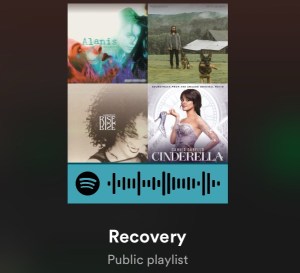
I put together this short little Recovery playlist, that starts with feelings of abandonment, through realisation, finding the fighter, rebuilding a glimmer of hope, and then celebration of self.
I’m still not in a place to put together clever words myself but in this slightly belated mental health week post I encourage you to find the playlist that puts you on your own path of recovery.
One of the hardest things for autistic people to get their heads around is injustice.
I noticed it first when my son was at school and he came home angry that his sports team lost a game because others were ‘cheating’. My own outrage matched his, and it took a while to realise that the cheating was in fact what I guess is called gamesmanship.
Gamesmanship is the use of dubious (although not technically illegal) methods to win or gain a serious advantage in a game or sport.
Wikipedia
The problem for autistic people is that there are so many shades of grey in this kind of behaviour, and our brains are more black and white.
In the classroom, my son would end up in trouble for insisting loudly that a classmate adhere to the rules. My son would be seen as the disrupter and get told off. The injustice of such an accusation would be awful, combined then with a feeling that he had somehow broken a rule. It was my first real indication that he might be autistic.
My daughter struggles with the unfairness of teachers breaking a uniform code that is inflicted on children because they need to be ‘ready for the workplace’. So much wrong with that! Autistic people tend not to recognise hierarchy, so one rule for teachers and one for teenagers isn’t fair. And then there’s the illogical idea of an imaginary workplace that isn’t in fact where teachers work. Or her parents. In fact, noone she knows still wears a tie to work and can’t have jewellery.
I used to think my need for fairness was a Libra trait. I am learning that it’s probably a bit more than that.
Discovering I am (probably) autistic – and how glad will I be, like my daughter this week, when I finally get my diagnosis – makes so much sense of why I have struggled to find and keep an office job.
Firstly there’s not understanding hierarchy: turns out thinking ‘if you’re wrong, you’re wrong, whether you’re an admin assistant or a chief exec’ isn’t a popular view point. 😂
Then there’s following the rules. What rules? Who made them up? Where is it written that I wear heels and don’t swear and don’t tie my hair in a messy bun? It doesn’t affect my ability to do my job. Same with laughing too much, complaining about noise, or not wanting to eat lunch with the team.
And fairness or things making sense? That’s just a minefield. Challenging that something shouldn’t be done just because it’s always been done that way is hugely unpopular. But if you do what you always did you get what you always got.
Needing to know WHY is another no-no apparently. But if I understand why a project is urgent, where it fits in, I might be able to deliver it quicker and change a process so it’s not urgent next time.
Right now, all these things are very much in my mind, for reasons I can’t discuss. It’s making me very sad, and I need to move on. But a combination of injustice and something just not making sense has caught my brain in a loop, trying to comprehend the incomprehensible.
It’ll pass.
In the meantime, if you have an autistic person in your life, and I hope you do as we’re pretty goddam awesome, try and appreciate their strengths even if it makes you uncomfortable. They might just fight for you with everything they have to make your world a better, fairer, place
One of the things I’m learning as a neurodivergent is how to follow the flow of energy. When it’s right to rest and when it’s actually better to move, do something, anything, and how to sneak up on my brain if it’s resistant.
I was raised to see rest as idleness, self-care as decadence. It’s taken a really long time to even begin to deprogram myself from that. I also realise, with hindsight, that I pushed those values onto my husband. He used to understand the need to sit and just be, was an expert at it, but I saw it as laziness. Sorry, husband 😔
In my defence, it wasn’t just upbringing. Our whole Western culture celebrates productivity. We are told to “fill the unforgiving minute | With sixty seconds’ worth of distance run”.
From infancy, our worth is defined by our achievements. You spoke! You walked! You can count to ten, you passed your exams. What a clever girl, I’m so proud of you. Haven’t you worked hard.
The message is never that it’s okay to just be. That the world is somehow better with you in it, regardless of whether you win awards or die trying.
When I was working, Monday morning chat filled me with dread. “What did you get up to this weekend?” caused my truthful autistic brain to stumble. Somehow, “I slept and did laundry” wasn’t the answer they were after 😂
But weekends were for rest and recovery, ready for another week of work. Harvesting energy, so I could pour it into my job. Which is why it was fortunate that I loved it (most of the time). I was excited by Mondays, revved and ready to tackle the challenges and test my brain to see what it could do.
Without that, under-employed as I currently am, (I won’t say unemployed, because there is still a house to run, a family to feed and clothe), managing my energy is so much harder.
Firstly, there isn’t much challenge in laundry, so it isn’t all that exciting. Feeding a house of ARFID is challenging, but in a tax-return sort of way that’s pretty fucking miserable, I won’t lie. My newly-freed-from-work husband is doing All. The. Things. Decorating, landscaping, renovating. Wonderful stuff, but it’s not where my energy is currently at.
So I read and apply for jobs and try not to panic.
And I learn about energy.
I’ve learned that my energy flows best in an empty house. Which is a bit of a bugger at the moment. I’m back to hanging out in coffee shops for solitude and cake. My waist is expanding at an alarming rate 😉
I’ve learned that I can sneak up on energy, like a skittish horse, if I pretend to be resting and then suddenly leap up, put running clothes on, and get stuck into a task before my brain’s caught up.
I have remembered the power of a playlist. Metallica blaring through headphones got me through periods of post-procrastination panic-productivity at university, enabling me to write a term’s worth of essays in a sleepless week. I don’t recommend it, but if you must, then diet coke and …And Justice for All are what you need. Just don’t forget the headphones.
I am also learning about creative energy. It’s like trying to catch a Roborovski hamster. Or like the end of Crystal Maze, grabbing the gold tokens flying around. The clever contestants waited and gathered them as they landed rather than snatching at air.
Take this post. It’s weeks overdue, and the third I’ve started in my head. But today I waited until the ideas started to gather, then grabbed at them as they pooled in my mind. I started at 5a.m. The Notes file on my phone is full of 5a.m. thoughts. 😂 I had a slight side-quest, trying to find an image of a Crystal Maze contestant grabbing at tokens. I couldn’t, but am learning to limit these perfection-searches where I can. That way danger lies. (The same reason I can’t have Instagram or TikTok on my phone.)
My brain, when under-utilised, is like the Crystal Dome all the darn time. Ideas flap around me, all shiny, but I can’t get hold of them. Or I grab randomly and get a hodgepodge that I can’t sift through. Since leaving work to look after my daughter I’ve knitted, cross-stitched, crocheted, made a book trailer video, redesigned a book cover, drawn illustrations, updated my website, and come up with a dozen crazy ideas for new projects.
New cover design
But having to job-hunt is depleting my energy, because it’s all the things I hate. It’s trying to believe in myself and sell myself, it’s trying to say what recruiters want to hear, in cover letters and interviews. It’s searching, and reading through the job-speak trying to understand what is actually expected in a role.
And it’s waiting.
Waiting is ADHD Kryptonite. A 4 o’clock appointment will kill a day. Add to that a daughter who is still in recovery and a hyper-productive husband doing ten projects at once, and managing my own energy is getting really hard.
So I read. And rest. And sneak up on my brain, holding a chocolate bar and a coffee to tempt it to submit.